Can Israel Keep Fighting Its Wars Without U.S. Aid?
By using this website, you agree to our use of cookies. This use includes personalization of content and ads, and traffic analytics. Review our Privacy Policy for more information.
Foreign Policy Get analysis and alerts more quickly in the mobile app.
Install
Back to Foreign Policy Magazine home page
Evening roundup with our editors’ favorite stories of the day
World Brief
Your guide to the most important world stories of the day
China Brief
The latest news, analysis, and data from the country each week
Situation Report
Weekly update on what’s driving U.S. national security policy
FP Weekend
A curation of our best book reviews, deep dives, and other reads
Africa Brief
Essential analysis of the stories shaping geopolitics on the continent
South Asia Brief
Weekly update on developments in India and its neighbors
The Reading List
Curated guides on geopolitics and current affairs
FP Bookshelf
A monthly guide to FP’s book reviews, excerpts, and reading recommendations
Latin America Brief
One-stop digest of politics, economics, and culture
Southeast Asia Brief
A weekly dispatch with news from the region’s 11 countries
The New Geopolitics
A five-part masterclass in IR theory with Harvard Professor Stephen M. Walt
View All Newsletters
Give a gift Give a gift
Subscribe Subscribe Give a gift Give a gift
Analysis: Without U.S. Military Aid, Can Israel Afford So Many Wars?
1. Create an FP account to save articles to read later.
Sign Up
ALREADY AN FP SUBSCRIBER? LOGIN
PDF
1. **Downloadable PDFs** are a benefit of an FP subscription.
ALREADY AN FP SUBSCRIBER? LOGIN
Gift
1. Gifting articles is a subscriber benefit.
ALREADY AN FP SUBSCRIBER? LOGIN
2. This article is an Insider exclusive.
Contact us at [email protected] to learn about upgrade options, unlocking the ability to gift this article.
Analysis
Without U.S. Military Aid, Can Israel Afford So Many Wars?
Deterioration in ties with Washington poses serious trouble.
By **David E. Rosenberg**, the economics editor and a columnist for the English edition of *Haaretz* and the author of *Israel’s Technology Economy.*
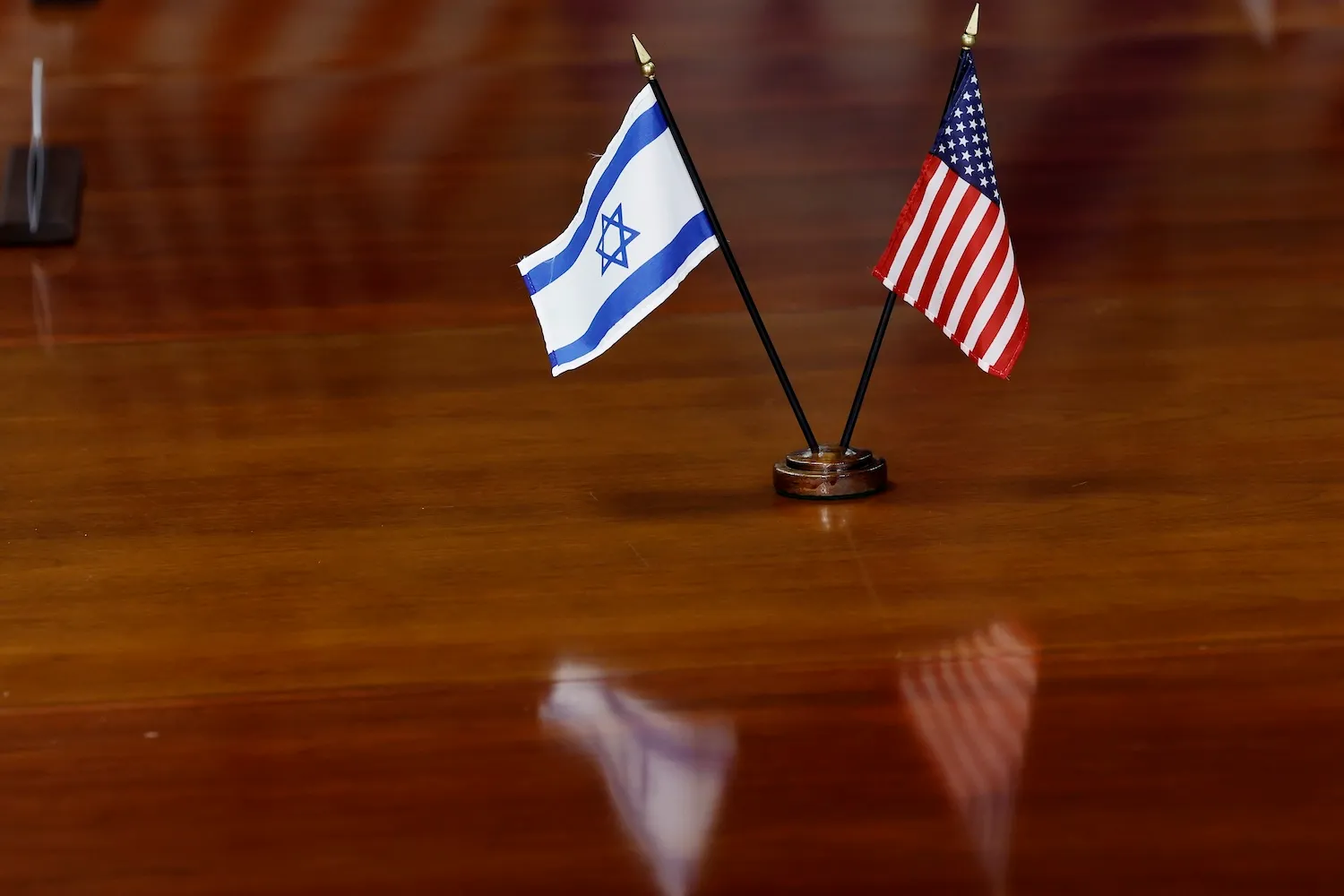
*Miniature desk flags of Israel and the United States are side-by-side on a polished wooden conference table, with their reflections visible on the surface.*
The flags of Israel and the United States are seen as U.S. Defense Secretary Lloyd Austin meets with Israeli Defense Minister Yoav Gallant in Arlington, Virginia, on March 26, 2024. Anna Moneymaker/Getty Images
1. Get audio access with any FP subscription.
ALREADY AN FP SUBSCRIBER? LOGIN
November 18, 2026, 3:19 PM
Considering its long history, the hundreds of billions of dollars involved over decades, its growing controversy and symbol of the special bilateral relationship, U.S. aid to Israel came to an abrupt end this month with barely a whimper. Rather than being announced in a platitude-filled joint statement and with a roadmap for its gradual demise, the news that “by the end of this year, we won’t be paying Israel” emerged in an offhand remark by U.S. President Donald Trump seven minutes into an interview with Fox News on Nov. 3, the day of the midterm elections. It took three days for Israeli Prime Minister Benjamin Netanyahu to publicly confirm the news, which he did by way of a on X. Israeli officials, who had been expecting the aid to unwind gradually after 2028 (when the current framework agreement expires) were taken by complete surprise.
But none of that can conceal the fact that the aid program’s demise signals a major downgrade of U.S.-Israeli relations, one that is wholly an American initiative, not one of mutual consent as both Trump and Netanyahu presented it. Moreover, Israel is now losing a major component of U.S. ties at a moment when it is more politically and militarily dependent on the United States than at any time since the 1973 Yom Kippur War. And, even if Israel’s economy has become big enough to cover the country’s military spending, its current capacity to do so is being tested by a major rearmament drive and the continued pursuit of an aggressive military policy that began after Hamas’s attack on Oct. 7, 2023.
Although it has had its ups and downs over the years, Israel long enjoined broad bipartisan support in Congress and in public opinion, certainly in comparison with the Palestinians, Israel’s main rival in the competition for American’s affections. That bipartisan consensus began to unravel 15 years ago under Netanyahu, who preferred the Republican Party and Christian evangelicals over Democrats and even the American Jewish community, whose liberal politics made it increasingly uncomfortable with Israeli policies.
Netanyahu’s alliance with the American right looked solid, but it crumbled in the wake of Hamas’s attack three years ago. The initial sympathy for Israel evaporated quickly as its offensive in Gaza proved unusually brutal and continued long after its military justification had run out. Not only did remaining support in the Democratic Party collapse, but Israel began losing the GOP, as well—starting at the far-right fringe of the MAGA movement and rapidly moving to the center, especially among younger Republicans. Israel’s role in convincing Trump to attack Iran earlier this year made it even more enemies across the political spectrum, as did the settler violence against
Without U.S. Military Aid, Can Israel Afford So Many Wars?
U.S. military aid to Israel ended abruptly, marking a significant downgrade in the bilateral relationship. The move comes as Israel pursues a major rearmament drive and an aggressive military policy that is testing its capacity to bear the costs of war.
Cross Lines newsroom
Share this article
#إسرائيل#المساعدات العسكرية الأمريكية#العلاقات الأمريكية الإسرائيلية#بنيامين نتنياهو#دونالد ترامب#الكونغرس
Original source: Foreign Policy