Japan's Defense Industry Lessons From Ukraine and the Middle East
By using this website, you agree to our use of cookies. This use includes personalization of content and ads, and traffic analytics. Review our Privacy Policy for more information.
Foreign Policy Get analysis and alerts more quickly in the mobile app.
Install
Back to Foreign Policy Magazine home page
Evening roundup with our editors’ favorite stories of the day
World Brief
Your guide to the most important world stories of the day
China Brief
The latest news, analysis, and data from the country each week
Situation Report
Weekly update on what’s driving U.S. national security policy
FP Weekend
A curation of our best book reviews, deep dives, and other reads
Africa Brief
Essential analysis of the stories shaping geopolitics on the continent
South Asia Brief
Weekly update on developments in India and its neighbors
The Reading List
Curated guides on geopolitics and current affairs
FP Bookshelf
A monthly guide to FP’s book reviews, excerpts, and reading recommendations
Latin America Brief
One-stop digest of politics, economics, and culture
Southeast Asia Brief
A weekly dispatch with news from the region’s 11 countries
The New Geopolitics
A five-part masterclass in IR theory with Harvard Professor Stephen M. Walt
View All Newsletters
Give a gift Give a gift
Subscribe Subscribe Give a gift Give a gift
Analysis: Japan’s Defense Lessons From Ukraine and the Middle East
1. Create an FP account to save articles to read later.
Sign Up
ALREADY AN FP SUBSCRIBER? LOGIN
PDF
1. **Downloadable PDFs** are a benefit of an FP subscription.
ALREADY AN FP SUBSCRIBER? LOGIN
Gift
1. Gifting articles is a subscriber benefit.
ALREADY AN FP SUBSCRIBER? LOGIN
2. This article is an Insider exclusive.
Contact us at [email protected] to learn about upgrade options, unlocking the ability to gift this article.
Analysis
Japan’s Defense Lessons From Ukraine and the Middle East
The ability to surge weapons production in wartime is now a critical pillar of deterrence.
By **Jumpei Ishimaru**, a research analyst in the Japan program at the International Institute for Strategic Studies.
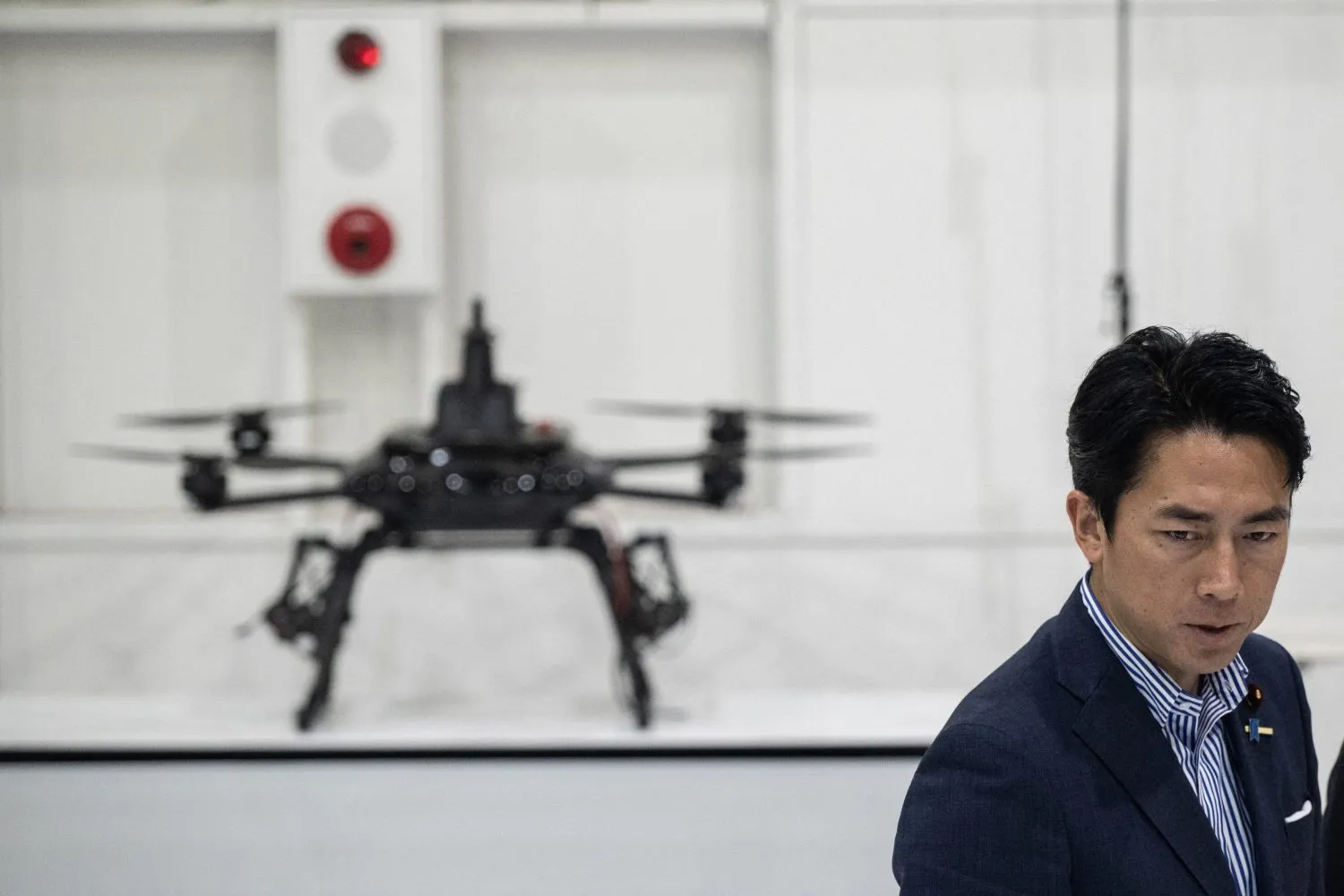
*Japanese Defense Minister Shinjiro Koizumi looks at drones at the Prodrone research facility in Nagoya, Japan, on May 20.*
Japanese Defense Minister Shinjiro Koizumi looks at drones at the Prodrone research facility in Nagoya, Japan, on May 20. Andrew Caballero-Reynolds/AFP via Getty Images
1. Get audio access with any FP subscription.
ALREADY AN FP SUBSCRIBER? LOGIN
November 16, 2026, 11:08 AM
Since taking office in October 2025, Japanese Prime Minister Sanae Takaichi has been busy reforming Japan’s defense policy. Her government is revising the National Security Strategy, National Defense Strategy, and Defense Buildup Program to prepare for an era of heightened instability and growing uncertainty over U.S. engagement in the region. Notably, Tokyo raised defense and other security-related spending to approximately 1.8 percent of GDP in the 2025-2026fiscal year, up from around 1 percent in 2022. In April, Japan also revised its defense transfer policy with the aim of promoting exports of weapons and nonlethal military equipment.
Expanding Japan’s defense production capacity has been a central focus of these reforms. In its budget request for the 2027 fiscal year, the Japanese Defense Ministry singles out domestic military production as a critical element of deterrence. This reflects growing concerns that Japan may need to sustain military operations in a protracted, high-intensity conflict. In an analysis of the U.S.-Israel war against Iran that was published in August, the Defense Ministry explicitly recognizes the need to maintain adequate production capacity in peacetime—and to be ready to rapidly scale up weapons production in the event of a conflict.
Japan’s focus on production capacity reflects a change in the way that military planners think about deterrence. Russia’s yearslong war against Ukraine and the ongoing conflict in the Middle East have demonstrated the prolonged, high-intensity, resource-draining nature of modern warfare. Some analysts now expect a potential conflict over Taiwan to play out in similar ways, rather than the quick, decisive campaign that many experts had long assumed as their base case.
NATO frames deterrence around three elements: capability (does a state have the weapons to defend itself?), credibility (would it actually use them?), and communication (does the adversary understand what it would be up against?). In a long, high-intensity conflict, each of these three pillars is increasingly shaped by production capacity.
Production capacity affects the availability of the weapons needed for military operations both in preparation during peacetime and during an ongoing war. Recent conflicts have underlined two aspects of replenishment capability: the replacement rate (whether weapons output keeps pace with consumption in the battlespace) and the cost-to-kill ratio (how much a defensive weapon costs compared to the offensive threat that it counters).
In terms of credibility, a longer conflict is not just about the willingness to use force but also the willingness to sustain it for the duration of the conflict. The durability of public and private investment signals whether a state can support production throughout a prolonged conflict.
In terms of communication, an adversary’s calculation—and hence the deterrent effect—is affected by the signal sent by investing political and financial capital in defense production capacity.
Viewed through this framework, recent announcements by the Japanese government and reports on the forthcoming refor
Japan’s Defense Lessons From Ukraine and the Middle East
Japan is seeking to expand its defense production capacity as a cornerstone of deterrence amid the prospect of prolonged, high-intensity conflicts. Analysts say the wars in Ukraine and the Middle East highlight the resource-draining nature of modern warfare.
Cross Lines newsroom
Share this article
#اليابان#الدفاع#الردع#الصناعات الدفاعية#أوكرانيا#الشرق الأوسط
Original source: Foreign Policy