What Xi Actually Thinks of Trump
Foreign Policy

Foreign Policy
Original Source
China's president likely concluded that the U.S. under Trump has lost its way. A deep analysis of Xi's probable assessments of Trump and the implications of his presidency for American global standing.
What Xi Actually Thinks of Trump
!Foreign Policy
Foreign Policy Get analysis and alerts more quickly in the mobile app.
Install
Back to Foreign Policy Magazine home page
* Latest
* Regions
+ Asia & the Pacific
+ China
+ Middle East & Africa
+ Americas
+ Europe
* Newsletters
Editors’ Picks
Evening roundup with our editors’ favorite stories of the day
!World Brief Icon
World Brief
Your guide to the most important world stories of the day
!China Brief Icon
China Brief
The latest news, analysis, and data from the country each week
Situation Report
Weekly update on what’s driving U.S. national security policy
FP Weekend
A curation of our best book reviews, deep dives, and other reads
!Africa Brief Icon
Africa Brief
Essential analysis of the stories shaping geopolitics on the continent
!South Asia Brief Icon
South Asia Brief
Weekly update on developments in India and its neighbors
The Reading List
Curated guides on geopolitics and current affairs
FP Bookshelf
A monthly guide to FP’s book reviews, excerpts, and reading recommendations
!Latin America Brief Icon
Latin America Brief
One-stop digest of politics, economics, and culture
!Southeast Asia Brief Icon
Southeast Asia Brief
A weekly dispatch with news from the region’s 11 countries
The New Geopolitics
A five-part masterclass in IR theory with Harvard Professor Stephen M. Walt
View All Newsletters
* FP Live
* Latest
* Trending:
* Trump-Xi meeting
Search this website
* Preferences
* My FP Feed
* Saved Articles
* Newsletters
* Magazine Archive
* Subscription Settings
* FAQs
* Log Out
Sign In
Sign In
Team access Team access
Subscribe Subscribe Team access Team access
Argument: What Xi Actually Thinks of Trump
*
*
* Facebook
* Bluesky
* X
* LinkedIn
* WhatsApp
* Reddit
Save
1. Create an FP account to save articles to read later.
Sign Up
ALREADY AN FP SUBSCRIBER? LOGIN
PDF
1. **Downloadable PDFs** are a benefit of an FP subscription.
Subscribe Now
ALREADY AN FP SUBSCRIBER? LOGIN
Gift
*
*
* WhatsApp
1. Gifting articles is a subscriber benefit.
Subscribe Now
ALREADY AN FP SUBSCRIBER? LOGIN
2. This article is an Insider exclusive.
Contact us at [email protected] to learn about upgrade options, unlocking the ability to gift this article.
Argument
An expert’s point of view on a current event.
What Xi Actually Thinks of Trump
China’s president has likely concluded that the U.S. under Trump has lost its way.
!Howard French
*Howard French*
*Howard W. French*
By **Howard W. French**, a columnist at *Foreign Policy*.
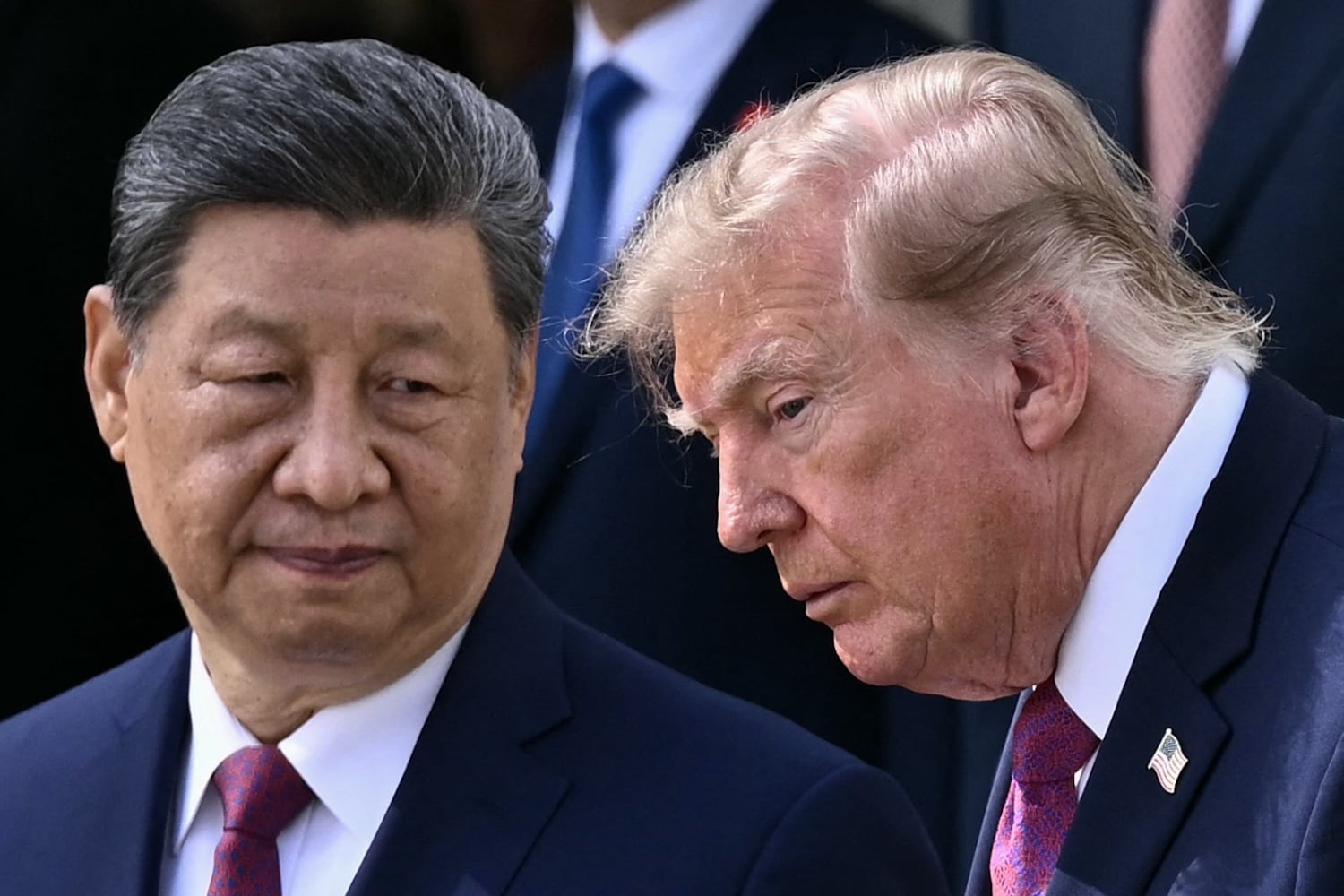
!Xi (left) and Trump (right) are shown up close, with Xi looking at Trump.
*Xi (left) and Trump (right) are shown up close, with Xi looking at Trump.*
U.S. President Donald Trump and Chinese President Xi Jinping are shown in the Rose Garden of the White House in Washington on Sept. 24. Brendan Smialowski/AFP via Getty Images
1. Get audio access with any FP subscription.
Subscribe Now
ALREADY AN FP SUBSCRIBER? LOGIN
September 28, 2026, 4:40 PM
Trump-Xi Summit
FP’s analysis and reporting
One of the most important outcomes of the recent summit in Washington between U.S. President Donald Trump and his Chinese counterpart, Xi Jinping, is something we are unlikely to learn soon, if ever.
This has nothing to do with the failure of the delegations to release a joint statement, or even the large discrepancies between each side’s readout of their meetings. Rather, it is about the private estimates that Xi must have made at the conclusion of his visit concerning two related questions: Who, deep down, is Trump, and what does his presidency say about the state of the United States as the world’s incumbent superpower?
One of the most important outcomes of the recent summit in Washington between U.S. President Donald Trump and his Chinese counterpart, Xi Jinping, is something we are unlikely to learn soon, if ever.
This has nothing to do with the failure of the delegations to release a joint statement, or even the large discrepancies between each side’s readout of their meetings. Rather, it is about the private estimates that Xi must have made at the conclusion of his visit concerning two related questions: Who, deep down, is Trump, and what does his presidency say about the state of the United States as the world’s incumbent superpower?
A column like this is necessarily speculative, so I am going to venture my best guesses. The first is by far the easiest: Trump’s extraordinary unctuousness in giving Xi the red-carpet treatment and flattering him at every turn stands no chance of turning the two men into genuine friends, as Trump often seems to believe.
Like any nation, China has made many errors and miscalculations over the decades, but in the post-Mao era, it generates policies through a disciplined process, whose goal is a sober and rational assessment of China’s—or at least the Chinese Communist Party’s (CCP’s)—interests. Friendship in the normal, personalized sense of the word has little to do with this. This is a rule that I would even extend to the theatrics of bonhomie played out between Xi and Russian President Vladimir Putin, whose Moscow serves as Beijing’s situational ally.
An admittedly more conjectural thought is that Xi may have found it highly amusing to watch Trump perform his interpretation of what authoritarian leadership consists of. It has become commonplace in U.S. political commentary to say that Trump fantasizes about having kingly powers. How else to interpret his lavish use of gold and his craze for monuments, especially ones that he hopes will bear his name down through the ages? But as Trump escorted Xi around the White House, extolling his helipad and the ballroom under construction, I am tempted to say that Xi must have taken him for a fool. For as much authority as Xi has concentrated in his own hands over the last 13-plus years, almost none of his energy has been consumed in the pursuit of personalized grandiosity.
Xi must also have thought poorly of his counterpart when Trump led him through a pavilion whose gilded walls featured portraits of U.S. presidents. They had been hung in ascending fashion, with Trump’s the highest of all. That is tacky enough by itself, but the Chinese leader stood by, looking as impassive as ever, as Trump paused before the frame devoted to his predecessor, Joe Biden. Instead of a portrait of Biden, it bore a photo of the autopen, the device that Biden often used to sign official acts (as other presidents have before him).
What Trump seemed oblivious to is that domestic politics and international relations at the highest level routinely warrant a careful distinction, as per the venerable U.S. saying about foreign policy that politics stops at the water’s edge. Xi caused waves in October 2022, when he had his predecessor, Hu Jintao, removed in front of a congress of the country’s top CCP officials, a rare sign of internal discord in a country where such things do not often surface in public. But it would be unimaginable for Xi to openly speak ill of any of his predecessors abroad. That is because he, like leaders of most nations with a well-developed sense of statecraft, understands that among his first duties while overseas is to promote a unified image of his country and its system.
At a minimum, Xi must have also felt that Trump was deeply confused when Trump dissed the U.S. media in his presence and expressed ill-concealed envy about the fact that the Chinese media reports what Beijing wants it to. Trump seems to believe that pro-government media coverage is a matter of banning news outlets whose criticism offends him. Xi knows better. The difference between the U.S. and Chinese press regimes is anchored in fundamental differences between democracy and dictatorship.
But t
!Foreign Policy
Foreign Policy Get analysis and alerts more quickly in the mobile app.
Install
Back to Foreign Policy Magazine home page
* Latest
* Regions
+ Asia & the Pacific
+ China
+ Middle East & Africa
+ Americas
+ Europe
* Newsletters
Editors’ Picks
Evening roundup with our editors’ favorite stories of the day
!World Brief Icon
World Brief
Your guide to the most important world stories of the day
!China Brief Icon
China Brief
The latest news, analysis, and data from the country each week
Situation Report
Weekly update on what’s driving U.S. national security policy
FP Weekend
A curation of our best book reviews, deep dives, and other reads
!Africa Brief Icon
Africa Brief
Essential analysis of the stories shaping geopolitics on the continent
!South Asia Brief Icon
South Asia Brief
Weekly update on developments in India and its neighbors
The Reading List
Curated guides on geopolitics and current affairs
FP Bookshelf
A monthly guide to FP’s book reviews, excerpts, and reading recommendations
!Latin America Brief Icon
Latin America Brief
One-stop digest of politics, economics, and culture
!Southeast Asia Brief Icon
Southeast Asia Brief
A weekly dispatch with news from the region’s 11 countries
The New Geopolitics
A five-part masterclass in IR theory with Harvard Professor Stephen M. Walt
View All Newsletters
* FP Live
* Latest
* Trending:
* Trump-Xi meeting
Search this website
* Preferences
* My FP Feed
* Saved Articles
* Newsletters
* Magazine Archive
* Subscription Settings
* FAQs
* Log Out
Sign In
Sign In
Team access Team access
Subscribe Subscribe Team access Team access
Argument: What Xi Actually Thinks of Trump
*
*
* Bluesky
* X
Save
1. Create an FP account to save articles to read later.
Sign Up
ALREADY AN FP SUBSCRIBER? LOGIN
1. **Downloadable PDFs** are a benefit of an FP subscription.
Subscribe Now
ALREADY AN FP SUBSCRIBER? LOGIN
Gift
*
*
1. Gifting articles is a subscriber benefit.
Subscribe Now
ALREADY AN FP SUBSCRIBER? LOGIN
2. This article is an Insider exclusive.
Contact us at [email protected] to learn about upgrade options, unlocking the ability to gift this article.
Argument
An expert’s point of view on a current event.
What Xi Actually Thinks of Trump
China’s president has likely concluded that the U.S. under Trump has lost its way.
!Howard French
*Howard French*
*Howard W. French*
By **Howard W. French**, a columnist at *Foreign Policy*.
!Xi (left) and Trump (right) are shown up close, with Xi looking at Trump.
*Xi (left) and Trump (right) are shown up close, with Xi looking at Trump.*
U.S. President Donald Trump and Chinese President Xi Jinping are shown in the Rose Garden of the White House in Washington on Sept. 24. Brendan Smialowski/AFP via Getty Images
1. Get audio access with any FP subscription.
Subscribe Now
ALREADY AN FP SUBSCRIBER? LOGIN
September 28, 2026, 4:40 PM
Trump-Xi Summit
FP’s analysis and reporting
One of the most important outcomes of the recent summit in Washington between U.S. President Donald Trump and his Chinese counterpart, Xi Jinping, is something we are unlikely to learn soon, if ever.
This has nothing to do with the failure of the delegations to release a joint statement, or even the large discrepancies between each side’s readout of their meetings. Rather, it is about the private estimates that Xi must have made at the conclusion of his visit concerning two related questions: Who, deep down, is Trump, and what does his presidency say about the state of the United States as the world’s incumbent superpower?
One of the most important outcomes of the recent summit in Washington between U.S. President Donald Trump and his Chinese counterpart, Xi Jinping, is something we are unlikely to learn soon, if ever.
This has nothing to do with the failure of the delegations to release a joint statement, or even the large discrepancies between each side’s readout of their meetings. Rather, it is about the private estimates that Xi must have made at the conclusion of his visit concerning two related questions: Who, deep down, is Trump, and what does his presidency say about the state of the United States as the world’s incumbent superpower?
A column like this is necessarily speculative, so I am going to venture my best guesses. The first is by far the easiest: Trump’s extraordinary unctuousness in giving Xi the red-carpet treatment and flattering him at every turn stands no chance of turning the two men into genuine friends, as Trump often seems to believe.
Like any nation, China has made many errors and miscalculations over the decades, but in the post-Mao era, it generates policies through a disciplined process, whose goal is a sober and rational assessment of China’s—or at least the Chinese Communist Party’s (CCP’s)—interests. Friendship in the normal, personalized sense of the word has little to do with this. This is a rule that I would even extend to the theatrics of bonhomie played out between Xi and Russian President Vladimir Putin, whose Moscow serves as Beijing’s situational ally.
An admittedly more conjectural thought is that Xi may have found it highly amusing to watch Trump perform his interpretation of what authoritarian leadership consists of. It has become commonplace in U.S. political commentary to say that Trump fantasizes about having kingly powers. How else to interpret his lavish use of gold and his craze for monuments, especially ones that he hopes will bear his name down through the ages? But as Trump escorted Xi around the White House, extolling his helipad and the ballroom under construction, I am tempted to say that Xi must have taken him for a fool. For as much authority as Xi has concentrated in his own hands over the last 13-plus years, almost none of his energy has been consumed in the pursuit of personalized grandiosity.
Xi must also have thought poorly of his counterpart when Trump led him through a pavilion whose gilded walls featured portraits of U.S. presidents. They had been hung in ascending fashion, with Trump’s the highest of all. That is tacky enough by itself, but the Chinese leader stood by, looking as impassive as ever, as Trump paused before the frame devoted to his predecessor, Joe Biden. Instead of a portrait of Biden, it bore a photo of the autopen, the device that Biden often used to sign official acts (as other presidents have before him).
What Trump seemed oblivious to is that domestic politics and international relations at the highest level routinely warrant a careful distinction, as per the venerable U.S. saying about foreign policy that politics stops at the water’s edge. Xi caused waves in October 2022, when he had his predecessor, Hu Jintao, removed in front of a congress of the country’s top CCP officials, a rare sign of internal discord in a country where such things do not often surface in public. But it would be unimaginable for Xi to openly speak ill of any of his predecessors abroad. That is because he, like leaders of most nations with a well-developed sense of statecraft, understands that among his first duties while overseas is to promote a unified image of his country and its system.
At a minimum, Xi must have also felt that Trump was deeply confused when Trump dissed the U.S. media in his presence and expressed ill-concealed envy about the fact that the Chinese media reports what Beijing wants it to. Trump seems to believe that pro-government media coverage is a matter of banning news outlets whose criticism offends him. Xi knows better. The difference between the U.S. and Chinese press regimes is anchored in fundamental differences between democracy and dictatorship.
But t
🔗 Share Article
Tags:#العلاقات الأمريكية الصينية#ترامب#شي جينبينغ#السياسة الخارجية#القمة الثنائية
Source: Foreign Policy
For Context
Related reads from the same topic or latest developments