Six Russian Words for a Country Sliding Into Authoritarianism
Foreign Policy

Foreign Policy
Original Source
This excerpt examines the language Russians use to describe life under authoritarianism, revealing how societies develop coded vocabulary to express power, repression, and bureaucratic absurdity. These linguistic lessons offer cautionary warnings for other nations showing similar authoritarian warning signs.
Book Excerpt: The Words Russians Use to Describe Life Under Authoritarianism
!Foreign Policy
Foreign Policy Get analysis and alerts more quickly in the mobile app.
Install
Back to Foreign Policy Magazine home page
* Latest
* Regions
+ Asia & the Pacific
+ China
+ Middle East & Africa
+ Americas
+ Europe
* Newsletters
Editors’ Picks
Evening roundup with our editors’ favorite stories of the day
!World Brief Icon
World Brief
Your guide to the most important world stories of the day
!China Brief Icon
China Brief
The latest news, analysis, and data from the country each week
Situation Report
Weekly update on what’s driving U.S. national security policy
FP Weekend
A curation of our best book reviews, deep dives, and other reads
!Africa Brief Icon
Africa Brief
Essential analysis of the stories shaping geopolitics on the continent
!South Asia Brief Icon
South Asia Brief
Weekly update on developments in India and its neighbors
The Reading List
Curated guides on geopolitics and current affairs
FP Bookshelf
A monthly guide to FP’s book reviews, excerpts, and reading recommendations
!Latin America Brief Icon
Latin America Brief
One-stop digest of politics, economics, and culture
!Southeast Asia Brief Icon
Southeast Asia Brief
A weekly dispatch with news from the region’s 11 countries
The New Geopolitics
A five-part masterclass in IR theory with Harvard Professor Stephen M. Walt
View All Newsletters
* FP Live
* Latest
* Trending:
* Trump-Xi meeting
* United Nations General Assembly
Search this website
* Preferences
* My FP Feed
* Saved Articles
* Newsletters
* Magazine Archive
* Subscription Settings
* FAQs
* Log Out
Sign In
Sign In
Partner with FP at UNGA81 Partner with FP at UNGA81
Subscribe Subscribe Partner with FP at UNGA81 Partner with FP at UNGA81
Excerpt: 6 Russian Words for a Country Sliding Into Authoritarianism
*
*
* Facebook
* Bluesky
* X
* LinkedIn
* WhatsApp
* Reddit
Save
1. Create an FP account to save articles to read later.
Sign Up
ALREADY AN FP SUBSCRIBER? LOGIN
PDF
1. **Downloadable PDFs** are a benefit of an FP subscription.
Subscribe Now
ALREADY AN FP SUBSCRIBER? LOGIN
Gift
*
*
* WhatsApp
1. Gifting articles is a subscriber benefit.
Subscribe Now
ALREADY AN FP SUBSCRIBER? LOGIN
2. This article is an Insider exclusive.
Contact us at [email protected] to learn about upgrade options, unlocking the ability to gift this article.
Excerpt
6 Russian Words for a Country Sliding Into Authoritarianism
How ordinary people describe power, repression, absurdity, and life under Putin.
September 25, 2026, 3:05 PM
By **Maria Kuznetsova**, a Russian human rights defender and writer, and **Dan Storyev**, a writer and analyst.
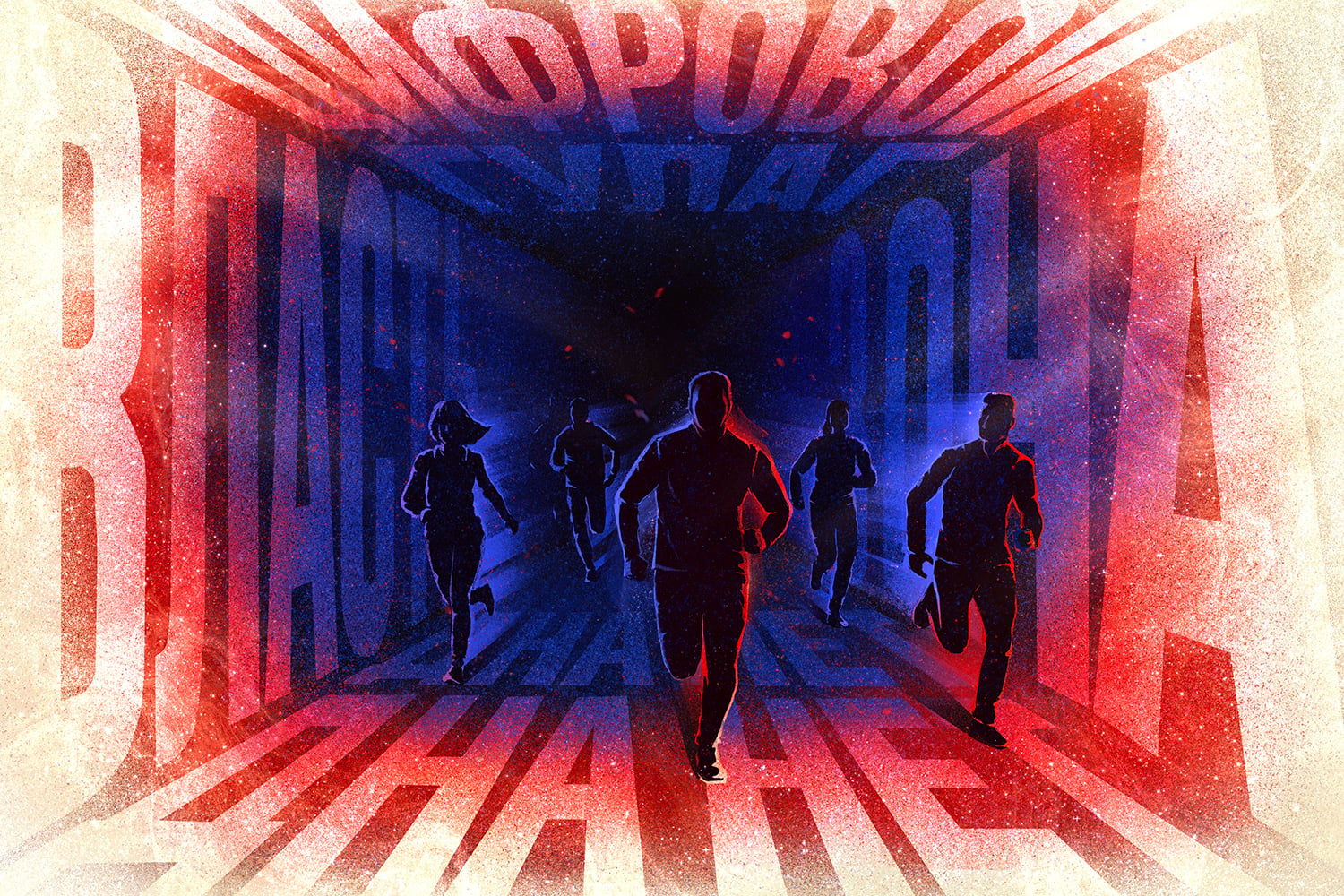
!An illustration in red and blue tones depicting five silhouetted figures running forward through a dark corridor flanked by large, textured Russian lettering on the walls and floor. Light radiates from the far end of the tunnel behind them
*An illustration in red and blue tones depicting five silhouetted figures running forward through a dark corridor flanked by large, textured Russian lettering on the walls and floor. Light radiates from the far end of the tunnel behind them*
Daria Lada illustration for Foreign Policy
1. Get audio access with any FP subscription.
Subscribe Now
ALREADY AN FP SUBSCRIBER? LOGIN
Decoder
Explaining a word and the culture that uses it.
Growing up in early 2000s Russia, when President Vladimir Putin was strengthening his grip on the country, we watched firsthand as a stillborn democracy was trampled—by riot police in faceless helmets, sleek media operatives, greasy oligarchs, and a cabal of supporting characters who helped Putin centralize power and smother civic life.
It can be difficult to recognize one’s home country drifting toward authoritarianism while living through it. Today’s dictators don’t necessarily wear military uniforms. In public speeches, they talk about freedom and democracy. Their subjects often have access to world class technology, visa free travel, and middle class comforts.
Growing up in early 2000s Russia, when President Vladimir Putin was strengthening his grip on the country, we watched firsthand as a stillborn democracy was trampled—by riot police in faceless helmets, sleek media operatives, greasy oligarchs, and a cabal of supporting characters who helped Putin centralize power and smother civic life.
This article is adapted from ***How to Survive Authoritarianism: A Russian’s Phrasebook for Everyday Life in America*** by Maria Kuznetsova and Dan Storyev (Liveright, 232 pp., $19.99, September 2026).
It can be difficult to recognize one’s home country drifting toward authoritarianism while living through it. Today’s dictators don’t necessarily wear military uniforms. In public speeches, they talk about freedom and democracy. Their subjects often have access to world class technology, visa free travel, and middle class comforts.
Russians, however, have generations of experience with the sense of unreality that characterizes life under an oppressive state. Russian literature, and the language itself, have often been at the forefront of resistance to the authorities—which has in turn shaped language and literature.
Under the Tsarist autocracy of the late 1800s, for instance, Russian satirist Mikhail Saltykov-Shchedrin developed Aesopian speech—an ironic, coded vocabulary that obscures meaning from the authorities while allowing people in the know to communicate freely. During Soviet times, Aesopian speech was fine-tuned by satirists such as Fazil Iskander, whose tongue-in-cheek fables jabbed at corruption and tyranny.
In Putin’s Russia, language remains a way of coping with, making sense of, and ultimately making peace with the horrors of daily life in a land where ordinary people are all too often devoured by the leviathan of the state.
The terms below offer a sense of what life is like for those living under authoritarianism in Russia today. Western readers often think of tyranny as something that happens elsewhere. But authoritarianism can spread—read closely, and you might find striking parallels to warning signs in the United Kingdom, Israel, the United States, and beyond.
---
!A group of officers wearing dark riot gear, helmets with face shields, and protective face masks move forward together outdoors on a city street lined with tall buildings.
*A group of officers wearing dark riot gear, helmets with face shields, and protective face masks move forward together outdoors on a city street lined with tall buildings.*
Riot police officers and supporters of jailed Russian opposition leader Alexei Navalny clash during a rally in Saint Petersburg, Russia, on Jan. 23, 2021. Anatolij Medved/NurPhoto via Getty Images
*Vlast’*: Power
The concept of vlast’ permeates Russian politics, as well as the conversations that Russians share about politics. Vlast’ literally translates to “power,” but it means so much more. Like *poder* in Spanish, it refers to state power and control, with the connotation of absolute or extreme power.
But sometimes, people use vlast’ to refer to the state or government itself, which is telling. For instance, Russians refer to policemen or soldiers as representatives of vlast’ (*predstaviteli vlasti*). Heads of state and government officials are called *vlast’ imooshchie*, literally “those who have vlast’.”
Language shapes politics and vice versa. Perhaps it is partly because of this association between the idea of power and the idea of a state—inherent in vlast’—that Russian politicians are so focused on capturing the state. In 1990, Putin’s former mentor Anatoly Sobchak, then a pro-democracy reformer, put it pithily: “We \[democrats] have the power. Therefore, this is a demo
!Foreign Policy
Foreign Policy Get analysis and alerts more quickly in the mobile app.
Install
Back to Foreign Policy Magazine home page
* Latest
* Regions
+ Asia & the Pacific
+ China
+ Middle East & Africa
+ Americas
+ Europe
* Newsletters
Editors’ Picks
Evening roundup with our editors’ favorite stories of the day
!World Brief Icon
World Brief
Your guide to the most important world stories of the day
!China Brief Icon
China Brief
The latest news, analysis, and data from the country each week
Situation Report
Weekly update on what’s driving U.S. national security policy
FP Weekend
A curation of our best book reviews, deep dives, and other reads
!Africa Brief Icon
Africa Brief
Essential analysis of the stories shaping geopolitics on the continent
!South Asia Brief Icon
South Asia Brief
Weekly update on developments in India and its neighbors
The Reading List
Curated guides on geopolitics and current affairs
FP Bookshelf
A monthly guide to FP’s book reviews, excerpts, and reading recommendations
!Latin America Brief Icon
Latin America Brief
One-stop digest of politics, economics, and culture
!Southeast Asia Brief Icon
Southeast Asia Brief
A weekly dispatch with news from the region’s 11 countries
The New Geopolitics
A five-part masterclass in IR theory with Harvard Professor Stephen M. Walt
View All Newsletters
* FP Live
* Latest
* Trending:
* Trump-Xi meeting
* United Nations General Assembly
Search this website
* Preferences
* My FP Feed
* Saved Articles
* Newsletters
* Magazine Archive
* Subscription Settings
* FAQs
* Log Out
Sign In
Sign In
Partner with FP at UNGA81 Partner with FP at UNGA81
Subscribe Subscribe Partner with FP at UNGA81 Partner with FP at UNGA81
Excerpt: 6 Russian Words for a Country Sliding Into Authoritarianism
*
*
* Bluesky
* X
Save
1. Create an FP account to save articles to read later.
Sign Up
ALREADY AN FP SUBSCRIBER? LOGIN
1. **Downloadable PDFs** are a benefit of an FP subscription.
Subscribe Now
ALREADY AN FP SUBSCRIBER? LOGIN
Gift
*
*
1. Gifting articles is a subscriber benefit.
Subscribe Now
ALREADY AN FP SUBSCRIBER? LOGIN
2. This article is an Insider exclusive.
Contact us at [email protected] to learn about upgrade options, unlocking the ability to gift this article.
Excerpt
6 Russian Words for a Country Sliding Into Authoritarianism
How ordinary people describe power, repression, absurdity, and life under Putin.
September 25, 2026, 3:05 PM
By **Maria Kuznetsova**, a Russian human rights defender and writer, and **Dan Storyev**, a writer and analyst.
!An illustration in red and blue tones depicting five silhouetted figures running forward through a dark corridor flanked by large, textured Russian lettering on the walls and floor. Light radiates from the far end of the tunnel behind them
*An illustration in red and blue tones depicting five silhouetted figures running forward through a dark corridor flanked by large, textured Russian lettering on the walls and floor. Light radiates from the far end of the tunnel behind them*
Daria Lada illustration for Foreign Policy
1. Get audio access with any FP subscription.
Subscribe Now
ALREADY AN FP SUBSCRIBER? LOGIN
Decoder
Explaining a word and the culture that uses it.
Growing up in early 2000s Russia, when President Vladimir Putin was strengthening his grip on the country, we watched firsthand as a stillborn democracy was trampled—by riot police in faceless helmets, sleek media operatives, greasy oligarchs, and a cabal of supporting characters who helped Putin centralize power and smother civic life.
It can be difficult to recognize one’s home country drifting toward authoritarianism while living through it. Today’s dictators don’t necessarily wear military uniforms. In public speeches, they talk about freedom and democracy. Their subjects often have access to world class technology, visa free travel, and middle class comforts.
Growing up in early 2000s Russia, when President Vladimir Putin was strengthening his grip on the country, we watched firsthand as a stillborn democracy was trampled—by riot police in faceless helmets, sleek media operatives, greasy oligarchs, and a cabal of supporting characters who helped Putin centralize power and smother civic life.
This article is adapted from ***How to Survive Authoritarianism: A Russian’s Phrasebook for Everyday Life in America*** by Maria Kuznetsova and Dan Storyev (Liveright, 232 pp., $19.99, September 2026).
It can be difficult to recognize one’s home country drifting toward authoritarianism while living through it. Today’s dictators don’t necessarily wear military uniforms. In public speeches, they talk about freedom and democracy. Their subjects often have access to world class technology, visa free travel, and middle class comforts.
Russians, however, have generations of experience with the sense of unreality that characterizes life under an oppressive state. Russian literature, and the language itself, have often been at the forefront of resistance to the authorities—which has in turn shaped language and literature.
Under the Tsarist autocracy of the late 1800s, for instance, Russian satirist Mikhail Saltykov-Shchedrin developed Aesopian speech—an ironic, coded vocabulary that obscures meaning from the authorities while allowing people in the know to communicate freely. During Soviet times, Aesopian speech was fine-tuned by satirists such as Fazil Iskander, whose tongue-in-cheek fables jabbed at corruption and tyranny.
In Putin’s Russia, language remains a way of coping with, making sense of, and ultimately making peace with the horrors of daily life in a land where ordinary people are all too often devoured by the leviathan of the state.
The terms below offer a sense of what life is like for those living under authoritarianism in Russia today. Western readers often think of tyranny as something that happens elsewhere. But authoritarianism can spread—read closely, and you might find striking parallels to warning signs in the United Kingdom, Israel, the United States, and beyond.
---
!A group of officers wearing dark riot gear, helmets with face shields, and protective face masks move forward together outdoors on a city street lined with tall buildings.
*A group of officers wearing dark riot gear, helmets with face shields, and protective face masks move forward together outdoors on a city street lined with tall buildings.*
Riot police officers and supporters of jailed Russian opposition leader Alexei Navalny clash during a rally in Saint Petersburg, Russia, on Jan. 23, 2021. Anatolij Medved/NurPhoto via Getty Images
*Vlast’*: Power
The concept of vlast’ permeates Russian politics, as well as the conversations that Russians share about politics. Vlast’ literally translates to “power,” but it means so much more. Like *poder* in Spanish, it refers to state power and control, with the connotation of absolute or extreme power.
But sometimes, people use vlast’ to refer to the state or government itself, which is telling. For instance, Russians refer to policemen or soldiers as representatives of vlast’ (*predstaviteli vlasti*). Heads of state and government officials are called *vlast’ imooshchie*, literally “those who have vlast’.”
Language shapes politics and vice versa. Perhaps it is partly because of this association between the idea of power and the idea of a state—inherent in vlast’—that Russian politicians are so focused on capturing the state. In 1990, Putin’s former mentor Anatoly Sobchak, then a pro-democracy reformer, put it pithily: “We \[democrats] have the power. Therefore, this is a demo
🔗 Share Article
Tags:#روسيا#الاستبداد#السلطة#اللغة السياسية#بوتين#المقاومة الثقافية
Source: Foreign Policy
For Context
Related reads from the same topic or latest developments