Top Signs You’re Heading for a Quagmire
Foreign Policy

Foreign Policy
Original Source
Harvard's Stephen M. Walt identifies predictable warning signs that lead great powers into costly quagmires, drawing lessons from U.S., Russian, and Chinese foreign policy over recent decades. He offers practical guidance on how nations can avoid strategic blunders through recognizing common pitfalls in decision-making.
Top Signs You’re Heading for a Quagmire
!Foreign Policy
Foreign Policy
Get analysis and alerts more quickly in the mobile app.
Install
Back to Foreign Policy Magazine home page
* Latest
* Regions
+ Asia & the Pacific
+ China
+ Middle East & Africa
+ Americas
+ Europe
* Newsletters
Editors’ Picks
Evening roundup with our editors’ favorite stories of the day
!World Brief Icon
World Brief
Your guide to the most important world stories of the day
!China Brief Icon
China Brief
The latest news, analysis, and data from the country each week
Situation Report
Weekly update on what’s driving U.S. national security policy
FP Weekend
A curation of our best book reviews, deep dives, and other reads
!Africa Brief Icon
Africa Brief
Essential analysis of the stories shaping geopolitics on the continent
!South Asia Brief Icon
South Asia Brief
Weekly update on developments in India and its neighbors
The Reading List
Curated guides on geopolitics and current affairs
FP Bookshelf
A monthly guide to FP’s book reviews, excerpts, and reading recommendations
!Latin America Brief Icon
Latin America Brief
One-stop digest of politics, economics, and culture
!Southeast Asia Brief Icon
Southeast Asia Brief
A weekly dispatch with news from the region’s 11 countries
The New Geopolitics
A five-part masterclass in IR theory with Harvard Professor Stephen M. Walt
View All Newsletters
* FP Live
* Latest
* Trending:
* Germany elections
* Venezuela oil deal
Search this website
* Preferences
* My FP Feed
* Saved Articles
* Newsletters
* Magazine Archive
* Subscription Settings
* FAQs
* Log Out
Sign In
Sign In
Partner with FP at UNGA81 Partner with FP at UNGA81
Subscribe SubscribePartner with FP at UNGA81 Partner with FP at UNGA81
Argument:
Top Signs You’re Heading for a Quagmire
*
*
* Facebook
* Bluesky
* X
* LinkedIn
* WhatsApp
* Reddit
Save
1. Create an FP account to save articles to read later.
Sign Up
ALREADY AN FP SUBSCRIBER? LOGIN
PDF
1. **Downloadable PDFs** are a benefit of an FP subscription.
Subscribe Now
ALREADY AN FP SUBSCRIBER? LOGIN
Gift
*
*
* WhatsApp
1. Gifting articles is a subscriber benefit.
Subscribe Now
ALREADY AN FP SUBSCRIBER? LOGIN
2. This article is an Insider exclusive.
Contact us at [email protected] to learn about upgrade options, unlocking the ability to gift this article.
Argument
An expert’s point of view on a current event.
Top Signs You’re Heading for a Quagmire
Failed wars are predictable, if you know what to look for.
!Walt-Steve-foreign-policy-columnist20
*Walt-Steve-foreign-policy-columnist20*
*Stephen M. Walt*
By **Stephen M. Walt**, a columnist at *Foreign Policy* and the Robert and Renée Belfer professor of international relations at Harvard University.
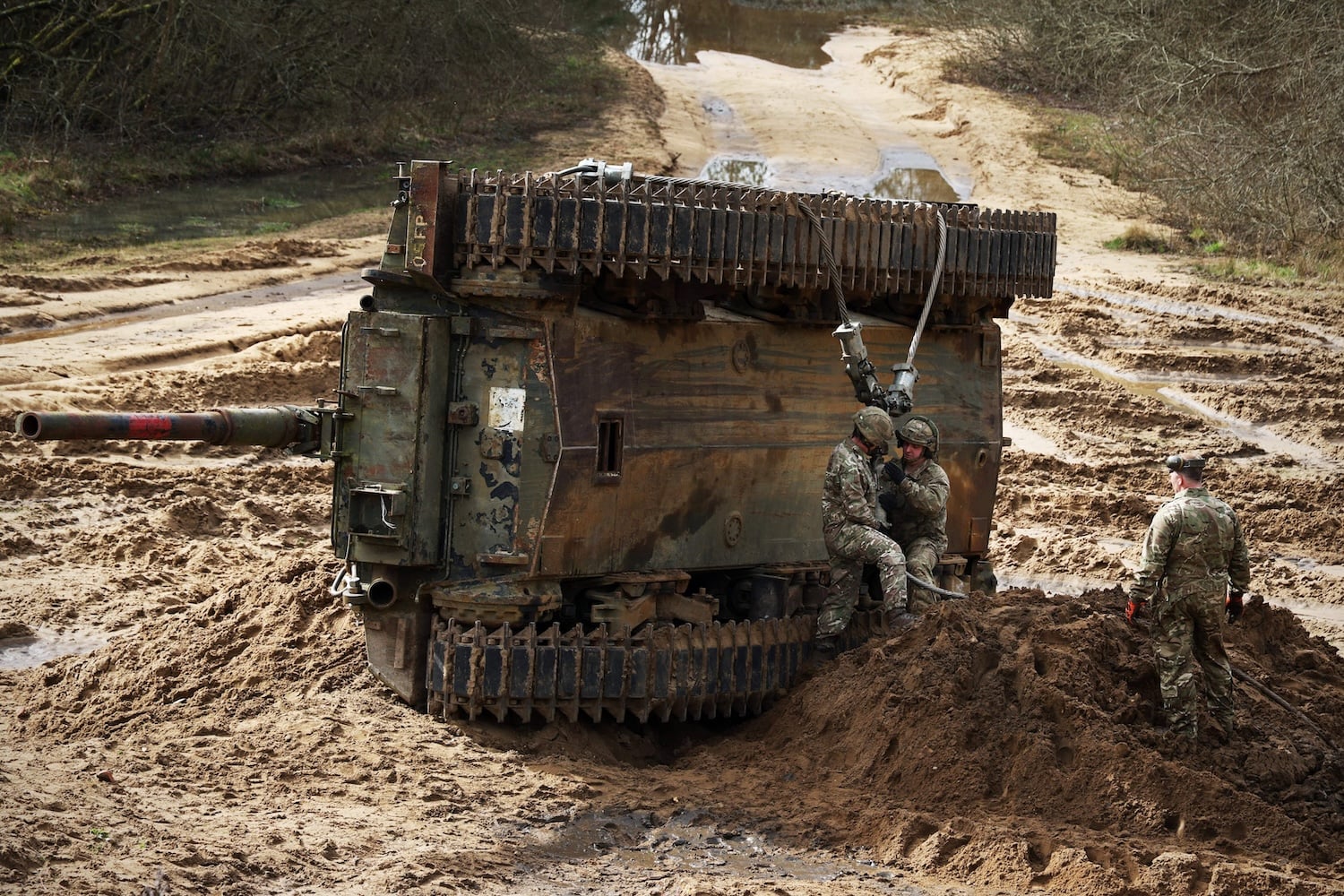
!Soldiers secure cables to recover an overturned battle tank at the Longmoor training area, near Bordon, United Kingdom on March 14, 2022.
*Soldiers secure cables to recover an overturned battle tank at the Longmoor training area, near Bordon, United Kingdom on March 14, 2022.*
Soldiers secure cables to recover an overturned battle tank at the Longmoor training area, near Bordon, United Kingdom on March 14, 2022. ADRIAN DENNIS/AFP via Getty Images
*
*
*
September 10, 2026, 2:57 AM
In a world where great-power competition is intensifying, a revealing test of foreign-policy acumen is a country’s ability to avoid costly conflicts or other endeavors that waste resources, divert attention, and ultimately leave them weaker rather than stronger. In other words: staying out of quagmires. Great powers are often happy to see their rivals stumble into strategic quicksand and may even try to encourage such developments, but wise leaders try to stay out of this kind of trouble.
In recent decades, China has done a far better job of avoiding quagmires than either the United States or Russia. Post-Cold War hubris led U.S. leaders to take on a vast array of global responsibilities, some that made sense but many that did not. The “forever wars” in Iraq and Afghanistan are the most obvious examples of the latter, of course, but the United States also gotten itself mired in lesser conflicts in Libya, Yemen, Syria, and various parts of Africa, largely as part of the “global war on terror.”
In a world where great-power competition is intensifying, a revealing test of foreign-policy acumen is a country’s ability to avoid costly conflicts or other endeavors that waste resources, divert attention, and ultimately leave them weaker rather than stronger. In other words: staying out of quagmires. Great powers are often happy to see their rivals stumble into strategic quicksand and may even try to encourage such developments, but wise leaders try to stay out of this kind of trouble.
In recent decades, China has done a far better job of avoiding quagmires than either the United States or Russia. Post-Cold War hubris led U.S. leaders to take on a vast array of global responsibilities, some that made sense but many that did not. The “forever wars” in Iraq and Afghanistan are the most obvious examples of the latter, of course, but the United States also gotten itself mired in lesser conflicts in Libya, Yemen, Syria, and various parts of Africa, largely as part of the “global war on terror.”
One might add the long, inept, and fruitless effort to broker an Israeli-Palestinian peace, which consumed vast amounts of presidential time and attention and ultimately failed, in good part because Washington acted not as a fair-minded mediator but as “Israel’s lawyer.” And now U.S. President Donald Trump has walked open-eyed into a quagmire of his own making with Iran, one with few if any benefits, increasingly obvious costs, and no obvious exit save a humiliating retreat.
Similarly, since 2000, Russia has engaged in a series of frozen conflicts with various neighbors, failed to prop up clients such as former Ukrainian President Viktor Yanukovych or former Syrian leader Bashar al-Assad, and is now mired the running sore of war in Ukraine. Not only have these actions cost the Russian economy and the Russian people a great deal, but they have also poisoned relations with most of Europe and made Russia increasingly dependent on China.
Both Washington and Moscow had reasons for acting as they did, but it is hard to argue that these various adventures left either country in a stronger global position.
By contrast, China has stayed out of costly quagmires and focused on building power at home, constructing islands in the South China Sea, expanding its diplomatic presence and influence abroad, insulating itself from foreign pressure by building up stockpiles and reserves, and gaining leverage through its control of raw earths and other parts of global supply chains. To be sure, its growing military power and increasingly assertive foreign policy have alarmed its neighbors and encouraged them to balance against Beijing, but its overall position vis-à-vis both Russia and the United States has improved considerably. China’s approach suggests that staying out of trouble abroad is a pretty smart strategy.
So why do states blunder into quagmires, and how might they avoid them in the future? Here are some of the warning signs.
**Ignorance.** Nobody starts a war that they think will be long, costly, and maybe end with being defeated. It follows that if they had known in advance what they were getting into, most leaders would have tried something else.
And that suggests that quagmires usually arise from ignorance about the country you’re taking on, the difficulties you will encounter against them, or the ways that other actors will respond. The lesson: If you’re about to intervene in a country that you know very little about, look out.
**Bad advice.** Decisions to intervene don’t arise from thin air; somebody has to come up with the idea and then convince the people in charge to embrace it. If you want to avoid a quagmire, therefore, you should be deeply skeptical of the
!Foreign Policy
Foreign Policy
Get analysis and alerts more quickly in the mobile app.
Install
Back to Foreign Policy Magazine home page
* Latest
* Regions
+ Asia & the Pacific
+ China
+ Middle East & Africa
+ Americas
+ Europe
* Newsletters
Editors’ Picks
Evening roundup with our editors’ favorite stories of the day
!World Brief Icon
World Brief
Your guide to the most important world stories of the day
!China Brief Icon
China Brief
The latest news, analysis, and data from the country each week
Situation Report
Weekly update on what’s driving U.S. national security policy
FP Weekend
A curation of our best book reviews, deep dives, and other reads
!Africa Brief Icon
Africa Brief
Essential analysis of the stories shaping geopolitics on the continent
!South Asia Brief Icon
South Asia Brief
Weekly update on developments in India and its neighbors
The Reading List
Curated guides on geopolitics and current affairs
FP Bookshelf
A monthly guide to FP’s book reviews, excerpts, and reading recommendations
!Latin America Brief Icon
Latin America Brief
One-stop digest of politics, economics, and culture
!Southeast Asia Brief Icon
Southeast Asia Brief
A weekly dispatch with news from the region’s 11 countries
The New Geopolitics
A five-part masterclass in IR theory with Harvard Professor Stephen M. Walt
View All Newsletters
* FP Live
* Latest
* Trending:
* Germany elections
* Venezuela oil deal
Search this website
* Preferences
* My FP Feed
* Saved Articles
* Newsletters
* Magazine Archive
* Subscription Settings
* FAQs
* Log Out
Sign In
Sign In
Partner with FP at UNGA81 Partner with FP at UNGA81
Subscribe SubscribePartner with FP at UNGA81 Partner with FP at UNGA81
Argument:
Top Signs You’re Heading for a Quagmire
*
*
* Bluesky
* X
Save
1. Create an FP account to save articles to read later.
Sign Up
ALREADY AN FP SUBSCRIBER? LOGIN
1. **Downloadable PDFs** are a benefit of an FP subscription.
Subscribe Now
ALREADY AN FP SUBSCRIBER? LOGIN
Gift
*
*
1. Gifting articles is a subscriber benefit.
Subscribe Now
ALREADY AN FP SUBSCRIBER? LOGIN
2. This article is an Insider exclusive.
Contact us at [email protected] to learn about upgrade options, unlocking the ability to gift this article.
Argument
An expert’s point of view on a current event.
Top Signs You’re Heading for a Quagmire
Failed wars are predictable, if you know what to look for.
!Walt-Steve-foreign-policy-columnist20
*Walt-Steve-foreign-policy-columnist20*
*Stephen M. Walt*
By **Stephen M. Walt**, a columnist at *Foreign Policy* and the Robert and Renée Belfer professor of international relations at Harvard University.
!Soldiers secure cables to recover an overturned battle tank at the Longmoor training area, near Bordon, United Kingdom on March 14, 2022.
*Soldiers secure cables to recover an overturned battle tank at the Longmoor training area, near Bordon, United Kingdom on March 14, 2022.*
Soldiers secure cables to recover an overturned battle tank at the Longmoor training area, near Bordon, United Kingdom on March 14, 2022. ADRIAN DENNIS/AFP via Getty Images
*
*
*
September 10, 2026, 2:57 AM
In a world where great-power competition is intensifying, a revealing test of foreign-policy acumen is a country’s ability to avoid costly conflicts or other endeavors that waste resources, divert attention, and ultimately leave them weaker rather than stronger. In other words: staying out of quagmires. Great powers are often happy to see their rivals stumble into strategic quicksand and may even try to encourage such developments, but wise leaders try to stay out of this kind of trouble.
In recent decades, China has done a far better job of avoiding quagmires than either the United States or Russia. Post-Cold War hubris led U.S. leaders to take on a vast array of global responsibilities, some that made sense but many that did not. The “forever wars” in Iraq and Afghanistan are the most obvious examples of the latter, of course, but the United States also gotten itself mired in lesser conflicts in Libya, Yemen, Syria, and various parts of Africa, largely as part of the “global war on terror.”
In a world where great-power competition is intensifying, a revealing test of foreign-policy acumen is a country’s ability to avoid costly conflicts or other endeavors that waste resources, divert attention, and ultimately leave them weaker rather than stronger. In other words: staying out of quagmires. Great powers are often happy to see their rivals stumble into strategic quicksand and may even try to encourage such developments, but wise leaders try to stay out of this kind of trouble.
In recent decades, China has done a far better job of avoiding quagmires than either the United States or Russia. Post-Cold War hubris led U.S. leaders to take on a vast array of global responsibilities, some that made sense but many that did not. The “forever wars” in Iraq and Afghanistan are the most obvious examples of the latter, of course, but the United States also gotten itself mired in lesser conflicts in Libya, Yemen, Syria, and various parts of Africa, largely as part of the “global war on terror.”
One might add the long, inept, and fruitless effort to broker an Israeli-Palestinian peace, which consumed vast amounts of presidential time and attention and ultimately failed, in good part because Washington acted not as a fair-minded mediator but as “Israel’s lawyer.” And now U.S. President Donald Trump has walked open-eyed into a quagmire of his own making with Iran, one with few if any benefits, increasingly obvious costs, and no obvious exit save a humiliating retreat.
Similarly, since 2000, Russia has engaged in a series of frozen conflicts with various neighbors, failed to prop up clients such as former Ukrainian President Viktor Yanukovych or former Syrian leader Bashar al-Assad, and is now mired the running sore of war in Ukraine. Not only have these actions cost the Russian economy and the Russian people a great deal, but they have also poisoned relations with most of Europe and made Russia increasingly dependent on China.
Both Washington and Moscow had reasons for acting as they did, but it is hard to argue that these various adventures left either country in a stronger global position.
By contrast, China has stayed out of costly quagmires and focused on building power at home, constructing islands in the South China Sea, expanding its diplomatic presence and influence abroad, insulating itself from foreign pressure by building up stockpiles and reserves, and gaining leverage through its control of raw earths and other parts of global supply chains. To be sure, its growing military power and increasingly assertive foreign policy have alarmed its neighbors and encouraged them to balance against Beijing, but its overall position vis-à-vis both Russia and the United States has improved considerably. China’s approach suggests that staying out of trouble abroad is a pretty smart strategy.
So why do states blunder into quagmires, and how might they avoid them in the future? Here are some of the warning signs.
**Ignorance.** Nobody starts a war that they think will be long, costly, and maybe end with being defeated. It follows that if they had known in advance what they were getting into, most leaders would have tried something else.
And that suggests that quagmires usually arise from ignorance about the country you’re taking on, the difficulties you will encounter against them, or the ways that other actors will respond. The lesson: If you’re about to intervene in a country that you know very little about, look out.
**Bad advice.** Decisions to intervene don’t arise from thin air; somebody has to come up with the idea and then convince the people in charge to embrace it. If you want to avoid a quagmire, therefore, you should be deeply skeptical of the
🔗 Share Article
Tags:#السياسة الخارجية#الحروب#القوى الكبرى#المنافسة الدولية#ستيفن والت#الاستراتيجية
Source: Foreign Policy
For Context
Related reads from the same topic or latest developments


