Is Europe Ready for a New Era of Russian Dirty Tricks?
Foreign Policy

Foreign Policy
Original Source
After Moscow's failure in Ukraine, Putin is escalating a campaign of strikes, sabotage, and assassinations against Europe. Experts warn that the Kremlin is betting on dismantling European support for Kyiv through violence, threats, and influence operations.
After Failing in Ukraine, Putin Is Now Targeting Europe
By using this website, you agree to our use of cookies. This use includes personalization of content and ads, and traffic analytics. Review our Privacy Policy for more information.
!Foreign Policy
Foreign Policy
Get analysis and alerts more quickly in the mobile app.
Install
Back to Foreign Policy Magazine home page
* Latest
* Regions
+ Asia & the Pacific
+ China
+ Middle East & Africa
+ Americas
+ Europe
* Newsletters
Editors’ Picks
Evening roundup with our editors’ favorite stories of the day
!World Brief Icon
World Brief
Your guide to the most important world stories of the day
!China Brief Icon
China Brief
The latest news, analysis, and data from the country each week
Situation Report
Weekly update on what’s driving U.S. national security policy
FP Weekend
A curation of our best book reviews, deep dives, and other reads
!Africa Brief Icon
Africa Brief
Essential analysis of the stories shaping geopolitics on the continent
!South Asia Brief Icon
South Asia Brief
Weekly update on developments in India and its neighbors
The Reading List
Curated guides on geopolitics and current affairs
FP Bookshelf
A monthly guide to FP’s book reviews, excerpts, and reading recommendations
!Latin America Brief Icon
Latin America Brief
One-stop digest of politics, economics, and culture
!Southeast Asia Brief Icon
Southeast Asia Brief
A weekly dispatch with news from the region’s 11 countries
The New Geopolitics
A five-part masterclass in IR theory with Harvard Professor Stephen M. Walt
View All Newsletters
* FP Live
* Latest
* Trending:
* Iran war
* Brazil's election kicks off
Search this website
* Preferences
* My FP Feed
* Saved Articles
* Newsletters
* Magazine Archive
* Subscription Settings
* FAQs
* Log Out
Sign In
Sign In
Campus and team access Campus and team access
Subscribe SubscribeCampus and team access Campus and team access
Analysis:
Is Europe Ready for a New Era of Russian Dirty Tricks?
*
*
* Facebook
* Bluesky
* X
* LinkedIn
* WhatsApp
* Reddit
Save
1. Create an FP account to save articles to read later.
Sign Up
ALREADY AN FP SUBSCRIBER? LOGIN
PDF
1. **Downloadable PDFs** are a benefit of an FP subscription.
Subscribe Now
ALREADY AN FP SUBSCRIBER? LOGIN
Gift
*
*
* WhatsApp
1. Gifting articles is a subscriber benefit.
Subscribe Now
ALREADY AN FP SUBSCRIBER? LOGIN
2. This article is an Insider exclusive.
Contact us at [email protected] to learn about upgrade options, unlocking the ability to gift this article.
Analysis
Is Europe Ready for a New Era of Russian Dirty Tricks?
After the Kremlin’s failure in Ukraine, Putin’s new plan aims westward.
!A pencil drawn headshot of Christian Caryl wearing glasses a jacket and button-up shirt.
*A pencil drawn headshot of Christian Caryl wearing glasses a jacket and button-up shirt.*
*Christian Caryl*
By **Christian Caryl**, a columnist at *Foreign Policy* and a former Moscow bureau chief for *Newsweek* and *U.S. News & World Report*.
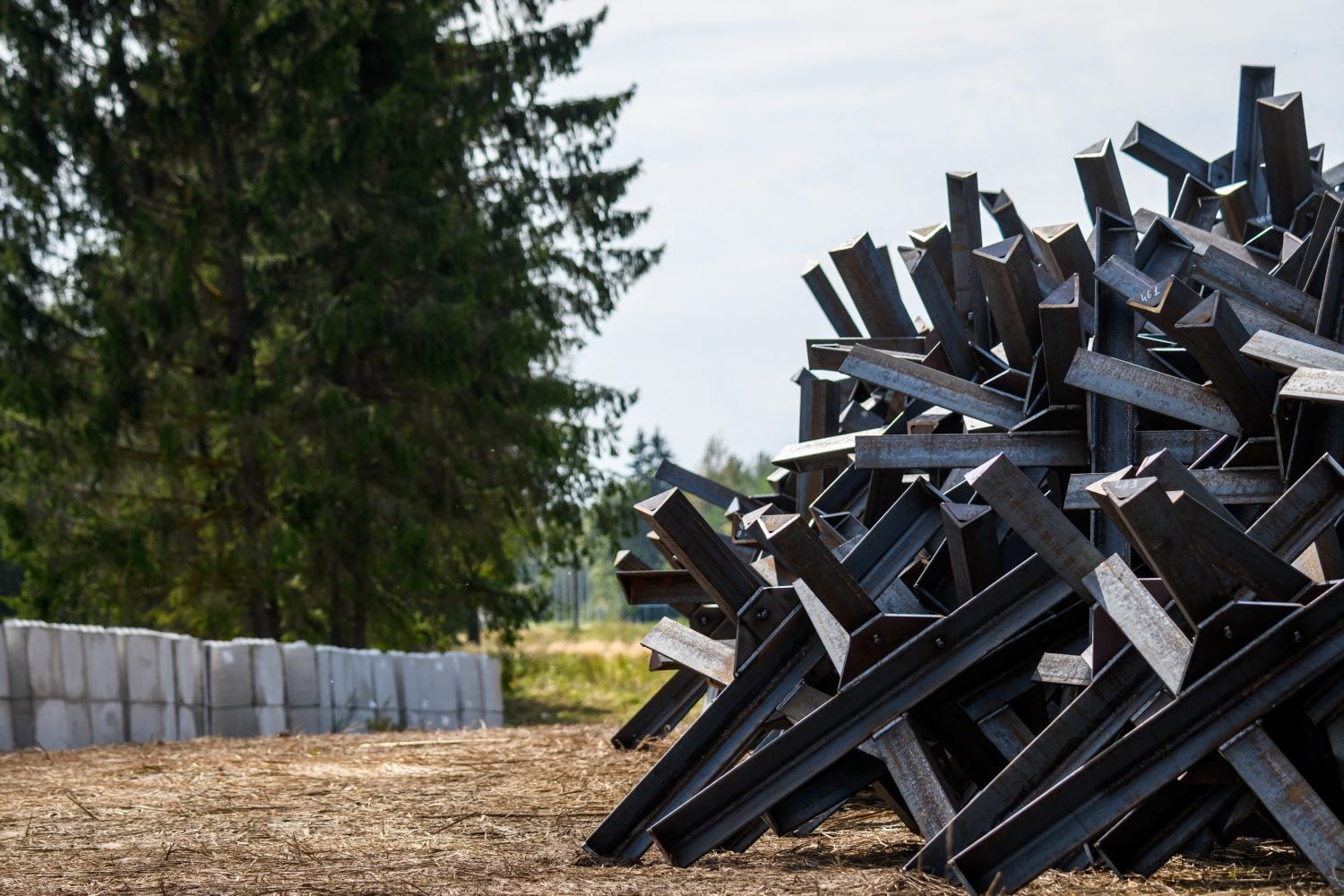
!Anti-tank hedgehogs are stacked near the border with Russia in Karsava, Latvia, on Aug. 16, 2024.
*Anti-tank hedgehogs are stacked near the border with Russia in Karsava, Latvia, on Aug. 16, 2024.*
Anti-tank hedgehogs are stacked near the border with Russia in Karsava, Latvia, on Aug. 16, 2024. GINTS IVUSKANS/AFP via Getty Images
*
*
*
*
August 26, 2026, 5:49 AM
Russia’s War in Ukraine
Understanding the conflict four years on.
More on this topic
Europeans are rattled. A bomb-laden drone attacked a Ukrainian cargo plane in the eastern German city of Leipzig, but it failed to go off. In another incident, German authorities revealed that they had thwarted an assassination plot targeting the CEO of one of the country’s leading drone-manufacturing companies. Outside Rome, a titanic blast destroyed an ammunition factory whose products are used by Ukrainian forces—just a few days after another explosion hit a plant in Bulgaria whose owner was previously reported to have been targeted by Russian security services. And a Spanish fighter jet on a NATO air-policing mission shot down a drone that crossed into Romanian airspace. A NATO spokesperson said that the drone was probably of Russian origin.
And that was just the first half of August.
Europeans are rattled. A bomb-laden drone attacked a Ukrainian cargo plane in the eastern German city of Leipzig, but it failed to go off. In another incident, German authorities revealed that they had thwarted an assassination plot targeting the CEO of one of the country’s leading drone-manufacturing companies. Outside Rome, a titanic blast destroyed an ammunition factory whose products are used by Ukrainian forces—just a few days after another explosion hit a plant in Bulgaria whose owner was previously reported to have been targeted by Russian security services. And a Spanish fighter jet on a NATO air-policing mission shot down a drone that crossed into Romanian airspace. A NATO spokesperson said that the drone was probably of Russian origin.
And that was just the first half of August.
None of this is completely unprecedented. For many months now, Europeans have been assailed by a series of hostile actions, some clearly traced back to Russia, that have aimed to undermine Europe’s efforts to support Ukraine. Russia has cut undersea cables, jammed GPS signals, and staged sabotage using disaffected locals recruited through the internet. Some observers have taken to describing this campaign as gray-zone warfare, referring to aggressive measures that fall below the threshold of outright war.
Right now, though, the “gray-zone” modifier looks increasingly obsolete—especially given the growing brazenness of Russian threats accompanying its actions. On Aug. 12, Russian President Vladimir Putin pledged unspecified retaliation against any countries daring to interfere with Russia’s so-called shadow fleet of oil tankers—a clear reference to a recent decision by the European Union that would allow the confiscation of Russian oil from sanctioned vessels. In an interview two days later, Russian Foreign Minister Sergey Lavrov extended the threat to include any countries that dare to support Ukraine in its fight against the Russian invaders. “We will adopt much harsher methods to destroy everything that enables the West to fuel Kyiv’s war machine,” he declared. “We are already doing this, and \[the Europeans] are already moaning.”
Yet Europe continues to dither. German officials seem to be awaiting proof that Russia was behind the Leipzig attack before responding—a good example of why Moscow always goes to great lengths to make its involvement deniable. But if Europeans think that observing the diplomatic niceties will save them, then they have another thing coming.
Putin and his minions have every reason to up the ante. For well over four years now, the men in the Kremlin have tried to defeat the Ukrainians through direct combat. Far from succeeding, they’ve now had to look on as Kyiv’s drones and missiles pound oil refineries and military targets deep inside Russia. Putin’s next-best option—getting his friend U.S. President Donald Trump to strong-arm Ukraine into accepting Russian peace terms through U.S.-led negotiations—has also petered out. That leaves plan C: an intensified effort to undercut European support for Ukraine, whether through subversion, intimidation, or influence operations that are aimed at elevating pro-Moscow parties and politicians. Putin’s most effective minion, former Hungarian Prime Minister Viktor Orban, fulfilled this function for years. Now, the Russian president is betting that his allies in Germany or France may soon be able to do even more.
For Putin, targeting Europe is the most obvious choice on a limited escalation menu. There’s little reason to believe that Russia isn’t already throwing everything it has at Ukraine short of nuclear weapons—and there is ample reason to conclude that the Kremlin w
By using this website, you agree to our use of cookies. This use includes personalization of content and ads, and traffic analytics. Review our Privacy Policy for more information.
!Foreign Policy
Foreign Policy
Get analysis and alerts more quickly in the mobile app.
Install
Back to Foreign Policy Magazine home page
* Latest
* Regions
+ Asia & the Pacific
+ China
+ Middle East & Africa
+ Americas
+ Europe
* Newsletters
Editors’ Picks
Evening roundup with our editors’ favorite stories of the day
!World Brief Icon
World Brief
Your guide to the most important world stories of the day
!China Brief Icon
China Brief
The latest news, analysis, and data from the country each week
Situation Report
Weekly update on what’s driving U.S. national security policy
FP Weekend
A curation of our best book reviews, deep dives, and other reads
!Africa Brief Icon
Africa Brief
Essential analysis of the stories shaping geopolitics on the continent
!South Asia Brief Icon
South Asia Brief
Weekly update on developments in India and its neighbors
The Reading List
Curated guides on geopolitics and current affairs
FP Bookshelf
A monthly guide to FP’s book reviews, excerpts, and reading recommendations
!Latin America Brief Icon
Latin America Brief
One-stop digest of politics, economics, and culture
!Southeast Asia Brief Icon
Southeast Asia Brief
A weekly dispatch with news from the region’s 11 countries
The New Geopolitics
A five-part masterclass in IR theory with Harvard Professor Stephen M. Walt
View All Newsletters
* FP Live
* Latest
* Trending:
* Iran war
* Brazil's election kicks off
Search this website
* Preferences
* My FP Feed
* Saved Articles
* Newsletters
* Magazine Archive
* Subscription Settings
* FAQs
* Log Out
Sign In
Sign In
Campus and team access Campus and team access
Subscribe SubscribeCampus and team access Campus and team access
Analysis:
Is Europe Ready for a New Era of Russian Dirty Tricks?
*
*
* Bluesky
* X
Save
1. Create an FP account to save articles to read later.
Sign Up
ALREADY AN FP SUBSCRIBER? LOGIN
1. **Downloadable PDFs** are a benefit of an FP subscription.
Subscribe Now
ALREADY AN FP SUBSCRIBER? LOGIN
Gift
*
*
1. Gifting articles is a subscriber benefit.
Subscribe Now
ALREADY AN FP SUBSCRIBER? LOGIN
2. This article is an Insider exclusive.
Contact us at [email protected] to learn about upgrade options, unlocking the ability to gift this article.
Analysis
Is Europe Ready for a New Era of Russian Dirty Tricks?
After the Kremlin’s failure in Ukraine, Putin’s new plan aims westward.
!A pencil drawn headshot of Christian Caryl wearing glasses a jacket and button-up shirt.
*A pencil drawn headshot of Christian Caryl wearing glasses a jacket and button-up shirt.*
*Christian Caryl*
By **Christian Caryl**, a columnist at *Foreign Policy* and a former Moscow bureau chief for *Newsweek* and *U.S. News & World Report*.
!Anti-tank hedgehogs are stacked near the border with Russia in Karsava, Latvia, on Aug. 16, 2024.
*Anti-tank hedgehogs are stacked near the border with Russia in Karsava, Latvia, on Aug. 16, 2024.*
Anti-tank hedgehogs are stacked near the border with Russia in Karsava, Latvia, on Aug. 16, 2024. GINTS IVUSKANS/AFP via Getty Images
*
*
*
*
August 26, 2026, 5:49 AM
Russia’s War in Ukraine
Understanding the conflict four years on.
Europeans are rattled. A bomb-laden drone attacked a Ukrainian cargo plane in the eastern German city of Leipzig, but it failed to go off. In another incident, German authorities revealed that they had thwarted an assassination plot targeting the CEO of one of the country’s leading drone-manufacturing companies. Outside Rome, a titanic blast destroyed an ammunition factory whose products are used by Ukrainian forces—just a few days after another explosion hit a plant in Bulgaria whose owner was previously reported to have been targeted by Russian security services. And a Spanish fighter jet on a NATO air-policing mission shot down a drone that crossed into Romanian airspace. A NATO spokesperson said that the drone was probably of Russian origin.
And that was just the first half of August.
Europeans are rattled. A bomb-laden drone attacked a Ukrainian cargo plane in the eastern German city of Leipzig, but it failed to go off. In another incident, German authorities revealed that they had thwarted an assassination plot targeting the CEO of one of the country’s leading drone-manufacturing companies. Outside Rome, a titanic blast destroyed an ammunition factory whose products are used by Ukrainian forces—just a few days after another explosion hit a plant in Bulgaria whose owner was previously reported to have been targeted by Russian security services. And a Spanish fighter jet on a NATO air-policing mission shot down a drone that crossed into Romanian airspace. A NATO spokesperson said that the drone was probably of Russian origin.
And that was just the first half of August.
None of this is completely unprecedented. For many months now, Europeans have been assailed by a series of hostile actions, some clearly traced back to Russia, that have aimed to undermine Europe’s efforts to support Ukraine. Russia has cut undersea cables, jammed GPS signals, and staged sabotage using disaffected locals recruited through the internet. Some observers have taken to describing this campaign as gray-zone warfare, referring to aggressive measures that fall below the threshold of outright war.
Right now, though, the “gray-zone” modifier looks increasingly obsolete—especially given the growing brazenness of Russian threats accompanying its actions. On Aug. 12, Russian President Vladimir Putin pledged unspecified retaliation against any countries daring to interfere with Russia’s so-called shadow fleet of oil tankers—a clear reference to a recent decision by the European Union that would allow the confiscation of Russian oil from sanctioned vessels. In an interview two days later, Russian Foreign Minister Sergey Lavrov extended the threat to include any countries that dare to support Ukraine in its fight against the Russian invaders. “We will adopt much harsher methods to destroy everything that enables the West to fuel Kyiv’s war machine,” he declared. “We are already doing this, and \[the Europeans] are already moaning.”
Yet Europe continues to dither. German officials seem to be awaiting proof that Russia was behind the Leipzig attack before responding—a good example of why Moscow always goes to great lengths to make its involvement deniable. But if Europeans think that observing the diplomatic niceties will save them, then they have another thing coming.
Putin and his minions have every reason to up the ante. For well over four years now, the men in the Kremlin have tried to defeat the Ukrainians through direct combat. Far from succeeding, they’ve now had to look on as Kyiv’s drones and missiles pound oil refineries and military targets deep inside Russia. Putin’s next-best option—getting his friend U.S. President Donald Trump to strong-arm Ukraine into accepting Russian peace terms through U.S.-led negotiations—has also petered out. That leaves plan C: an intensified effort to undercut European support for Ukraine, whether through subversion, intimidation, or influence operations that are aimed at elevating pro-Moscow parties and politicians. Putin’s most effective minion, former Hungarian Prime Minister Viktor Orban, fulfilled this function for years. Now, the Russian president is betting that his allies in Germany or France may soon be able to do even more.
For Putin, targeting Europe is the most obvious choice on a limited escalation menu. There’s little reason to believe that Russia isn’t already throwing everything it has at Ukraine short of nuclear weapons—and there is ample reason to conclude that the Kremlin w
🔗 Share Article
Tags:#روسيا#أوروبا#أوكرانيا#بوتين#العمليات السرية#الأمن القومي
Source: Foreign Policy
For Context
Related reads from the same topic or latest developments


