El Niño Comes For Global Economy, Agriculture
By using this website, you agree to our use of cookies. This use includes personalization of content and ads, and traffic analytics. Review our Privacy Policy for more information.
Foreign Policy Get analysis and alerts more quickly in the mobile app.
Install
**An error has occurred**
Sale ends in: 10h 14m 5s
Midterm Flash Sale! Join FP for only $14.99. CLAIM OFFER
Back to Foreign Policy Magazine home page
Evening roundup with our editors’ favorite stories of the day
World Brief
Your guide to the most important world stories of the day
China Brief
The latest news, analysis, and data from the country each week
Situation Report
Weekly update on what’s driving U.S. national security policy
FP Weekend
A curation of our best book reviews, deep dives, and other reads
Africa Brief
Essential analysis of the stories shaping geopolitics on the continent
South Asia Brief
Weekly update on developments in India and its neighbors
The Reading List
Curated guides on geopolitics and current affairs
FP Bookshelf
A monthly guide to FP’s book reviews, excerpts, and reading recommendations
Latin America Brief
One-stop digest of politics, economics, and culture
Southeast Asia Brief
A weekly dispatch with news from the region’s 11 countries
The New Geopolitics
A five-part masterclass in IR theory with Harvard Professor Stephen M. Walt
View All Newsletters
Subscribe Subscribe Team access Team access
Analysis: The Global Economy Braces for Yet Another Blow
1. Create an FP account to save articles to read later.
Sign Up
ALREADY AN FP SUBSCRIBER? LOGIN
PDF
1. **Downloadable PDFs** are a benefit of an FP subscription.
ALREADY AN FP SUBSCRIBER? LOGIN
Gift
1. Gifting articles is a subscriber benefit.
ALREADY AN FP SUBSCRIBER? LOGIN
2. This article is an Insider exclusive.
Contact us at [email protected] to learn about upgrade options, unlocking the ability to gift this article.
Analysis
The Global Economy Braces for Yet Another Blow
El Niño is already unleashing economic and agricultural pain worldwide. It may get even worse.
By **Christina Lu**, a staff writer at *Foreign Policy*.
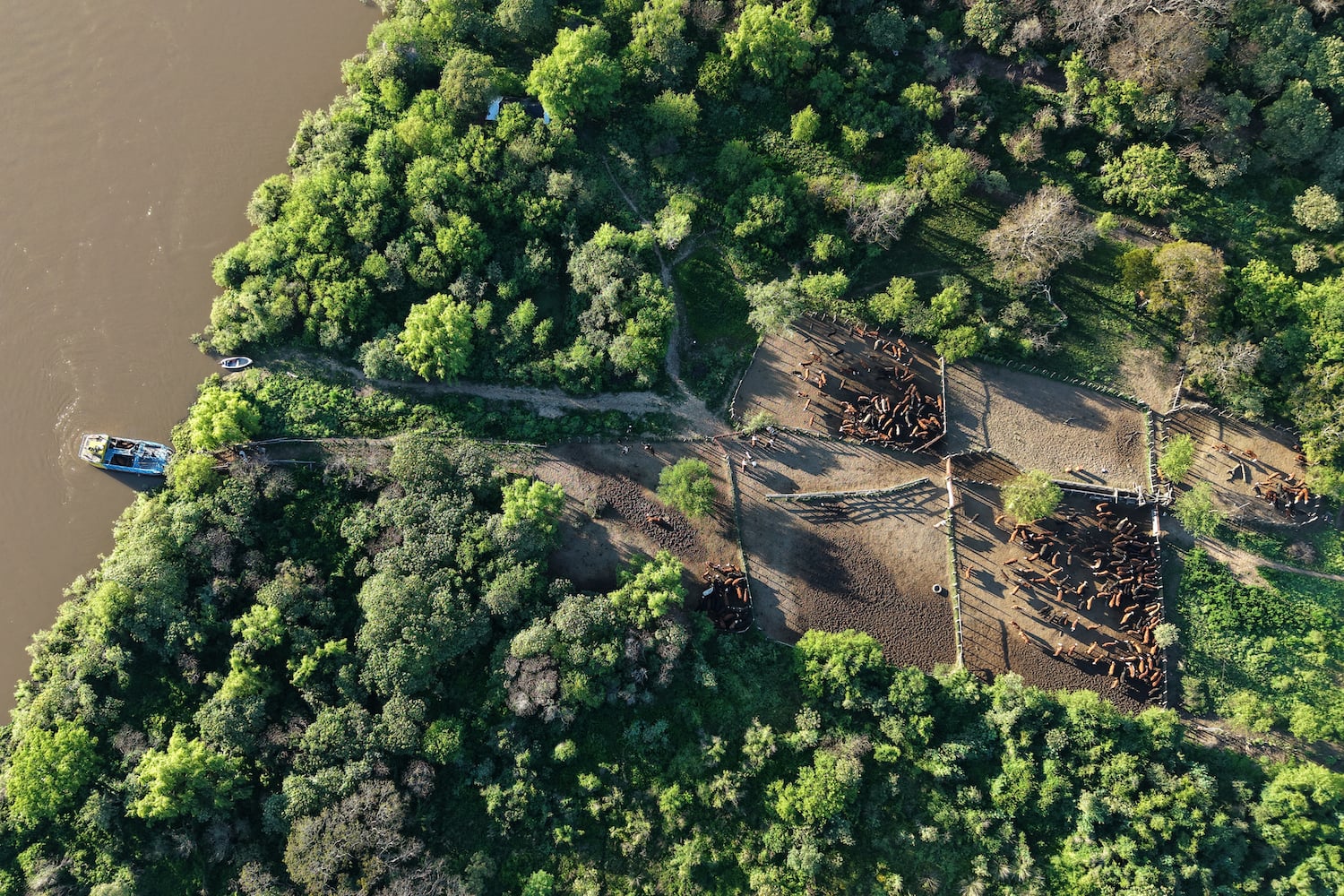
*An aerial view of livestock waiting to be loaded into a vessel.*
An aerial view of livestock waiting to be loaded into a vessel to be relocated amid heavy rains caused by El Niño on El Peluquero Island, Argentina, on Oct. 28. Mauricio Garin/AFP via Getty Images
My FP: Follow topics and authors to get straight to what you like. Exclusively for FP subscribers. Subscribe Now | Log In
Deadly flooding sweeping the American Southwest. Unrelenting downpours clobbering South America. A punishing drought gripping Southeast Asia.
The world is still seeing the evolution of El Niño, the naturally occurring phenomenon that scrambles weather patterns worldwide and can wreak havoc on agricultural production. But these snapshots offer a window—and warning—for what could come as the full force of this powerful event crashes into a global economy that is already battered by the Iran war and months of trade turmoil.
“The effects of these El Niños are not benign,” said Cullen Hendrix, a senior fellow at the Peterson Institute for International Economics who has estimated that this event could cost the global economy more than $7 trillion over the next five years. “We’re talking about a phenomenon that has systemic impacts that can adversely affect populations all across the globe.”
The world is no stranger to this phenomenon, which occurs about every two to seven years and can last for up to 18 months. But no two El Niños are identical.
“Each one has its own little fingerprint,” said Brian Barker, a principal faculty specialist at the University of Maryland who works for NASA Harvest, the agency’s food security and agriculture program. “Until we actually see it develop and come to fruition, we won’t know exactly what it’s going to be.”
And this year’s event is shaping into what could be the strongest El Niño ever recorded. The U.S. National Oceanic and Atmospheric Administration has forecast an 83 percent likelihood that the world sees a strong-to-very strong El Niño in early 2027, and the World Meteorological Organization (WMO) has projected that the strength of this event could exceed the scale of its global monitoring charts.
Governments, banks, and humanitarian agencies are bracing for substantial disruptions to critical infrastructure, food production, and global inflation.
Impacts on agricultural yields are highly uneven: Southern Africa, Central America, India, and Australia are set to feel the sharpest pain, while the United States and Central Asia could see benefits. At the global level, crop production impacts typically offset each other, and ample inventories are expected to help cushion the shock.
Past El Niños have taken a profound toll. For example, the El Niño of 2015-16 throttled some 60 million people, triggering $5 billion in humanitarian appeals across nearly two dozen countries, according to the U.N. Food and Agriculture Organization. While estimates range, studies suggest that prior events cost at least tens of billions, or even trillions, of dollars in economic damage globally.
This El Niño is expected to reach its full might in December, but it is already leaving a trail of damage around the world. Peru and Bolivia recently declared states of emergency, with drought parching nearly 80,000 families in the latter, according to Bolivian officials. Indian farmers are grappling with the country’s weakest rainfall in a decade, while sweeping wildfires have smothered Indonesia.
The big problem is that many of these countries are still reeling from the economic and energy shock waves of the Iran war and have little cushion to absorb new pressures. Hendrix, the Peterson economist who estimated that the economic losses of this El Niño could balloon to more than $7 trillion, said that the costs will deal a particularly painful blow to lower- and middle-income countries.
*A local farmer tills their rice fields, which are affected by a suspended irrigation supply due to looming El Niño effects, in Bulacan province, Philippines, on July 18.*
El Niño Bakes Southeast Asia
The world’s rice bowl takes a hit.
Southeast Asia Brief
|
Joseph Rachman
*A man crosses a reservoir on his way home in Las Canoas, Nicaragua.*
Farmers Worldwide Brace for El Niño
An intense El Niño thre
The Global Economy Braces for Yet Another Blow
El Niño, which may prove the strongest on record, is delivering fresh shocks to a global economy already battered by the Iran war and months of trade turmoil, with deadly floods, torrential rains and severe drought already under way. One estimate puts the cost at more than $7 trillion over five years, with lower- and middle-income countries set to suffer most.
Cross Lines newsroom
Share this article
#إل نينيو#الاقتصاد العالمي#الأمن الغذائي#المناخ#الزراعة#حرب إيران
Original source: Foreign Policy