Spanish PM Sánchez calls early election after housing protests
BBC World

BBC World
Original Source
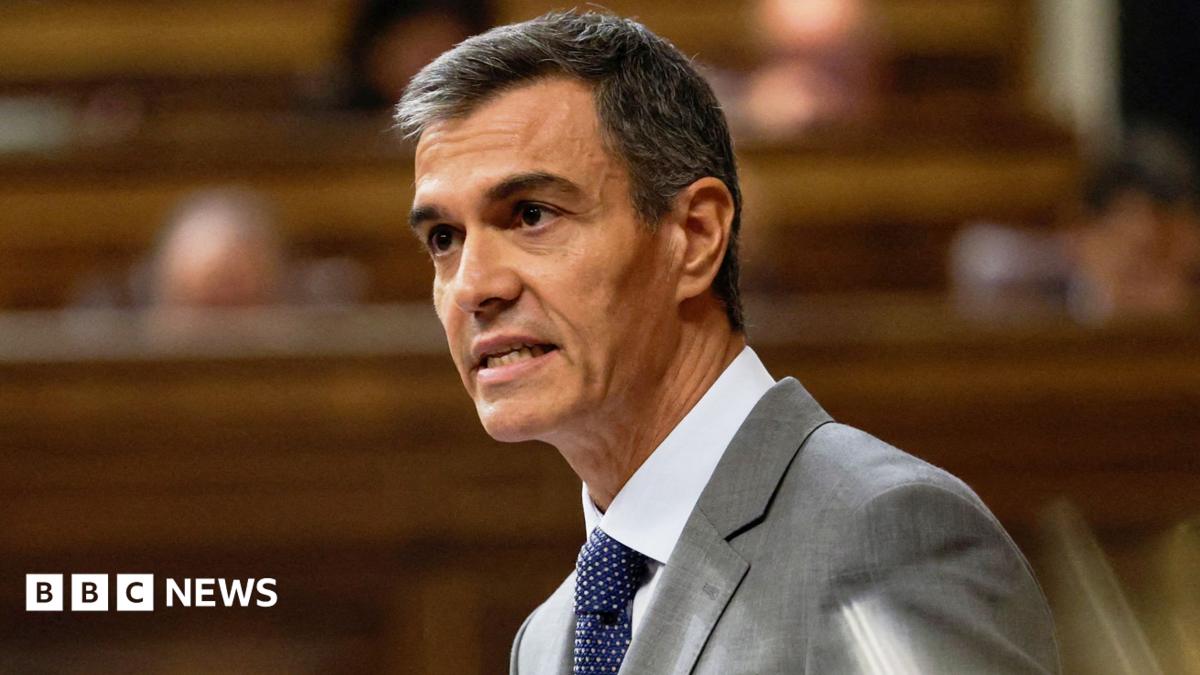
Spanish Prime Minister Pedro Sánchez has called an early election for 29 November after parliament rejected two government decrees aimed at protecting tenants and addressing the country's acute housing crisis. The announcement follows nationwide protests sparked by the eviction of an elderly woman unable to afford rising rents, and comes amid mounting pressure over corruption scandals and cost-of-living challenges.
Spanish Prime Minister Pedro Sánchez has called an early election for 29 November after recent defeats on legislation aimed at addressing the country's housing crisis.
Speculation about a snap election had been building over the weekend after parliament rejected two decree laws put forward by the minority government to protect tenants in the rental market.
The eviction of an 87-year-old woman from her home after she was unable to afford a sharp rent rise has sparked nationwide protests and increased pressure for housing reform.
In a televised address on Monday, Sánchez said that to push reforms through he needed "a broader progressive majority" that can "overcome the resistance of the elites".
Housing has not been the only issue causing problems for Sánchez's leadership in recent months, with his party having been caught up in numerous corruption scandals and facing pressure on other cost-of-living issues and immigration.
"We have made mistakes and have not achieved everything we had set out to do," Sánchez said, acknowledging there were still "a lot of problems to solve, particularly in the areas of inequality, of public services and access to housing".
Sánchez's left-wing coalition government is made up of his ruling Socialist party and junior partner the Sumar alliance, and does not have a majority in parliament.
Spain was not due to hold a general election until the summer of 2027 at the latest.
Sánchez has been prime minister since June 2018. His Socialist party finished second in the last election, in 2023.
Although the conservative People's Party won the most seats, it fell short of a majority.
Sánchez remained in power after striking agreements with left-wing parties and securing support from Catalan and Basque nationalist and pro-independence groups.
Most opinion polls suggest the conservatives are likely to emerge as the largest party in the next election. However, they would be expected to need the support of the hard-right Vox party to form a government.
Speaking after Monday's announcement, the leader of the People's Party, Alberto Núñez Feijóo, said: "At last, Spaniards will be able to decide".
The opposition leader said it would not be "just another election", but a chance for voters to choose between "decline or change, lies or change, incompetence or change, division or change, corruption or change".
Sánchez's leadership has been marred by numerous corruption scandals in recent months.
In April, his wife Begoña Gómez was charged with corruption after a two-year criminal investigation.
She is accused of using her relationship to advance her private career - allegations she denies, and which have been dismissed by Sánchez as a right-wing attempt to undermine his coalition.
In May, police raided the Socialist party's headquarters in Madrid as part of an investigation into allegations an operative was paid to carry out a misinformation campaign. The party has denied the allegations.
And in June, Sánchez's former transport minister, José Luis Ábalos, was jailed for 24 years after he was found guilty of being involved in a network that received kickbacks from the sale of face masks during the Covid-19 pandemic.
The Spanish prime minister also came under scrutiny for his handling of the Ceuta migration crisis over the summer, when tens of thousands of people entered the territory from Morocco without authorisation.
Speculation about a snap election had been building over the weekend after parliament rejected two decree laws put forward by the minority government to protect tenants in the rental market.
The eviction of an 87-year-old woman from her home after she was unable to afford a sharp rent rise has sparked nationwide protests and increased pressure for housing reform.
In a televised address on Monday, Sánchez said that to push reforms through he needed "a broader progressive majority" that can "overcome the resistance of the elites".
Housing has not been the only issue causing problems for Sánchez's leadership in recent months, with his party having been caught up in numerous corruption scandals and facing pressure on other cost-of-living issues and immigration.
"We have made mistakes and have not achieved everything we had set out to do," Sánchez said, acknowledging there were still "a lot of problems to solve, particularly in the areas of inequality, of public services and access to housing".
Sánchez's left-wing coalition government is made up of his ruling Socialist party and junior partner the Sumar alliance, and does not have a majority in parliament.
Spain was not due to hold a general election until the summer of 2027 at the latest.
Sánchez has been prime minister since June 2018. His Socialist party finished second in the last election, in 2023.
Although the conservative People's Party won the most seats, it fell short of a majority.
Sánchez remained in power after striking agreements with left-wing parties and securing support from Catalan and Basque nationalist and pro-independence groups.
Most opinion polls suggest the conservatives are likely to emerge as the largest party in the next election. However, they would be expected to need the support of the hard-right Vox party to form a government.
Speaking after Monday's announcement, the leader of the People's Party, Alberto Núñez Feijóo, said: "At last, Spaniards will be able to decide".
The opposition leader said it would not be "just another election", but a chance for voters to choose between "decline or change, lies or change, incompetence or change, division or change, corruption or change".
Sánchez's leadership has been marred by numerous corruption scandals in recent months.
In April, his wife Begoña Gómez was charged with corruption after a two-year criminal investigation.
She is accused of using her relationship to advance her private career - allegations she denies, and which have been dismissed by Sánchez as a right-wing attempt to undermine his coalition.
In May, police raided the Socialist party's headquarters in Madrid as part of an investigation into allegations an operative was paid to carry out a misinformation campaign. The party has denied the allegations.
And in June, Sánchez's former transport minister, José Luis Ábalos, was jailed for 24 years after he was found guilty of being involved in a network that received kickbacks from the sale of face masks during the Covid-19 pandemic.
The Spanish prime minister also came under scrutiny for his handling of the Ceuta migration crisis over the summer, when tens of thousands of people entered the territory from Morocco without authorisation.
🔗 Share Article
Tags:#إسبانيا#الانتخابات#الإسكان#بيدرو سانشيز#السياسة الأوروبية#الأزمات السياسية
Source: BBC World
For Context
Related reads from the same topic or latest developments