Iran Is Talking Peace but Preparing for War After the U.S. Midterms
By using this website, you agree to our use of cookies. This use includes personalization of content and ads, and traffic analytics. Review our Privacy Policy for more information.
Foreign Policy Get analysis and alerts more quickly in the mobile app.
Install
**An error has occurred**
Midterm Flash Sale! Join FP for only $14.99.
CLAIM OFFER
Back to Foreign Policy Magazine home page
Evening roundup with our editors’ favorite stories of the day
World Brief
Your guide to the most important world stories of the day
China Brief
The latest news, analysis, and data from the country each week
Situation Report
Weekly update on what’s driving U.S. national security policy
FP Weekend
A curation of our best book reviews, deep dives, and other reads
Africa Brief
Essential analysis of the stories shaping geopolitics on the continent
South Asia Brief
Weekly update on developments in India and its neighbors
The Reading List
Curated guides on geopolitics and current affairs
FP Bookshelf
A monthly guide to FP’s book reviews, excerpts, and reading recommendations
Latin America Brief
One-stop digest of politics, economics, and culture
Southeast Asia Brief
A weekly dispatch with news from the region’s 11 countries
The New Geopolitics
A five-part masterclass in IR theory with Harvard Professor Stephen M. Walt
View All Newsletters
Subscribe Subscribe Team access Team access
Analysis: Iran Is Talking Peace but Preparing for War
1. Create an FP account to save articles to read later.
Sign Up
ALREADY AN FP SUBSCRIBER? LOGIN
PDF
1. **Downloadable PDFs** are a benefit of an FP subscription.
ALREADY AN FP SUBSCRIBER? LOGIN
Gift
1. Gifting articles is a subscriber benefit.
ALREADY AN FP SUBSCRIBER? LOGIN
2. This article is an Insider exclusive.
Contact us at [email protected] to learn about upgrade options, unlocking the ability to gift this article.
Analysis
Iran Is Talking Peace but Preparing for War
Tehran is hedging its bets to prepare for Trump’s post-midterms plans.
By **Ashkan Hashemipour**, a D.Phil. candidate at the University of Oxford in modern Iranian history and politics.
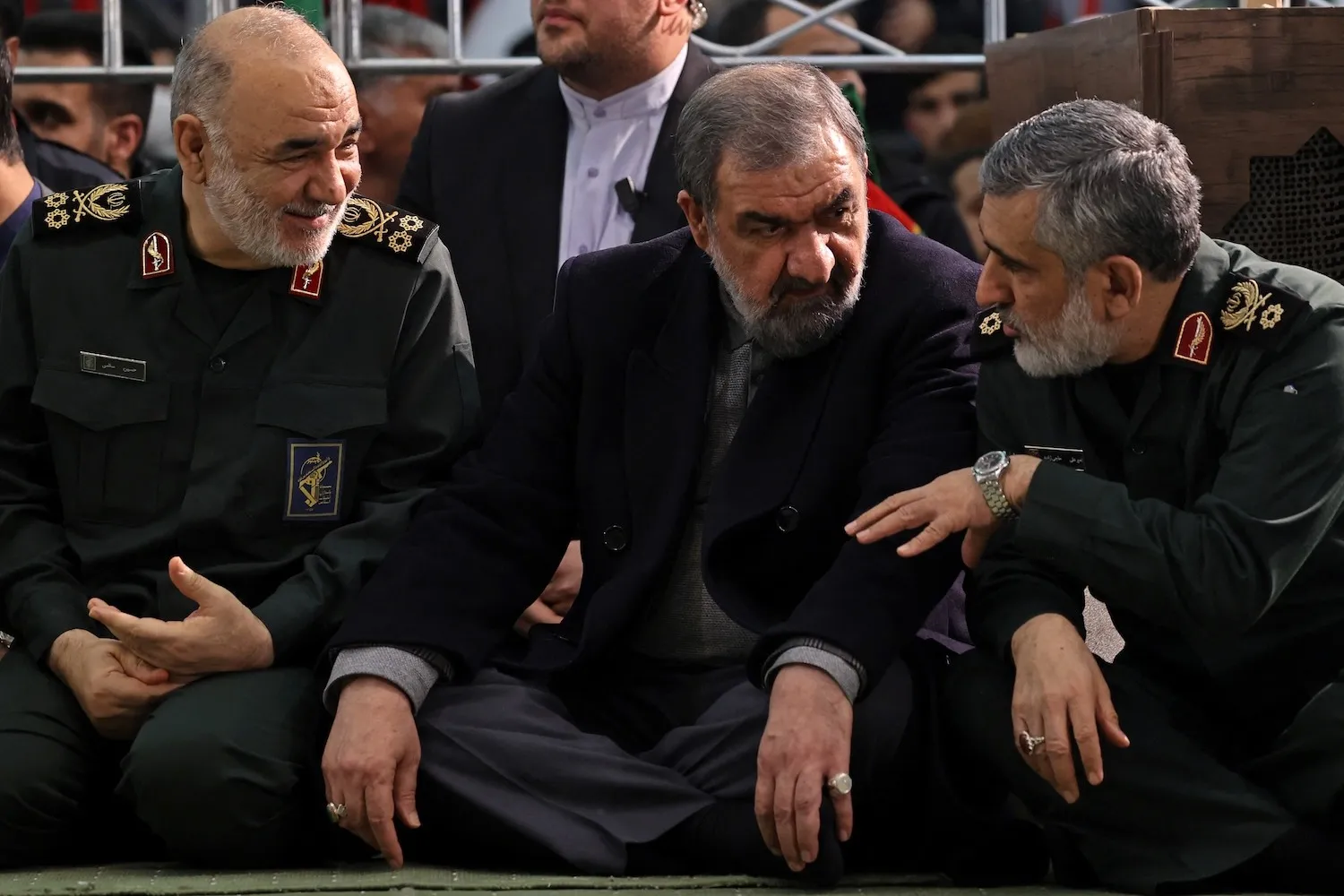
*Head of Islamic Revolutionary Guard Corps (IRGC) Hossein Salami, Iran's former chief of the Revolutionary Guards Mohsen Rezaei, and head of Iran's Revolutionary Guard's aerospace division General Amir Ali Hajizadeh, attend a commemoration ceremony in the capital Tehran on January 3, 2023.*
Head of Islamic Revolutionary Guard Corps (IRGC) Hossein Salami, Iran's former chief of the Revolutionary Guards Mohsen Rezaei, and head of Iran's Revolutionary Guard's aerospace division General Amir Ali Hajizadeh, attend a commemoration ceremony in the capital Tehran on January 3, 2023. ATTA KENARE / AFP via Getty Images
My FP: Follow topics and authors to get straight to what you like. Exclusively for FP subscribers. Subscribe Now | Log In
November 3, 2026, 5:59 AM
Last week, a high-ranking set of Saudi, Pakistani, and Turkish officials came to Tehran, where they met an Iranian delegation led by Mohsen Rezaei. Rezaei, former commander of the Islamic Revolutionary Guard Corps (IRGC), heads Iran’s Supreme National Security Council (SNSC). The SNSC is the country’s top decision-making body and brings together leaders from the IRGC and conventional military, along with representatives of the supreme leader and elected officials. In this meeting, Rezaei was joined by President Masoud Pezeshkian and Foreign Minister Abbas Araghchi.
That these officials—representing Iran’s top security body, its president, and its foreign minister—all participated in the meeting suggests a degree of consensus across Iran’s political spectrum. In the past, many Iranian diplomatic efforts had been the sole prerogative of the foreign ministry, without buy-in from military and security institutions, which made their implementation difficult. This meeting, on the other hand, demonstrates that, across different centers of power, Iran’s political and military establishment is serious about diplomacy.
The seniority of the Iranians’ interlocutors also underscores the importance of these talks. Pakistan was represented by Field Marshal Asim Munir, the country’s de facto most influential political figure. Saudi Arabia sent Defense Minister Khalid bin Salman, the younger brother and confidant of Crown Prince Mohammed bin Salman, while Turkey sent intelligence chief Ibrahim Kalin, a longtime close advisor to President Recep Tayyip Erdogan with extensive experience in regional diplomacy.
Saudi Arabia, Turkey, and Pakistan are also members of the Mecca defense pact, suggesting that Iran wants to play a greater role in the regional security architecture rather than acting outside of it. This is important, as Saudi Arabia in particular faces both continued attacks from Iran’s Houthi allies and risks becoming the target of IRGC strikes should the war break out again.
The meeting ended with a joint statement signed by Rezaei, Salman, Munir, and Kalin in which the four committed their countries to continued dialogue and regional “peace and security.” The statement was vague but signals that Iran does not want to immediately escalate and is instead open to having a productive relationship with its neighbors, some of whom it was targeting with missile and drone strikes just months earlier. This is supported by reports that the Iranian leadership responded positively to a letter sent last month by U.S. Vice President J.D. Vance to Rezaei, in which the former stressed the need for diplomacy.
But the meeting came on the heels of another significant development in the Iranian security landscape that signals that Iran i
Iran Is Talking Peace but Preparing for War
This analysis examines Tehran's recent diplomatic outreach, including talks with high-level Saudi, Pakistani, and Turkish delegations, as it prepares for possible escalation after the U.S. midterm elections. The author argues that this dual track reflects a rare consensus among Iran's centers of power.
Cross Lines newsroom
Share this article
#إيران#الدبلوماسية الإيرانية#محسن رضائي#الحرس الثوري#السعودية#الانتخابات النصفية الأمريكية
Original source: Foreign Policy