EU leaders urge unity after Russian strike on train
DW World
D
DW World
Original Source
EU leaders condemned a Russian drone strike on a Ukrainian passenger train near the Polish border as an intimidation tactic, urging stronger resolve and unified support for Kyiv. Officials called for increased sanctions and political measures against Moscow, while Germany cautioned against escalation.
Several top EU politicians have called a Russian drone strike on a passenger train on Ukraine's border with Poland a bid by Moscow to intimidate Kyiv's allies that should be met with even more resolution.
In the incident, a drone hit the train's locomotive at a railway station in the Volyn region, some 2 kilometers (1.24 miles) from the border, shortly after a diplomatic train carrying former British Prime Minister Boris Johnson and other European diplomats had been at the station.
What did EU leaders say about the train attack?
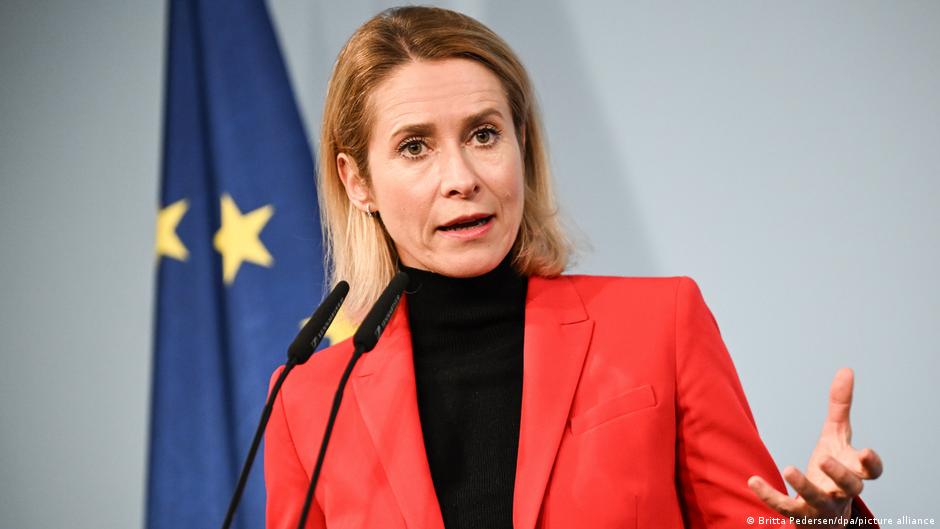
"It [the attack] is clearly meant to scare Western countries from supporting Ukraine, from going to Ukraine to show support," the EU's foreign policy chief, Kaja Kallas, said.
"I think we should act the opposite. We should show that we are there for Ukraine and we are not scared," she told reporters in Finland, where she attended a summit on Arctic strategy.
Finnish Prime Minister Petteri Orpo, who was also at the meeting, said the attack demonstrated Russia's growing aggression and called both for more support for Kyiv and for harsher penalties on Moscow.
"For me, it means that we have to [...] do even more to help Ukraine, to support Ukraine. And we need more measures against Russia, more political measures, more sanctions, and make it clear that this is strong strategy," he said.
"We are united here in Europe," he added.
Lithuanian President Gitanas Nauseda said the attack showed that Russia was "challenging all of us."
"We should not talk about concrete geographic regions, because Russia's goal is much more ambitious: to test the rule of law, to test our style of life, to test democracy. And I think they will put additional efforts to do it," he said.
French Foreign Affairs Minister Jean-Noel Barrot said the attack had a "very clear goal, which is to intimidate Europeans, discourage them and, above all, drive a wedge between them."
Barrot said Russian President Vladimir Putin had constantly stepped up pressure on the EU and NATO over the past five years.
"Why? Because he knows that our strength lies in our unity, and that as long as we stand together, nothing can intimidate us," he said.
Germany warns against escalation with Russia
German Foreign Minister Boris Pistorius, for his part, called for caution.
"I take the drones that were approaching trains near the (Ukrainian-Polish) border very seriously, but we must not be forced into an escalation," he said.
The Kremlin has commented on the attack only by saying that the Russian army operated across all Ukrainian territory and would continue to do so.
Speaking about the incident on Sunday, Ukrainian Foreign Minister Andriy Sybiga has said Putin considered Russia to be "de facto" at war with Europe.
"Putin's terror is literally knocking at the door of the European Union and NATO," Sybiga said.
Edited by: Natalie Muller
In the incident, a drone hit the train's locomotive at a railway station in the Volyn region, some 2 kilometers (1.24 miles) from the border, shortly after a diplomatic train carrying former British Prime Minister Boris Johnson and other European diplomats had been at the station.
What did EU leaders say about the train attack?
"It [the attack] is clearly meant to scare Western countries from supporting Ukraine, from going to Ukraine to show support," the EU's foreign policy chief, Kaja Kallas, said.
"I think we should act the opposite. We should show that we are there for Ukraine and we are not scared," she told reporters in Finland, where she attended a summit on Arctic strategy.
Finnish Prime Minister Petteri Orpo, who was also at the meeting, said the attack demonstrated Russia's growing aggression and called both for more support for Kyiv and for harsher penalties on Moscow.
"For me, it means that we have to [...] do even more to help Ukraine, to support Ukraine. And we need more measures against Russia, more political measures, more sanctions, and make it clear that this is strong strategy," he said.
"We are united here in Europe," he added.
Lithuanian President Gitanas Nauseda said the attack showed that Russia was "challenging all of us."
"We should not talk about concrete geographic regions, because Russia's goal is much more ambitious: to test the rule of law, to test our style of life, to test democracy. And I think they will put additional efforts to do it," he said.
French Foreign Affairs Minister Jean-Noel Barrot said the attack had a "very clear goal, which is to intimidate Europeans, discourage them and, above all, drive a wedge between them."
Barrot said Russian President Vladimir Putin had constantly stepped up pressure on the EU and NATO over the past five years.
"Why? Because he knows that our strength lies in our unity, and that as long as we stand together, nothing can intimidate us," he said.
Germany warns against escalation with Russia
German Foreign Minister Boris Pistorius, for his part, called for caution.
"I take the drones that were approaching trains near the (Ukrainian-Polish) border very seriously, but we must not be forced into an escalation," he said.
The Kremlin has commented on the attack only by saying that the Russian army operated across all Ukrainian territory and would continue to do so.
Speaking about the incident on Sunday, Ukrainian Foreign Minister Andriy Sybiga has said Putin considered Russia to be "de facto" at war with Europe.
"Putin's terror is literally knocking at the door of the European Union and NATO," Sybiga said.
Edited by: Natalie Muller
🔗 Share Article
Tags:#روسيا#أوكرانيا#الاتحاد الأوروبي#الناتو#الصراع الأوروبي#العلاقات الدولية
Source: DW World
For Context
Related reads from the same topic or latest developments
