It’s Time to Update the U.N. Sustainable Development Goals
Foreign Policy

Foreign Policy
Original Source
With wars proliferating globally at unprecedented rates, the UN's 2015 Sustainable Development Goals—designed without accounting for prolonged conflicts—have become fundamentally outdated. Former UK Foreign Secretary David Miliband argues that armed conflict is now the primary determinant of development progress, rendering the framework incapable of addressing modern humanitarian crises.
UNGA 2026: The U.N. Sustainable Development Goals Are Outdated
!Foreign Policy
Foreign Policy Get analysis and alerts more quickly in the mobile app.
Install
Back to Foreign Policy Magazine home page
* Latest
* Regions
+ Asia & the Pacific
+ China
+ Middle East & Africa
+ Americas
+ Europe
* Newsletters
Editors’ Picks
Evening roundup with our editors’ favorite stories of the day
!World Brief Icon
World Brief
Your guide to the most important world stories of the day
!China Brief Icon
China Brief
The latest news, analysis, and data from the country each week
Situation Report
Weekly update on what’s driving U.S. national security policy
FP Weekend
A curation of our best book reviews, deep dives, and other reads
!Africa Brief Icon
Africa Brief
Essential analysis of the stories shaping geopolitics on the continent
!South Asia Brief Icon
South Asia Brief
Weekly update on developments in India and its neighbors
The Reading List
Curated guides on geopolitics and current affairs
FP Bookshelf
A monthly guide to FP’s book reviews, excerpts, and reading recommendations
!Latin America Brief Icon
Latin America Brief
One-stop digest of politics, economics, and culture
!Southeast Asia Brief Icon
Southeast Asia Brief
A weekly dispatch with news from the region’s 11 countries
The New Geopolitics
A five-part masterclass in IR theory with Harvard Professor Stephen M. Walt
View All Newsletters
* FP Live
* Latest
* Trending:
* Trump-Xi meeting
* United Nations General Assembly
Search this website
* Preferences
* My FP Feed
* Saved Articles
* Newsletters
* Magazine Archive
* Subscription Settings
* FAQs
* Log Out
Sign In
Sign In
Partner with FP at UNGA81 Partner with FP at UNGA81
Subscribe Subscribe Partner with FP at UNGA81 Partner with FP at UNGA81
Argument: It’s Time to Update the U.N. Sustainable Development Goals
*
*
* Facebook
* Bluesky
* X
* LinkedIn
* WhatsApp
* Reddit
Save
1. Create an FP account to save articles to read later.
Sign Up
ALREADY AN FP SUBSCRIBER? LOGIN
PDF
1. **Downloadable PDFs** are a benefit of an FP subscription.
Subscribe Now
ALREADY AN FP SUBSCRIBER? LOGIN
Gift
*
*
* WhatsApp
1. Gifting articles is a subscriber benefit.
Subscribe Now
ALREADY AN FP SUBSCRIBER? LOGIN
2. This article is an Insider exclusive.
Contact us at [email protected] to learn about upgrade options, unlocking the ability to gift this article.
Argument
An expert’s point of view on a current event.
It’s Time to Update the U.N. Sustainable Development Goals
Countries committed to end poverty. They never accounted for forever wars.
By **David Miliband**, president and CEO of the International Rescue Committee and a former foreign secretary of the United Kingdom.
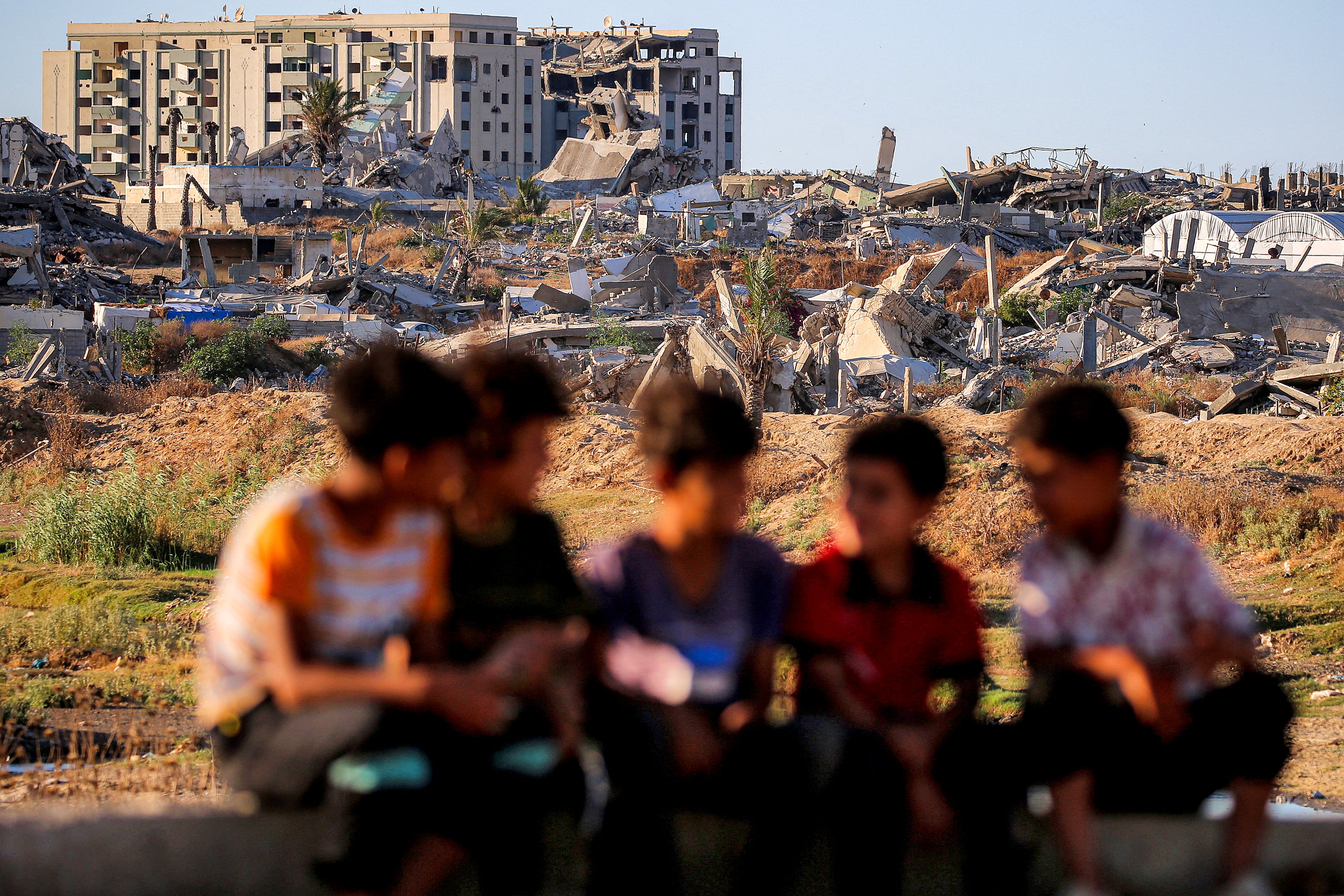
!A group of five children sit side by side in the soft-focused foreground, facing each other in conversation. In the sharply focused background, a vast area of destroyed buildings and rubble stretches across the landscape beneath a clear sky.
*A group of five children sit side by side in the soft-focused foreground, facing each other in conversation. In the sharply focused background, a vast area of destroyed buildings and rubble stretches across the landscape beneath a clear sky.*
Children sit together near heavily damaged buildings at the Nuseirat camp for Palestinian refugees in the Gaza Strip on June 19. Eyad Baba/AFP via Getty Images
1. Get audio access with any FP subscription.
Subscribe Now
ALREADY AN FP SUBSCRIBER? LOGIN
September 21, 2026, 3:44 PM
World leaders are about to choose a new United Nations secretary-general. Whoever gets the job will inherit an uncomfortable truth: The world body’s promise to end poverty, hunger, and disease is in retreat because today’s leaders are presiding over an era of multiple and growing forever wars.
In September 2015, U.N. member states set 17 Sustainable Development Goals, or SDGs, to be achieved by 2030. These sought to end extreme poverty, promote climate action, and set social and economic targets, all while “leaving no one behind.” But the commitment assumed the existence of functioning states, international cooperation, and development systems capable of turning finance into progress.
World leaders are about to choose a new United Nations secretary-general. Whoever gets the job will inherit an uncomfortable truth: The world body’s promise to end poverty, hunger, and disease is in retreat because today’s leaders are presiding over an era of multiple and growing forever wars.
In September 2015, U.N. member states set 17 Sustainable Development Goals, or SDGs, to be achieved by 2030. These sought to end extreme poverty, promote climate action, and set social and economic targets, all while “leaving no one behind.” But the commitment assumed the existence of functioning states, international cooperation, and development systems capable of turning finance into progress.
Instead, the world has entered a new global disorder. States flout laws, and impunity is on the rise, while aid budgets are cut and international cooperation is undermined. The United States, which was once the anchor of the global system, has abandoned its former role. Countries including the United Kingdom have joined in with significant aid cuts.
Meanwhile, more wars are raging today than at any point since World War II, and they are lasting longer than ever. More than 70 percent of conflicts that have begun since 2020 have continued for more than a year, up from 44 percent in the 2000s. So-called civil wars, or wars within states, are increasingly internationalized through external sponsorship. According to the Institute for Economics & Peace’s 2025 Global Peace Index, 98 countries were entangled in conflicts outside of their borders in the five years prior to the report, up from 59 in 2008. These internationalized wars are nearly four times less likely to end.
The U.S. war of choice in Iran exemplifies the adage that it is easier to start a war than end it. It also shows the risks of conflict in our interconnected world—farmers and consumers across the world pay the price when global fertilizer supplies, among other key goods, cannot pass through the Strait of Hormuz, which Iran has effectively blocked since February.
The SDGs, adopted more than a decade ago, were not built for this era. Indeed, the word “conflict” appears less often than “fisheries” in the SDGs. For instance, both Goal 2 (“Zero Hunger”) and Goal 14 (“Life Below Water”) prioritize fisheries and fishers, while there is no formal target addressing humanitarian food aid or conflict and displacement as drivers of hunger.
Yet conflict is the principal force determining whether any development target can be achieved, and it is the main driver of heightened levels of poverty and hunger around the world
Already eight years ago, the International Rescue Committee (IRC), which I lead, warned that more than 80 percent of fragile and conflict-affected states were off track to meet these goals, and nearly 26 million refugees were being left out of the official reporting processes. Since then, the situation has become direr. Research indicates that as of 2021, armed conflict slowed global progress on the SDGs by the equivalent of 18 years. Today, only 15 percent of the 139 SDG targets with sufficient data are on track, with fragile and conflict-affected states lagging furthest behind. Nearly half of all deaths of children under 5 years old have also occurred in those states.
By 2030, more than half of the people living in extreme poverty are expected to be in the 20 countries named on this year’s IRC Emergency Watchlist—countries that account for just 12 percent of the world’s population but 89 percent of those in humanitarian need globally. A generation of development g
!Foreign Policy
Foreign Policy Get analysis and alerts more quickly in the mobile app.
Install
Back to Foreign Policy Magazine home page
* Latest
* Regions
+ Asia & the Pacific
+ China
+ Middle East & Africa
+ Americas
+ Europe
* Newsletters
Editors’ Picks
Evening roundup with our editors’ favorite stories of the day
!World Brief Icon
World Brief
Your guide to the most important world stories of the day
!China Brief Icon
China Brief
The latest news, analysis, and data from the country each week
Situation Report
Weekly update on what’s driving U.S. national security policy
FP Weekend
A curation of our best book reviews, deep dives, and other reads
!Africa Brief Icon
Africa Brief
Essential analysis of the stories shaping geopolitics on the continent
!South Asia Brief Icon
South Asia Brief
Weekly update on developments in India and its neighbors
The Reading List
Curated guides on geopolitics and current affairs
FP Bookshelf
A monthly guide to FP’s book reviews, excerpts, and reading recommendations
!Latin America Brief Icon
Latin America Brief
One-stop digest of politics, economics, and culture
!Southeast Asia Brief Icon
Southeast Asia Brief
A weekly dispatch with news from the region’s 11 countries
The New Geopolitics
A five-part masterclass in IR theory with Harvard Professor Stephen M. Walt
View All Newsletters
* FP Live
* Latest
* Trending:
* Trump-Xi meeting
* United Nations General Assembly
Search this website
* Preferences
* My FP Feed
* Saved Articles
* Newsletters
* Magazine Archive
* Subscription Settings
* FAQs
* Log Out
Sign In
Sign In
Partner with FP at UNGA81 Partner with FP at UNGA81
Subscribe Subscribe Partner with FP at UNGA81 Partner with FP at UNGA81
Argument: It’s Time to Update the U.N. Sustainable Development Goals
*
*
* Bluesky
* X
Save
1. Create an FP account to save articles to read later.
Sign Up
ALREADY AN FP SUBSCRIBER? LOGIN
1. **Downloadable PDFs** are a benefit of an FP subscription.
Subscribe Now
ALREADY AN FP SUBSCRIBER? LOGIN
Gift
*
*
1. Gifting articles is a subscriber benefit.
Subscribe Now
ALREADY AN FP SUBSCRIBER? LOGIN
2. This article is an Insider exclusive.
Contact us at [email protected] to learn about upgrade options, unlocking the ability to gift this article.
Argument
An expert’s point of view on a current event.
It’s Time to Update the U.N. Sustainable Development Goals
Countries committed to end poverty. They never accounted for forever wars.
By **David Miliband**, president and CEO of the International Rescue Committee and a former foreign secretary of the United Kingdom.
!A group of five children sit side by side in the soft-focused foreground, facing each other in conversation. In the sharply focused background, a vast area of destroyed buildings and rubble stretches across the landscape beneath a clear sky.
*A group of five children sit side by side in the soft-focused foreground, facing each other in conversation. In the sharply focused background, a vast area of destroyed buildings and rubble stretches across the landscape beneath a clear sky.*
Children sit together near heavily damaged buildings at the Nuseirat camp for Palestinian refugees in the Gaza Strip on June 19. Eyad Baba/AFP via Getty Images
1. Get audio access with any FP subscription.
Subscribe Now
ALREADY AN FP SUBSCRIBER? LOGIN
September 21, 2026, 3:44 PM
World leaders are about to choose a new United Nations secretary-general. Whoever gets the job will inherit an uncomfortable truth: The world body’s promise to end poverty, hunger, and disease is in retreat because today’s leaders are presiding over an era of multiple and growing forever wars.
In September 2015, U.N. member states set 17 Sustainable Development Goals, or SDGs, to be achieved by 2030. These sought to end extreme poverty, promote climate action, and set social and economic targets, all while “leaving no one behind.” But the commitment assumed the existence of functioning states, international cooperation, and development systems capable of turning finance into progress.
World leaders are about to choose a new United Nations secretary-general. Whoever gets the job will inherit an uncomfortable truth: The world body’s promise to end poverty, hunger, and disease is in retreat because today’s leaders are presiding over an era of multiple and growing forever wars.
In September 2015, U.N. member states set 17 Sustainable Development Goals, or SDGs, to be achieved by 2030. These sought to end extreme poverty, promote climate action, and set social and economic targets, all while “leaving no one behind.” But the commitment assumed the existence of functioning states, international cooperation, and development systems capable of turning finance into progress.
Instead, the world has entered a new global disorder. States flout laws, and impunity is on the rise, while aid budgets are cut and international cooperation is undermined. The United States, which was once the anchor of the global system, has abandoned its former role. Countries including the United Kingdom have joined in with significant aid cuts.
Meanwhile, more wars are raging today than at any point since World War II, and they are lasting longer than ever. More than 70 percent of conflicts that have begun since 2020 have continued for more than a year, up from 44 percent in the 2000s. So-called civil wars, or wars within states, are increasingly internationalized through external sponsorship. According to the Institute for Economics & Peace’s 2025 Global Peace Index, 98 countries were entangled in conflicts outside of their borders in the five years prior to the report, up from 59 in 2008. These internationalized wars are nearly four times less likely to end.
The U.S. war of choice in Iran exemplifies the adage that it is easier to start a war than end it. It also shows the risks of conflict in our interconnected world—farmers and consumers across the world pay the price when global fertilizer supplies, among other key goods, cannot pass through the Strait of Hormuz, which Iran has effectively blocked since February.
The SDGs, adopted more than a decade ago, were not built for this era. Indeed, the word “conflict” appears less often than “fisheries” in the SDGs. For instance, both Goal 2 (“Zero Hunger”) and Goal 14 (“Life Below Water”) prioritize fisheries and fishers, while there is no formal target addressing humanitarian food aid or conflict and displacement as drivers of hunger.
Yet conflict is the principal force determining whether any development target can be achieved, and it is the main driver of heightened levels of poverty and hunger around the world
Already eight years ago, the International Rescue Committee (IRC), which I lead, warned that more than 80 percent of fragile and conflict-affected states were off track to meet these goals, and nearly 26 million refugees were being left out of the official reporting processes. Since then, the situation has become direr. Research indicates that as of 2021, armed conflict slowed global progress on the SDGs by the equivalent of 18 years. Today, only 15 percent of the 139 SDG targets with sufficient data are on track, with fragile and conflict-affected states lagging furthest behind. Nearly half of all deaths of children under 5 years old have also occurred in those states.
By 2030, more than half of the people living in extreme poverty are expected to be in the 20 countries named on this year’s IRC Emergency Watchlist—countries that account for just 12 percent of the world’s population but 89 percent of those in humanitarian need globally. A generation of development g
🔗 Share Article
Tags:#الأمم المتحدة#أهداف التنمية المستدامة#النزاعات المسلحة#الأزمات الإنسانية#الفقر والجوع#الشرق الأوسط
Source: Foreign Policy
For Context
Related reads from the same topic or latest developments