Would Another War Help Netanyahu Win Reelection?
Foreign Policy

Foreign Policy
Original Source
As Israeli elections approach, Prime Minister Netanyahu faces declining poll numbers, prompting analysts to warn he may resort to military escalation or manufacturing a security crisis to salvage his reelection campaign. While a recent bombing of a Syrian air base hints at his strategy, Trump administration constraints and the volatile West Bank situation limit his options.
Would Another War Help Israel’s Netanyahu Win Reelection?
By using this website, you agree to our use of cookies. This use includes personalization of content and ads, and traffic analytics. Review our Privacy Policy for more information.
!Foreign Policy
Foreign Policy
Get analysis and alerts more quickly in the mobile app.
Install
Back to Foreign Policy Magazine home page
* Latest
* Regions
+ Asia & the Pacific
+ China
+ Middle East & Africa
+ Americas
+ Europe
* Newsletters
Editors’ Picks
Evening roundup with our editors’ favorite stories of the day
!World Brief Icon
World Brief
Your guide to the most important world stories of the day
!China Brief Icon
China Brief
The latest news, analysis, and data from the country each week
Situation Report
Weekly update on what’s driving U.S. national security policy
FP Weekend
A curation of our best book reviews, deep dives, and other reads
!Africa Brief Icon
Africa Brief
Essential analysis of the stories shaping geopolitics on the continent
!South Asia Brief Icon
South Asia Brief
Weekly update on developments in India and its neighbors
The Reading List
Curated guides on geopolitics and current affairs
FP Bookshelf
A monthly guide to FP’s book reviews, excerpts, and reading recommendations
!Latin America Brief Icon
Latin America Brief
One-stop digest of politics, economics, and culture
!Southeast Asia Brief Icon
Southeast Asia Brief
A weekly dispatch with news from the region’s 11 countries
The New Geopolitics
A five-part masterclass in IR theory with Harvard Professor Stephen M. Walt
View All Newsletters
* FP Live
* Latest
* Trending:
* Iran war
* China's bet on AI
Search this website
* Preferences
* My FP Feed
* Saved Articles
* Newsletters
* Magazine Archive
* Subscription Settings
* FAQs
* Log Out
Sign In
Sign In
Partner with FP at UNGA81 Partner with FP at UNGA81
Subscribe SubscribePartner with FP at UNGA81 Partner with FP at UNGA81
Analysis:
Would Another War Help Netanyahu Win Reelection?
*
*
* Facebook
* Bluesky
* X
* LinkedIn
* WhatsApp
* Reddit
Save
Save
1. Create an FP account to save articles to read later.
Sign Up
ALREADY AN FP SUBSCRIBER? LOGIN
PDF
PDF
1. **Downloadable PDFs** are a benefit of an FP subscription.
Subscribe Now
ALREADY AN FP SUBSCRIBER? LOGIN
Gift
Gift
*
*
* WhatsApp
1. Gifting articles is a subscriber benefit.
Subscribe Now
ALREADY AN FP SUBSCRIBER? LOGIN
2. This article is an Insider exclusive.
Contact us at [email protected] to learn about upgrade options, unlocking the ability to gift this article.
Analysis
Would Another War Help Netanyahu Win Reelection?
Some Israelis worry that he might manufacture a security crisis ahead of the vote.
By **David E. Rosenberg**, the economics editor and a columnist for the English edition of *Haaretz* and the author of *Israel’s Technology Economy.*
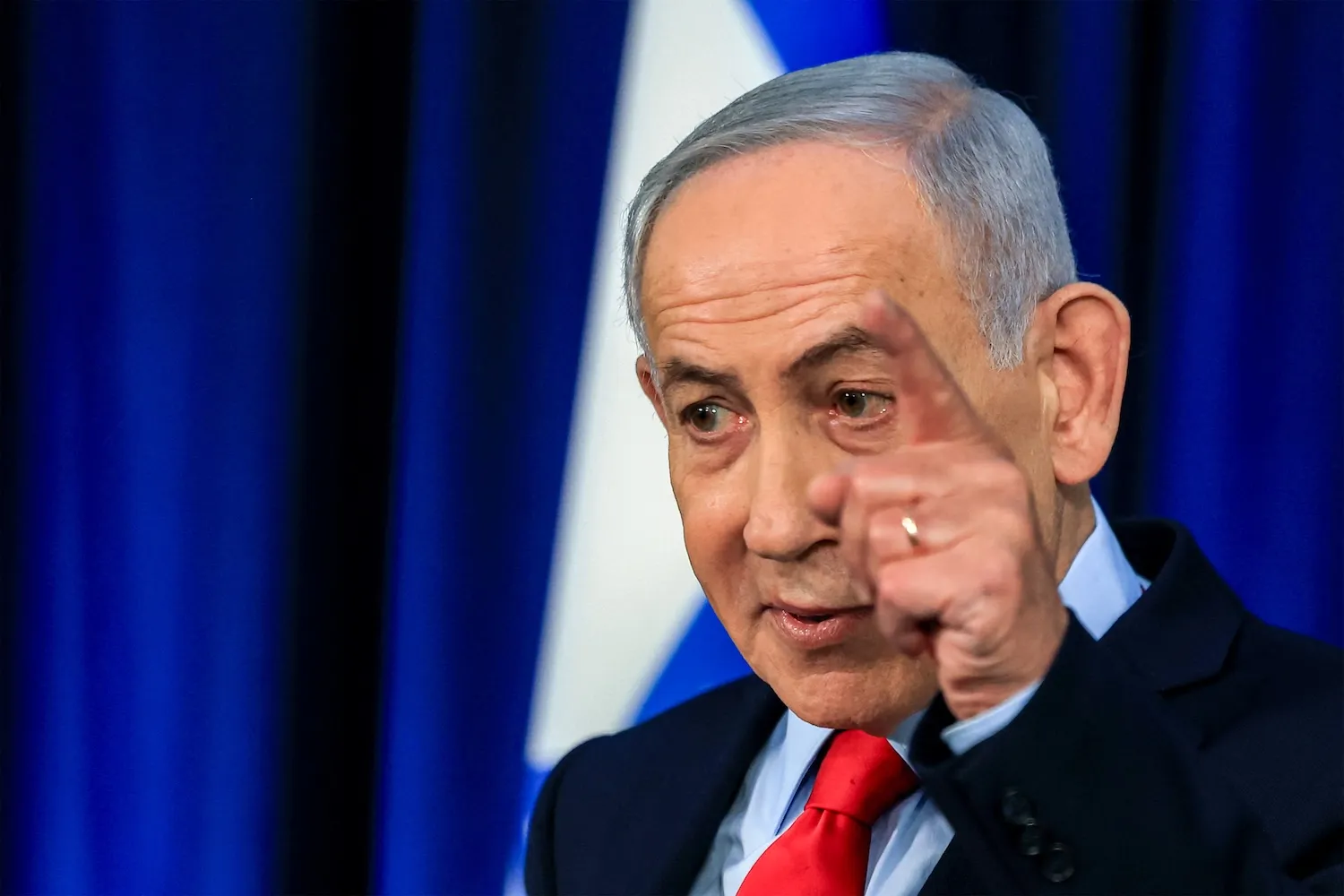
!Israeli Prime Minister Benjamin Netanyahu gives a press conference in Jerusalem on March 19.
*Israeli Prime Minister Benjamin Netanyahu gives a press conference in Jerusalem on March 19.*
Israeli Prime Minister Benjamin Netanyahu gives a press conference in Jerusalem on March 19. Ronen Zvulun / POOL / AFP via Getty Images
1. Get audio access with any FP subscription.
Subscribe Now
ALREADY AN FP SUBSCRIBER? LOGIN
September 3, 2026, 7:24 AM
Israeli elections are less than two months away, and Prime Minister Benjamin Netanyahu’s prospects are not looking good. Opinion polls show support for his Likud party stagnating or even declining, while the main opposition party is steadily rising. The scare tactics that Netanyahu employed so successfully in the past against his rivals aren’t gaining traction this time. Meanwhile, a clutch of new right-wing parties threatens to divide his bloc and steal votes from Likud.
Israel-Hamas War
MORE ON THIS TOPIC
So, what can Netanyahu do to rescue himself from the very real risk of being voted out of power?
Israeli elections are less than two months away, and Prime Minister Benjamin Netanyahu’s prospects are not looking good. Opinion polls show support for his Likud party stagnating or even declining, while the main opposition party is steadily rising. The scare tactics that Netanyahu employed so successfully in the past against his rivals aren’t gaining traction this time. Meanwhile, a clutch of new right-wing parties threatens to divide his bloc and steal votes from Likud.
Israel-Hamas War
MORE ON THIS TOPIC
So, what can Netanyahu do to rescue himself from the very real risk of being voted out of power?
Political analysts and commentators have warned that Netanyahu might disrupt the election by encouraging (if not orchestrating) violence, deploying the police against the opposition, delegitimizing the Central Elections Committee that oversees the vote and, if all else fails, raising Trump-style “stolen election” claims after the polls close. While none of these threats has materialized so far, the campaign gets underway in earnest only on Sept. 7, when the parties submit their final election slates.
However, there is one campaign tactic that Netanyahu may have already set into motion, namely, to create one or more security crises. The aim would be to polish his now-tarnished “Mr. Security” reputation and give more moderate voters who have fled the Likud second thoughts about putting the country into the untested hands of Netanyahu’s main rival, Gadi Eisenkot. Netanyahu wouldn’t necessarily have to start a full-fledged war. Instead, he could instigate a military confrontation and allow it to escalate—to a point where he could plausibly argue that there was no choice but to go to war.
A preview of this may have occurred Aug. 18, when Israeli fighter jets bombed the Abu al-Duhur air base in Syria. Netanyahu and his defense minister, Israel Katz, said the attack was meant to warn Turkey against deepening its military presence in Syria. A Turkish military delegation had indeed visited the base, reportedly to deploy drones and air defenses there. Israel has legitimate concerns about Turkish aspirations in Syria and elsewhere in the Middle East, but many observers—including Tom Barrack, U.S. President Donald Trump’s envoy to Turkey and Syria—expressed doubts about the security claim. “One theory is they were just baiting Turkey, and it’s a very aggressive, but maybe well-received, pre-election concept,” Barrack speculated.
On other fronts, Netanyahu’s ability to stir up trouble is constrained by Trump. Iran, which remains the Israeli public’s biggest source of anxiety, has effectively been put off limits by the U.S. president, who has made it clear that he doesn’t want war to flare up again, at least until after the United States’ midterm elections in November. In Gaza and Lebanon, where Trump has imposed cease-fires, Netanyahu also has limited room to maneuver.
Aggressive behavior on the Syrian-Turkish front poses risks, as well. Washington is backing Syrian President Ahmed al-Sharaa’s efforts to stabilize the country and align it with the West, and views Turkey’s military assistance as a helpful component. The United States, which has presided over security talks between Syria and Israel, doesn’t want Israel to undermine Sharaa. Striking Syria and precipitating a crisis or worse with Turkey, therefore, might be too risky in terms of Netanyahu’s already strained relations with Trump.
Still, in recent weeks, the Israeli prime minister has been increasingly calling out Turkey as a threat, as if he is preparing the public for a confrontation. Turkish President Recep Tayyip Erdogan has responded with inflammatory rhetoric of his own toward Israel. Given Trump’s short attention span and historic tolerance for Israeli cease-fire infractions in Gaza and Lebanon, Netanyahu may get the green light he needs.
The real danger, however, is the West Bank. The violence by extremist settlers that began not long after the 2023 Hamas attacks has grown in recent weeks and become more brazen. Extremis
By using this website, you agree to our use of cookies. This use includes personalization of content and ads, and traffic analytics. Review our Privacy Policy for more information.
!Foreign Policy
Foreign Policy
Get analysis and alerts more quickly in the mobile app.
Install
Back to Foreign Policy Magazine home page
* Latest
* Regions
+ Asia & the Pacific
+ China
+ Middle East & Africa
+ Americas
+ Europe
* Newsletters
Editors’ Picks
Evening roundup with our editors’ favorite stories of the day
!World Brief Icon
World Brief
Your guide to the most important world stories of the day
!China Brief Icon
China Brief
The latest news, analysis, and data from the country each week
Situation Report
Weekly update on what’s driving U.S. national security policy
FP Weekend
A curation of our best book reviews, deep dives, and other reads
!Africa Brief Icon
Africa Brief
Essential analysis of the stories shaping geopolitics on the continent
!South Asia Brief Icon
South Asia Brief
Weekly update on developments in India and its neighbors
The Reading List
Curated guides on geopolitics and current affairs
FP Bookshelf
A monthly guide to FP’s book reviews, excerpts, and reading recommendations
!Latin America Brief Icon
Latin America Brief
One-stop digest of politics, economics, and culture
!Southeast Asia Brief Icon
Southeast Asia Brief
A weekly dispatch with news from the region’s 11 countries
The New Geopolitics
A five-part masterclass in IR theory with Harvard Professor Stephen M. Walt
View All Newsletters
* FP Live
* Latest
* Trending:
* Iran war
* China's bet on AI
Search this website
* Preferences
* My FP Feed
* Saved Articles
* Newsletters
* Magazine Archive
* Subscription Settings
* FAQs
* Log Out
Sign In
Sign In
Partner with FP at UNGA81 Partner with FP at UNGA81
Subscribe SubscribePartner with FP at UNGA81 Partner with FP at UNGA81
Analysis:
Would Another War Help Netanyahu Win Reelection?
*
*
* Bluesky
* X
Save
Save
1. Create an FP account to save articles to read later.
Sign Up
ALREADY AN FP SUBSCRIBER? LOGIN
1. **Downloadable PDFs** are a benefit of an FP subscription.
Subscribe Now
ALREADY AN FP SUBSCRIBER? LOGIN
Gift
Gift
*
*
1. Gifting articles is a subscriber benefit.
Subscribe Now
ALREADY AN FP SUBSCRIBER? LOGIN
2. This article is an Insider exclusive.
Contact us at [email protected] to learn about upgrade options, unlocking the ability to gift this article.
Analysis
Would Another War Help Netanyahu Win Reelection?
Some Israelis worry that he might manufacture a security crisis ahead of the vote.
By **David E. Rosenberg**, the economics editor and a columnist for the English edition of *Haaretz* and the author of *Israel’s Technology Economy.*
!Israeli Prime Minister Benjamin Netanyahu gives a press conference in Jerusalem on March 19.
*Israeli Prime Minister Benjamin Netanyahu gives a press conference in Jerusalem on March 19.*
Israeli Prime Minister Benjamin Netanyahu gives a press conference in Jerusalem on March 19. Ronen Zvulun / POOL / AFP via Getty Images
1. Get audio access with any FP subscription.
Subscribe Now
ALREADY AN FP SUBSCRIBER? LOGIN
September 3, 2026, 7:24 AM
Israeli elections are less than two months away, and Prime Minister Benjamin Netanyahu’s prospects are not looking good. Opinion polls show support for his Likud party stagnating or even declining, while the main opposition party is steadily rising. The scare tactics that Netanyahu employed so successfully in the past against his rivals aren’t gaining traction this time. Meanwhile, a clutch of new right-wing parties threatens to divide his bloc and steal votes from Likud.
Israel-Hamas War
So, what can Netanyahu do to rescue himself from the very real risk of being voted out of power?
Israeli elections are less than two months away, and Prime Minister Benjamin Netanyahu’s prospects are not looking good. Opinion polls show support for his Likud party stagnating or even declining, while the main opposition party is steadily rising. The scare tactics that Netanyahu employed so successfully in the past against his rivals aren’t gaining traction this time. Meanwhile, a clutch of new right-wing parties threatens to divide his bloc and steal votes from Likud.
Israel-Hamas War
So, what can Netanyahu do to rescue himself from the very real risk of being voted out of power?
Political analysts and commentators have warned that Netanyahu might disrupt the election by encouraging (if not orchestrating) violence, deploying the police against the opposition, delegitimizing the Central Elections Committee that oversees the vote and, if all else fails, raising Trump-style “stolen election” claims after the polls close. While none of these threats has materialized so far, the campaign gets underway in earnest only on Sept. 7, when the parties submit their final election slates.
However, there is one campaign tactic that Netanyahu may have already set into motion, namely, to create one or more security crises. The aim would be to polish his now-tarnished “Mr. Security” reputation and give more moderate voters who have fled the Likud second thoughts about putting the country into the untested hands of Netanyahu’s main rival, Gadi Eisenkot. Netanyahu wouldn’t necessarily have to start a full-fledged war. Instead, he could instigate a military confrontation and allow it to escalate—to a point where he could plausibly argue that there was no choice but to go to war.
A preview of this may have occurred Aug. 18, when Israeli fighter jets bombed the Abu al-Duhur air base in Syria. Netanyahu and his defense minister, Israel Katz, said the attack was meant to warn Turkey against deepening its military presence in Syria. A Turkish military delegation had indeed visited the base, reportedly to deploy drones and air defenses there. Israel has legitimate concerns about Turkish aspirations in Syria and elsewhere in the Middle East, but many observers—including Tom Barrack, U.S. President Donald Trump’s envoy to Turkey and Syria—expressed doubts about the security claim. “One theory is they were just baiting Turkey, and it’s a very aggressive, but maybe well-received, pre-election concept,” Barrack speculated.
On other fronts, Netanyahu’s ability to stir up trouble is constrained by Trump. Iran, which remains the Israeli public’s biggest source of anxiety, has effectively been put off limits by the U.S. president, who has made it clear that he doesn’t want war to flare up again, at least until after the United States’ midterm elections in November. In Gaza and Lebanon, where Trump has imposed cease-fires, Netanyahu also has limited room to maneuver.
Aggressive behavior on the Syrian-Turkish front poses risks, as well. Washington is backing Syrian President Ahmed al-Sharaa’s efforts to stabilize the country and align it with the West, and views Turkey’s military assistance as a helpful component. The United States, which has presided over security talks between Syria and Israel, doesn’t want Israel to undermine Sharaa. Striking Syria and precipitating a crisis or worse with Turkey, therefore, might be too risky in terms of Netanyahu’s already strained relations with Trump.
Still, in recent weeks, the Israeli prime minister has been increasingly calling out Turkey as a threat, as if he is preparing the public for a confrontation. Turkish President Recep Tayyip Erdogan has responded with inflammatory rhetoric of his own toward Israel. Given Trump’s short attention span and historic tolerance for Israeli cease-fire infractions in Gaza and Lebanon, Netanyahu may get the green light he needs.
The real danger, however, is the West Bank. The violence by extremist settlers that began not long after the 2023 Hamas attacks has grown in recent weeks and become more brazen. Extremis
🔗 Share Article
Tags:#انتخابات إسرائيل#نتنياهو#سياسة إسرائيلية#أزمة أمنية#انتخابات 2026#الشرق الأوسط
Source: Foreign Policy
For Context
Related reads from the same topic or latest developments


