InternationalAvailable in English
Recognising Hamas as 'terror' outfit: Eisenkot lays down conditions for 'broad Zionist government'
Editorial
Cross Lines editing
Source
Middle East Eye

Middle East Eye
M
Middle East Eye
Original Source
Israeli opposition leader Gadi Eisenkot has set four conditions for forming a new government, including recognising Hamas as a terrorist organisation and dismantling its military and governing capabilities in Gaza. He is seeking to use the opposition's parliamentary majority to end Benjamin Netanyahu's rule.
Israeli opposition leader Gadi Eisenkot has set out four conditions for forming a new government, including recognising Hamas as a "terrorist" organisation and committing to dismantle its military and governing capabilities in Gaza, as he seeks to use an opposition parliamentary majority to end Benjamin Netanyahu's rule.
In a statement posted on X on Saturday, the Yashar party leader said he was prepared to work with any elected lawmaker who accepted his principles for a broad "Zionist government".
These include recognising Israel as a "Jewish, democratic, liberal and egalitarian state", upholding the values of its Declaration of Independence, and introducing compulsory military or civilian national service for all citizens.
"The door to the government we will establish is open to every elected official who accepts these principles," he said, calling for an "extraordinary effort" to avoid another election and a prolonged political crisis.
Eisenkot vowed to move swiftly to use the new Knesset majority against what he called the "government of October 7", referring to the Netanyahu administration and its handling of the failures surrounding the Hamas-led attack on Israel in 2023.
He said a majority of Israeli voters, by more than half a million votes, had rejected the outgoing government and draft evasion in favour of political change. He pledged to introduce legislation establishing a state commission of enquiry into the 7 October failures, make national service compulsory for all Israelis and repeal the controversial judicial overhaul laws passed by the outgoing government.
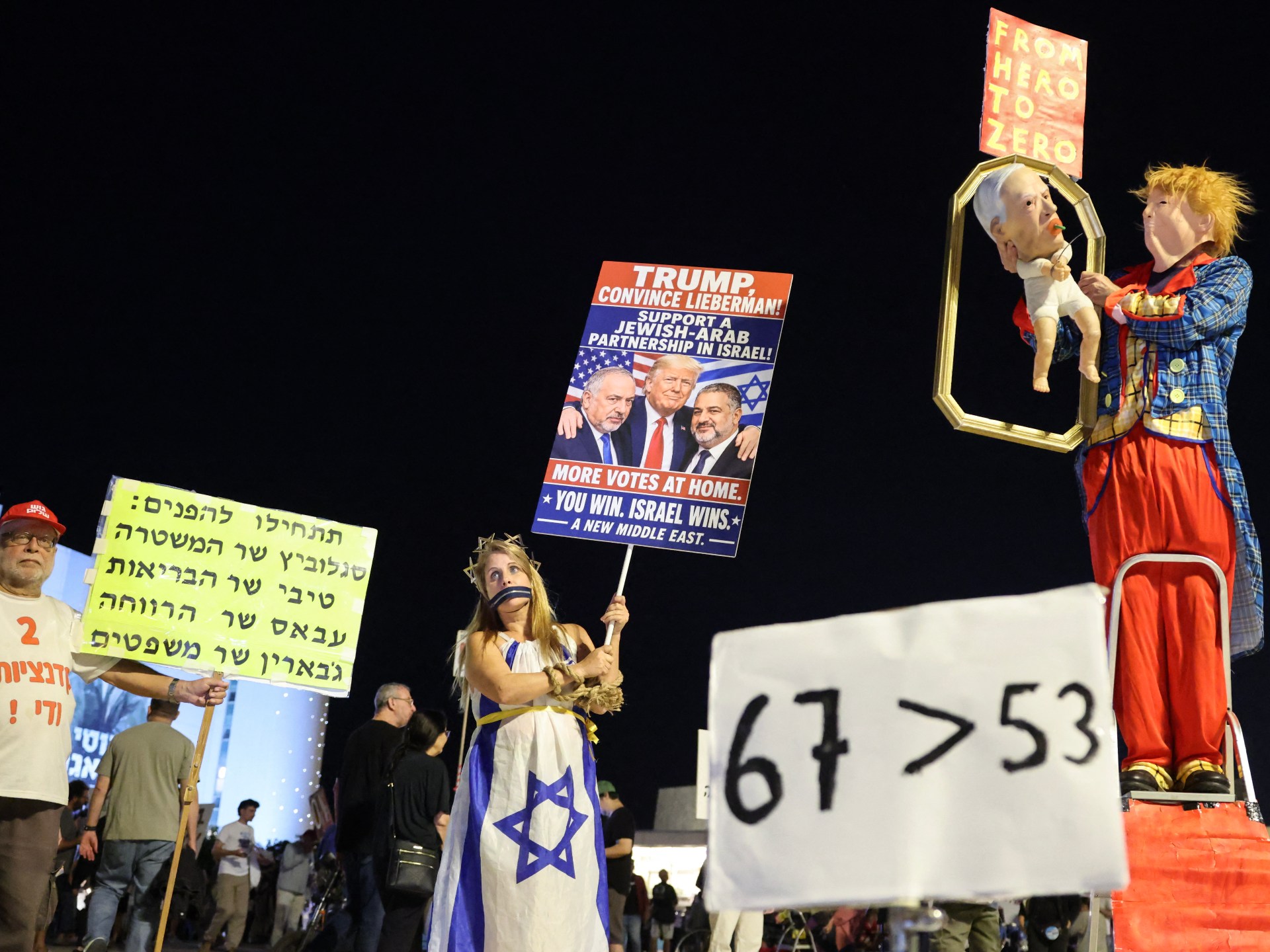
The election, however, has produced a hung parliament, leaving neither side with the 61 seats needed for a majority in the 120-member Knesset. Anti-Netanyahu parties secured 67 seats, against 53 for the outgoing coalition, but the opposition total includes 48 seats held by Zionist parties and 19 won by the two Arab-led parties, the Joint List and Ra'am.
Netanyahu's Likud emerged as the largest party with 27 seats, while Eisenkot's Yashar finished second with 21. The opposition's numerical advantage therefore does not automatically translate into a governing majority, particularly given the reluctance of several Jewish opposition leaders to formally cooperate with Arab parties.
Share Article
Tags:#غادي إيزنكوت#بنيامين نتنياهو#حماس#الكنيست#المعارضة الإسرائيلية#حزب ياشار
Source: Middle East Eye
For Context
Related reads from the same topic or latest developments