How 9/11 Helped Create Regional Clout for Iran
New York Times
N
New York Times
Original Source
The US invasion of Iraq in 2003 marked a turning point that allowed Iran to dominate its erstwhile nemesis and expand its influence across the greater Middle East, a regional realignment that continues to reverberate today. A 2008 message from shadowy Iranian general Qassim Suleimani to the top US commander symbolized Iran's emergence as a peer power reshaping regional conflicts.
How Sept. 11 Paved the Way to Mideast Power for Iran - The New York Times
Skip to contentSkip to site index
Middle East
Today’s Paper
War in the
Middle East
* Diplomatic Efforts
* Iran’s Aggressive Approach
* Inside the Conflict in Lebanon
* Timeline of War
Advertisement
SKIP ADVERTISEMENT
You have a preview view of this article while we are checking your access. When we have confirmed access, the full article content will load.
Supported by
SKIP ADVERTISEMENT
How Sept. 11 Paved the Way to Mideast Power for Iran
The American invasion of Iraq in 2003 set the path for Tehran to dominate its neighbor and whetted its appetite to expand its influence across the greater Middle East.
Listen · 8:34 min
*
*
*
*
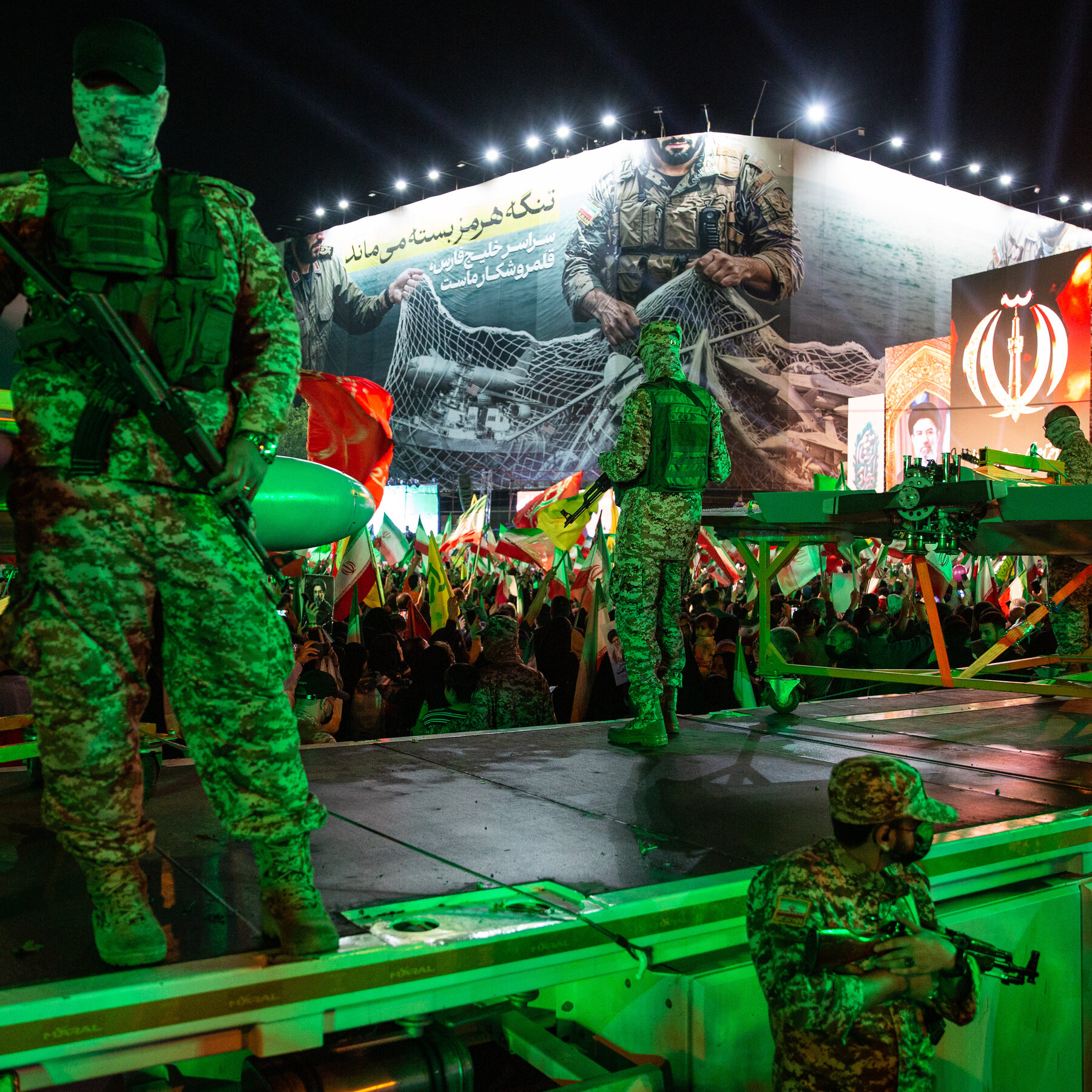
!People in camouflage uniforms with guns stand on a green-lit platform beside missile-like objects. A crowd waving flags fills the background, with a large illuminated mural depicting soldiers.
*Members of the Islamic Revolutionary Guards Corps at a government-organized march in Tehran in April.
Credit...
Arash Khamooshi/Polaris for The New York Times*
By
Neil MacFarquhar
Sept. 16, 2026
Updated 8:49 a.m. ET
See more of our coverage in your search results. Encuentra más de nuestra cobertura en los resultados de búsqueda. Add The New York Times on Google Agrega The New York Times en Google
The message was conveyed to the then-commander of all U.S. forces across the greater Middle East.
Communicated through an intermediary, it came from the shadowy general in charge of Iran’s ragtag overseas forces, yet he addressed the U.S. commander, Gen. David Petraeus, as if he were a peer: “General Petraeus, you should know that I, Qassim Suleimani, control the policy of Iran for Iraq, and also for Syria, Lebanon, Gaza and Afghanistan.”
It was, General Petraeus has recounted, and confirmed in a recent email message, an Iranian attempt to signal that the solution to conflicts in the region ran through Tehran.
In hindsight, some analysts identify that message, sent during the Iraq war in 2008, as a milestone marking the start of one of the most far-reaching shifts in regional politics to emerge out of the Sept. 11, 2001, terrorist attacks on the United States: the rise of Iran as a regional power.
After 9/11, Washington invaded Iraq and toppled its president, Saddam Hussein, setting the gears in motion for Iran to dominate its neighbor, previously its main nemesis. That seemed to whet Tehran’s appetite for regional supremacy in ways that continue to reverberate today in the conflict with the United States.
“The war in Iraq really changed everything because it made Iran a much bigger part of the equation,” said Stéphane Lacroix, an associate professor at Sciences Po in Paris who focuses on contemporary Islam. “It opened the way for this kind of Iranian expansionism, this much greater Iranian influence across the region.”
Image
*Gen. Qassim Suleimani in Tehran in 2016, in a photo released by the Iranian government.
Credit...
Press Office of Iranian Supreme Leade, via Getty Images*
---
Thank you for your patience while we verify access. If you are in Reader mode please exit andlog intoyour Times account, orsubscribefor all of The Times.
---
Thank you for your patience while we verify access.
Already a subscriber?Log in.
Want all of The Times?Subscribe.
Related Content
*
*
*
*
*
*
*
*
*
*
*
*
*
*
*
*
*
*
*
Advertisement
SKIP ADVERTISEMENT
Site Index
Site Information Navigation
* ©2026 The New York Times Company
* NYTCo
* Contact Us
* Accessibility
* Work with us
* Advertise
* T Brand Studio
* Privacy Policy
* Cookie Policy
* Terms of Service
* Terms of Sale
* Site Map
* Canada
* International
* Help
* Subscriptions
* Manage Privacy Preferences
Skip to contentSkip to site index
Middle East
Today’s Paper
War in the
Middle East
* Diplomatic Efforts
* Iran’s Aggressive Approach
* Inside the Conflict in Lebanon
* Timeline of War
Advertisement
SKIP ADVERTISEMENT
You have a preview view of this article while we are checking your access. When we have confirmed access, the full article content will load.
Supported by
SKIP ADVERTISEMENT
How Sept. 11 Paved the Way to Mideast Power for Iran
The American invasion of Iraq in 2003 set the path for Tehran to dominate its neighbor and whetted its appetite to expand its influence across the greater Middle East.
Listen · 8:34 min
*
*
*
*
!People in camouflage uniforms with guns stand on a green-lit platform beside missile-like objects. A crowd waving flags fills the background, with a large illuminated mural depicting soldiers.
*Members of the Islamic Revolutionary Guards Corps at a government-organized march in Tehran in April.
Credit...
Arash Khamooshi/Polaris for The New York Times*
By
Neil MacFarquhar
Sept. 16, 2026
Updated 8:49 a.m. ET
See more of our coverage in your search results. Encuentra más de nuestra cobertura en los resultados de búsqueda. Add The New York Times on Google Agrega The New York Times en Google
The message was conveyed to the then-commander of all U.S. forces across the greater Middle East.
Communicated through an intermediary, it came from the shadowy general in charge of Iran’s ragtag overseas forces, yet he addressed the U.S. commander, Gen. David Petraeus, as if he were a peer: “General Petraeus, you should know that I, Qassim Suleimani, control the policy of Iran for Iraq, and also for Syria, Lebanon, Gaza and Afghanistan.”
It was, General Petraeus has recounted, and confirmed in a recent email message, an Iranian attempt to signal that the solution to conflicts in the region ran through Tehran.
In hindsight, some analysts identify that message, sent during the Iraq war in 2008, as a milestone marking the start of one of the most far-reaching shifts in regional politics to emerge out of the Sept. 11, 2001, terrorist attacks on the United States: the rise of Iran as a regional power.
After 9/11, Washington invaded Iraq and toppled its president, Saddam Hussein, setting the gears in motion for Iran to dominate its neighbor, previously its main nemesis. That seemed to whet Tehran’s appetite for regional supremacy in ways that continue to reverberate today in the conflict with the United States.
“The war in Iraq really changed everything because it made Iran a much bigger part of the equation,” said Stéphane Lacroix, an associate professor at Sciences Po in Paris who focuses on contemporary Islam. “It opened the way for this kind of Iranian expansionism, this much greater Iranian influence across the region.”
Image
*Gen. Qassim Suleimani in Tehran in 2016, in a photo released by the Iranian government.
Credit...
Press Office of Iranian Supreme Leade, via Getty Images*
---
Thank you for your patience while we verify access. If you are in Reader mode please exit andlog intoyour Times account, orsubscribefor all of The Times.
---
Thank you for your patience while we verify access.
Already a subscriber?Log in.
Want all of The Times?Subscribe.
Related Content
*
*
*
*
*
*
*
*
*
*
*
*
*
*
*
*
*
*
*
Advertisement
SKIP ADVERTISEMENT
Site Index
Site Information Navigation
* ©2026 The New York Times Company
* NYTCo
* Contact Us
* Accessibility
* Work with us
* Advertise
* T Brand Studio
* Privacy Policy
* Cookie Policy
* Terms of Service
* Terms of Sale
* Site Map
* Canada
* International
* Help
* Subscriptions
* Manage Privacy Preferences
🔗 Share Article
Tags:#إيران#العراق#الشرق الأوسط#سياسة خارجية#قاسم سليماني#الولايات المتحدة
Source: New York Times
For Context
Related reads from the same topic or latest developments