The West Is Sending Russia the Wrong Signals
Foreign Policy

Foreign Policy
Original Source
Western leaders' fear of escalation is emboldening Putin to continue his campaign of provocations and sabotage across Europe. As Russia incrementally escalates attacks below the threshold of conventional war, NATO's hesitation signals that Moscow still has substantial room to maneuver.
Western Vacillation Encourages Putin's Aggression
!Foreign Policy
Foreign Policy Get analysis and alerts more quickly in the mobile app.
Install
Back to Foreign Policy Magazine home page
* Latest
* Regions
+ Asia & the Pacific
+ China
+ Middle East & Africa
+ Americas
+ Europe
* Newsletters
Editors’ Picks
Evening roundup with our editors’ favorite stories of the day
!World Brief Icon
World Brief
Your guide to the most important world stories of the day
!China Brief Icon
China Brief
The latest news, analysis, and data from the country each week
Situation Report
Weekly update on what’s driving U.S. national security policy
FP Weekend
A curation of our best book reviews, deep dives, and other reads
!Africa Brief Icon
Africa Brief
Essential analysis of the stories shaping geopolitics on the continent
!South Asia Brief Icon
South Asia Brief
Weekly update on developments in India and its neighbors
The Reading List
Curated guides on geopolitics and current affairs
FP Bookshelf
A monthly guide to FP’s book reviews, excerpts, and reading recommendations
!Latin America Brief Icon
Latin America Brief
One-stop digest of politics, economics, and culture
!Southeast Asia Brief Icon
Southeast Asia Brief
A weekly dispatch with news from the region’s 11 countries
The New Geopolitics
A five-part masterclass in IR theory with Harvard Professor Stephen M. Walt
View All Newsletters
* FP Live
* Latest
* Trending:
* Trump-Xi meeting
* United Nations General Assembly
Search this website
* Preferences
* My FP Feed
* Saved Articles
* Newsletters
* Magazine Archive
* Subscription Settings
* FAQs
* Log Out
Sign In
Sign In
Partner with FP at UNGA81 Partner with FP at UNGA81
Subscribe Subscribe Partner with FP at UNGA81 Partner with FP at UNGA81
Argument: The West Is Sending Russia the Wrong Signals
*
*
* Facebook
* Bluesky
* X
* LinkedIn
* WhatsApp
* Reddit
Save
1. Create an FP account to save articles to read later.
Sign Up
ALREADY AN FP SUBSCRIBER? LOGIN
PDF
1. **Downloadable PDFs** are a benefit of an FP subscription.
Subscribe Now
ALREADY AN FP SUBSCRIBER? LOGIN
Gift
*
*
* WhatsApp
1. Gifting articles is a subscriber benefit.
Subscribe Now
ALREADY AN FP SUBSCRIBER? LOGIN
2. This article is an Insider exclusive.
Contact us at [email protected] to learn about upgrade options, unlocking the ability to gift this article.
Argument
An expert’s point of view on a current event.
The West Is Sending Russia the Wrong Signals
Europe’s fear of escalation is encouraging Putin.
By **David V. Gioe**, a visiting professor in the Department of War Studies at King’s College London.
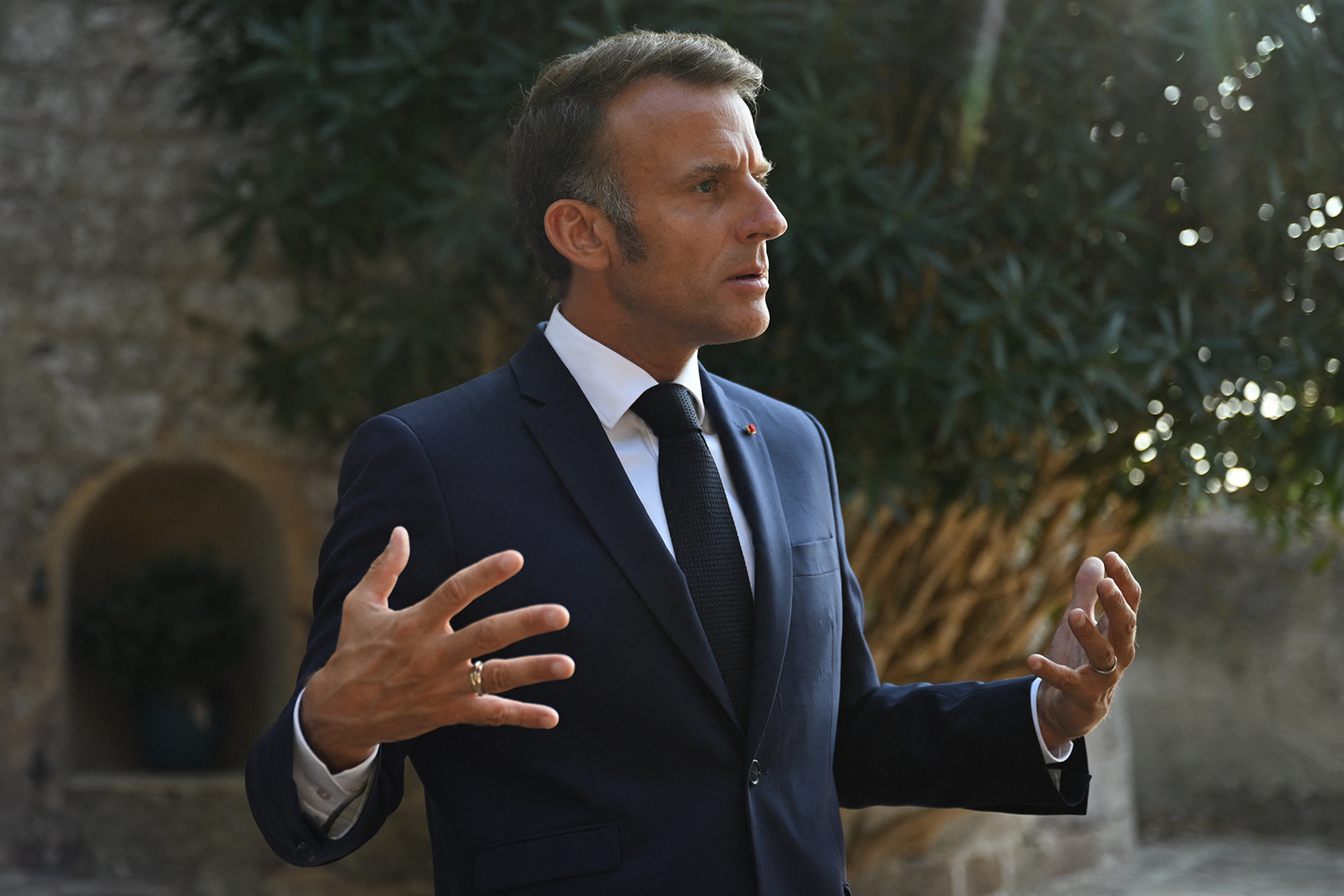
!French President Emmanuel Macron speaks to media at the Fort de Bregancon in Bormes-les-Mimosas, France.
*French President Emmanuel Macron speaks to media at the Fort de Bregancon in Bormes-les-Mimosas, France.*
French President Emmanuel Macron speaks to the media at the Fort de Brégançon in Bormes-les-Mimosas, France, on Aug. 17, 2025. Philippe Magoni/POOL/AFP via Getty Images
1. Get audio access with any FP subscription.
Subscribe Now
ALREADY AN FP SUBSCRIBER? LOGIN
September 22, 2026, 4:46 PM
Over four years after Russian President Vladimir Putin’s disastrous full-scale invasion of Ukraine, the West is still sending mixed messages to the Kremlin. Many Western leaders talk tough, arm Ukraine, impose sanctions, and warn Moscow against further aggression. Yet while Russia continues to immiserate Ukraine and Putin carries out an increasingly reckless campaign of provocations on NATO territory, those same governments—still struggling to wean themselves off of Russian oil and gas—often seem more worried about whether their response might be considered escalatory than about Russia’s own actions.
This signals to Putin that he has plenty more runway for an asymmetric campaign of terror in Europe. Still, Putin has miscalculated the resolve of his adversaries before, such as in his expected three-day “special military operation” to conquer Ukraine, and he may again miscalculate the limits of NATO’s tolerance. The accretion of sub-threshold attacks may, when added together, end up crossing a threshold for more aggressive collective defense. Some estimates of the combined scale of Russian sabotage across Europe reveal over a hundred attacks, including potentially devastating ones in Germany last month, and the trajectory is increasing. A better strategy to reverse this trend would clarify concrete costs for Putin up front: Real red lines are usually identified only in hindsight.
Over four years after Russian President Vladimir Putin’s disastrous full-scale invasion of Ukraine, the West is still sending mixed messages to the Kremlin. Many Western leaders talk tough, arm Ukraine, impose sanctions, and warn Moscow against further aggression. Yet while Russia continues to immiserate Ukraine and Putin carries out an increasingly reckless campaign of provocations on NATO territory, those same governments—still struggling to wean themselves off of Russian oil and gas—often seem more worried about whether their response might be considered escalatory than about Russia’s own actions.
This signals to Putin that he has plenty more runway for an asymmetric campaign of terror in Europe. Still, Putin has miscalculated the resolve of his adversaries before, such as in his expected three-day “special military operation” to conquer Ukraine, and he may again miscalculate the limits of NATO’s tolerance. The accretion of sub-threshold attacks may, when added together, end up crossing a threshold for more aggressive collective defense. Some estimates of the combined scale of Russian sabotage across Europe reveal over a hundred attacks, including potentially devastating ones in Germany last month, and the trajectory is increasing. A better strategy to reverse this trend would clarify concrete costs for Putin up front: Real red lines are usually identified only in hindsight.
Much of Europe’s hesitancy to get tougher with Russia, a nuclear power—as it consistently reminds everyone—is rooted in a fear of where tit-for-tat escalation might take them. Since the beginning of the full-scale invasion, European leaders have worried that one retaliatory step could provoke another, creating an action-reaction spiral that ends in direct conflict between NATO and Russia.
But this conception of escalation is largely vertical and immediate, while Moscow is escalating horizontally and incrementally. Russia operates below the threshold of conventional war by salami-slicing European security: an arson attack here, a severed undersea cable there, GPS jamming, a cyberattack, a drone incursion. The problem in confronting Russia in the gray zone is that each incident does not seem to warrant a major response, and NATO member countries are loath to act more decisively without clear NATO backing. The cumulative pattern gradually normalizes Russian violence inside Europe and threatens to condition European publics to regard such insecurity as the cost of supporting Ukraine. Putin’s purpose in his European gray-zone campaign is to separate Kyiv from its backers by persuading nervous publics that Ukraine is not worth risking their own security. In an echo of the dilemma of Cold War extended deterrence, Putin wants Europeans to conclude that Kyiv is not worth putting their own security at risk.
In September 2024, the chief of Britain’s foreign intelligence service observed that Russian intelligence had “gone a bit feral.” In March, the European Union more specifically described Moscow’s activities as a “persistent, coordinated and long-standing” hybrid campaign encompassing sabotage, arson, cyberattacks, interference, and attacks on critical infrastructure. These characterizations are correct, but
!Foreign Policy
Foreign Policy Get analysis and alerts more quickly in the mobile app.
Install
Back to Foreign Policy Magazine home page
* Latest
* Regions
+ Asia & the Pacific
+ China
+ Middle East & Africa
+ Americas
+ Europe
* Newsletters
Editors’ Picks
Evening roundup with our editors’ favorite stories of the day
!World Brief Icon
World Brief
Your guide to the most important world stories of the day
!China Brief Icon
China Brief
The latest news, analysis, and data from the country each week
Situation Report
Weekly update on what’s driving U.S. national security policy
FP Weekend
A curation of our best book reviews, deep dives, and other reads
!Africa Brief Icon
Africa Brief
Essential analysis of the stories shaping geopolitics on the continent
!South Asia Brief Icon
South Asia Brief
Weekly update on developments in India and its neighbors
The Reading List
Curated guides on geopolitics and current affairs
FP Bookshelf
A monthly guide to FP’s book reviews, excerpts, and reading recommendations
!Latin America Brief Icon
Latin America Brief
One-stop digest of politics, economics, and culture
!Southeast Asia Brief Icon
Southeast Asia Brief
A weekly dispatch with news from the region’s 11 countries
The New Geopolitics
A five-part masterclass in IR theory with Harvard Professor Stephen M. Walt
View All Newsletters
* FP Live
* Latest
* Trending:
* Trump-Xi meeting
* United Nations General Assembly
Search this website
* Preferences
* My FP Feed
* Saved Articles
* Newsletters
* Magazine Archive
* Subscription Settings
* FAQs
* Log Out
Sign In
Sign In
Partner with FP at UNGA81 Partner with FP at UNGA81
Subscribe Subscribe Partner with FP at UNGA81 Partner with FP at UNGA81
Argument: The West Is Sending Russia the Wrong Signals
*
*
* Bluesky
* X
Save
1. Create an FP account to save articles to read later.
Sign Up
ALREADY AN FP SUBSCRIBER? LOGIN
1. **Downloadable PDFs** are a benefit of an FP subscription.
Subscribe Now
ALREADY AN FP SUBSCRIBER? LOGIN
Gift
*
*
1. Gifting articles is a subscriber benefit.
Subscribe Now
ALREADY AN FP SUBSCRIBER? LOGIN
2. This article is an Insider exclusive.
Contact us at [email protected] to learn about upgrade options, unlocking the ability to gift this article.
Argument
An expert’s point of view on a current event.
The West Is Sending Russia the Wrong Signals
Europe’s fear of escalation is encouraging Putin.
By **David V. Gioe**, a visiting professor in the Department of War Studies at King’s College London.
!French President Emmanuel Macron speaks to media at the Fort de Bregancon in Bormes-les-Mimosas, France.
*French President Emmanuel Macron speaks to media at the Fort de Bregancon in Bormes-les-Mimosas, France.*
French President Emmanuel Macron speaks to the media at the Fort de Brégançon in Bormes-les-Mimosas, France, on Aug. 17, 2025. Philippe Magoni/POOL/AFP via Getty Images
1. Get audio access with any FP subscription.
Subscribe Now
ALREADY AN FP SUBSCRIBER? LOGIN
September 22, 2026, 4:46 PM
Over four years after Russian President Vladimir Putin’s disastrous full-scale invasion of Ukraine, the West is still sending mixed messages to the Kremlin. Many Western leaders talk tough, arm Ukraine, impose sanctions, and warn Moscow against further aggression. Yet while Russia continues to immiserate Ukraine and Putin carries out an increasingly reckless campaign of provocations on NATO territory, those same governments—still struggling to wean themselves off of Russian oil and gas—often seem more worried about whether their response might be considered escalatory than about Russia’s own actions.
This signals to Putin that he has plenty more runway for an asymmetric campaign of terror in Europe. Still, Putin has miscalculated the resolve of his adversaries before, such as in his expected three-day “special military operation” to conquer Ukraine, and he may again miscalculate the limits of NATO’s tolerance. The accretion of sub-threshold attacks may, when added together, end up crossing a threshold for more aggressive collective defense. Some estimates of the combined scale of Russian sabotage across Europe reveal over a hundred attacks, including potentially devastating ones in Germany last month, and the trajectory is increasing. A better strategy to reverse this trend would clarify concrete costs for Putin up front: Real red lines are usually identified only in hindsight.
Over four years after Russian President Vladimir Putin’s disastrous full-scale invasion of Ukraine, the West is still sending mixed messages to the Kremlin. Many Western leaders talk tough, arm Ukraine, impose sanctions, and warn Moscow against further aggression. Yet while Russia continues to immiserate Ukraine and Putin carries out an increasingly reckless campaign of provocations on NATO territory, those same governments—still struggling to wean themselves off of Russian oil and gas—often seem more worried about whether their response might be considered escalatory than about Russia’s own actions.
This signals to Putin that he has plenty more runway for an asymmetric campaign of terror in Europe. Still, Putin has miscalculated the resolve of his adversaries before, such as in his expected three-day “special military operation” to conquer Ukraine, and he may again miscalculate the limits of NATO’s tolerance. The accretion of sub-threshold attacks may, when added together, end up crossing a threshold for more aggressive collective defense. Some estimates of the combined scale of Russian sabotage across Europe reveal over a hundred attacks, including potentially devastating ones in Germany last month, and the trajectory is increasing. A better strategy to reverse this trend would clarify concrete costs for Putin up front: Real red lines are usually identified only in hindsight.
Much of Europe’s hesitancy to get tougher with Russia, a nuclear power—as it consistently reminds everyone—is rooted in a fear of where tit-for-tat escalation might take them. Since the beginning of the full-scale invasion, European leaders have worried that one retaliatory step could provoke another, creating an action-reaction spiral that ends in direct conflict between NATO and Russia.
But this conception of escalation is largely vertical and immediate, while Moscow is escalating horizontally and incrementally. Russia operates below the threshold of conventional war by salami-slicing European security: an arson attack here, a severed undersea cable there, GPS jamming, a cyberattack, a drone incursion. The problem in confronting Russia in the gray zone is that each incident does not seem to warrant a major response, and NATO member countries are loath to act more decisively without clear NATO backing. The cumulative pattern gradually normalizes Russian violence inside Europe and threatens to condition European publics to regard such insecurity as the cost of supporting Ukraine. Putin’s purpose in his European gray-zone campaign is to separate Kyiv from its backers by persuading nervous publics that Ukraine is not worth risking their own security. In an echo of the dilemma of Cold War extended deterrence, Putin wants Europeans to conclude that Kyiv is not worth putting their own security at risk.
In September 2024, the chief of Britain’s foreign intelligence service observed that Russian intelligence had “gone a bit feral.” In March, the European Union more specifically described Moscow’s activities as a “persistent, coordinated and long-standing” hybrid campaign encompassing sabotage, arson, cyberattacks, interference, and attacks on critical infrastructure. These characterizations are correct, but
🔗 Share Article
Tags:#روسيا#الناتو#أوكرانيا#الأمن الأوروبي#السياسة الخارجية#بوتين
Source: Foreign Policy
For Context
Related reads from the same topic or latest developments