Sean Duffy’s FAA Fiasco
Support Us
Support Us
Aviation journalist Jeff Wise breaks down some misconceptions about air traffic control while the nation waits for answers on the ground stop.
The Intercept Briefing
November 20 2026, 6:00 a.m. ET
A week after the Federal Aviation Administration issued a nationwide ground stop — disrupting 12,000 flights for an estimated 1.5 million passengers — there are still no answers on what exactly went wrong.
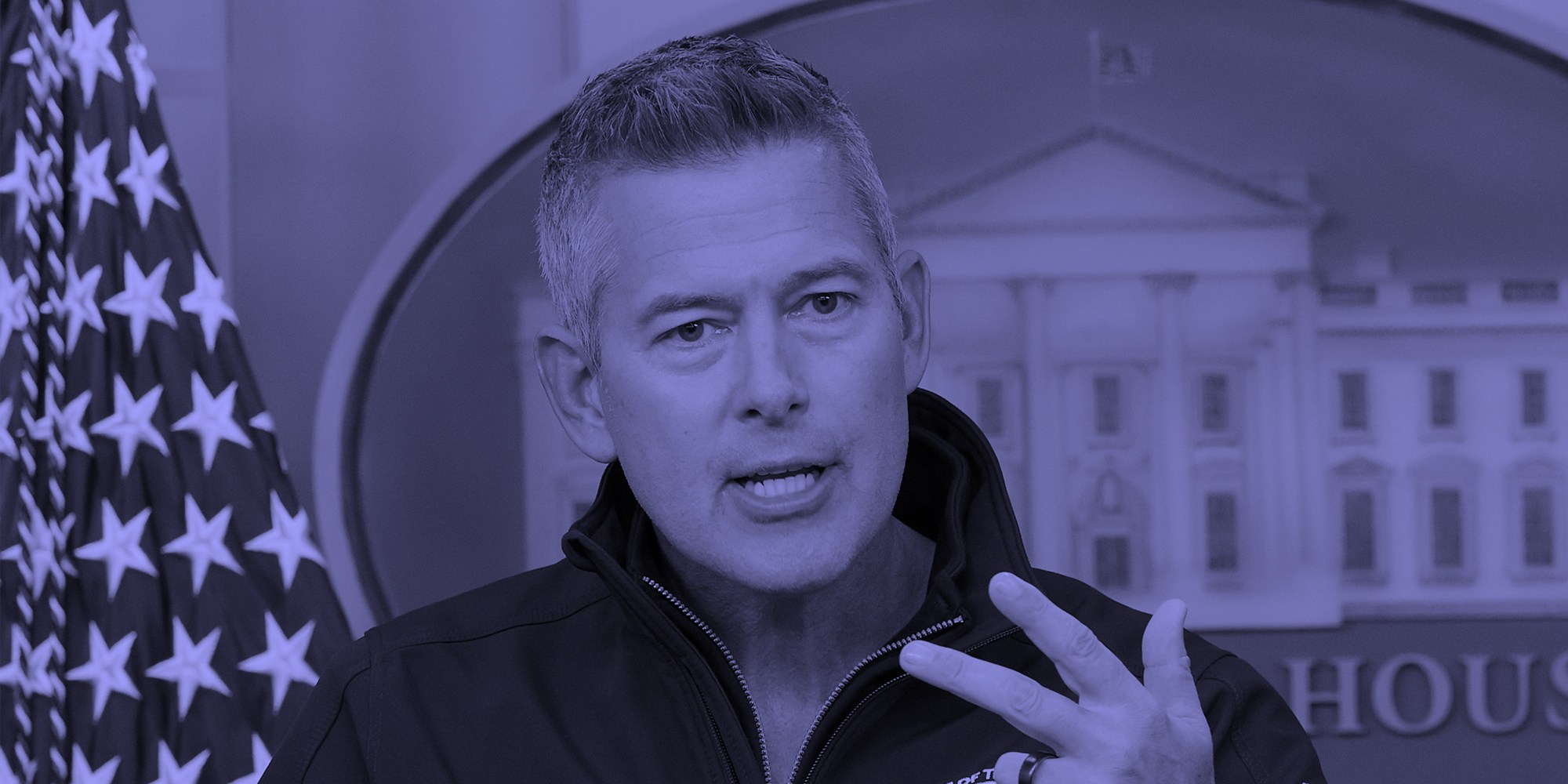
Transportation Secretary and former Real World Star Sean Duffy initially claimed that the incident was the result of “instability with air traffic communications and radar feeds,” but has since backtracked. With zero answers to one of the biggest aviation communication crises in recent memory; some speculated that the incident could be the result of the recent implementation of a new artificial intelligence air traffic control program, SMART. The FAA has denied any connection between the new program and the ground stop, and there is no reporting to indicate a connection.
However, questions remain about the AI program’s safety moving forward — and the Trump administration’s ability to manage one of the most complex and potentially deadly functions of our government.
“These are deeply unserious people in charge of a highly complex system in which the stakes could not be higher,” says Wise, referring to both President Donald Trump and Secretary Duffy. “Hundreds of thousands of people’s lives are in the hands of this system that is being maintained by people who have no idea or interest in how it works.”
This week, host Jessica Washington speaks with Jeff Wise, an aviation journalist who writes frequently for New York magazine, Wired, and others and the host of “Finding MH370,” an investigative podcast about the 2014 disappearance of an Malaysia Airlines flight. He explains why the nationwide ground stop wasn’t unprecedented at all, that the air traffic control system isn’t as antiquated as you might think, and that the skies of the United States might soon be taken over by delivery drones, if Amazon and Walmart have their way.
Washington also speaks with Intercept reporter Noah Hurowitz who was temporarily trapped in Denver during the ground stop along with other attendees of the “What’s Next!” conference, a who’s who of moderate Democrats discussing the future of the party. “It was funnier to witness than to be part of,” jokes Hurowitz.
He says the moderates at the post-midterms summit were “crafting themselves as the maverick middle,” adding, “What’s interesting is that they were also saying that we have to listen to voters. And the lack of any talk of Israel, for example, I think, is evidence of perhaps a selective idea of listening to voters.”
For more, listen to the full conversation of The Intercept Briefing on Apple Podcasts, Spotify, YouTube, or wherever you listen to podcasts.
**Transcript**
**Jessica M. Washington:** Welcome to The Intercept Briefing. I’m Jessica Washington, politics reporter for The Intercept.
**Noah Hurowitz:** And I’m Noah Hurowitz. I cover politics, federal law enforcement, and immigration at The Intercept.
**JMW:** Noah, last week I know you attended the “What’s Next” conference, which was a two-day summit in Denver, Colorado, hosted by the Majority Democrats PAC, where moderates debated the future of a party that appears to be slipping from their grasp.
Both Senate Minority Leader Chuck Schumer, and Maryland Sen. Chris Van Hollen, who is challenging Schumer for majority leader in the next Senate, spoke at the conference, sharing their visions for the party.
Noah, what is next for Democrats? Was there a winning vision that emerged?
**NH:** That was the question: What is next? It was interesting because the conference was scheduled sometime in advance, and so of course, what’s next could be a question for if they lost and if they won. It just so happened that this came on the heels of just this massive wave of wins for Democrats. And Democrats of all stripes, really.
Obviously, there’s an ascendant DSA left in New York and the \[Senate] candidate in Maine, Troy Jackson, is relatively of the left. But there were also a number of more moderate, more centrist wins around the country. So this party, it really was a party because the “what’s next” here is, “OK, what do we do with these wins?” rather than, “How do we stop losing?” \[laughs]
**JMW:** Nice change of pace.
**NH:** It did seem like a nice change of pace. There was an effort to craft both a reading of the midterm elections and a strategy for what’s next that elevated the wisdom of what I would call a centrist or a moderate vision. That’s not exactly the words that they used.
I had a conversation with one of the conference organizers, Lis Smith, who is a very prominent spokesperson for the moderate wing of the Democrats. She was saying, we don’t see Majority Dems as a centrist or an establishment group.
They’re crafting themselves as the maverick middle. They’re calling for flexibility. They’re calling for different strategies in different places, but there were a few themes that came up a number of times. I didn’t hear anything about Israel at all, but I did hear a number of calls for an end to the Iran war. I did not hear anything about abolishing ICE, but there were calls for a humane but secure immigration policy.
If you’re looking at it strictly from a popular standpoint, part of the reason that the Democrats likely lost, especially along the border in Texas in 2024, was that there was an experience of chaos on the border. With that gone, that was less of an issue here. I do see some of where they’re coming from — it’s not like saying a secure border is an unpopular opinion.
**JMW:** The maverick middle is a really, really funny way of putting it. But obviously issues like Israel, ICE anger and a desire for people to do more than what Democrats have been doing played into the midterm races, particularly in the primaries.
Was there any pushback on the fact that that wasn’t discussed more? Did you hear anything from people in the room that they wanted to hear on anything on these issues?
**NH:** We heard from some unsanctioned visitors to the conference during the speech by Hakeem Jeffries. A number of protesters stood up and called for a Green New Deal. They called for an arms embargo. They yelled, “We don’t trust you.” That was perhaps the most contentious instance of dissent or disagreement that I saw. For the most part, this was a fairly self-selected group of people — big group of people. There were more than 3,000 people there. There were a lot of elected officials there, including a number of candidates backed by this PAC, Majority Dems.
But one interesting fact is that this conference was co-signed by or done in close coordination with this group called the Searchlight Institute, which is a think tank formed by a former John Fetterman staffer, Adam Jentleson, which has really made its thing about pushing back on the so-called groups, pushing back on the left wing of the party who they blamed for perhaps going too far with some of the messaging in 2024. Woke 1.0, if you will. The tone was really set by just tuning out what they view as the groups’.
But what’s interesting is that they were also saying that we have to listen to voters. And the lack of any talk of Israel, for example, I think, is ev
Sean Duffy’s FAA Fiasco
A week after the FAA halted flights nationwide, disrupting around 12,000 flights, officials still have no clear explanation for what went wrong. Questions are mounting about the safety of a new AI-based air traffic control program and the Trump administration's ability to manage one of the government's most sensitive systems.
Cross Lines newsroom
Share this article
#إدارة الطيران الفيدرالية#شون دافي#مراقبة الحركة الجوية#الذكاء الاصطناعي#الديمقراطيون#الانتخابات النصفية
Original source: The Intercept