Trump’s Venezuela Oil Deal Is a Farce
Foreign Policy

Foreign Policy
Original Source
The Trump administration's landmark oil accord with Venezuela, intended to control 65 billion barrels and lower U.S. fuel prices, faces serious legal and political obstacles that render it unlikely to deliver on its ambitious promises.
Trump Can't Lower Gas Pump Prices Via Venezuelan Oil
By using this website, you agree to our use of cookies. This use includes personalization of content and ads, and traffic analytics. Review our Privacy Policy for more information.
!Foreign Policy
Foreign Policy
Get analysis and alerts more quickly in the mobile app.
Install
Back to Foreign Policy Magazine home page
* Latest
* Regions
+ Asia & the Pacific
+ China
+ Middle East & Africa
+ Americas
+ Europe
* Newsletters
Editors’ Picks
Evening roundup with our editors’ favorite stories of the day
!World Brief Icon
World Brief
Your guide to the most important world stories of the day
!China Brief Icon
China Brief
The latest news, analysis, and data from the country each week
Situation Report
Weekly update on what’s driving U.S. national security policy
FP Weekend
A curation of our best book reviews, deep dives, and other reads
!Africa Brief Icon
Africa Brief
Essential analysis of the stories shaping geopolitics on the continent
!South Asia Brief Icon
South Asia Brief
Weekly update on developments in India and its neighbors
The Reading List
Curated guides on geopolitics and current affairs
FP Bookshelf
A monthly guide to FP’s book reviews, excerpts, and reading recommendations
!Latin America Brief Icon
Latin America Brief
One-stop digest of politics, economics, and culture
!Southeast Asia Brief Icon
Southeast Asia Brief
A weekly dispatch with news from the region’s 11 countries
The New Geopolitics
A five-part masterclass in IR theory with Harvard Professor Stephen M. Walt
View All Newsletters
* FP Live
* Latest
* Trending:
* Iran war
* China's bet on AI
Search this website
* Preferences
* My FP Feed
* Saved Articles
* Newsletters
* Magazine Archive
* Subscription Settings
* FAQs
* Log Out
Sign In
Sign In
Partner with FP at UNGA81 Partner with FP at UNGA81
Subscribe SubscribePartner with FP at UNGA81 Partner with FP at UNGA81
Analysis:
Trump’s Venezuela Oil Deal Is a Farce
*
*
* Facebook
* Bluesky
* X
* LinkedIn
* WhatsApp
* Reddit
Save
Save
1. Create an FP account to save articles to read later.
Sign Up
ALREADY AN FP SUBSCRIBER? LOGIN
PDF
PDF
1. **Downloadable PDFs** are a benefit of an FP subscription.
Subscribe Now
ALREADY AN FP SUBSCRIBER? LOGIN
Gift
Gift
*
*
* WhatsApp
1. Gifting articles is a subscriber benefit.
Subscribe Now
ALREADY AN FP SUBSCRIBER? LOGIN
2. This article is an Insider exclusive.
Contact us at [email protected] to learn about upgrade options, unlocking the ability to gift this article.
Analysis
Trump’s Venezuela Oil Deal Is a Farce
There aren’t 65 billion barrels, they won’t be lowering gas prices, and they won’t refill the SPR.
By **Keith Johnson**, a staff writer at *Foreign Policy* covering geoeconomics and energy.
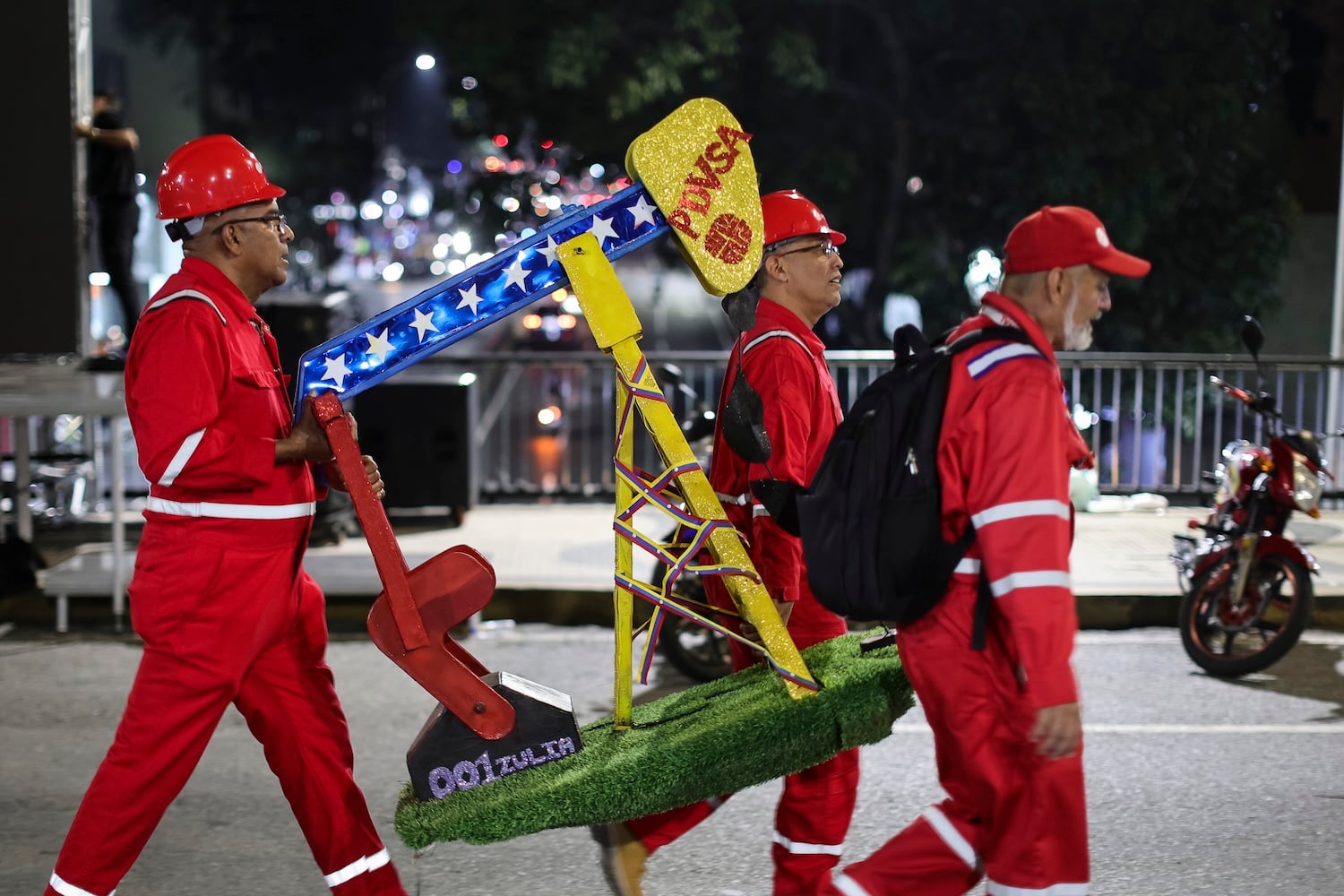
!Three oil workers dressed in red uniform coveralls with matching red helmets are seen from the side as they cross a street. Between them, they carry a roughly three-foot-tall mini model of an oil rig decorated in the red, yellow, and blue field of stars colors of the Venezuelan flag.
*Three oil workers dressed in red uniform coveralls with matching red helmets are seen from the side as they cross a street. Between them, they carry a roughly three-foot-tall mini model of an oil rig decorated in the red, yellow, and blue field of stars colors of the Venezuelan flag.*
PDVSA oil workers carry a cardboard replica of an oil rig after the presentation of new oil reforms at an event in Caracas, Venezuela, on Jan. 29. Jesus Vargas / Getty Images
1. Get audio access with any FP subscription.
Subscribe Now
ALREADY AN FP SUBSCRIBER? LOGIN
September 1, 2026, 5:29 PM
The Trump administration has managed, in its proposed oil “accord” with Venezuela, to combine its love for state crony capitalism with a yearning for 19th-century imperialism. It is the capstone of U.S. President Donald Trump’s *Weltanshauung.*
The oil agreement announced over the weekend between the United States and Venezuela is, from Washington’s point of view, meant to be the payoff for the January military operation and change of leaders (if not regime change) in Caracas. Trump proposed at the time to take Venezuela’s oil, as he had previously rued the United States’ failure to take Iraq’s oil. This is his effort to do so. And it has confused people across many continents.
The Trump administration has managed, in its proposed oil “accord” with Venezuela, to combine its love for
state crony capitalismwith a yearning for 19th-century
imperialism. It is the capstone of U.S. President Donald Trump’s
*Weltanshauung.*
The oil
agreementannounced over the weekend between the United States and Venezuela is, from Washington’s point of view, meant to be the payoff for the January military operation and change of leaders (if not regime change) in Caracas. Trump proposed at the time to take Venezuela’s oil, as he had previously rued the United States’ failure to
take Iraq’s oil. This is his effort to do so. And it has
confusedpeople across many continents.
As
announcedby the White House
, the deal would give the United States “control” over some 65 billion barrels of Venezuela’s oil, with an eye to securing even more oil for feedstock for U.S. refineries, lowering U.S. fuel prices, and refilling the near-empty Strategic Petroleum Reserve that Trump and his predecessor
drained.
The Trump administration chose as its
vehiclefor this maneuver the second-largest operator in Venezuela, a Barbados-based
companyknown as North American Blue Energy Partners (NABEP). That company is run
by Venezuelan businessman
Alejandro Betancourt, a friend of the regimes in both Caracas and Washington who has faced investigations in Venezuela, Spain, and Switzerland on suspicion of corruption and
money-laundering offenses. (NABEP’s legal counsel maintains that Betancourt “has never been charged with a crime in any jurisdiction.”)
Yet despite the Trump administration’s grand pronouncement that this agreement represents “
the biggest oil deal in world history,” the reality is that it won’t begin to affect gasoline prices this year or next; will do nothing to assuage voter concern ahead of midterms; and is not a solution to the emptying salt caverns in Louisiana and Texas, where U.S. strategic oil reserves are kept.
It also won’t likely ever come close to fruition—s
ince about 1976, no agreement with a foreign oil company has lasted a full term of a Venezuelan president, let alone that of the concession—and the dividends it pays, if any, will be exceedingly modest, risky, and costly.
Read More
*
*In a fuchsia blouse, Venezuela’s interim president, Delcy Rodríguez, holds a red folder with the a golden seal and the words "ley de reforma de la ley organica de hidrocarburos."*
Venezuela Reformed Its Oil Law. Now What?
Caracas is trying desperately to boost investment in its oil patch, but it may be disappointed. !This article has an audio recording
Analysis
|
Keith Johnson
*
*A person hold a megaphone as a Venezuelan flag is behind them.*
Can Venezuela’s Opposition Find A Path to Power?
As Delcy Rodríguez clings to power, dissidents wonder who to trust.
Analysis
|
Ani Chkhikvadze
---
The problemswith this deal
are many.
One can start with the legality. The regime of interim Venezuelan President Delcy Rodríguez—the legatee of the country’s authoritarian former president, Nicolás Maduro—is,
accordingto Trump, “highly respected.” What she is not is the legitimate head of a legitimate Venezuelan government. That raises questions about the longevity of any of these agreements, as a future Venezuelan government could, and probably will, abrogate many of the terms. That is exactly the sort of thing that chills long-term, multibillion-dollar investments.
“There is an original sin, which is believing in keeping Delcy Rodríguez, who you yourself undermined. You got yourself into a pickle,” said Pedro Burelli, referring to Trump. Burelli is a former
By using this website, you agree to our use of cookies. This use includes personalization of content and ads, and traffic analytics. Review our Privacy Policy for more information.
!Foreign Policy
Foreign Policy
Get analysis and alerts more quickly in the mobile app.
Install
Back to Foreign Policy Magazine home page
* Latest
* Regions
+ Asia & the Pacific
+ China
+ Middle East & Africa
+ Americas
+ Europe
* Newsletters
Editors’ Picks
Evening roundup with our editors’ favorite stories of the day
!World Brief Icon
World Brief
Your guide to the most important world stories of the day
!China Brief Icon
China Brief
The latest news, analysis, and data from the country each week
Situation Report
Weekly update on what’s driving U.S. national security policy
FP Weekend
A curation of our best book reviews, deep dives, and other reads
!Africa Brief Icon
Africa Brief
Essential analysis of the stories shaping geopolitics on the continent
!South Asia Brief Icon
South Asia Brief
Weekly update on developments in India and its neighbors
The Reading List
Curated guides on geopolitics and current affairs
FP Bookshelf
A monthly guide to FP’s book reviews, excerpts, and reading recommendations
!Latin America Brief Icon
Latin America Brief
One-stop digest of politics, economics, and culture
!Southeast Asia Brief Icon
Southeast Asia Brief
A weekly dispatch with news from the region’s 11 countries
The New Geopolitics
A five-part masterclass in IR theory with Harvard Professor Stephen M. Walt
View All Newsletters
* FP Live
* Latest
* Trending:
* Iran war
* China's bet on AI
Search this website
* Preferences
* My FP Feed
* Saved Articles
* Newsletters
* Magazine Archive
* Subscription Settings
* FAQs
* Log Out
Sign In
Sign In
Partner with FP at UNGA81 Partner with FP at UNGA81
Subscribe SubscribePartner with FP at UNGA81 Partner with FP at UNGA81
Analysis:
Trump’s Venezuela Oil Deal Is a Farce
*
*
* Bluesky
* X
Save
Save
1. Create an FP account to save articles to read later.
Sign Up
ALREADY AN FP SUBSCRIBER? LOGIN
1. **Downloadable PDFs** are a benefit of an FP subscription.
Subscribe Now
ALREADY AN FP SUBSCRIBER? LOGIN
Gift
Gift
*
*
1. Gifting articles is a subscriber benefit.
Subscribe Now
ALREADY AN FP SUBSCRIBER? LOGIN
2. This article is an Insider exclusive.
Contact us at [email protected] to learn about upgrade options, unlocking the ability to gift this article.
Analysis
Trump’s Venezuela Oil Deal Is a Farce
There aren’t 65 billion barrels, they won’t be lowering gas prices, and they won’t refill the SPR.
By **Keith Johnson**, a staff writer at *Foreign Policy* covering geoeconomics and energy.
!Three oil workers dressed in red uniform coveralls with matching red helmets are seen from the side as they cross a street. Between them, they carry a roughly three-foot-tall mini model of an oil rig decorated in the red, yellow, and blue field of stars colors of the Venezuelan flag.
*Three oil workers dressed in red uniform coveralls with matching red helmets are seen from the side as they cross a street. Between them, they carry a roughly three-foot-tall mini model of an oil rig decorated in the red, yellow, and blue field of stars colors of the Venezuelan flag.*
PDVSA oil workers carry a cardboard replica of an oil rig after the presentation of new oil reforms at an event in Caracas, Venezuela, on Jan. 29. Jesus Vargas / Getty Images
1. Get audio access with any FP subscription.
Subscribe Now
ALREADY AN FP SUBSCRIBER? LOGIN
September 1, 2026, 5:29 PM
The Trump administration has managed, in its proposed oil “accord” with Venezuela, to combine its love for state crony capitalism with a yearning for 19th-century imperialism. It is the capstone of U.S. President Donald Trump’s *Weltanshauung.*
The oil agreement announced over the weekend between the United States and Venezuela is, from Washington’s point of view, meant to be the payoff for the January military operation and change of leaders (if not regime change) in Caracas. Trump proposed at the time to take Venezuela’s oil, as he had previously rued the United States’ failure to take Iraq’s oil. This is his effort to do so. And it has confused people across many continents.
The Trump administration has managed, in its proposed oil “accord” with Venezuela, to combine its love for
state crony capitalismwith a yearning for 19th-century
imperialism. It is the capstone of U.S. President Donald Trump’s
*Weltanshauung.*
The oil
agreementannounced over the weekend between the United States and Venezuela is, from Washington’s point of view, meant to be the payoff for the January military operation and change of leaders (if not regime change) in Caracas. Trump proposed at the time to take Venezuela’s oil, as he had previously rued the United States’ failure to
take Iraq’s oil. This is his effort to do so. And it has
confusedpeople across many continents.
As
announcedby the White House
, the deal would give the United States “control” over some 65 billion barrels of Venezuela’s oil, with an eye to securing even more oil for feedstock for U.S. refineries, lowering U.S. fuel prices, and refilling the near-empty Strategic Petroleum Reserve that Trump and his predecessor
drained.
The Trump administration chose as its
vehiclefor this maneuver the second-largest operator in Venezuela, a Barbados-based
companyknown as North American Blue Energy Partners (NABEP). That company is run
by Venezuelan businessman
Alejandro Betancourt, a friend of the regimes in both Caracas and Washington who has faced investigations in Venezuela, Spain, and Switzerland on suspicion of corruption and
money-laundering offenses. (NABEP’s legal counsel maintains that Betancourt “has never been charged with a crime in any jurisdiction.”)
Yet despite the Trump administration’s grand pronouncement that this agreement represents “
the biggest oil deal in world history,” the reality is that it won’t begin to affect gasoline prices this year or next; will do nothing to assuage voter concern ahead of midterms; and is not a solution to the emptying salt caverns in Louisiana and Texas, where U.S. strategic oil reserves are kept.
It also won’t likely ever come close to fruition—s
ince about 1976, no agreement with a foreign oil company has lasted a full term of a Venezuelan president, let alone that of the concession—and the dividends it pays, if any, will be exceedingly modest, risky, and costly.
Read More
*
*In a fuchsia blouse, Venezuela’s interim president, Delcy Rodríguez, holds a red folder with the a golden seal and the words "ley de reforma de la ley organica de hidrocarburos."*
Venezuela Reformed Its Oil Law. Now What?
Caracas is trying desperately to boost investment in its oil patch, but it may be disappointed. !This article has an audio recording
Analysis
|
Keith Johnson
*
*A person hold a megaphone as a Venezuelan flag is behind them.*
Can Venezuela’s Opposition Find A Path to Power?
As Delcy Rodríguez clings to power, dissidents wonder who to trust.
Analysis
|
Ani Chkhikvadze
---
The problemswith this deal
are many.
One can start with the legality. The regime of interim Venezuelan President Delcy Rodríguez—the legatee of the country’s authoritarian former president, Nicolás Maduro—is,
accordingto Trump, “highly respected.” What she is not is the legitimate head of a legitimate Venezuelan government. That raises questions about the longevity of any of these agreements, as a future Venezuelan government could, and probably will, abrogate many of the terms. That is exactly the sort of thing that chills long-term, multibillion-dollar investments.
“There is an original sin, which is believing in keeping Delcy Rodríguez, who you yourself undermined. You got yourself into a pickle,” said Pedro Burelli, referring to Trump. Burelli is a former
🔗 Share Article
Tags:#فنزويلا#الولايات المتحدة#النفط والطاقة#ترامب#السياسة الخارجية#الاقتصاد
Source: Foreign Policy
For Context
Related reads from the same topic or latest developments


