Book Review: 'The Best Kind of American' Shows How Lebanon Became the Middle East's Battleground
By using this website, you agree to our use of cookies. This use includes personalization of content and ads, and traffic analytics. Review our Privacy Policy for more information.
Foreign Policy Get analysis and alerts more quickly in the mobile app.
Install
Back to Foreign Policy Magazine home page
Evening roundup with our editors’ favorite stories of the day
World Brief
Your guide to the most important world stories of the day
China Brief
The latest news, analysis, and data from the country each week
Situation Report
Weekly update on what’s driving U.S. national security policy
FP Weekend
A curation of our best book reviews, deep dives, and other reads
Africa Brief
Essential analysis of the stories shaping geopolitics on the continent
South Asia Brief
Weekly update on developments in India and its neighbors
The Reading List
Curated guides on geopolitics and current affairs
FP Bookshelf
A monthly guide to FP’s book reviews, excerpts, and reading recommendations
Latin America Brief
One-stop digest of politics, economics, and culture
Southeast Asia Brief
A weekly dispatch with news from the region’s 11 countries
The New Geopolitics
A five-part masterclass in IR theory with Harvard Professor Stephen M. Walt
View All Newsletters
Give a gift Give a gift
Subscribe Subscribe Give a gift Give a gift
Review: How Lebanon Became the Middle East’s Battleground
1. Create an FP account to save articles to read later.
Sign Up
ALREADY AN FP SUBSCRIBER? LOGIN
PDF
1. **Downloadable PDFs** are a benefit of an FP subscription.
ALREADY AN FP SUBSCRIBER? LOGIN
Gift
1. Gifting articles is a subscriber benefit.
ALREADY AN FP SUBSCRIBER? LOGIN
2. This article is an Insider exclusive.
Contact us at [email protected] to learn about upgrade options, unlocking the ability to gift this article.
Review
How Lebanon Became the Middle East’s Battleground
A new book explores how the 1982 Israeli invasion set the stage for conflicts still unfolding today.
November 13, 2026, 2:38 PM
By ***Jackie Northam**, a former international affairs correspondent for NPR.*
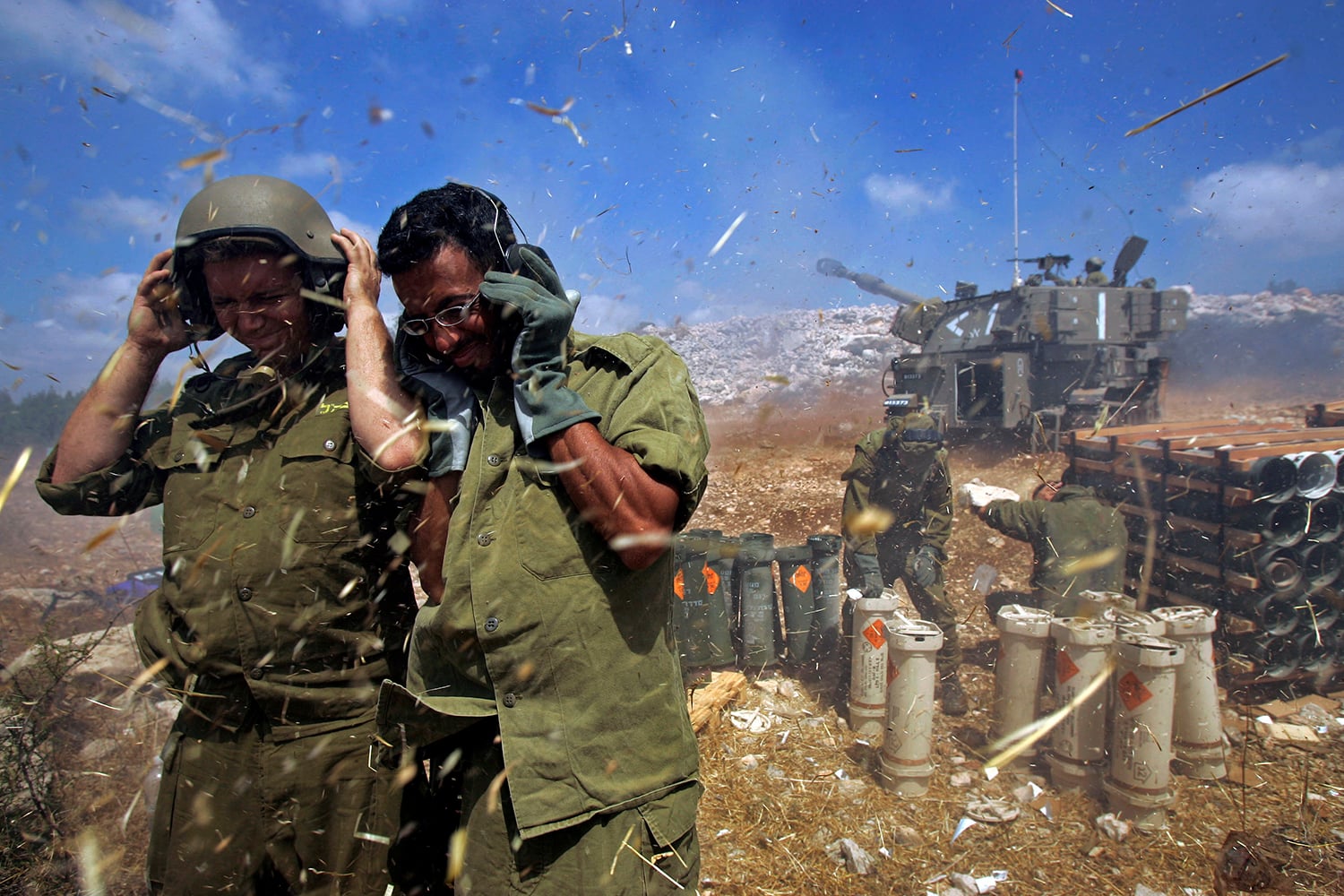
*Two soldiers wearing olive-green uniforms cover their ears as debris flies through the air, with ammunition canisters and a military artillery vehicle in the background.*
Israeli soldiers cover their ears as a mobile artillery unit fires into southern Lebanon at a military position located along the Israeli-Lebanese border on Aug. 8, 2006. David Furst/AFP via Getty Images
1. Get audio access with any FP subscription.
ALREADY AN FP SUBSCRIBER? LOGIN
In mid-July 2006, NPR’s foreign editor dispatched me to Beirut. Israel and Hezbollah were waging an all-out war after militants launched a cross-border attack from Lebanon, killing eight Israeli soldiers and capturing two more. Israeli bombs pounded Lebanon’s ports, roads, and bridges, while Hezbollah rained missiles down on northern Israel. Believing his country had the upper hand, Israeli Prime Minister Ehud Olmert wanted to finish off Hezbollah once and for all and had convinced the George W. Bush administration to hold off calling for a ceasefire.
I was in my hotel room working on a story with a Lebanese translator when then-U.S. Secretary of State Condoleezza Rice appeared on TV, suggesting the conflict was an opportunity to remake the region. She added that the attacks—which had already led to more than 300 Lebanese deaths and would go on to kill over 1,000 people in Lebanon and 121 Israeli soldiers—were the “birth pangs of a new Middle East.”
The translator looked up from her computer and turned to me. “Birth pangs?” she asked, shaking her head. “Why does Lebanon always have to be the midwife?”
*Book cover of "The Best Kind of American: A True Story of Murder, War, and America’s Undoing in the Middle East," by Kim Ghattas, Henry Holt and Co.*
***The Best Kind of American: A True Story of Murder, War, and America’s Undoing in the Middle East***, Kim Ghattas, Henry Holt and Co., 496 pp., $32.99, October 2026
For five decades, Lebanon has been a key Middle East battleground, caught in the geopolitical crosshairs of Israel, Iran, Syria, and the United States competing to shape or control the broader region. In her new book *The Best Kind of American: A True Story of Murder, War, and America’s Undoing in the Middle East*, Kim Ghattas contends that many of the policies and conflicts playing out across the region today were established in Lebanon during the 1980s, particularly Israel’s 1982 invasion. It’s a prescient argument given where the Middle East now finds itself, with Israel continuing to vie for security and land, Iran using Hezbollah to project power, and Lebanon remaining a fragile state.
Ghattas, a Lebanon-born journalist and commentator, unfolds the story of the country’s turbulence around the 1984 murder of Malcolm Kerr, a U.S. scholar of the Middle East and president of the American University of Beirut who was gunned down outside his office. The book begins with an email from Kerr’s widow, Ann, asking Ghattas if she had discovered new information about his assassination while writing an earlier book. Ann had clues about who had killed her husband, but no clarity as to why.
Kerr was born and spent most of his childhood in Lebanon. Ghattas portrays him as an Arabist with a deep knowledge of the Middle East and an intuitive understanding of the role of religious fanaticism in the region. This was in striking contrast to successive U.S. administrations that, Ghattas writes, have been out-maneuvered time and again by Iran, Israel, and Syria.
Lebanon was embroiled in a brutal civil war in the 1980s, which provides a vivid backdrop for Ghattas’ search to identify Kerr’s killer and the reason for his death. Regional pow
How Lebanon Became the Middle East’s Battleground
Kim Ghattas's new book, The Best Kind of American, argues that Israel's 1982 invasion of Lebanon laid the groundwork for regional conflicts that continue to unfold today. The author traces how many of the policies shaping the Middle East were first set in motion during the 1980s, using the murder of American scholar Malcolm Kerr as a window into the country's turmoil.
Cross Lines newsroom
Share this article
#لبنان#الشرق الأوسط#حزب الله#الغزو الإسرائيلي للبنان#كيم غطاس#الولايات المتحدة
Original source: Foreign Policy