Ethiopia Returns to Civil War
Foreign Policy

Foreign Policy
Original Source
Ethiopia's four-year ceasefire collapsed this week as the Tigray People's Liberation Front launched military operations to oust Prime Minister Abiy Ahmed. The rebel group has formed an alliance with six other armed organizations in a bid to increase pressure on the capital.
Ethiopia, TPLF Rebels Return to War in Tigray Region
!Foreign Policy
Foreign Policy Get analysis and alerts more quickly in the mobile app.
Install
Back to Foreign Policy Magazine home page
* Latest
* Regions
+ Asia & the Pacific
+ China
+ Middle East & Africa
+ Americas
+ Europe
* Newsletters
Editors’ Picks
Evening roundup with our editors’ favorite stories of the day
!World Brief Icon
World Brief
Your guide to the most important world stories of the day
!China Brief Icon
China Brief
The latest news, analysis, and data from the country each week
Situation Report
Weekly update on what’s driving U.S. national security policy
FP Weekend
A curation of our best book reviews, deep dives, and other reads
!Africa Brief Icon
Africa Brief
Essential analysis of the stories shaping geopolitics on the continent
!South Asia Brief Icon
South Asia Brief
Weekly update on developments in India and its neighbors
The Reading List
Curated guides on geopolitics and current affairs
FP Bookshelf
A monthly guide to FP’s book reviews, excerpts, and reading recommendations
!Latin America Brief Icon
Latin America Brief
One-stop digest of politics, economics, and culture
!Southeast Asia Brief Icon
Southeast Asia Brief
A weekly dispatch with news from the region’s 11 countries
The New Geopolitics
A five-part masterclass in IR theory with Harvard Professor Stephen M. Walt
View All Newsletters
* FP Live
* Latest
* Trending:
* Trump-Xi meeting
* United Nations General Assembly
Search this website
* Preferences
* My FP Feed
* Saved Articles
* Newsletters
* Magazine Archive
* Subscription Settings
* FAQs
* Log Out
Sign In
Sign In
Partner with FP at UNGA81 Partner with FP at UNGA81
Subscribe Subscribe Partner with FP at UNGA81 Partner with FP at UNGA81
World Brief: Ethiopia Returns to Civil War
*
*
* Facebook
* Bluesky
* X
* LinkedIn
* WhatsApp
* Reddit
Save
1. Create an FP account to save articles to read later.
Sign Up
ALREADY AN FP SUBSCRIBER? LOGIN
PDF
1. **Downloadable PDFs** are a benefit of an FP subscription.
Subscribe Now
ALREADY AN FP SUBSCRIBER? LOGIN
Gift
*
*
* WhatsApp
1. Gifting articles is a subscriber benefit.
Subscribe Now
ALREADY AN FP SUBSCRIBER? LOGIN
2. This article is an Insider exclusive.
Contact us at [email protected] to learn about upgrade options, unlocking the ability to gift this article.
World Brief
FP’s flagship daily newsletter, catching you up on 24 hours of news in five minutes. Delivered weekdays.
Ethiopia Returns to Civil War
The Tigray People’s Liberation Front, now allied with six other armed groups, hopes to oust Prime Minister Abiy Ahmed.
!An illustration of Alexandra Sharp, World Brief newsletter writer
*An illustration of Alexandra Sharp, World Brief newsletter writer*
*Alexandra Sharp*
By **Alexandra Sharp**, the World Brief writer at *Foreign Policy*.
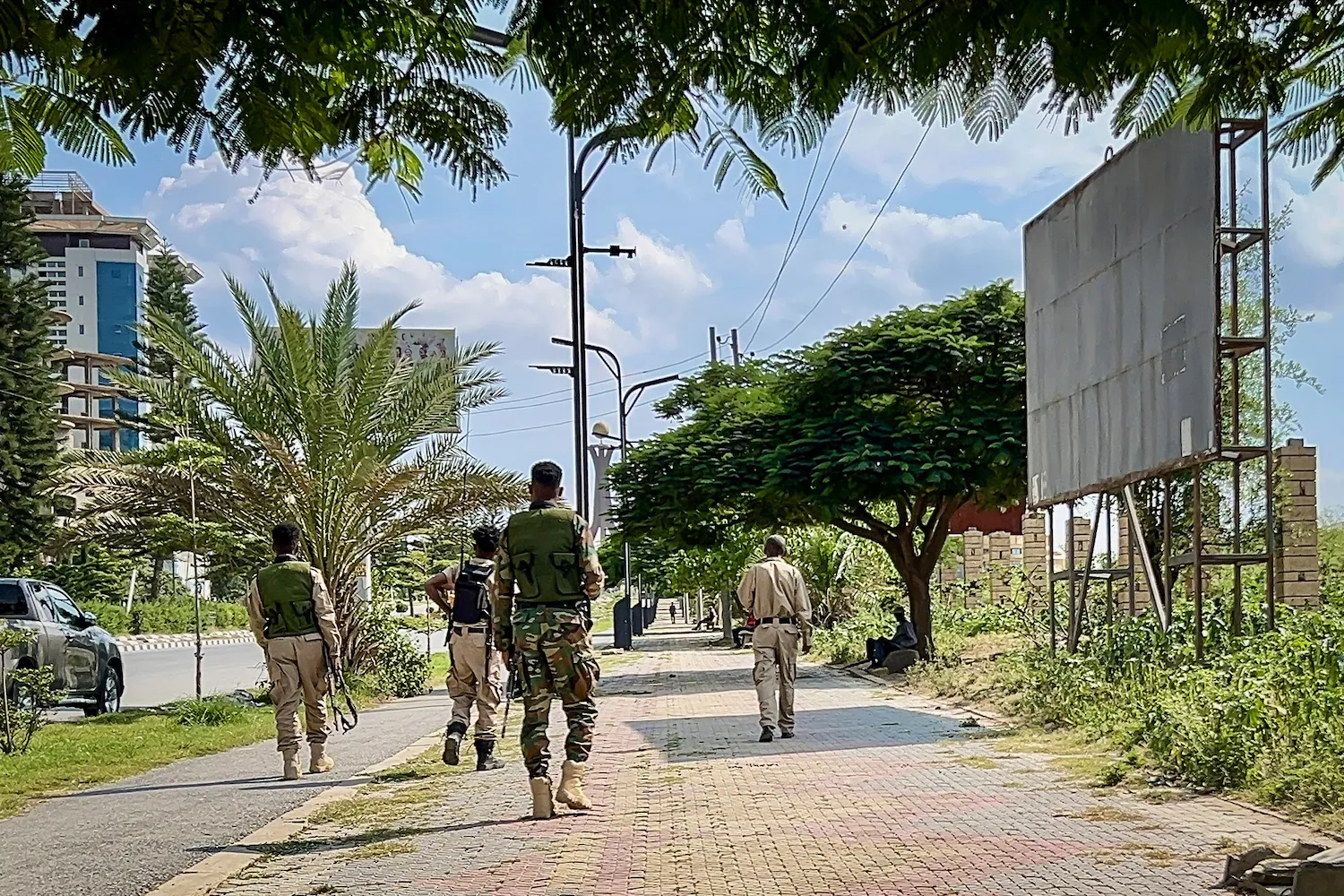
!Members of the Tigray People’s Liberation Front walk along a main road in Ethiopia. Their backs are turned toward the camera.
*Members of the Tigray People’s Liberation Front walk along a main road in Ethiopia. Their backs are turned toward the camera.*
Members of the Tigray People’s Liberation Front walk along a main road in Mekelle, Ethiopia, on Sept. 23. AFP via Getty Images
*
*
September 25, 2026, 4:33 PM
Welcome back to World Brief, where we’re looking at violent clashes across **Ethiopia**, the **Vatican** courting **France**, and a seven-day proposal to end the **Iran war**.
---
**Threats to Addis Ababa**
For nearly four years, Ethiopia has clung to a state of precarious peace, afraid to reignite a civil war that became one of the world’s deadliest conflicts in this century. But the country’s 2022 truce ultimately shattered this week, when the Tigray People’s Liberation Front (TPLF)—a powerful ethno-nationalist political and paramilitary organization that ruled Ethiopia for three decades until 2018—launched what its leaders called a “defensive” war to oust Prime Minister Abiy Ahmed.
Welcome back to World Brief, where we’re looking at violent clashes across **Ethiopia**, the **Vatican** courting **France**, and a seven-day proposal to end the **Iran war**.
Sign up to receive World Brief in your inbox every weekday.
---
**Threats to Addis Ababa**
For nearly four years, Ethiopia has clung to a state of precarious peace, afraid to reignite a civil war that became one of the world’s deadliest conflicts in this century. But the country’s 2022 truce ultimately shattered this week, when the Tigray People’s Liberation Front (TPLF)—a powerful ethno-nationalist political and paramilitary organization that ruled Ethiopia for three decades until 2018—launched what its leaders called a “defensive” war to oust Prime Minister Abiy Ahmed.
It is unclear what led to renewed fighting. On Wednesday, the TPLF accused government forces of firing on its troops, prompting retaliation. Addis Ababa tells a different story, arguing that armed rebels ordered an “all-out offensive” against federal positions in the Afar and Amhara regions as well as seized three airports in nearby Tigray. “The TPLF politico-military leadership has obviously taken irresponsibility to new heights,” Getachew Reda, an advisor to Abiy and a former TPLF official, wrote on social media.
Since then, violent clashes have only escalated. According to the Ethiopian National Defense Force (ENDF), its troops have already killed 272 “enemy troops” and captured 260 others. “Currently, the army is assessing the enemy’s situation and launching well-planned counterattacks from key military positions it holds,” the ENDF said. Internet access and phone service have also been disrupted in the north.
The last time that Ethiopia’s military took up arms against the TPLF, around 600,000 people were killed, and the Tigray region found itself on the brink of famine. This time, the TPLF has found new ways to exert pressure on Addis Ababa—namely, its recently formed coalition with six other armed groups. The alliance, announced on Sunday, includes major opposition parties that boycotted Ethiopia’s election in June. Abiy’s Prosperity Party won around 90 percent of available seats in the country’s lower house of parliament; voting did not take place at all in Tigray.
Ethiopia has also accused the rebels of seeking an alliance with neighboring Eritrea in an effort to destabilize Abiy’s administration. Eritrea, whose forces fought alongside Ethiopian federal forces in the previous Tigray war, denies involvement. However, as relations between Abiy and Eritrean President Isaias Afwerki have plummeted in recent years, currying support from Tigray has become an increasingly attractive option for Asmara. Eritrea has long feared that landlocked Ethiopia will invade its territory to gain access to the Red Sea.
Hoping to avoid another catastrophe or the outbreak of a wider regional war, foreign leaders have condemned the recent fighting and advocated for diplomacy. This week, the African Union Commission called for an immediate de-escalation of hostilities, East Africa’s bloc stressed the importance of “maximum restraint,” and the U.S. ambassador to Ethiopia demanded “reasonable political dialogue.”
Yet the conflict appears far from over. “Our army will continue its fight to ensure that the rights, security, sovereignty, and survival of our people are protected,” the Tigray regional government said in a statement on Wednesday.
---
**Today’s Most Read**
* **What Machiavelli Would Say About Trump** *by Stephen M. Walt*
* **Saudi Arabia Bribed the Wrong People** *by Nicholas Grossman*
* **Germany Is Officially Adrift** *by Jeff Rathke*
---
**What We’re Following**
**The Vatican’s “eldest daughter.”** Pope Leo XIV on Friday kicked off his fourth major international trip since beginning his sti
!Foreign Policy
Foreign Policy Get analysis and alerts more quickly in the mobile app.
Install
Back to Foreign Policy Magazine home page
* Latest
* Regions
+ Asia & the Pacific
+ China
+ Middle East & Africa
+ Americas
+ Europe
* Newsletters
Editors’ Picks
Evening roundup with our editors’ favorite stories of the day
!World Brief Icon
World Brief
Your guide to the most important world stories of the day
!China Brief Icon
China Brief
The latest news, analysis, and data from the country each week
Situation Report
Weekly update on what’s driving U.S. national security policy
FP Weekend
A curation of our best book reviews, deep dives, and other reads
!Africa Brief Icon
Africa Brief
Essential analysis of the stories shaping geopolitics on the continent
!South Asia Brief Icon
South Asia Brief
Weekly update on developments in India and its neighbors
The Reading List
Curated guides on geopolitics and current affairs
FP Bookshelf
A monthly guide to FP’s book reviews, excerpts, and reading recommendations
!Latin America Brief Icon
Latin America Brief
One-stop digest of politics, economics, and culture
!Southeast Asia Brief Icon
Southeast Asia Brief
A weekly dispatch with news from the region’s 11 countries
The New Geopolitics
A five-part masterclass in IR theory with Harvard Professor Stephen M. Walt
View All Newsletters
* FP Live
* Latest
* Trending:
* Trump-Xi meeting
* United Nations General Assembly
Search this website
* Preferences
* My FP Feed
* Saved Articles
* Newsletters
* Magazine Archive
* Subscription Settings
* FAQs
* Log Out
Sign In
Sign In
Partner with FP at UNGA81 Partner with FP at UNGA81
Subscribe Subscribe Partner with FP at UNGA81 Partner with FP at UNGA81
World Brief: Ethiopia Returns to Civil War
*
*
* Bluesky
* X
Save
1. Create an FP account to save articles to read later.
Sign Up
ALREADY AN FP SUBSCRIBER? LOGIN
1. **Downloadable PDFs** are a benefit of an FP subscription.
Subscribe Now
ALREADY AN FP SUBSCRIBER? LOGIN
Gift
*
*
1. Gifting articles is a subscriber benefit.
Subscribe Now
ALREADY AN FP SUBSCRIBER? LOGIN
2. This article is an Insider exclusive.
Contact us at [email protected] to learn about upgrade options, unlocking the ability to gift this article.
World Brief
FP’s flagship daily newsletter, catching you up on 24 hours of news in five minutes. Delivered weekdays.
Ethiopia Returns to Civil War
The Tigray People’s Liberation Front, now allied with six other armed groups, hopes to oust Prime Minister Abiy Ahmed.
!An illustration of Alexandra Sharp, World Brief newsletter writer
*An illustration of Alexandra Sharp, World Brief newsletter writer*
*Alexandra Sharp*
By **Alexandra Sharp**, the World Brief writer at *Foreign Policy*.
!Members of the Tigray People’s Liberation Front walk along a main road in Ethiopia. Their backs are turned toward the camera.
*Members of the Tigray People’s Liberation Front walk along a main road in Ethiopia. Their backs are turned toward the camera.*
Members of the Tigray People’s Liberation Front walk along a main road in Mekelle, Ethiopia, on Sept. 23. AFP via Getty Images
*
*
September 25, 2026, 4:33 PM
Welcome back to World Brief, where we’re looking at violent clashes across **Ethiopia**, the **Vatican** courting **France**, and a seven-day proposal to end the **Iran war**.
---
**Threats to Addis Ababa**
For nearly four years, Ethiopia has clung to a state of precarious peace, afraid to reignite a civil war that became one of the world’s deadliest conflicts in this century. But the country’s 2022 truce ultimately shattered this week, when the Tigray People’s Liberation Front (TPLF)—a powerful ethno-nationalist political and paramilitary organization that ruled Ethiopia for three decades until 2018—launched what its leaders called a “defensive” war to oust Prime Minister Abiy Ahmed.
Welcome back to World Brief, where we’re looking at violent clashes across **Ethiopia**, the **Vatican** courting **France**, and a seven-day proposal to end the **Iran war**.
Sign up to receive World Brief in your inbox every weekday.
---
**Threats to Addis Ababa**
For nearly four years, Ethiopia has clung to a state of precarious peace, afraid to reignite a civil war that became one of the world’s deadliest conflicts in this century. But the country’s 2022 truce ultimately shattered this week, when the Tigray People’s Liberation Front (TPLF)—a powerful ethno-nationalist political and paramilitary organization that ruled Ethiopia for three decades until 2018—launched what its leaders called a “defensive” war to oust Prime Minister Abiy Ahmed.
It is unclear what led to renewed fighting. On Wednesday, the TPLF accused government forces of firing on its troops, prompting retaliation. Addis Ababa tells a different story, arguing that armed rebels ordered an “all-out offensive” against federal positions in the Afar and Amhara regions as well as seized three airports in nearby Tigray. “The TPLF politico-military leadership has obviously taken irresponsibility to new heights,” Getachew Reda, an advisor to Abiy and a former TPLF official, wrote on social media.
Since then, violent clashes have only escalated. According to the Ethiopian National Defense Force (ENDF), its troops have already killed 272 “enemy troops” and captured 260 others. “Currently, the army is assessing the enemy’s situation and launching well-planned counterattacks from key military positions it holds,” the ENDF said. Internet access and phone service have also been disrupted in the north.
The last time that Ethiopia’s military took up arms against the TPLF, around 600,000 people were killed, and the Tigray region found itself on the brink of famine. This time, the TPLF has found new ways to exert pressure on Addis Ababa—namely, its recently formed coalition with six other armed groups. The alliance, announced on Sunday, includes major opposition parties that boycotted Ethiopia’s election in June. Abiy’s Prosperity Party won around 90 percent of available seats in the country’s lower house of parliament; voting did not take place at all in Tigray.
Ethiopia has also accused the rebels of seeking an alliance with neighboring Eritrea in an effort to destabilize Abiy’s administration. Eritrea, whose forces fought alongside Ethiopian federal forces in the previous Tigray war, denies involvement. However, as relations between Abiy and Eritrean President Isaias Afwerki have plummeted in recent years, currying support from Tigray has become an increasingly attractive option for Asmara. Eritrea has long feared that landlocked Ethiopia will invade its territory to gain access to the Red Sea.
Hoping to avoid another catastrophe or the outbreak of a wider regional war, foreign leaders have condemned the recent fighting and advocated for diplomacy. This week, the African Union Commission called for an immediate de-escalation of hostilities, East Africa’s bloc stressed the importance of “maximum restraint,” and the U.S. ambassador to Ethiopia demanded “reasonable political dialogue.”
Yet the conflict appears far from over. “Our army will continue its fight to ensure that the rights, security, sovereignty, and survival of our people are protected,” the Tigray regional government said in a statement on Wednesday.
---
**Today’s Most Read**
* **What Machiavelli Would Say About Trump** *by Stephen M. Walt*
* **Saudi Arabia Bribed the Wrong People** *by Nicholas Grossman*
* **Germany Is Officially Adrift** *by Jeff Rathke*
---
**What We’re Following**
**The Vatican’s “eldest daughter.”** Pope Leo XIV on Friday kicked off his fourth major international trip since beginning his sti
🔗 Share Article
Tags:#إثيوبيا#جبهة تحرير الشعب التيجراوي#أبي أحمد#الحرب الأهلية#شرق أفريقيا
Source: Foreign Policy
For Context
Related reads from the same topic or latest developments