I’m the attorney general of Washington state. Here’s how we’re protecting the midterm elections | Nick Brown
The Guardian US
T
The Guardian US
Original Source
A coalition of Democratic state attorneys general representing 24 states is fighting to protect midterm elections from Trump administration efforts to undermine voting. The federal government has abandoned its traditional role of supporting election security and defending voting rights.
Elections have consequences. So do the Trump administration’s exhaustive efforts to undermine them.
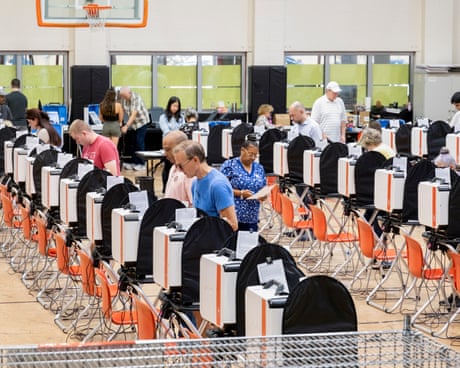
Voters will be confident in their choices, but less certain whose voice will count in the face of myriad intrusions by the executive branch. A coalition of Democratic attorneys general are working to make sure voters across the political spectrum have their say.
Led by the attorneys general of Washington, California, Massachusetts, and Nevada, 24 states sued to block President Trump’s US Postal Service plot to interfere with voting by mail. Last month, the supreme court upheld our lower court victories and blocked the administration’s unconstitutional power grab, at least for this election.
The law says states decide who receives a mail ballot. The USPS has never had the final say and, according to the American Postal Workers Union, until this year had never in its 250-year history tried to put such arbitrary restrictions on what mail it will deliver.
The case we brought was an important victory in every state, and particularly Washington, where more than 99% of voters cast their ballot by mail. States such as Colorado, Hawaii, and Oregon have similarly high mail voting rates. But mail voting is not confined to blue states; it is widely used in red states as well, particularly those like Nebraska and the Dakotas, with large rural populations. It’s also the president’s preferred way to cast his own ballot.
The case of the postal service is just part of the multi-pronged federal attack states are pushing back against. The administration has abandoned the federal government’s traditional role of supporting election security and defending voting rights, work I participated in first-hand as a US attorney.
Recall, in 2020, Trump’s own administration – and particularly the Cybersecurity and Infrastructure Security Agency – worked to protect the vote and defend the election. Then, efforts to misuse the Department of Justice were thwarted, and Trump relied on insurrectionists to do his bidding. In return for serving honorably, many public servants were sent packing upon Trump’s return to office, and the convicted insurrectionists were pardoned.
Now we have a US solicitor general who described the postal service’s attempt to deprive the rights of millions of eligible voters as only a “modest” use of federal authority.
The Trump administration is not known for its discretion or consistency. While the administration was in court purportedly concerned about election integrity, the president publicly demanded his supporters “cheat like hell” in midterm voting. I don’t think Republican voters want that any more than Democrats do.
We don’t doubt the administration will continue its lawless blitz against voters. Democratic state attorneys general are prepared, and have undertaken the largest multistate effort to protect the vote in modern American history.
Recent rulings keep state elections on track and show the law is on our side. If Trump attempts to intimidate or discourage eligible voters, or to obstruct the counting of votes or certification of the election, Democratic state attorneys general will take swift action. States have decades of experience countering these threats when lodged by private actors, and they are just as illegal when attempted by the federal government.
Voters can do their part by exercising the right to elect their representatives. The president’s scheming benefits from public doubt and uncertainty. Democracy depends on the participation of its citizens, and every eligible voter should have the opportunity to render a verdict on their elected representatives.
That verdict is unlikely to favor President Trump, who ran on lowering costs, preserving peace, and economic stability, but instead delivered higher prices, hollowed out critical public services, engaged in unprecedented self-dealing, and began a globally destabilizing war with no end in sight.
Presidents don’t decide elections. State attorneys general and the millions of eligible voters we represent will exercise our constitutional powers to help keep it that way.
Voters will be confident in their choices, but less certain whose voice will count in the face of myriad intrusions by the executive branch. A coalition of Democratic attorneys general are working to make sure voters across the political spectrum have their say.
Led by the attorneys general of Washington, California, Massachusetts, and Nevada, 24 states sued to block President Trump’s US Postal Service plot to interfere with voting by mail. Last month, the supreme court upheld our lower court victories and blocked the administration’s unconstitutional power grab, at least for this election.
The law says states decide who receives a mail ballot. The USPS has never had the final say and, according to the American Postal Workers Union, until this year had never in its 250-year history tried to put such arbitrary restrictions on what mail it will deliver.
The case we brought was an important victory in every state, and particularly Washington, where more than 99% of voters cast their ballot by mail. States such as Colorado, Hawaii, and Oregon have similarly high mail voting rates. But mail voting is not confined to blue states; it is widely used in red states as well, particularly those like Nebraska and the Dakotas, with large rural populations. It’s also the president’s preferred way to cast his own ballot.
The case of the postal service is just part of the multi-pronged federal attack states are pushing back against. The administration has abandoned the federal government’s traditional role of supporting election security and defending voting rights, work I participated in first-hand as a US attorney.
Recall, in 2020, Trump’s own administration – and particularly the Cybersecurity and Infrastructure Security Agency – worked to protect the vote and defend the election. Then, efforts to misuse the Department of Justice were thwarted, and Trump relied on insurrectionists to do his bidding. In return for serving honorably, many public servants were sent packing upon Trump’s return to office, and the convicted insurrectionists were pardoned.
Now we have a US solicitor general who described the postal service’s attempt to deprive the rights of millions of eligible voters as only a “modest” use of federal authority.
The Trump administration is not known for its discretion or consistency. While the administration was in court purportedly concerned about election integrity, the president publicly demanded his supporters “cheat like hell” in midterm voting. I don’t think Republican voters want that any more than Democrats do.
We don’t doubt the administration will continue its lawless blitz against voters. Democratic state attorneys general are prepared, and have undertaken the largest multistate effort to protect the vote in modern American history.
Recent rulings keep state elections on track and show the law is on our side. If Trump attempts to intimidate or discourage eligible voters, or to obstruct the counting of votes or certification of the election, Democratic state attorneys general will take swift action. States have decades of experience countering these threats when lodged by private actors, and they are just as illegal when attempted by the federal government.
Voters can do their part by exercising the right to elect their representatives. The president’s scheming benefits from public doubt and uncertainty. Democracy depends on the participation of its citizens, and every eligible voter should have the opportunity to render a verdict on their elected representatives.
That verdict is unlikely to favor President Trump, who ran on lowering costs, preserving peace, and economic stability, but instead delivered higher prices, hollowed out critical public services, engaged in unprecedented self-dealing, and began a globally destabilizing war with no end in sight.
Presidents don’t decide elections. State attorneys general and the millions of eligible voters we represent will exercise our constitutional powers to help keep it that way.
🔗 Share Article
Tags:#الانتخابات الأمريكية#ترامب#حقوق الناخبين#الدعوى القضائية#الخدمة البريدية
Source: The Guardian US
For Context
Related reads from the same topic or latest developments