Europe’s Chance to Revive Middle East Peace
Foreign Policy

Foreign Policy
Original Source
As Washington withdraws from its role as Middle East peacemaker, Europe steps forward with sanctions on Israeli settlements, echoing its historic stance four decades ago. History suggests that when the United States loses interest, European powers move in to shape the course of regional diplomacy.
Europe's Chance to Revive the Israeli-Palestinian Peace Process
!Foreign Policy
Foreign Policy Get analysis and alerts more quickly in the mobile app.
Install
Back to Foreign Policy Magazine home page
* Latest
* Regions
+ Asia & the Pacific
+ China
+ Middle East & Africa
+ Americas
+ Europe
* Newsletters
Editors’ Picks
Evening roundup with our editors’ favorite stories of the day
!World Brief Icon
World Brief
Your guide to the most important world stories of the day
!China Brief Icon
China Brief
The latest news, analysis, and data from the country each week
Situation Report
Weekly update on what’s driving U.S. national security policy
FP Weekend
A curation of our best book reviews, deep dives, and other reads
!Africa Brief Icon
Africa Brief
Essential analysis of the stories shaping geopolitics on the continent
!South Asia Brief Icon
South Asia Brief
Weekly update on developments in India and its neighbors
The Reading List
Curated guides on geopolitics and current affairs
FP Bookshelf
A monthly guide to FP’s book reviews, excerpts, and reading recommendations
!Latin America Brief Icon
Latin America Brief
One-stop digest of politics, economics, and culture
!Southeast Asia Brief Icon
Southeast Asia Brief
A weekly dispatch with news from the region’s 11 countries
The New Geopolitics
A five-part masterclass in IR theory with Harvard Professor Stephen M. Walt
View All Newsletters
* FP Live
* Latest
* Trending:
* Brazil's election
* Canada-EU ties
Search this website
* Preferences
* My FP Feed
* Saved Articles
* Newsletters
* Magazine Archive
* Subscription Settings
* FAQs
* Log Out
Sign In
Sign In
Team access Team access
Subscribe Subscribe Team access Team access
Argument: Europe’s Chance to Revive Middle East Peace
*
*
* Facebook
* Bluesky
* X
* LinkedIn
* WhatsApp
* Reddit
Save
1. Create an FP account to save articles to read later.
Sign Up
ALREADY AN FP SUBSCRIBER? LOGIN
PDF
1. **Downloadable PDFs** are a benefit of an FP subscription.
Subscribe Now
ALREADY AN FP SUBSCRIBER? LOGIN
Gift
*
*
* WhatsApp
1. Gifting articles is a subscriber benefit.
Subscribe Now
ALREADY AN FP SUBSCRIBER? LOGIN
2. This article is an Insider exclusive.
Contact us at [email protected] to learn about upgrade options, unlocking the ability to gift this article.
Argument
An expert’s point of view on a current event.
Europe’s Chance to Revive Middle East Peace
History suggests that when Washington loses interest, the Europeans step in.
By **Azriel Bermant**, an associate researcher at the Institute of International Relations Prague.
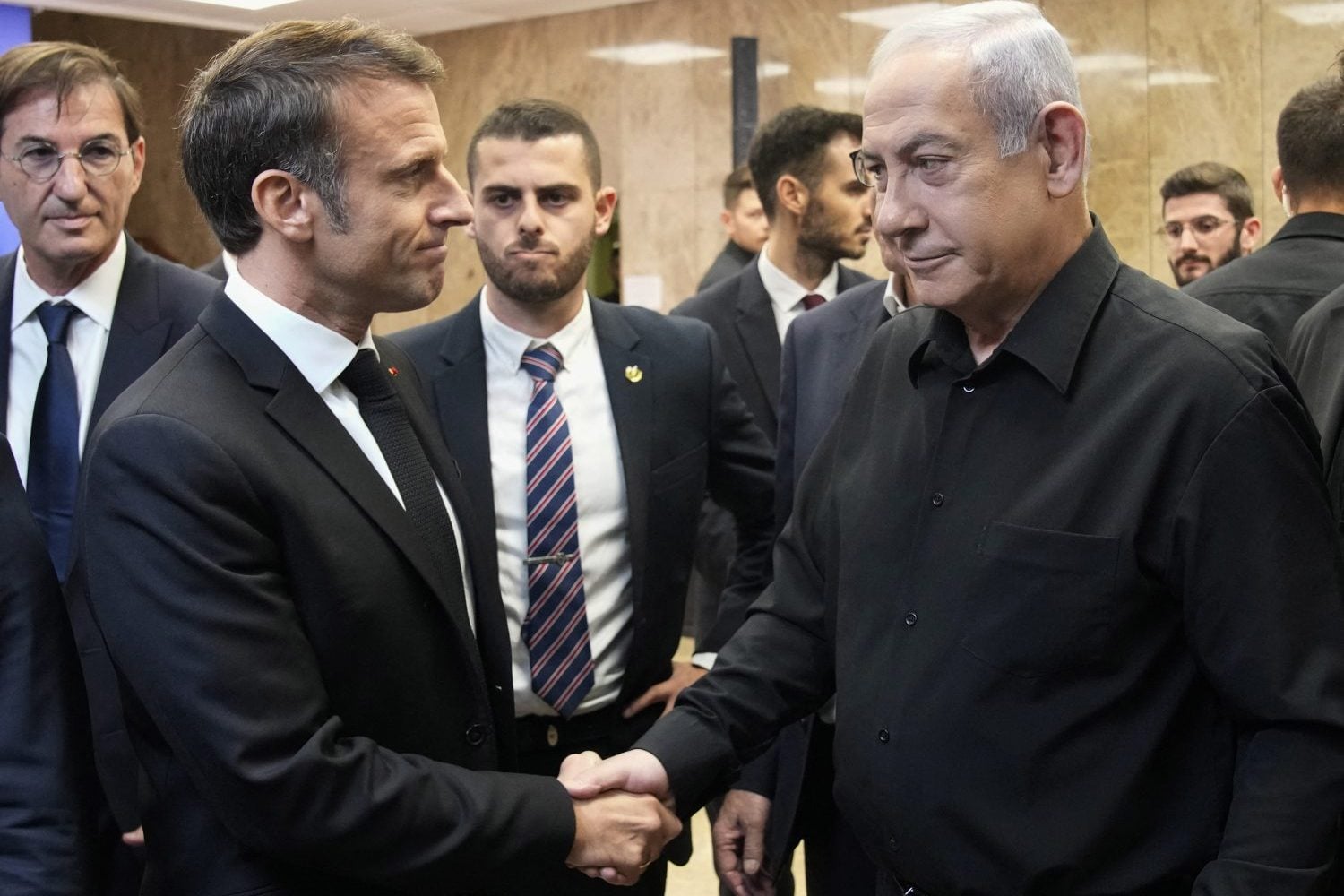
!Two men in suits shake hands.
*Two men in suits shake hands.*
French President Emmanuel Macron shakes hands with Israeli Prime Minister Benjamin Netanyahu after a press conference in Jerusalem on Oct. 24, 2023. Christophe Ena/Pool/AFP via Getty Images
1. Get audio access with any FP subscription.
Subscribe Now
ALREADY AN FP SUBSCRIBER? LOGIN
October 5, 2026, 9:17 AM
Last month’s announcement by the British government to ban imports from West Bank settlements, backed by Canada and 11 European nations, marks the sharpest crisis between Western allies and Israel in decades. Amid U.S. inaction over escalating settler violence and continued settlement expansion, the move has triggered a predictable reaction in Jerusalem. Israel has accused Britain’s Labour government of appeasing the party’s hard left and domestic Muslim voters.
The timing of the British sanctions is undoubtedly politically motivated, with the decision coming just in time to pacify Labour’s left flank ahead of the party conference that started on Sept. 27. Beyond Britain, however, the bigger picture is much harder for Israel to challenge. It is highly unlikely that Canada and a broad coalition of European countries are all acting out of identical domestic political motives.
Last month’s announcement by the British government to ban imports from West Bank settlements, backed by Canada and 11 European nations, marks the sharpest crisis between Western allies and Israel in decades. Amid U.S. inaction over escalating settler violence and continued settlement expansion, the move has triggered a predictable reaction in Jerusalem. Israel has accused Britain’s Labour government of appeasing the party’s hard left and domestic Muslim voters.
The timing of the British sanctions is undoubtedly politically motivated, with the decision coming just in time to pacify Labour’s left flank ahead of the party conference that started on Sept. 27. Beyond Britain, however, the bigger picture is much harder for Israel to challenge. It is highly unlikely that Canada and a broad coalition of European countries are all acting out of identical domestic political motives.
Then there is the legislation introduced by U.S. Senate Democrats to sanction Israeli individuals and companies involved in the controversial E1 project, a new settlement that critics argue would cut off the West Bank from East Jerusalem and effectively destroy prospects for a viable two-state solution. As American public opinion increasingly turns against Israel, support for such measures in Washington will only grow. For now, however, it is Europe that is taking the lead.
The fact that Israel has focused its ire on Britain suggests that it views the Labour government as the ringleader of European sanctions. Israel has retaliated by ordering Britain’s representatives out of the international support center for Gaza, demanding the closure of the historic British consulate in East Jerusalem, and curtailing Britain’s role in training Palestinian Authority security forces.
As a historian who has written extensively about Anglo-American policy toward the Middle East, I see striking parallels with a similar crisis in the past. Much like U.S. President Donald Trump today, the Carter administration was mired in an Iran crisis in 1980: the Iran hostage fiasco. President Jimmy Carter had already exhausted much of his political capital in pressuring Israeli Prime Minister Menachem Begin to sign a peace treaty with Egypt in 1979 and return the occupied Sinai Peninsula to Cairo.
Carter was the first U.S. president to openly advocate for a Palestinian “homeland,” a term that was considered controversial at the time that he first used it in a press conference after taking office.
During his final year in office, he remained committed to the negotiations between Israel and the Palestinians over autonomy. At best, these promised administrative autonomy for individuals, not sovereign control over territory. During a meeting with British Prime Minister Margaret Thatcher and Foreign Secretary Peter Carington in December 1979, Carter stated that, during his 1978 tour of the Middle East, he had not met a single Arab leader who had insisted on the establishment of an independent Palestinian state. The U.S president stressed that the idea of Palestinian independence, like that of a complete Israeli withdrawal from the occupied territories, was “dead.”
The notion that self-determination for the Palestinians was out of the question did not go down well in European capitals. West German Chancellor Helmut Schmidt reportedly even described the Camp David Accords normalizing Egypt-Israel relations as “amateurish.”
As prospects for the autonomy talks became increasingly uncertain, European leaders began considering defensive actions of their own to mitigate the fallout of a potential collapse. In June 1980, recognizing that the United States was withdrawing from its active role as a peace broker, Britain and its European partners broke with Washington to unveil the European Economic Community’s (the precursor to the European Union) landmark Venice Declaration.
This initiative recognized Palestinian
!Foreign Policy
Foreign Policy Get analysis and alerts more quickly in the mobile app.
Install
Back to Foreign Policy Magazine home page
* Latest
* Regions
+ Asia & the Pacific
+ China
+ Middle East & Africa
+ Americas
+ Europe
* Newsletters
Editors’ Picks
Evening roundup with our editors’ favorite stories of the day
!World Brief Icon
World Brief
Your guide to the most important world stories of the day
!China Brief Icon
China Brief
The latest news, analysis, and data from the country each week
Situation Report
Weekly update on what’s driving U.S. national security policy
FP Weekend
A curation of our best book reviews, deep dives, and other reads
!Africa Brief Icon
Africa Brief
Essential analysis of the stories shaping geopolitics on the continent
!South Asia Brief Icon
South Asia Brief
Weekly update on developments in India and its neighbors
The Reading List
Curated guides on geopolitics and current affairs
FP Bookshelf
A monthly guide to FP’s book reviews, excerpts, and reading recommendations
!Latin America Brief Icon
Latin America Brief
One-stop digest of politics, economics, and culture
!Southeast Asia Brief Icon
Southeast Asia Brief
A weekly dispatch with news from the region’s 11 countries
The New Geopolitics
A five-part masterclass in IR theory with Harvard Professor Stephen M. Walt
View All Newsletters
* FP Live
* Latest
* Trending:
* Brazil's election
* Canada-EU ties
Search this website
* Preferences
* My FP Feed
* Saved Articles
* Newsletters
* Magazine Archive
* Subscription Settings
* FAQs
* Log Out
Sign In
Sign In
Team access Team access
Subscribe Subscribe Team access Team access
Argument: Europe’s Chance to Revive Middle East Peace
*
*
* Bluesky
* X
Save
1. Create an FP account to save articles to read later.
Sign Up
ALREADY AN FP SUBSCRIBER? LOGIN
1. **Downloadable PDFs** are a benefit of an FP subscription.
Subscribe Now
ALREADY AN FP SUBSCRIBER? LOGIN
Gift
*
*
1. Gifting articles is a subscriber benefit.
Subscribe Now
ALREADY AN FP SUBSCRIBER? LOGIN
2. This article is an Insider exclusive.
Contact us at [email protected] to learn about upgrade options, unlocking the ability to gift this article.
Argument
An expert’s point of view on a current event.
Europe’s Chance to Revive Middle East Peace
History suggests that when Washington loses interest, the Europeans step in.
By **Azriel Bermant**, an associate researcher at the Institute of International Relations Prague.
!Two men in suits shake hands.
*Two men in suits shake hands.*
French President Emmanuel Macron shakes hands with Israeli Prime Minister Benjamin Netanyahu after a press conference in Jerusalem on Oct. 24, 2023. Christophe Ena/Pool/AFP via Getty Images
1. Get audio access with any FP subscription.
Subscribe Now
ALREADY AN FP SUBSCRIBER? LOGIN
October 5, 2026, 9:17 AM
Last month’s announcement by the British government to ban imports from West Bank settlements, backed by Canada and 11 European nations, marks the sharpest crisis between Western allies and Israel in decades. Amid U.S. inaction over escalating settler violence and continued settlement expansion, the move has triggered a predictable reaction in Jerusalem. Israel has accused Britain’s Labour government of appeasing the party’s hard left and domestic Muslim voters.
The timing of the British sanctions is undoubtedly politically motivated, with the decision coming just in time to pacify Labour’s left flank ahead of the party conference that started on Sept. 27. Beyond Britain, however, the bigger picture is much harder for Israel to challenge. It is highly unlikely that Canada and a broad coalition of European countries are all acting out of identical domestic political motives.
Last month’s announcement by the British government to ban imports from West Bank settlements, backed by Canada and 11 European nations, marks the sharpest crisis between Western allies and Israel in decades. Amid U.S. inaction over escalating settler violence and continued settlement expansion, the move has triggered a predictable reaction in Jerusalem. Israel has accused Britain’s Labour government of appeasing the party’s hard left and domestic Muslim voters.
The timing of the British sanctions is undoubtedly politically motivated, with the decision coming just in time to pacify Labour’s left flank ahead of the party conference that started on Sept. 27. Beyond Britain, however, the bigger picture is much harder for Israel to challenge. It is highly unlikely that Canada and a broad coalition of European countries are all acting out of identical domestic political motives.
Then there is the legislation introduced by U.S. Senate Democrats to sanction Israeli individuals and companies involved in the controversial E1 project, a new settlement that critics argue would cut off the West Bank from East Jerusalem and effectively destroy prospects for a viable two-state solution. As American public opinion increasingly turns against Israel, support for such measures in Washington will only grow. For now, however, it is Europe that is taking the lead.
The fact that Israel has focused its ire on Britain suggests that it views the Labour government as the ringleader of European sanctions. Israel has retaliated by ordering Britain’s representatives out of the international support center for Gaza, demanding the closure of the historic British consulate in East Jerusalem, and curtailing Britain’s role in training Palestinian Authority security forces.
As a historian who has written extensively about Anglo-American policy toward the Middle East, I see striking parallels with a similar crisis in the past. Much like U.S. President Donald Trump today, the Carter administration was mired in an Iran crisis in 1980: the Iran hostage fiasco. President Jimmy Carter had already exhausted much of his political capital in pressuring Israeli Prime Minister Menachem Begin to sign a peace treaty with Egypt in 1979 and return the occupied Sinai Peninsula to Cairo.
Carter was the first U.S. president to openly advocate for a Palestinian “homeland,” a term that was considered controversial at the time that he first used it in a press conference after taking office.
During his final year in office, he remained committed to the negotiations between Israel and the Palestinians over autonomy. At best, these promised administrative autonomy for individuals, not sovereign control over territory. During a meeting with British Prime Minister Margaret Thatcher and Foreign Secretary Peter Carington in December 1979, Carter stated that, during his 1978 tour of the Middle East, he had not met a single Arab leader who had insisted on the establishment of an independent Palestinian state. The U.S president stressed that the idea of Palestinian independence, like that of a complete Israeli withdrawal from the occupied territories, was “dead.”
The notion that self-determination for the Palestinians was out of the question did not go down well in European capitals. West German Chancellor Helmut Schmidt reportedly even described the Camp David Accords normalizing Egypt-Israel relations as “amateurish.”
As prospects for the autonomy talks became increasingly uncertain, European leaders began considering defensive actions of their own to mitigate the fallout of a potential collapse. In June 1980, recognizing that the United States was withdrawing from its active role as a peace broker, Britain and its European partners broke with Washington to unveil the European Economic Community’s (the precursor to the European Union) landmark Venice Declaration.
This initiative recognized Palestinian
🔗 Share Article
Tags:#السلام الإسرائيلي-الفلسطيني#المستوطنات الإسرائيلية#السياسة الأوروبية#الشرق الأوسط#العقوبات الاقتصادية#السياسة الدولية
Source: Foreign Policy
For Context
Related reads from the same topic or latest developments