Where Is U.S. Security Assistance to Jordan Going?
By using this website, you agree to our use of cookies. This use includes personalization of content and ads, and traffic analytics. Review our Privacy Policy for more information.
Foreign Policy Get analysis and alerts more quickly in the mobile app.
Install
Back to Foreign Policy Magazine home page
Evening roundup with our editors’ favorite stories of the day
World Brief
Your guide to the most important world stories of the day
China Brief
The latest news, analysis, and data from the country each week
Situation Report
Weekly update on what’s driving U.S. national security policy
FP Weekend
A curation of our best book reviews, deep dives, and other reads
Africa Brief
Essential analysis of the stories shaping geopolitics on the continent
South Asia Brief
Weekly update on developments in India and its neighbors
The Reading List
Curated guides on geopolitics and current affairs
FP Bookshelf
A monthly guide to FP’s book reviews, excerpts, and reading recommendations
Latin America Brief
One-stop digest of politics, economics, and culture
Southeast Asia Brief
A weekly dispatch with news from the region’s 11 countries
The New Geopolitics
A five-part masterclass in IR theory with Harvard Professor Stephen M. Walt
View All Newsletters
Subscribe Subscribe Team access Team access
Analysis: Where Is U.S. Security Assistance to Jordan Going?
1. Create an FP account to save articles to read later.
Sign Up
ALREADY AN FP SUBSCRIBER? LOGIN
PDF
1. **Downloadable PDFs** are a benefit of an FP subscription.
ALREADY AN FP SUBSCRIBER? LOGIN
Gift
1. Gifting articles is a subscriber benefit.
ALREADY AN FP SUBSCRIBER? LOGIN
2. This article is an Insider exclusive.
Contact us at [email protected] to learn about upgrade options, unlocking the ability to gift this article.
Analysis
Where Is U.S. Security Assistance to Jordan Going?
Security agencies prioritize shielding the monarchy from political dissent.
By **Sarah Leah Whitson**, a lawyer and a co-author of the recently published *From Apartheid to Democracy: A Blueprint for Peace in Israel-Palestine*, and **Jamal Al-Tahat**, a Jordanian analyst.
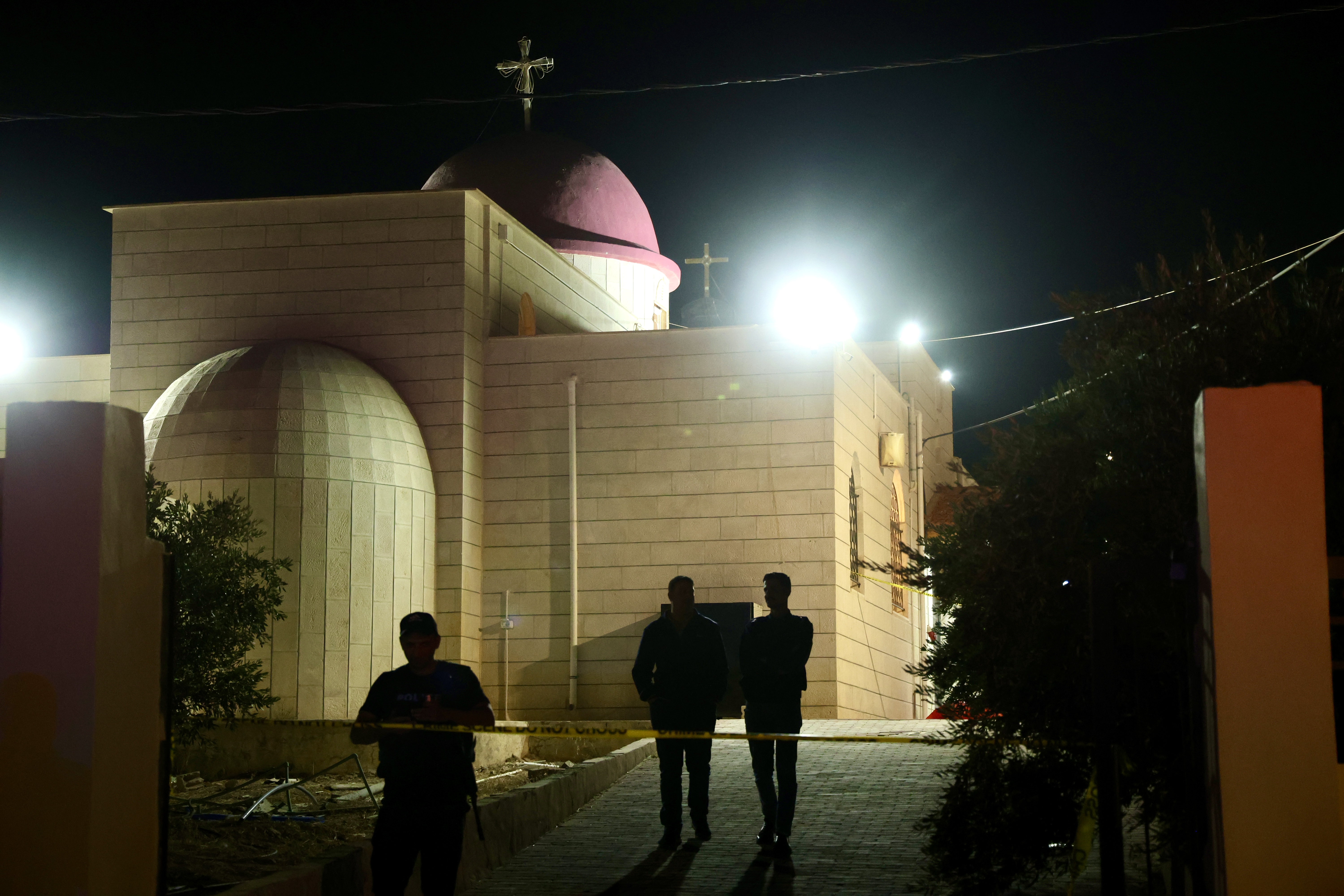
*A stone church building topped with a dome and cross is illuminated by bright lights at night, with silhouetted figures standing behind yellow caution tape across the walkway.*
Police investigate the church where gunmen opened fire on Oct. 23 in Hmoud, Jordan. Salah Malkawi/Getty Images
1. Get audio access with any FP subscription.
ALREADY AN FP SUBSCRIBER? LOGIN
November 9, 2026, 7:17 PM
The unprecedented terrorist attack on a church in Jordan last month that killed nine people and injured at least 34 has raised understandable concern about the spread of Salafist violence targeting civilians in the country. It should raise even greater concern about how Jordan’s government has used billions in U.S. security assistance and more than a decade of support for countering violent extremism.
The main perpetrator of the attack had only recently left prison following a terrorism conviction, yet the government has offered little explanation of how he went on to carry out the massacre. Instead, it launched kneejerk airstrikes on alleged Islamic State hideouts in Syria, killing seven civilians, three of them children, according to Syrian authorities. Both the failure to prevent the attack and the deadly retaliation expose a broader problem: security agencies empowered to raid, arrest, and punish, with little public accounting of whether their methods actually protect people.
The sequence of events is revealing. On Oct. 23, three gunmen—brothers Hazza Mohammad and Mishal Mohammad and their brother-in-law Ahmad Sami Hussein—attacked mourners at a funeral. The event was taking place at St. George’s Greek Orthodox Church in Hmoud, a small village in the Karak governorate of southern Jordan; the gunmen lived in a nearby village.
Karak itself is home to one of Jordan’s oldest Christian communities, dating back more than 1,500 years, and it has long been a model of Muslim-Christian cohesion. While there have been at least 12 attacks by Jordanian violent extremists in the past decade, all but one have targeted military and police sites. This attack was one of a very few in Jordan’s history to deliberately target Christians, who make up a mere 2.1 percent of the country’s population.
Following a three-day search, authorities captured the three alleged perpetrators on Oct. 26, wounding them, one critically, in a shoot-out at an abandoned house in Karak, where they also recovered weapons and substantial ammunition. The government initially claimed that the church attack was random and opportunistic, but it later revised its claim to confirm that this was a planned attack, documenting preparations involving smuggled weapons, vehicles, assigned roles, and escape routes.
The most damning facts to emerge, however, concern the authorities’ prior knowledge of Hazza Mohammad, the reported ringleader, and the police presence at the church before the attack. Jordanian authorities had released Hazza from prison less than six months ago, following the completion of a seven-year sentence for planning a terrorist attack and promoting Islamic State ideology. He presumably would have, or should have, remained under close surveillance by Jordanian authorities. On Oct. 26, a local woman reported that a police patrol was stationed at the church during Sunday worship services earlier this month, something that she had never seen before; a Karak churchgoer confirmed this in an Oct. 28 interview with the authors.
On the same night as the arrests of the three men, the Jordanian government launched an aerial bombardment on four rural locations near Daraa and Suwayda in Syria. The attack is confirmed to have killed five family members in al-Tuff, three of them children; an 80-year-old man at a
Where Is U.S. Security Assistance to Jordan Going?
The unprecedented attack on a church in Karak has exposed serious gaps in the work of Jordanian security agencies that receive billions of dollars in U.S. assistance. The main perpetrator had been released from prison on terrorism charges only months earlier, and Amman's retaliatory airstrikes in Syria killed civilians, including children.
Cross Lines newsroom
Share this article
#الأردن#المساعدات الأمنية الأمريكية#هجوم الكرك#مكافحة التطرف#تنظيم الدولة الإسلامية#سوريا
Original source: Foreign Policy