Latin America’s Second Pink Tide Recedes
Foreign Policy

Foreign Policy
Original Source
Latin America's brief resurgence of left-wing governance is rapidly receding as right-wing leaders return to power across the region. Despite some social achievements, this second leftist wave has proven far shorter-lived and less transformative than the first pink tide of the late 1990s and 2000s.
Latin America's 'Second Pink Tide' Has Ended. What Is Its Legacy?
By using this website, you agree to our use of cookies. This use includes personalization of content and ads, and traffic analytics. Review our Privacy Policy for more information.
!Foreign Policy
Foreign Policy
Get analysis and alerts more quickly in the mobile app.
Install
Back to Foreign Policy Magazine home page
* Latest
* Regions
+ Asia & the Pacific
+ China
+ Middle East & Africa
+ Americas
+ Europe
* Newsletters
Editors’ Picks
Evening roundup with our editors’ favorite stories of the day
!World Brief Icon
World Brief
Your guide to the most important world stories of the day
!China Brief Icon
China Brief
The latest news, analysis, and data from the country each week
Situation Report
Weekly update on what’s driving U.S. national security policy
FP Weekend
A curation of our best book reviews, deep dives, and other reads
!Africa Brief Icon
Africa Brief
Essential analysis of the stories shaping geopolitics on the continent
!South Asia Brief Icon
South Asia Brief
Weekly update on developments in India and its neighbors
The Reading List
Curated guides on geopolitics and current affairs
FP Bookshelf
A monthly guide to FP’s book reviews, excerpts, and reading recommendations
!Latin America Brief Icon
Latin America Brief
One-stop digest of politics, economics, and culture
!Southeast Asia Brief Icon
Southeast Asia Brief
A weekly dispatch with news from the region’s 11 countries
The New Geopolitics
A five-part masterclass in IR theory with Harvard Professor Stephen M. Walt
View All Newsletters
* FP Live
* Latest
* Trending:
* India's protests rattle Modi
* Gulf states react to Iran
Search this website
* Preferences
* My FP Feed
* Saved Articles
* Newsletters
* Magazine Archive
* Subscription Settings
* FAQs
* Log Out
Sign In
Sign In
Equip your team with FP Enterprise Equip your team with FP Enterprise
SUBSCRIBE SUBSCRIBEUpgrade & get a limited-edition tote Upgrade & get a limited-edition tote
Latin America Brief:
Latin America’s Second Pink Tide Recedes
*
*
* Facebook
* Bluesky
* X
* LinkedIn
* WhatsApp
* Reddit
Save
Save
1. Create an FP account to save articles to read later.
Sign Up
ALREADY AN FP SUBSCRIBER? LOGIN
PDF
PDF
1. **Downloadable PDFs** are a benefit of an FP subscription.
Subscribe Now
ALREADY AN FP SUBSCRIBER? LOGIN
Gift
Gift
*
*
* WhatsApp
1. Gifting articles is a subscriber benefit.
Subscribe Now
ALREADY AN FP SUBSCRIBER? LOGIN
2. This article is an Insider exclusive.
Contact us at [email protected] to learn about upgrade options, unlocking the ability to gift this article.
Latin America Brief
A one-stop weekly digest of politics, economics, technology, and culture in Latin America. Delivered Friday.
Latin America’s Second Pink Tide Recedes
The latest leftward shift was shorter-lived and less accomplished than its predecessor.
!Osborn-Catherine-foreign-policy-columnist15
*Osborn-Catherine-foreign-policy-columnist15*
*Catherine Osborn*
By **Catherine Osborn**, the writer of *Foreign Policy*’s weekly Latin America Brief.
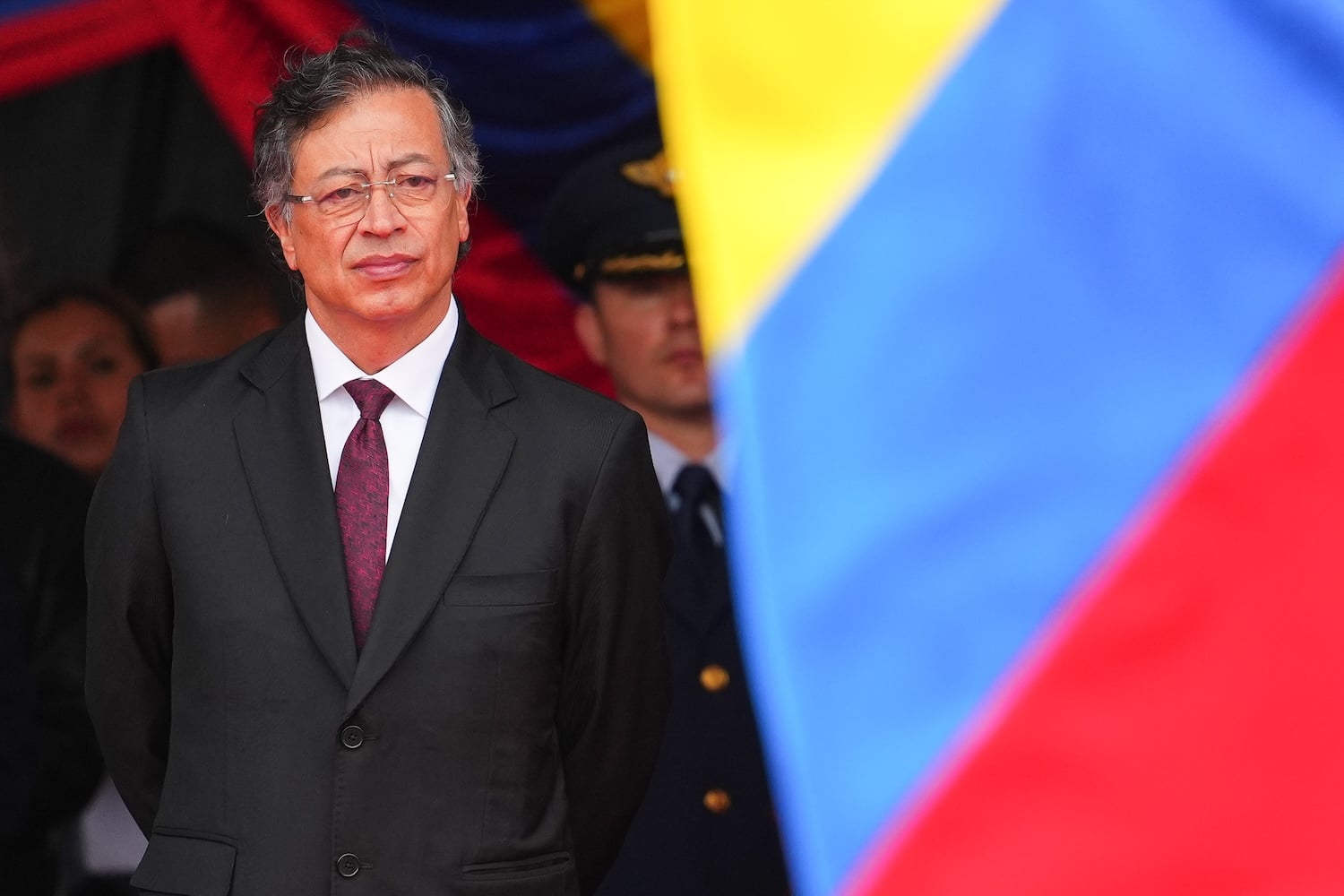
!Petro, wearing a dark suit and tie, stands with his arms clasped behind his back. Several out-of-focus people are seen behind him. The Colombian flag takes up half the foreground, waving in front of him.
*Petro, wearing a dark suit and tie, stands with his arms clasped behind his back. Several out-of-focus people are seen behind him. The Colombian flag takes up half the foreground, waving in front of him.*
Colombian President Gustavo Petro delivers a speech in Bogotá on July 20. Andres Rot/Getty Images
My FP:
Follow topics and authors to get straight to what you like. Exclusively for FP subscribers. Subscribe Now | Log In
*
*
*
*
August 7, 2026, 8:00 AM
Welcome back to *Foreign Policy*’s Latin America Brief.
The highlights this week: The region’s so-called **second pink tide** comes to an end, Bolivia secures a **$1.9 billion IMF loan**, and the United States ends **deportation protections for Haitians**.
Welcome back to *Foreign Policy*’s Latin America Brief.
The highlights this week: The region’s so-called **second pink tide** comes to an end, Bolivia secures a **$1.9 billion IMF loan**, and the United States ends **deportation protections for Haitians**.
Sign up to receive Latin America Brief in your inbox every Friday.
---
Taking Stock of the Second Pink Tide
Right-wing lawyer Abelardo de la Espriella will be inaugurated as Colombia’s president on Friday. He replaces Gustavo Petro, the latest in a string of left-wing Latin American leaders to leave office amid the region’s broader shift toward the right.
When Petro and his ideological allies were elected in the wake of the COVID-19 pandemic, their victories were so widespread that many observers dubbedthe phenomenon a “second pink tide,” recalling the wave of left-leaning and socialist governments that swept through Latin America from the late 1990s to the early 2010s.
The first pink tide transformed the domestic and foreign policies of many South American countries, which increasingly turned toward one another to pursue a shared agenda of regional integration.
These changes were made possible in large part by a global commodities boom that increased public revenue across the region. Social spending generally went up, income inequality declined, and access to higher education expanded. By the end of the first pink tide, South American governments were cooperating regionally on health, infrastructure, and conflict resolution.
That momentum gave way in the mid-2010s as falling commodity prices, mounting economic challenges, and high-profile corruption scandals ushered in a more volatile political period.
Across the region’s democracies, voters elected a new crop of right-wing leaders whose foreign policies deprioritized regional integration. Their tenures, however, coincided with COVID-19, and many were ousted after a single term.
That political shift gave rise to the second pink tide. By 2023, leftist governments had taken office in Argentina, Bolivia, Brazil, Chile, Colombia, and Peru, pledging to reduce inequality at home and resurrect regional integration as a central pillar of their foreign policies. (Mexico has also been led by the leftist Morena party since 2018, though it has prioritized integration with North America over South America.)
Latin America’s second pink tide has proved to be much shorter-lived than the first. While Morena held on to Mexico’s presidency in 2024 and Brazilian President Luiz Inácio Lula da Silva may do the same this October, their peers elsewhere have mostly exited office.
As the ideological tides shift once again, it is a good time to ask: How much, if at all, did this pink tide change the region?
Several of these governments expanded anti-poverty efforts. In Colombia, multidimensional poverty fell to a historic low under Petro, while Brazil significantly reduced food insecurity. But without the tailwind of a commodities boom, these initiatives squeezed government budgets.
What’s more, many of the period’s most visible leaders fell short on signature progressive pledges, including Petro’s plan to reduce violence by negotiating with armed groups rather than taking a militarized approach and former Chilean President Gabriel Boric’s proposal to rewrite the country’s dictatorship-era constitution.
In foreign-policy terms, regional integration survived more than thrived. Mercosur, the South American trade bloc, expanded in 2024 to admit Bolivia and signed a long-delayed deal with the European Union this year, though keeping the group intact required careful diplomacy after Argentine President Javier Milei threatened to withdraw from it.
The leaders of the second pink tide, especially in Brazil, also revived joint work on several cross-border infrastructure corridors that had been under discussion since the early 2000s—notably the Capricorn Bioceanic Corridor, which will con
By using this website, you agree to our use of cookies. This use includes personalization of content and ads, and traffic analytics. Review our Privacy Policy for more information.
!Foreign Policy
Foreign Policy
Get analysis and alerts more quickly in the mobile app.
Install
Back to Foreign Policy Magazine home page
* Latest
* Regions
+ Asia & the Pacific
+ China
+ Middle East & Africa
+ Americas
+ Europe
* Newsletters
Editors’ Picks
Evening roundup with our editors’ favorite stories of the day
!World Brief Icon
World Brief
Your guide to the most important world stories of the day
!China Brief Icon
China Brief
The latest news, analysis, and data from the country each week
Situation Report
Weekly update on what’s driving U.S. national security policy
FP Weekend
A curation of our best book reviews, deep dives, and other reads
!Africa Brief Icon
Africa Brief
Essential analysis of the stories shaping geopolitics on the continent
!South Asia Brief Icon
South Asia Brief
Weekly update on developments in India and its neighbors
The Reading List
Curated guides on geopolitics and current affairs
FP Bookshelf
A monthly guide to FP’s book reviews, excerpts, and reading recommendations
!Latin America Brief Icon
Latin America Brief
One-stop digest of politics, economics, and culture
!Southeast Asia Brief Icon
Southeast Asia Brief
A weekly dispatch with news from the region’s 11 countries
The New Geopolitics
A five-part masterclass in IR theory with Harvard Professor Stephen M. Walt
View All Newsletters
* FP Live
* Latest
* Trending:
* India's protests rattle Modi
* Gulf states react to Iran
Search this website
* Preferences
* My FP Feed
* Saved Articles
* Newsletters
* Magazine Archive
* Subscription Settings
* FAQs
* Log Out
Sign In
Sign In
Equip your team with FP Enterprise Equip your team with FP Enterprise
SUBSCRIBE SUBSCRIBEUpgrade & get a limited-edition tote Upgrade & get a limited-edition tote
Latin America Brief:
Latin America’s Second Pink Tide Recedes
*
*
* Bluesky
* X
Save
Save
1. Create an FP account to save articles to read later.
Sign Up
ALREADY AN FP SUBSCRIBER? LOGIN
1. **Downloadable PDFs** are a benefit of an FP subscription.
Subscribe Now
ALREADY AN FP SUBSCRIBER? LOGIN
Gift
Gift
*
*
1. Gifting articles is a subscriber benefit.
Subscribe Now
ALREADY AN FP SUBSCRIBER? LOGIN
2. This article is an Insider exclusive.
Contact us at [email protected] to learn about upgrade options, unlocking the ability to gift this article.
Latin America Brief
A one-stop weekly digest of politics, economics, technology, and culture in Latin America. Delivered Friday.
Latin America’s Second Pink Tide Recedes
The latest leftward shift was shorter-lived and less accomplished than its predecessor.
!Osborn-Catherine-foreign-policy-columnist15
*Osborn-Catherine-foreign-policy-columnist15*
*Catherine Osborn*
By **Catherine Osborn**, the writer of *Foreign Policy*’s weekly Latin America Brief.
!Petro, wearing a dark suit and tie, stands with his arms clasped behind his back. Several out-of-focus people are seen behind him. The Colombian flag takes up half the foreground, waving in front of him.
*Petro, wearing a dark suit and tie, stands with his arms clasped behind his back. Several out-of-focus people are seen behind him. The Colombian flag takes up half the foreground, waving in front of him.*
Colombian President Gustavo Petro delivers a speech in Bogotá on July 20. Andres Rot/Getty Images
My FP:
Follow topics and authors to get straight to what you like. Exclusively for FP subscribers. Subscribe Now | Log In
*
*
*
*
August 7, 2026, 8:00 AM
Welcome back to *Foreign Policy*’s Latin America Brief.
The highlights this week: The region’s so-called **second pink tide** comes to an end, Bolivia secures a **$1.9 billion IMF loan**, and the United States ends **deportation protections for Haitians**.
Welcome back to *Foreign Policy*’s Latin America Brief.
The highlights this week: The region’s so-called **second pink tide** comes to an end, Bolivia secures a **$1.9 billion IMF loan**, and the United States ends **deportation protections for Haitians**.
Sign up to receive Latin America Brief in your inbox every Friday.
---
Taking Stock of the Second Pink Tide
Right-wing lawyer Abelardo de la Espriella will be inaugurated as Colombia’s president on Friday. He replaces Gustavo Petro, the latest in a string of left-wing Latin American leaders to leave office amid the region’s broader shift toward the right.
When Petro and his ideological allies were elected in the wake of the COVID-19 pandemic, their victories were so widespread that many observers dubbedthe phenomenon a “second pink tide,” recalling the wave of left-leaning and socialist governments that swept through Latin America from the late 1990s to the early 2010s.
The first pink tide transformed the domestic and foreign policies of many South American countries, which increasingly turned toward one another to pursue a shared agenda of regional integration.
These changes were made possible in large part by a global commodities boom that increased public revenue across the region. Social spending generally went up, income inequality declined, and access to higher education expanded. By the end of the first pink tide, South American governments were cooperating regionally on health, infrastructure, and conflict resolution.
That momentum gave way in the mid-2010s as falling commodity prices, mounting economic challenges, and high-profile corruption scandals ushered in a more volatile political period.
Across the region’s democracies, voters elected a new crop of right-wing leaders whose foreign policies deprioritized regional integration. Their tenures, however, coincided with COVID-19, and many were ousted after a single term.
That political shift gave rise to the second pink tide. By 2023, leftist governments had taken office in Argentina, Bolivia, Brazil, Chile, Colombia, and Peru, pledging to reduce inequality at home and resurrect regional integration as a central pillar of their foreign policies. (Mexico has also been led by the leftist Morena party since 2018, though it has prioritized integration with North America over South America.)
Latin America’s second pink tide has proved to be much shorter-lived than the first. While Morena held on to Mexico’s presidency in 2024 and Brazilian President Luiz Inácio Lula da Silva may do the same this October, their peers elsewhere have mostly exited office.
As the ideological tides shift once again, it is a good time to ask: How much, if at all, did this pink tide change the region?
Several of these governments expanded anti-poverty efforts. In Colombia, multidimensional poverty fell to a historic low under Petro, while Brazil significantly reduced food insecurity. But without the tailwind of a commodities boom, these initiatives squeezed government budgets.
What’s more, many of the period’s most visible leaders fell short on signature progressive pledges, including Petro’s plan to reduce violence by negotiating with armed groups rather than taking a militarized approach and former Chilean President Gabriel Boric’s proposal to rewrite the country’s dictatorship-era constitution.
In foreign-policy terms, regional integration survived more than thrived. Mercosur, the South American trade bloc, expanded in 2024 to admit Bolivia and signed a long-delayed deal with the European Union this year, though keeping the group intact required careful diplomacy after Argentine President Javier Milei threatened to withdraw from it.
The leaders of the second pink tide, especially in Brazil, also revived joint work on several cross-border infrastructure corridors that had been under discussion since the early 2000s—notably the Capricorn Bioceanic Corridor, which will con
🔗 Share Article
Tags:#أميركا اللاتينية#السياسة الإقليمية#اليسار واليمين#الحكومات#التكامل الإقليمي
Source: Foreign Policy
For Context
Related reads from the same topic or latest developments


