The Iran War Is Heading for a Swiss-Cheese Solution
By using this website, you agree to our use of cookies. This use includes personalization of content and ads, and traffic analytics. Review our Privacy Policy for more information.
Foreign Policy Get analysis and alerts more quickly in the mobile app.
Install
Back to Foreign Policy Magazine home page
Evening roundup with our editors’ favorite stories of the day
World Brief
Your guide to the most important world stories of the day
China Brief
The latest news, analysis, and data from the country each week
Situation Report
Weekly update on what’s driving U.S. national security policy
FP Weekend
A curation of our best book reviews, deep dives, and other reads
Africa Brief
Essential analysis of the stories shaping geopolitics on the continent
South Asia Brief
Weekly update on developments in India and its neighbors
The Reading List
Curated guides on geopolitics and current affairs
FP Bookshelf
A monthly guide to FP’s book reviews, excerpts, and reading recommendations
Latin America Brief
One-stop digest of politics, economics, and culture
Southeast Asia Brief
A weekly dispatch with news from the region’s 11 countries
The New Geopolitics
A five-part masterclass in IR theory with Harvard Professor Stephen M. Walt
View All Newsletters
Give a gift Give a gift
Subscribe Subscribe Give a gift Give a gift
Analysis: Iran Is Heading for a Swiss-Cheese Solution
1. Create an FP account to save articles to read later.
Sign Up
ALREADY AN FP SUBSCRIBER? LOGIN
PDF
1. **Downloadable PDFs** are a benefit of an FP subscription.
ALREADY AN FP SUBSCRIBER? LOGIN
Gift
1. Gifting articles is a subscriber benefit.
ALREADY AN FP SUBSCRIBER? LOGIN
2. This article is an Insider exclusive.
Contact us at [email protected] to learn about upgrade options, unlocking the ability to gift this article.
Analysis
Iran Is Heading for a Swiss-Cheese Solution
The Iran war is most likely to end not with a bang, but with a whimper.
By **Trita Parsi**, the executive vice president of the Quincy Institute for Responsible Statecraft.
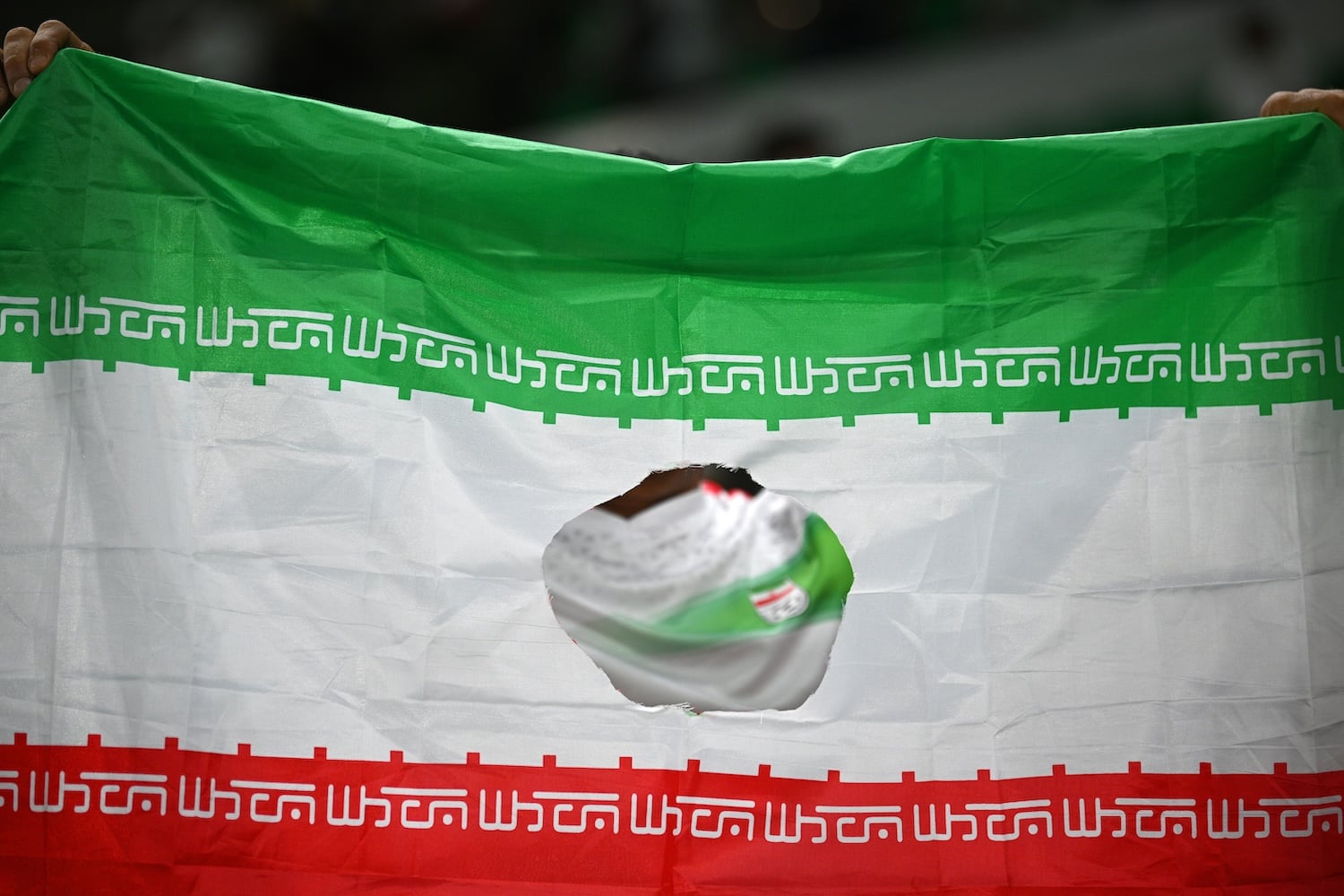
*A fan holds up an Iranian flag with a hole cut out prior to the FIFA World Cup Qatar 2022 Group B match between IR Iran and USA at Al Thumama Stadium on November 29, 2022 in Doha, Qatar.*
A fan holds up an Iranian flag with a hole cut out prior to the FIFA World Cup Qatar 2022 Group B match between IR Iran and USA at Al Thumama Stadium on November 29, 2022 in Doha, Qatar. Getty Images/Getty Images
November 18, 2026, 1:46 AM
Earlier this month, U.S. President Donald Trump faced a menu of war options and pushed them all aside. He also turned down the negotiated package on the table. Instead, he chose to keep tightening the screws on Iran through an economic blockade. Yet, rumors that he has shelved the military option or is warming to a deal are hasty. The more probable outcome is that he neither ends the conflict nor resolves it, but quietly drifts away from it while gradually loosening the blockade on Iran.
Pressure on Trump to restart the war has intensified dramatically since the midterms. Israeli Prime Minister Benjamin Netanyahu knows that several factors will limit Trump’s ability to resume military action against Iran. First, Netanyahu may have only a few weeks left as Israel’s caretaker. If Gadi Eisenkot succeeds in forming a government in the next few weeks, Netanyahu will lose the premiership and his long-term dream of crushing the Iranian state. A rising chorus of former and current Israeli officials—from Avigdor Lieberman to Ehud Barak—are sounding the alarms that, out of desperation, Netanyahu is planning to “carry out a blatant military provocation in order to force Iran to respond on a scale triggering a war that would disrupt or prevent the establishment of a new government \[in Israel].” The next Israeli prime minister will likely not share Netanyahu’s obsession with Iran or his skills in maneuvering the U.S. political system.
Second, in two months’ time, Trump’s maneuverability will be eclipsed by a Democratic Congress that can defund the war. Third, though U.S. Defense Secretary Pete Hegseth survived an impeachment attempt last week, his political future still hangs by a thread.
Even if the risk of war declines, this does not guarantee a greater likelihood of a deal. Key obstacles—including Iran’s enriched uranium stockpile, the future of its enrichment program, a regional cease-fire, sanctions relief, and the political cost for Trump—make both reaching and maintaining an agreement challenging.
The most likely scenario may turn out to be neither war nor peace, yet something altogether different from the economic blockade “middle path” that Trump chose earlier. In this scenario, Trump’s economic warfare and blockade would end up little more than words on paper. Trump would declare victory, reject both war and peace, withdraw the U.S. military, step away from the table, and insist that the blockade and sanctions remain in place while quietly allowing them to fade into irrelevance.
This would set in motion a gradual loosening of the blockade, with sanctions enforcement quietly eroding. Bit by bit, Asian and Middle Eastern countries would ramp up trade and investment in Iran, far surpassing current levels. Out of this slow transformation, a delicate new equilibrium would take shape: Sanctions enforcement would remain just robust enough for the United States to insist the system is intact, yet lax enough to persuade
Iran Is Heading for a Swiss-Cheese Solution
The author argues that the Iran war is more likely to fade than to end in a decisive confrontation, with Washington gradually loosening its economic blockade. He contends that sanctions enforcement will erode as Asian and Middle Eastern countries expand their trade and investment with Tehran.
Cross Lines newsroom
Share this article
#إيران#دونالد ترامب#الحصار الاقتصادي#بنيامين نتنياهو#العقوبات#البرنامج النووي الإيراني
Original source: Foreign Policy