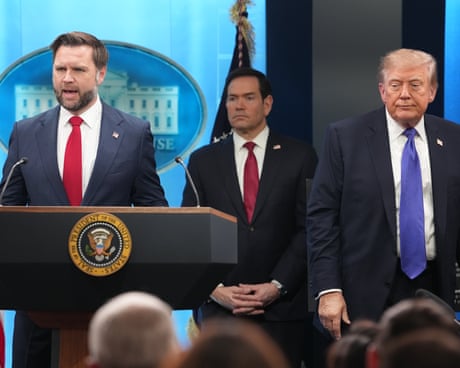
Ronald Reagan Changed His Chief of Staff After a Midterm Trouncing, Too
By using this website, you agree to our use of cookies. This use includes personalization of content and ads, and traffic analytics. Review our Privacy Policy for more information.
Foreign Policy Get analysis and alerts more quickly in the mobile app.
Install
Back to Foreign Policy Magazine home page
Evening roundup with our editors’ favorite stories of the day
World Brief
Your guide to the most important world stories of the day
China Brief
The latest news, analysis, and data from the country each week
Situation Report
Weekly update on what’s driving U.S. national security policy
FP Weekend
A curation of our best book reviews, deep dives, and other reads
Africa Brief
Essential analysis of the stories shaping geopolitics on the continent
South Asia Brief
Weekly update on developments in India and its neighbors
The Reading List
Curated guides on geopolitics and current affairs
FP Bookshelf
A monthly guide to FP’s book reviews, excerpts, and reading recommendations
Latin America Brief
One-stop digest of politics, economics, and culture
Southeast Asia Brief
A weekly dispatch with news from the region’s 11 countries
The New Geopolitics
A five-part masterclass in IR theory with Harvard Professor Stephen M. Walt
View All Newsletters
Give a gift Give a gift
Subscribe Subscribe Give a gift Give a gift
Analysis: Ronald Reagan Changed His Chief of Staff After a Midterm Trouncing, Too
1. Create an FP account to save articles to read later.
Sign Up
ALREADY AN FP SUBSCRIBER? LOGIN
PDF
1. **Downloadable PDFs** are a benefit of an FP subscription.
ALREADY AN FP SUBSCRIBER? LOGIN
Gift
1. Gifting articles is a subscriber benefit.
ALREADY AN FP SUBSCRIBER? LOGIN
2. This article is an Insider exclusive.
Contact us at [email protected] to learn about upgrade options, unlocking the ability to gift this article.
Analysis
Ronald Reagan Changed His Chief of Staff After a Midterm Trouncing, Too
The founding father of the conservative movement’s pick was very different from Trump’s.
*A pencil drawing of a man smiling and wearing glasses*
*Julian E. Zelizer*
By **Julian E. Zelizer**, a columnist at *Foreign Policy* and a professor of history and public affairs at Princeton University. Sign up for Julian’s newsletter, The Long View, here.
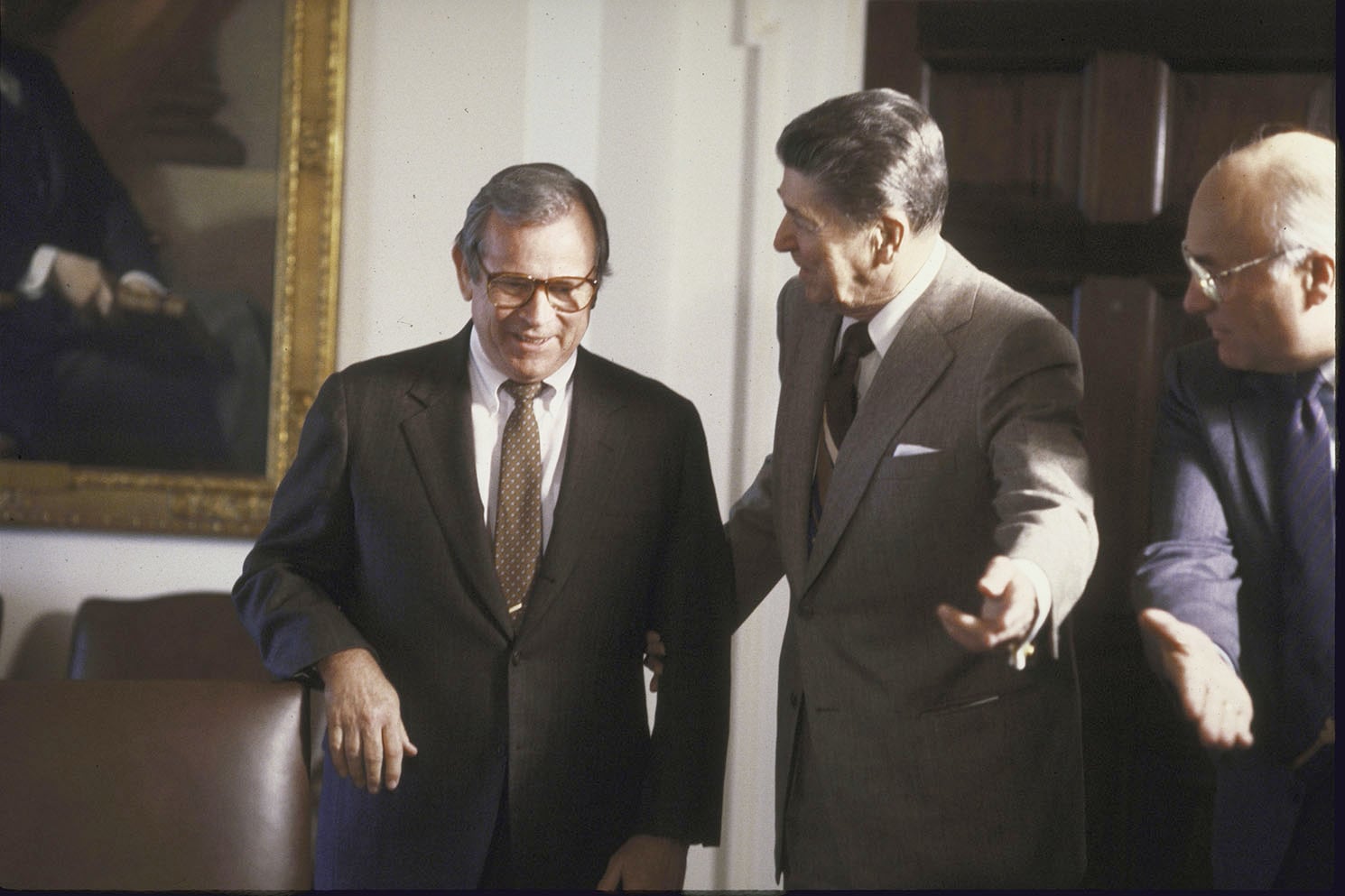
*Three older men in suits and ties walk together indoors, smiling and gesturing as they converse, with leather chairs and a framed painting visible in the background.*
White House Chief of Staff Howard Baker meets with U.S. President Ronald Reagan in the Oval Office in Washington on March 1, 1987. Diana Walker/Getty Images
My FP: Follow topics and authors to get straight to what you like. Exclusively for FP subscribers. Subscribe Now | Log In
November 22, 2026, 12:01 AM
President Donald Trump appears to have responded to the dramatic midterm results by doubling down on MAGA. Among his first major acts after the blue wave was replacing his trusted chief of staff, Susie Wiles, with Stephen Miller. Few moves could have signaled more clearly that Trump the fighter was not going to give way to Trump the conciliator. Because the White House chief of staff is often considered the second most powerful position in Washington, the choice carries particular weight. Miller has been seen as one of the most influential voices in Trump 2.0, if not the most influential. He has been the driving force behind an extraordinarily expansive view of presidential power: targeting what the administration considers opposition institutions such as law firms, the media, and universities; launching a sweeping detention and deportation program; imposing a tariff program that rocked the national economy; and making aggressive moves in Latin America that have included striking boats allegedly transporting illegal narcotics.
While Trump will still need to be more cooperative and responsive toward the Democratic Congress, and in some cases will have no choice, Miller’s elevation will certainly push back against what should be the natural rhythm of presidential politics: When the president’s party suffers a whopping midterm defeat, and that president is a lame duck struggling with major domestic and international challenges, he moves toward the center.
But that’s not how Miller thinks, nor has it been Trump’s instinct. The Miller appointment stands in sharp contrast to the personnel change that then-President Ronald Reagan, the founding father of the conservative movement, made after the 1986 midterms and the scandal that broke out soon after. That year, Democrats regained control of the Senate (they had held the House since 1955), and the administration was embroiled in a major scandal that some Democrats believed could reach Watergate-like levels.
The contrast between these two presidents reveals just how far Republican politics has radicalized since the 1980s. It is also a warning sign for Republicans who understand that, without a major course correction, the very same party that was celebrating a new governing coalition in 2024 might be on a self-destructive path. The GOP is in the grip of a strong leader who is not particularly interested in the long-term health of the party that brought him to the White House.
Reagan was not enjoying a good political moment in November 1986, though his presidency had been riding high until then. His first term was highly su
Ronald Reagan Changed His Chief of Staff After a Midterm Trouncing, Too
Columnist Julian E. Zelizer argues that President Donald Trump doubled down on the MAGA movement after his party's midterm defeat by replacing chief of staff Susie Wiles with Stephen Miller. He contrasts this move with Ronald Reagan's response to a similar crisis in 1986, warning that the Republican Party's growing radicalization threatens its long-term health.
Cross Lines newsroom
Share this article
#دونالد ترامب#رونالد ريغان#البيت الأبيض#الانتخابات النصفية#ستيفن ميلر#الكونغرس
Original source: Foreign Policy