The U.K. Is Falling for Palantir’s Salesmanship
Foreign Policy

Foreign Policy
Original Source
American software giant Palantir Technologies has leveraged theatrical presentations and political connections to secure lucrative contracts with the British government, yet its products have proven largely ineffective in practical deployment. The company designs deliberately complex contractual structures that make it nearly impossible for clients to exit agreements without devastating losses.
Palantir's Showmanship Finds Willing U.K. Marks
By using this website, you agree to our use of cookies. This use includes personalization of content and ads, and traffic analytics. Review our Privacy Policy for more information.
!Foreign Policy
Foreign Policy
Get analysis and alerts more quickly in the mobile app.
Install
Back to Foreign Policy Magazine home page
* Latest
* Regions
+ Asia & the Pacific
+ China
+ Middle East & Africa
+ Americas
+ Europe
* Newsletters
Editors’ Picks
Evening roundup with our editors’ favorite stories of the day
!World Brief Icon
World Brief
Your guide to the most important world stories of the day
!China Brief Icon
China Brief
The latest news, analysis, and data from the country each week
Situation Report
Weekly update on what’s driving U.S. national security policy
FP Weekend
A curation of our best book reviews, deep dives, and other reads
!Africa Brief Icon
Africa Brief
Essential analysis of the stories shaping geopolitics on the continent
!South Asia Brief Icon
South Asia Brief
Weekly update on developments in India and its neighbors
The Reading List
Curated guides on geopolitics and current affairs
FP Bookshelf
A monthly guide to FP’s book reviews, excerpts, and reading recommendations
!Latin America Brief Icon
Latin America Brief
One-stop digest of politics, economics, and culture
!Southeast Asia Brief Icon
Southeast Asia Brief
A weekly dispatch with news from the region’s 11 countries
The New Geopolitics
A five-part masterclass in IR theory with Harvard Professor Stephen M. Walt
View All Newsletters
* FP Live
* Latest
* Trending:
* Iran war
* Brazil's election kicks off
Search this website
* Preferences
* My FP Feed
* Saved Articles
* Newsletters
* Magazine Archive
* Subscription Settings
* FAQs
* Log Out
Sign In
Sign In
Campus and team access Campus and team access
Subscribe SubscribeCampus and team access Campus and team access
Argument:
The U.K. Is Falling for Palantir’s Salesmanship
*
*
* Facebook
* Bluesky
* X
* LinkedIn
* WhatsApp
* Reddit
Save
1. Create an FP account to save articles to read later.
Sign Up
ALREADY AN FP SUBSCRIBER? LOGIN
PDF
1. **Downloadable PDFs** are a benefit of an FP subscription.
Subscribe Now
ALREADY AN FP SUBSCRIBER? LOGIN
Gift
*
*
* WhatsApp
1. Gifting articles is a subscriber benefit.
Subscribe Now
ALREADY AN FP SUBSCRIBER? LOGIN
2. This article is an Insider exclusive.
Contact us at [email protected] to learn about upgrade options, unlocking the ability to gift this article.
Argument
An expert’s point of view on a current event.
The U.K. Is Falling for Palantir’s Salesmanship
Fantasy, not practicality, is driving bad deals.
By **Gareth Watkins**, a writer based in Manchester, UK.
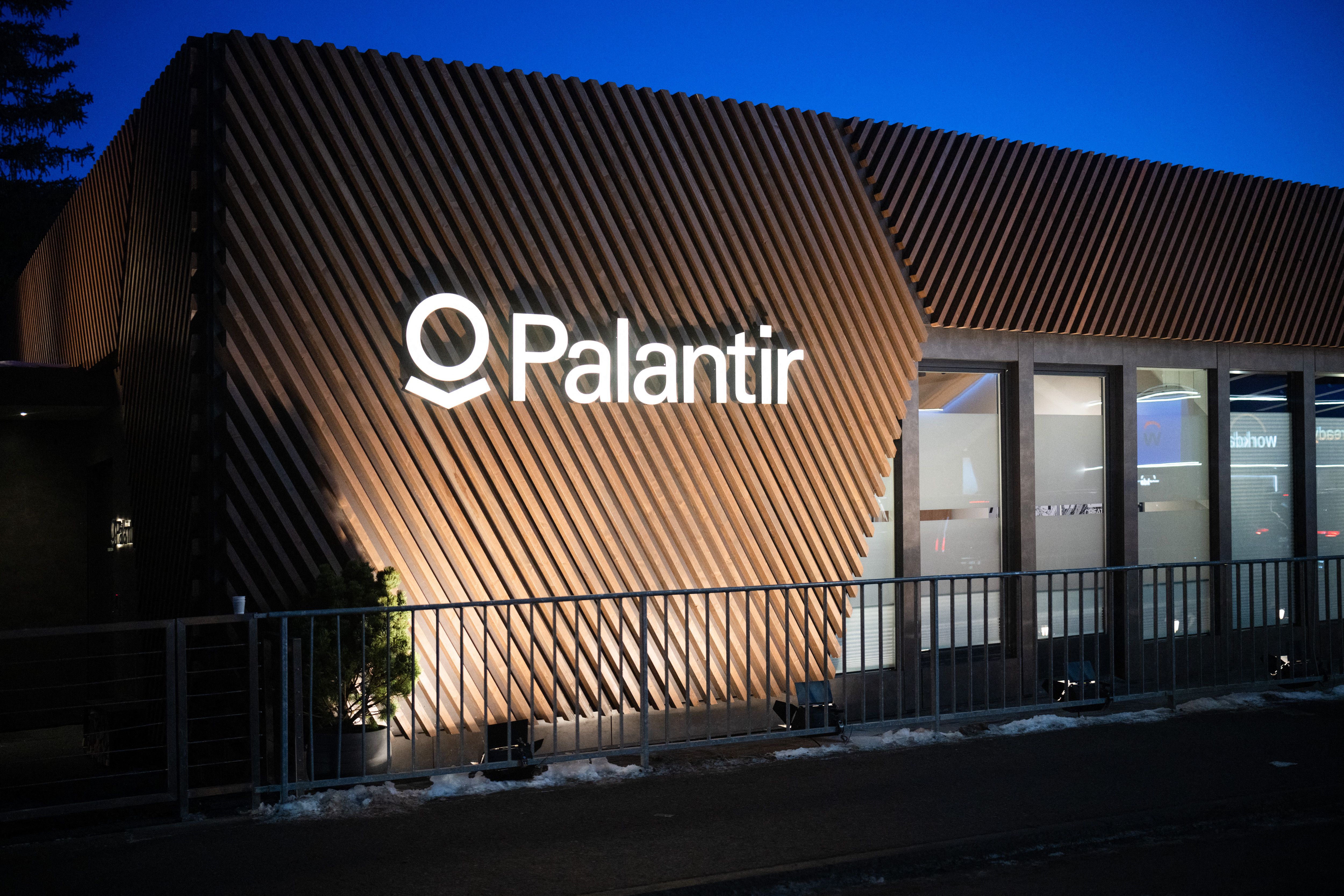
!A view of the Palantir building is seen during the annual meetings of the World Economic Forum in Davos, Switzerland, on Jan. 20, 2026.
*A view of the Palantir building is seen during the annual meetings of the World Economic Forum in Davos, Switzerland, on Jan. 20, 2026.*
A view of the Palantir building is seen during the annual meetings of the World Economic Forum in Davos, Switzerland, on Jan. 20, 2026. Laurent Hou/Hans Lucas/AFP via Getty Images
1. Get audio access with any FP subscription.
Subscribe Now
ALREADY AN FP SUBSCRIBER? LOGIN
August 26, 2026, 11:44 AM
In February 2025, then-U.K. Prime Minister Keir Starmer traveled to Washington to meet U.S. President Donald Trump for the first time since the latter reentered office. They talked tariffs, Ukraine, and an invitation to visit King Charles. That was routine: The prime minister’s next stop was more unusual. Starmer headed to the showroom of software giant Palantir Technologies for a meeting arranged by Peter Mandelson, then the U.K. ambassador to the United States, whose now-shuttered lobbying firm Global Counsel counted Palantir as a client worth more than 30,000 pounds (about $40,900) a month. Footage shows Starmer flanked by American military personnel and Palantir’s chief executive, Alex Karp, as he inspects an attack drone.
Civil society groups such as the Good Law Project and Foxglove had questions about the visit, and about the 240 million pound ($327.1 million) contract that Palantir was awarded shortly afterward. I have a different set of questions: Why does an enterprise data-integration company have a showroom? Why does that showroom contain weaponized drone platforms and screens relaying satellite feeds? What, exactly, was the prime minister being shown, and what was he meant to feel?
In February 2025, then-U.K. Prime Minister Keir Starmer traveled to Washington to meet U.S. President Donald Trump for the first time since the latter reentered office. They talked tariffs, Ukraine, and an invitation to visit King Charles. That was routine: The prime minister’s next stop was more unusual. Starmer headed to the showroom of software giant Palantir Technologies for a meeting arranged by Peter Mandelson, then the U.K. ambassador to the United States, whose now-shuttered lobbying firm Global Counsel counted Palantir as a client worth more than 30,000 pounds (about $40,900) a month. Footage shows Starmer flanked by American military personnel and Palantir’s chief executive, Alex Karp, as he inspects an attack drone.
Civil society groups such as the Good Law Project and Foxglove had questions about the visit, and about the 240 million pound ($327.1 million) contract that Palantir was awarded shortly afterward. I have a different set of questions: Why does an enterprise data-integration company have a showroom? Why does that showroom contain weaponized drone platforms and screens relaying satellite feeds? What, exactly, was the prime minister being shown, and what was he meant to feel?
Unlike its competitors, Palantir places a military and intelligence aesthetic front and center, and not just when selling to military clients. It self-consciously evokes the visual grammar of post-9/11 spy, war, and superhero films: dark “tactical” interfaces, dense webs of link-analysis graphs, and an “AI-defined” truck for the U.S. Army. Its London office has blacked-out windows and no signage; visitors reportedly sign nondisclosure agreements simply to enter. The showroom exists to immerse the visitor in that world of elite operators and threat feeds rather than the quotidian reality of data visualization. It’s theater, and so is the product.
This approach has paid off extremely well for Palantir in the U.K. In the *London Review of Books*, Peter Geoghegan and Lucas Amin describe a company with an unprecedented level of political access and fanatical institutional backing that is nonetheless quite ordinary, and often ineffective. Palantir began targeting Britain aggressively from 2019, with particular focus on the National Health Service (NHS). Its opening gambit came during the pandemic, when it supplied its services for 1 pound for four months.
That foothold became a much larger contract to build the NHS’s Federated Data Platform, which draws the data held in various trusts and general practitioners’ surgeries into a single system to power the apps that clinicians use. Yet 52 of the 139 trusts that the NHS classifies as “live” did not use a single Federated Data Platform app in the year preceding this June. Internal briefings call the interface “slow and clunky,” with queries that once took 30 seconds taking four or five minutes; one daily user described waiting 20 minutes for a dashboard to load, only for the system to crash. Further inquiry has met with delays and obfuscation, including a communications agency’s attempt to pay influencers to soothe public anxiety about the firm.
That refusal to act like a normal company extends to its contracts. Palantir creates structures that make it impossible to leave without punishment: Were the NHS to end the Federated Data Platform tomorrow, its staff would lose almost everything built on it, because most of the work lives only inside
By using this website, you agree to our use of cookies. This use includes personalization of content and ads, and traffic analytics. Review our Privacy Policy for more information.
!Foreign Policy
Foreign Policy
Get analysis and alerts more quickly in the mobile app.
Install
Back to Foreign Policy Magazine home page
* Latest
* Regions
+ Asia & the Pacific
+ China
+ Middle East & Africa
+ Americas
+ Europe
* Newsletters
Editors’ Picks
Evening roundup with our editors’ favorite stories of the day
!World Brief Icon
World Brief
Your guide to the most important world stories of the day
!China Brief Icon
China Brief
The latest news, analysis, and data from the country each week
Situation Report
Weekly update on what’s driving U.S. national security policy
FP Weekend
A curation of our best book reviews, deep dives, and other reads
!Africa Brief Icon
Africa Brief
Essential analysis of the stories shaping geopolitics on the continent
!South Asia Brief Icon
South Asia Brief
Weekly update on developments in India and its neighbors
The Reading List
Curated guides on geopolitics and current affairs
FP Bookshelf
A monthly guide to FP’s book reviews, excerpts, and reading recommendations
!Latin America Brief Icon
Latin America Brief
One-stop digest of politics, economics, and culture
!Southeast Asia Brief Icon
Southeast Asia Brief
A weekly dispatch with news from the region’s 11 countries
The New Geopolitics
A five-part masterclass in IR theory with Harvard Professor Stephen M. Walt
View All Newsletters
* FP Live
* Latest
* Trending:
* Iran war
* Brazil's election kicks off
Search this website
* Preferences
* My FP Feed
* Saved Articles
* Newsletters
* Magazine Archive
* Subscription Settings
* FAQs
* Log Out
Sign In
Sign In
Campus and team access Campus and team access
Subscribe SubscribeCampus and team access Campus and team access
Argument:
The U.K. Is Falling for Palantir’s Salesmanship
*
*
* Bluesky
* X
Save
1. Create an FP account to save articles to read later.
Sign Up
ALREADY AN FP SUBSCRIBER? LOGIN
1. **Downloadable PDFs** are a benefit of an FP subscription.
Subscribe Now
ALREADY AN FP SUBSCRIBER? LOGIN
Gift
*
*
1. Gifting articles is a subscriber benefit.
Subscribe Now
ALREADY AN FP SUBSCRIBER? LOGIN
2. This article is an Insider exclusive.
Contact us at [email protected] to learn about upgrade options, unlocking the ability to gift this article.
Argument
An expert’s point of view on a current event.
The U.K. Is Falling for Palantir’s Salesmanship
Fantasy, not practicality, is driving bad deals.
By **Gareth Watkins**, a writer based in Manchester, UK.
!A view of the Palantir building is seen during the annual meetings of the World Economic Forum in Davos, Switzerland, on Jan. 20, 2026.
*A view of the Palantir building is seen during the annual meetings of the World Economic Forum in Davos, Switzerland, on Jan. 20, 2026.*
A view of the Palantir building is seen during the annual meetings of the World Economic Forum in Davos, Switzerland, on Jan. 20, 2026. Laurent Hou/Hans Lucas/AFP via Getty Images
1. Get audio access with any FP subscription.
Subscribe Now
ALREADY AN FP SUBSCRIBER? LOGIN
August 26, 2026, 11:44 AM
In February 2025, then-U.K. Prime Minister Keir Starmer traveled to Washington to meet U.S. President Donald Trump for the first time since the latter reentered office. They talked tariffs, Ukraine, and an invitation to visit King Charles. That was routine: The prime minister’s next stop was more unusual. Starmer headed to the showroom of software giant Palantir Technologies for a meeting arranged by Peter Mandelson, then the U.K. ambassador to the United States, whose now-shuttered lobbying firm Global Counsel counted Palantir as a client worth more than 30,000 pounds (about $40,900) a month. Footage shows Starmer flanked by American military personnel and Palantir’s chief executive, Alex Karp, as he inspects an attack drone.
Civil society groups such as the Good Law Project and Foxglove had questions about the visit, and about the 240 million pound ($327.1 million) contract that Palantir was awarded shortly afterward. I have a different set of questions: Why does an enterprise data-integration company have a showroom? Why does that showroom contain weaponized drone platforms and screens relaying satellite feeds? What, exactly, was the prime minister being shown, and what was he meant to feel?
In February 2025, then-U.K. Prime Minister Keir Starmer traveled to Washington to meet U.S. President Donald Trump for the first time since the latter reentered office. They talked tariffs, Ukraine, and an invitation to visit King Charles. That was routine: The prime minister’s next stop was more unusual. Starmer headed to the showroom of software giant Palantir Technologies for a meeting arranged by Peter Mandelson, then the U.K. ambassador to the United States, whose now-shuttered lobbying firm Global Counsel counted Palantir as a client worth more than 30,000 pounds (about $40,900) a month. Footage shows Starmer flanked by American military personnel and Palantir’s chief executive, Alex Karp, as he inspects an attack drone.
Civil society groups such as the Good Law Project and Foxglove had questions about the visit, and about the 240 million pound ($327.1 million) contract that Palantir was awarded shortly afterward. I have a different set of questions: Why does an enterprise data-integration company have a showroom? Why does that showroom contain weaponized drone platforms and screens relaying satellite feeds? What, exactly, was the prime minister being shown, and what was he meant to feel?
Unlike its competitors, Palantir places a military and intelligence aesthetic front and center, and not just when selling to military clients. It self-consciously evokes the visual grammar of post-9/11 spy, war, and superhero films: dark “tactical” interfaces, dense webs of link-analysis graphs, and an “AI-defined” truck for the U.S. Army. Its London office has blacked-out windows and no signage; visitors reportedly sign nondisclosure agreements simply to enter. The showroom exists to immerse the visitor in that world of elite operators and threat feeds rather than the quotidian reality of data visualization. It’s theater, and so is the product.
This approach has paid off extremely well for Palantir in the U.K. In the *London Review of Books*, Peter Geoghegan and Lucas Amin describe a company with an unprecedented level of political access and fanatical institutional backing that is nonetheless quite ordinary, and often ineffective. Palantir began targeting Britain aggressively from 2019, with particular focus on the National Health Service (NHS). Its opening gambit came during the pandemic, when it supplied its services for 1 pound for four months.
That foothold became a much larger contract to build the NHS’s Federated Data Platform, which draws the data held in various trusts and general practitioners’ surgeries into a single system to power the apps that clinicians use. Yet 52 of the 139 trusts that the NHS classifies as “live” did not use a single Federated Data Platform app in the year preceding this June. Internal briefings call the interface “slow and clunky,” with queries that once took 30 seconds taking four or five minutes; one daily user described waiting 20 minutes for a dashboard to load, only for the system to crash. Further inquiry has met with delays and obfuscation, including a communications agency’s attempt to pay influencers to soothe public anxiety about the firm.
That refusal to act like a normal company extends to its contracts. Palantir creates structures that make it impossible to leave without punishment: Were the NHS to end the Federated Data Platform tomorrow, its staff would lose almost everything built on it, because most of the work lives only inside
🔗 Share Article
Tags:#باليونتير#بريطانيا#تكنولوجيا#عقود حكومية#NHS#فساد سياسي#البرمجيات
Source: Foreign Policy
For Context
Related reads from the same topic or latest developments


