Modi and Xi’s Meeting Caps a Detente
Foreign Policy

Foreign Policy
Original Source
Indian Prime Minister Narendra Modi and Chinese President Xi Jinping met on the sidelines of the BRICS summit in New Delhi, pledging to strengthen commercial and cultural ties. Despite the thaw following a deep crisis six years ago, fundamental disputes over borders and geopolitical interests make renewed rivalry virtually inevitable.
Modi and Xi’s Meeting Caps a Detente – Foreign Policy
By using this website, you agree to our use of cookies. This use includes personalization of content and ads, and traffic analytics. Review our Privacy Policy for more information.
!Foreign Policy
Foreign Policy
Get analysis and alerts more quickly in the mobile app.
Install
Back to Foreign Policy Magazine home page
* Latest
* Regions
+ Asia & the Pacific
+ China
+ Middle East & Africa
+ Americas
+ Europe
* Newsletters
Editors’ Picks
Evening roundup with our editors’ favorite stories of the day
!World Brief Icon
World Brief
Your guide to the most important world stories of the day
!China Brief Icon
China Brief
The latest news, analysis, and data from the country each week
Situation Report
Weekly update on what’s driving U.S. national security policy
FP Weekend
A curation of our best book reviews, deep dives, and other reads
!Africa Brief Icon
Africa Brief
Essential analysis of the stories shaping geopolitics on the continent
!South Asia Brief Icon
South Asia Brief
Weekly update on developments in India and its neighbors
The Reading List
Curated guides on geopolitics and current affairs
FP Bookshelf
A monthly guide to FP’s book reviews, excerpts, and reading recommendations
!Latin America Brief Icon
Latin America Brief
One-stop digest of politics, economics, and culture
!Southeast Asia Brief Icon
Southeast Asia Brief
A weekly dispatch with news from the region’s 11 countries
The New Geopolitics
A five-part masterclass in IR theory with Harvard Professor Stephen M. Walt
View All Newsletters
* FP Live
* Latest
* Trending:
* 25 years after 9/11
* Germany elections
Search this website
* Preferences
* My FP Feed
* Saved Articles
* Newsletters
* Magazine Archive
* Subscription Settings
* FAQs
* Log Out
Sign In
Sign In
Partner with FP at UNGA81 Partner with FP at UNGA81
Subscribe SubscribePartner with FP at UNGA81 Partner with FP at UNGA81
South Asia Brief:
Modi and Xi’s Meeting Caps a Detente
*
*
* Facebook
* Bluesky
* X
* LinkedIn
* WhatsApp
* Reddit
Save
Save
1. Create an FP account to save articles to read later.
Sign Up
ALREADY AN FP SUBSCRIBER? LOGIN
PDF
PDF
1. **Downloadable PDFs** are a benefit of an FP subscription.
Subscribe Now
ALREADY AN FP SUBSCRIBER? LOGIN
Gift
Gift
*
*
* WhatsApp
1. Gifting articles is a subscriber benefit.
Subscribe Now
ALREADY AN FP SUBSCRIBER? LOGIN
2. This article is an Insider exclusive.
Contact us at [email protected] to learn about upgrade options, unlocking the ability to gift this article.
South Asia Brief
News and analysis from India and its neighboring countries in South Asia, a region home to one-fourth of the world’s population. Delivered Wednesday.
Modi and Xi’s Meeting Caps a Detente
Despite the thaw, India-China rivalry remains inevitable.
!Kugelman-Michael-foreign-policy-columnist13
*Kugelman-Michael-foreign-policy-columnist13*
*Michael Kugelman*
By **Michael Kugelman**, the writer of *Foreign Policy*’s weekly South Asia Brief and a senior fellow for South Asia at the Atlantic Council.
!Chinese President Xi Jinping and Indian Prime Minister Narendra Modi shake hands.
*Chinese President Xi Jinping and Indian Prime Minister Narendra Modi shake hands.*
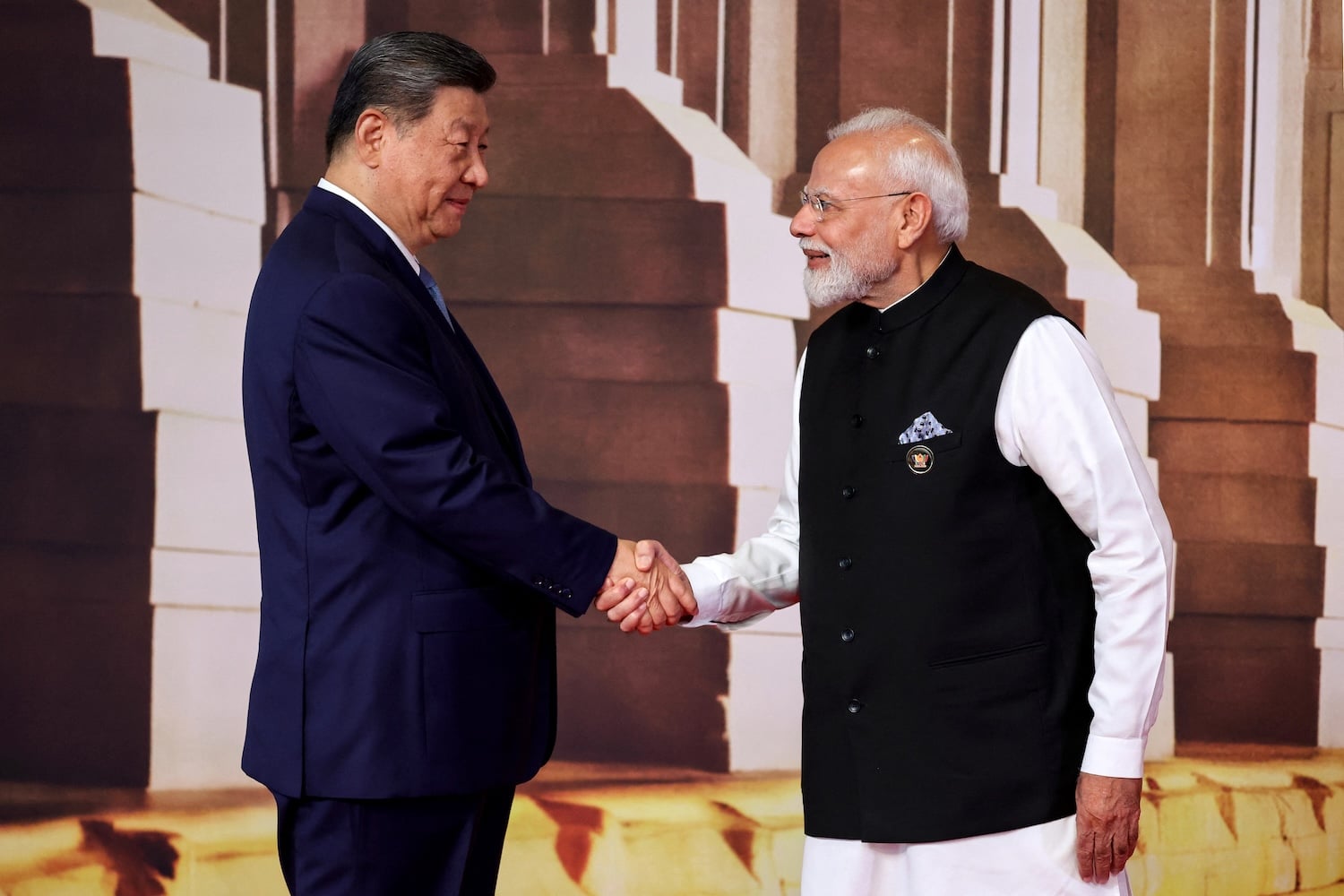
Chinese President Xi Jinping and Indian Prime Minister Narendra Modi shake hands before the start of the BRICS summit in New Delhi on Sept. 12. Alexander Kazakov/Pool/AFP via Getty Images
My FP:
Follow topics and authors to get straight to what you like. Exclusively for FP subscribers. Subscribe Now | Log In
*
*
*
*
September 16, 2026, 8:21 PM
Welcome to*Foreign Policy*’s South Asia Brief.
The highlights this week: Indian Prime Minister Narendra Modi and Chinese President Xi Jinping meet on the **sidelines of the BRICS summit**, Bangladesh faces the **world’s worst measles outbreak** as the death toll passes 1,000, and thousands of people remain missing after **Nepal’s deadly floods**.
Welcome to*Foreign Policy*’s South Asia Brief.
The highlights this week: Indian Prime Minister Narendra Modi and Chinese President Xi Jinping meet on the **sidelines of the BRICS summit**, Bangladesh faces the **world’s worst measles outbreak** as the death toll passes 1,000, and thousands of people remain missing after **Nepal’s deadly floods**.
Sign up to receive South Asia Brief in your inbox every Wednesday.
---
Modi, Xi Meet on BRICS Sideline
Over the weekend, Chinese President Xi Jinping traveled to India for the first time in seven years. Xi was in New Delhi for 24 hours to attend this year’s BRICS leaders’ summit, where he held a meeting with Indian Prime Minister Narendra Modi. An Indian Foreign Ministry statement said the two leaders pledged to strengthen commercial and cultural cooperation.
A more striking readout came from Chinese Foreign Minister Wang Yi, who said that the bilateral meeting covered long-term, strategic issues and that Modi and Xi reached “the most important consensus” to be partners, not rivals. Beijing hopes the meeting will advance bilateral ties “without stagnation or backsliding,” Wang added.
These are positive words for a relationship between major competitors—and one that was plunged into deep crisis after a deadly 2020 border clash in the Ladakh region. But an India-China rapprochement has been playing out for nearly two years. Xi’s visit marked the culmination, not the commencement, of India-China detente.
Still, the extent of the thaw shouldn’t be overstated. Historically, India-China ties have had their moments, with ample heady talk and good optics. Invariably, fresh tensions have spoiled them; the two are destined to remain rivals by history, geography, and geopolitics.
In October 2024, the post-Ladakh tensions began to ease with the inking of a new border agreement. India and China subsequently made pledges to resume direct air flights and bolster commercial cooperation. In March 2025, Modi said on a podcast that cooperation with China was “essential” for global stability.
Contrary to some commentary, the detente began before U.S. President Donald Trump was elected to a second term and wasn’t sparked by his policies. But Trump’s tariffs, which have hit both India and China hard, and concerns about access to U.S. markets gave both sides a strong incentive to accelerate their rapprochement and especially to deepen trade ties.
However, the reality is that continued India-China rivalry is all but inevitable. Both countries are both proud civilizational states and dispute claims to around 15,000 square miles of territory—equal to the size of Greece—along their shared border. They disagree on many other major issues, from Taiwan and Tibet to surveillance.
Perhaps most significantly, China is a close ally of India’s bitter rival Pakistan. Last year, the Pakistani military used Chinese weaponry in air combat operations against India for the first time.
Such challenges may seem surmountable, given what the India-China relationship has going for it. This includes their rock-solid trade partnership, shared interests, and considerable cooperation in global forums (including BRICS, but also the Shanghai Cooperation Organization and the Asian Infrastructure Investment Bank.)
Not surprisingly, India-China ties have often enjoyed periods of warmth—but ultimately a trigger, often a border provocation, has shattered that calm.
In 2017, a few years after Xi and Modi were photographed smiling on a swing together, a 73-day military standoff on the Doklam Plateau plunged relations into crisis. The Ladakh clash came just months after another Modi-Xi summit in India. Though border tensions have subsided, territorial disputes still fester and occasionally flare.
To be sure, there are plenty of reasons for New Delhi and Beijing to bury the hatchet. They want to ease tensions along their fraught border, create space for deeper commercial cooperation, hedge against Trump’s unpredictability, and remove a diplomatic
By using this website, you agree to our use of cookies. This use includes personalization of content and ads, and traffic analytics. Review our Privacy Policy for more information.
!Foreign Policy
Foreign Policy
Get analysis and alerts more quickly in the mobile app.
Install
Back to Foreign Policy Magazine home page
* Latest
* Regions
+ Asia & the Pacific
+ China
+ Middle East & Africa
+ Americas
+ Europe
* Newsletters
Editors’ Picks
Evening roundup with our editors’ favorite stories of the day
!World Brief Icon
World Brief
Your guide to the most important world stories of the day
!China Brief Icon
China Brief
The latest news, analysis, and data from the country each week
Situation Report
Weekly update on what’s driving U.S. national security policy
FP Weekend
A curation of our best book reviews, deep dives, and other reads
!Africa Brief Icon
Africa Brief
Essential analysis of the stories shaping geopolitics on the continent
!South Asia Brief Icon
South Asia Brief
Weekly update on developments in India and its neighbors
The Reading List
Curated guides on geopolitics and current affairs
FP Bookshelf
A monthly guide to FP’s book reviews, excerpts, and reading recommendations
!Latin America Brief Icon
Latin America Brief
One-stop digest of politics, economics, and culture
!Southeast Asia Brief Icon
Southeast Asia Brief
A weekly dispatch with news from the region’s 11 countries
The New Geopolitics
A five-part masterclass in IR theory with Harvard Professor Stephen M. Walt
View All Newsletters
* FP Live
* Latest
* Trending:
* 25 years after 9/11
* Germany elections
Search this website
* Preferences
* My FP Feed
* Saved Articles
* Newsletters
* Magazine Archive
* Subscription Settings
* FAQs
* Log Out
Sign In
Sign In
Partner with FP at UNGA81 Partner with FP at UNGA81
Subscribe SubscribePartner with FP at UNGA81 Partner with FP at UNGA81
South Asia Brief:
Modi and Xi’s Meeting Caps a Detente
*
*
* Bluesky
* X
Save
Save
1. Create an FP account to save articles to read later.
Sign Up
ALREADY AN FP SUBSCRIBER? LOGIN
1. **Downloadable PDFs** are a benefit of an FP subscription.
Subscribe Now
ALREADY AN FP SUBSCRIBER? LOGIN
Gift
Gift
*
*
1. Gifting articles is a subscriber benefit.
Subscribe Now
ALREADY AN FP SUBSCRIBER? LOGIN
2. This article is an Insider exclusive.
Contact us at [email protected] to learn about upgrade options, unlocking the ability to gift this article.
South Asia Brief
News and analysis from India and its neighboring countries in South Asia, a region home to one-fourth of the world’s population. Delivered Wednesday.
Modi and Xi’s Meeting Caps a Detente
Despite the thaw, India-China rivalry remains inevitable.
!Kugelman-Michael-foreign-policy-columnist13
*Kugelman-Michael-foreign-policy-columnist13*
*Michael Kugelman*
By **Michael Kugelman**, the writer of *Foreign Policy*’s weekly South Asia Brief and a senior fellow for South Asia at the Atlantic Council.
!Chinese President Xi Jinping and Indian Prime Minister Narendra Modi shake hands.
*Chinese President Xi Jinping and Indian Prime Minister Narendra Modi shake hands.*
Chinese President Xi Jinping and Indian Prime Minister Narendra Modi shake hands before the start of the BRICS summit in New Delhi on Sept. 12. Alexander Kazakov/Pool/AFP via Getty Images
My FP:
Follow topics and authors to get straight to what you like. Exclusively for FP subscribers. Subscribe Now | Log In
*
*
*
*
September 16, 2026, 8:21 PM
Welcome to*Foreign Policy*’s South Asia Brief.
The highlights this week: Indian Prime Minister Narendra Modi and Chinese President Xi Jinping meet on the **sidelines of the BRICS summit**, Bangladesh faces the **world’s worst measles outbreak** as the death toll passes 1,000, and thousands of people remain missing after **Nepal’s deadly floods**.
Welcome to*Foreign Policy*’s South Asia Brief.
The highlights this week: Indian Prime Minister Narendra Modi and Chinese President Xi Jinping meet on the **sidelines of the BRICS summit**, Bangladesh faces the **world’s worst measles outbreak** as the death toll passes 1,000, and thousands of people remain missing after **Nepal’s deadly floods**.
Sign up to receive South Asia Brief in your inbox every Wednesday.
---
Modi, Xi Meet on BRICS Sideline
Over the weekend, Chinese President Xi Jinping traveled to India for the first time in seven years. Xi was in New Delhi for 24 hours to attend this year’s BRICS leaders’ summit, where he held a meeting with Indian Prime Minister Narendra Modi. An Indian Foreign Ministry statement said the two leaders pledged to strengthen commercial and cultural cooperation.
A more striking readout came from Chinese Foreign Minister Wang Yi, who said that the bilateral meeting covered long-term, strategic issues and that Modi and Xi reached “the most important consensus” to be partners, not rivals. Beijing hopes the meeting will advance bilateral ties “without stagnation or backsliding,” Wang added.
These are positive words for a relationship between major competitors—and one that was plunged into deep crisis after a deadly 2020 border clash in the Ladakh region. But an India-China rapprochement has been playing out for nearly two years. Xi’s visit marked the culmination, not the commencement, of India-China detente.
Still, the extent of the thaw shouldn’t be overstated. Historically, India-China ties have had their moments, with ample heady talk and good optics. Invariably, fresh tensions have spoiled them; the two are destined to remain rivals by history, geography, and geopolitics.
In October 2024, the post-Ladakh tensions began to ease with the inking of a new border agreement. India and China subsequently made pledges to resume direct air flights and bolster commercial cooperation. In March 2025, Modi said on a podcast that cooperation with China was “essential” for global stability.
Contrary to some commentary, the detente began before U.S. President Donald Trump was elected to a second term and wasn’t sparked by his policies. But Trump’s tariffs, which have hit both India and China hard, and concerns about access to U.S. markets gave both sides a strong incentive to accelerate their rapprochement and especially to deepen trade ties.
However, the reality is that continued India-China rivalry is all but inevitable. Both countries are both proud civilizational states and dispute claims to around 15,000 square miles of territory—equal to the size of Greece—along their shared border. They disagree on many other major issues, from Taiwan and Tibet to surveillance.
Perhaps most significantly, China is a close ally of India’s bitter rival Pakistan. Last year, the Pakistani military used Chinese weaponry in air combat operations against India for the first time.
Such challenges may seem surmountable, given what the India-China relationship has going for it. This includes their rock-solid trade partnership, shared interests, and considerable cooperation in global forums (including BRICS, but also the Shanghai Cooperation Organization and the Asian Infrastructure Investment Bank.)
Not surprisingly, India-China ties have often enjoyed periods of warmth—but ultimately a trigger, often a border provocation, has shattered that calm.
In 2017, a few years after Xi and Modi were photographed smiling on a swing together, a 73-day military standoff on the Doklam Plateau plunged relations into crisis. The Ladakh clash came just months after another Modi-Xi summit in India. Though border tensions have subsided, territorial disputes still fester and occasionally flare.
To be sure, there are plenty of reasons for New Delhi and Beijing to bury the hatchet. They want to ease tensions along their fraught border, create space for deeper commercial cooperation, hedge against Trump’s unpredictability, and remove a diplomatic
🔗 Share Article
Tags:#الهند#الصين#العلاقات الدبلوماسية#بريكس#آسيا#الخلافات الحدودية
Source: Foreign Policy
For Context
Related reads from the same topic or latest developments