German Democracy, as We Knew It, Is Over
Foreign Policy

Foreign Policy
Original Source
The far-right Alternative for Germany's stunning electoral victory in Saxony-Anhalt signals the demise of post-Nazi Germany's liberal democratic system. The political center faces paralysis and recrimination, having failed to prevent an extremist force from approaching power for the first time since the Nazi regime's collapse.
With the AfD's Election Victory, German Democracy, as We Knew It, Is Over
By using this website, you agree to our use of cookies. This use includes personalization of content and ads, and traffic analytics. Review our Privacy Policy for more information.
!Foreign Policy
Foreign Policy
Get analysis and alerts more quickly in the mobile app.
Install
Back to Foreign Policy Magazine home page
* Latest
* Regions
+ Asia & the Pacific
+ China
+ Middle East & Africa
+ Americas
+ Europe
* Newsletters
Editors’ Picks
Evening roundup with our editors’ favorite stories of the day
!World Brief Icon
World Brief
Your guide to the most important world stories of the day
!China Brief Icon
China Brief
The latest news, analysis, and data from the country each week
Situation Report
Weekly update on what’s driving U.S. national security policy
FP Weekend
A curation of our best book reviews, deep dives, and other reads
!Africa Brief Icon
Africa Brief
Essential analysis of the stories shaping geopolitics on the continent
!South Asia Brief Icon
South Asia Brief
Weekly update on developments in India and its neighbors
The Reading List
Curated guides on geopolitics and current affairs
FP Bookshelf
A monthly guide to FP’s book reviews, excerpts, and reading recommendations
!Latin America Brief Icon
Latin America Brief
One-stop digest of politics, economics, and culture
!Southeast Asia Brief Icon
Southeast Asia Brief
A weekly dispatch with news from the region’s 11 countries
The New Geopolitics
A five-part masterclass in IR theory with Harvard Professor Stephen M. Walt
View All Newsletters
* FP Live
* Latest
* Trending:
* Germany elections
* Venezuela oil deal
Search this website
* Preferences
* My FP Feed
* Saved Articles
* Newsletters
* Magazine Archive
* Subscription Settings
* FAQs
* Log Out
Sign In
Sign In
Partner with FP at UNGA81 Partner with FP at UNGA81
Subscribe SubscribePartner with FP at UNGA81 Partner with FP at UNGA81
Argument:
German Democracy, as We Knew It, Is Over
*
*
* Facebook
* Bluesky
* X
* LinkedIn
* WhatsApp
* Reddit
Save
1. Create an FP account to save articles to read later.
Sign Up
ALREADY AN FP SUBSCRIBER? LOGIN
PDF
1. **Downloadable PDFs** are a benefit of an FP subscription.
Subscribe Now
ALREADY AN FP SUBSCRIBER? LOGIN
Gift
*
*
* WhatsApp
1. Gifting articles is a subscriber benefit.
Subscribe Now
ALREADY AN FP SUBSCRIBER? LOGIN
2. This article is an Insider exclusive.
Contact us at [email protected] to learn about upgrade options, unlocking the ability to gift this article.
Argument
An expert’s point of view on a current event.
German Democracy, as We Knew It, Is Over
A far-right state election victory is ushering in the end of the country’s postwar political system.
By **John Kampfner**, the author of *Braver New World: The Countries Daring to Do Things Others Won’t*.
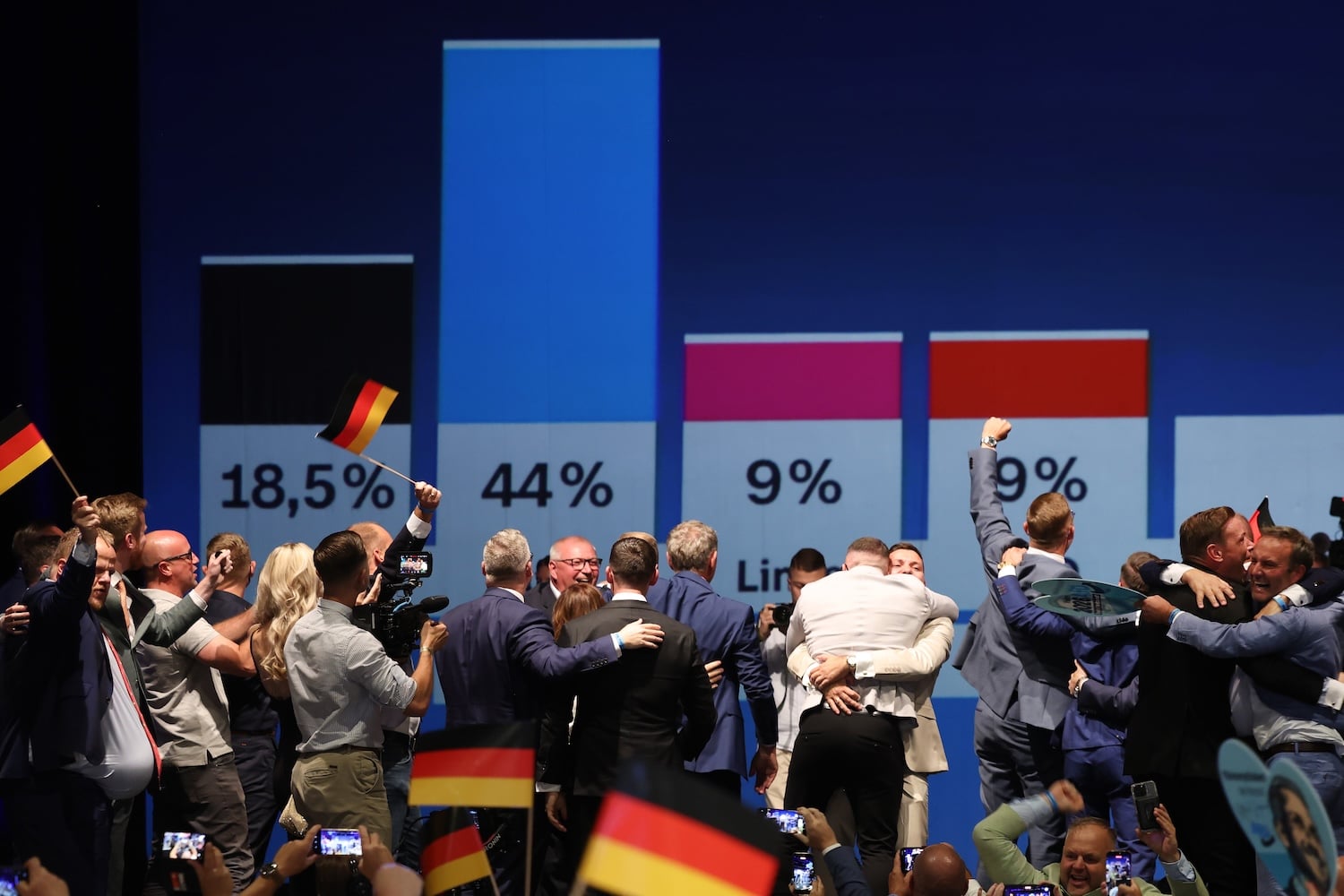
!Supporters of the far-right Alternative for Germany (AfD) cheer at the AfD election evening watch party as initial results show the party with 44% in Saxony-Anhalt state elections on September 6, 2026 in Magdeburg, Germany.
*Supporters of the far-right Alternative for Germany (AfD) cheer at the AfD election evening watch party as initial results show the party with 44% in Saxony-Anhalt state elections on September 6, 2026 in Magdeburg, Germany.*
Supporters of the far-right Alternative for Germany (AfD) cheer at the AfD election evening watch party as initial results show the party with 44% in Saxony-Anhalt state elections on September 6, 2026 in Magdeburg, Germany. Sean Gallup/Getty Images
*
September 9, 2026, 4:37 AM
Has a small, largely elderly, left-behind pocket of Germany struck a fatal blow against its postwar liberal democracy? That is the question many are asking after Sunday’s election in the eastern state of Saxony-Anhalt, which saw the Alternative for Germany (AfD) trounce the mainstream parties to stand on the verge of power—the first time a far-right party would do so in Germany since the fall of the Nazi regime.
As has been the case when other tsunamis have struck—Donald Trump’s presidential election victories in the United States, Brexit in the United Kingdom, to name but two of many around the world—the response of those in the political center has ranged from fury to consternation to despair. But most of all, a sense of dumbstruck paralysis. They could see it coming; they took some action, but they were swept away. And now, as they face the consequences, so the recriminations begin.
Has a small, largely elderly, left-behind pocket of Germany struck a fatal blow against its postwar liberal democracy? That is the question many are asking after Sunday’s election in the eastern state of Saxony-Anhalt, which saw the Alternative for Germany (AfD) trounce the mainstream parties to stand on the verge of power—the first time a far-right party would do so in Germany since the fall of the Nazi regime.
As has been the case when other tsunamis have struck—Donald Trump’s presidential election victories in the United States, Brexit in the United Kingdom, to name but two of many around the world—the response of those in the political center has ranged from fury to consternation to despair. But most of all, a sense of dumbstruck paralysis. They could see it coming; they took some action, but they were swept away. And now, as they face the consequences, so the recriminations begin.
In Washington, the targets of opprobrium ranged from presidential nominees Kamala Harris and Hillary Clinton to Democrats in Congress to the entire party establishment. In the United Kingdom, they were many and varied, from then-Prime Minister David Cameron, who called the 2016 referendum, to then-London mayor Boris Johnson, who changed his mind at the last moment to lead the calls to quit the European Union, to the ever-present right-winger Nigel Farage, to Jeremy Corbyn, the left-wing Labour leader who campaigned half-heartedly to stay while purportedly preferring to leave.
In Germany, it’s simpler. All the guns are trained on Friedrich Merz, the chancellor of the past 16 months with the ignominious distinction of historic low opinion poll ratings. He is the man who boasted when first challenging for the leadership of his Christian Democratic Union (CDU) party in 2018 that he would halve the popular support for the AfD, only to see it double. He is the man who promised voters an “autumn of reforms”—he meant 2025, and yet they are still spluttering their way through parliament.
Merz spent years trying to become CDU leader, criticizing former Chancellor Angela Merkel, openly and behind her back, for taking the party too much to the center, for being too generous to welfare claimants and too welcoming to migrants. What Germans wanted, he insisted, was more genuine conservatism.
They’ve now got that, but they’ve decided they would rather eat their meat rare. They’re opting in droves for the AfD, a party that promises remigration for “non-Germans,” to prioritize “German” culture, to incentivize child-rearing, to restore traditional family values: a party that is tacitly supported by the Kremlin and is openly embraced by Trump, U.S. Vice President J.D. Vance, and Elon Musk. A party, which in the European Parliament many other right-wing groups won’t touch and whose chapters in Saxony-Anhalt and in neighboring regions have been declared extremist by the federal office to protect the constitution.
There are some, a dwindling number it must be said, who seek to play down the consequences. After all, they say, Saxony-Anhalt is small. Its 2.2 million people constitute but one-fortieth of Germany’s overall population. It is poorer, older, more surly than other parts of the country. And it belongs to the former communist east, where support for the AfD has, throughout the party’s 13 years of existence, always been stronger.
All that may be true, but the alarm expressed by most political players in Berlin and elsewhere—words such as “s
By using this website, you agree to our use of cookies. This use includes personalization of content and ads, and traffic analytics. Review our Privacy Policy for more information.
!Foreign Policy
Foreign Policy
Get analysis and alerts more quickly in the mobile app.
Install
Back to Foreign Policy Magazine home page
* Latest
* Regions
+ Asia & the Pacific
+ China
+ Middle East & Africa
+ Americas
+ Europe
* Newsletters
Editors’ Picks
Evening roundup with our editors’ favorite stories of the day
!World Brief Icon
World Brief
Your guide to the most important world stories of the day
!China Brief Icon
China Brief
The latest news, analysis, and data from the country each week
Situation Report
Weekly update on what’s driving U.S. national security policy
FP Weekend
A curation of our best book reviews, deep dives, and other reads
!Africa Brief Icon
Africa Brief
Essential analysis of the stories shaping geopolitics on the continent
!South Asia Brief Icon
South Asia Brief
Weekly update on developments in India and its neighbors
The Reading List
Curated guides on geopolitics and current affairs
FP Bookshelf
A monthly guide to FP’s book reviews, excerpts, and reading recommendations
!Latin America Brief Icon
Latin America Brief
One-stop digest of politics, economics, and culture
!Southeast Asia Brief Icon
Southeast Asia Brief
A weekly dispatch with news from the region’s 11 countries
The New Geopolitics
A five-part masterclass in IR theory with Harvard Professor Stephen M. Walt
View All Newsletters
* FP Live
* Latest
* Trending:
* Germany elections
* Venezuela oil deal
Search this website
* Preferences
* My FP Feed
* Saved Articles
* Newsletters
* Magazine Archive
* Subscription Settings
* FAQs
* Log Out
Sign In
Sign In
Partner with FP at UNGA81 Partner with FP at UNGA81
Subscribe SubscribePartner with FP at UNGA81 Partner with FP at UNGA81
Argument:
German Democracy, as We Knew It, Is Over
*
*
* Bluesky
* X
Save
1. Create an FP account to save articles to read later.
Sign Up
ALREADY AN FP SUBSCRIBER? LOGIN
1. **Downloadable PDFs** are a benefit of an FP subscription.
Subscribe Now
ALREADY AN FP SUBSCRIBER? LOGIN
Gift
*
*
1. Gifting articles is a subscriber benefit.
Subscribe Now
ALREADY AN FP SUBSCRIBER? LOGIN
2. This article is an Insider exclusive.
Contact us at [email protected] to learn about upgrade options, unlocking the ability to gift this article.
Argument
An expert’s point of view on a current event.
German Democracy, as We Knew It, Is Over
A far-right state election victory is ushering in the end of the country’s postwar political system.
By **John Kampfner**, the author of *Braver New World: The Countries Daring to Do Things Others Won’t*.
!Supporters of the far-right Alternative for Germany (AfD) cheer at the AfD election evening watch party as initial results show the party with 44% in Saxony-Anhalt state elections on September 6, 2026 in Magdeburg, Germany.
*Supporters of the far-right Alternative for Germany (AfD) cheer at the AfD election evening watch party as initial results show the party with 44% in Saxony-Anhalt state elections on September 6, 2026 in Magdeburg, Germany.*
Supporters of the far-right Alternative for Germany (AfD) cheer at the AfD election evening watch party as initial results show the party with 44% in Saxony-Anhalt state elections on September 6, 2026 in Magdeburg, Germany. Sean Gallup/Getty Images
*
September 9, 2026, 4:37 AM
Has a small, largely elderly, left-behind pocket of Germany struck a fatal blow against its postwar liberal democracy? That is the question many are asking after Sunday’s election in the eastern state of Saxony-Anhalt, which saw the Alternative for Germany (AfD) trounce the mainstream parties to stand on the verge of power—the first time a far-right party would do so in Germany since the fall of the Nazi regime.
As has been the case when other tsunamis have struck—Donald Trump’s presidential election victories in the United States, Brexit in the United Kingdom, to name but two of many around the world—the response of those in the political center has ranged from fury to consternation to despair. But most of all, a sense of dumbstruck paralysis. They could see it coming; they took some action, but they were swept away. And now, as they face the consequences, so the recriminations begin.
Has a small, largely elderly, left-behind pocket of Germany struck a fatal blow against its postwar liberal democracy? That is the question many are asking after Sunday’s election in the eastern state of Saxony-Anhalt, which saw the Alternative for Germany (AfD) trounce the mainstream parties to stand on the verge of power—the first time a far-right party would do so in Germany since the fall of the Nazi regime.
As has been the case when other tsunamis have struck—Donald Trump’s presidential election victories in the United States, Brexit in the United Kingdom, to name but two of many around the world—the response of those in the political center has ranged from fury to consternation to despair. But most of all, a sense of dumbstruck paralysis. They could see it coming; they took some action, but they were swept away. And now, as they face the consequences, so the recriminations begin.
In Washington, the targets of opprobrium ranged from presidential nominees Kamala Harris and Hillary Clinton to Democrats in Congress to the entire party establishment. In the United Kingdom, they were many and varied, from then-Prime Minister David Cameron, who called the 2016 referendum, to then-London mayor Boris Johnson, who changed his mind at the last moment to lead the calls to quit the European Union, to the ever-present right-winger Nigel Farage, to Jeremy Corbyn, the left-wing Labour leader who campaigned half-heartedly to stay while purportedly preferring to leave.
In Germany, it’s simpler. All the guns are trained on Friedrich Merz, the chancellor of the past 16 months with the ignominious distinction of historic low opinion poll ratings. He is the man who boasted when first challenging for the leadership of his Christian Democratic Union (CDU) party in 2018 that he would halve the popular support for the AfD, only to see it double. He is the man who promised voters an “autumn of reforms”—he meant 2025, and yet they are still spluttering their way through parliament.
Merz spent years trying to become CDU leader, criticizing former Chancellor Angela Merkel, openly and behind her back, for taking the party too much to the center, for being too generous to welfare claimants and too welcoming to migrants. What Germans wanted, he insisted, was more genuine conservatism.
They’ve now got that, but they’ve decided they would rather eat their meat rare. They’re opting in droves for the AfD, a party that promises remigration for “non-Germans,” to prioritize “German” culture, to incentivize child-rearing, to restore traditional family values: a party that is tacitly supported by the Kremlin and is openly embraced by Trump, U.S. Vice President J.D. Vance, and Elon Musk. A party, which in the European Parliament many other right-wing groups won’t touch and whose chapters in Saxony-Anhalt and in neighboring regions have been declared extremist by the federal office to protect the constitution.
There are some, a dwindling number it must be said, who seek to play down the consequences. After all, they say, Saxony-Anhalt is small. Its 2.2 million people constitute but one-fortieth of Germany’s overall population. It is poorer, older, more surly than other parts of the country. And it belongs to the former communist east, where support for the AfD has, throughout the party’s 13 years of existence, always been stronger.
All that may be true, but the alarm expressed by most political players in Berlin and elsewhere—words such as “s
🔗 Share Article
Tags:#ألمانيا#حزب البديل#الديمقراطية#الانتخابات#التطرف السياسي#فريدريك ميرتس
Source: Foreign Policy
For Context
Related reads from the same topic or latest developments


