The Next Front in LNG Sanctions Runs Through China
Foreign Policy

Foreign Policy
Original Source
China has become Russia's indispensable lifeline for sanctioned liquefied natural gas exports, with southern ports like Beihai receiving over 40 cargoes at steep discounts, signaling the emergence of a sanctions-resistant LNG trading system. U.S. policymakers now face mounting pressure to expand enforcement mechanisms and target Chinese receiving terminals to prevent Moscow from building a sustainable export industry.
Russia LNG Sanctions Need to Expand to China
!Foreign Policy
Foreign Policy
Get analysis and alerts more quickly in the mobile app.
Install
Back to Foreign Policy Magazine home page
* Latest
* Regions
+ Asia & the Pacific
+ China
+ Middle East & Africa
+ Americas
+ Europe
* Newsletters
Editors’ Picks
Evening roundup with our editors’ favorite stories of the day
!World Brief Icon
World Brief
Your guide to the most important world stories of the day
!China Brief Icon
China Brief
The latest news, analysis, and data from the country each week
Situation Report
Weekly update on what’s driving U.S. national security policy
FP Weekend
A curation of our best book reviews, deep dives, and other reads
!Africa Brief Icon
Africa Brief
Essential analysis of the stories shaping geopolitics on the continent
!South Asia Brief Icon
South Asia Brief
Weekly update on developments in India and its neighbors
The Reading List
Curated guides on geopolitics and current affairs
FP Bookshelf
A monthly guide to FP’s book reviews, excerpts, and reading recommendations
!Latin America Brief Icon
Latin America Brief
One-stop digest of politics, economics, and culture
!Southeast Asia Brief Icon
Southeast Asia Brief
A weekly dispatch with news from the region’s 11 countries
The New Geopolitics
A five-part masterclass in IR theory with Harvard Professor Stephen M. Walt
View All Newsletters
* FP Live
* Latest
* Trending:
* Europe's record heatwave
* Gaza plan
* Ceuta's future
* Colombia's new president
Search this website
* Preferences
* My FP Feed
* Saved Articles
* Newsletters
* Magazine Archive
* Subscription Settings
* FAQs
* Log Out
Sign In
Sign In
Partner with FP at UNGA81 Partner with FP at UNGA81
Subscribe SubscribePartner with FP at UNGA81 Partner with FP at UNGA81
Argument:
The Next Front in LNG Sanctions Runs Through China
*
*
* Facebook
* Bluesky
* X
* LinkedIn
* WhatsApp
* Reddit
Save
1. Create an FP account to save articles to read later.
Sign Up
ALREADY AN FP SUBSCRIBER? LOGIN
PDF
1. **Downloadable PDFs** are a benefit of an FP subscription.
Subscribe Now
ALREADY AN FP SUBSCRIBER? LOGIN
Gift
*
*
* WhatsApp
1. Gifting articles is a subscriber benefit.
Subscribe Now
ALREADY AN FP SUBSCRIBER? LOGIN
2. This article is an Insider exclusive.
Contact us at [email protected] to learn about upgrade options, unlocking the ability to gift this article.
Argument
An expert’s point of view on a current event.
The Next Front in LNG Sanctions Runs Through China
Moscow will soon have to redirect a growing share of its exports to Asia.
By **Petras Katinas**, a nonresident research fellow at the Kyiv School of Economics and a research fellow at the Royal United Services Institute.
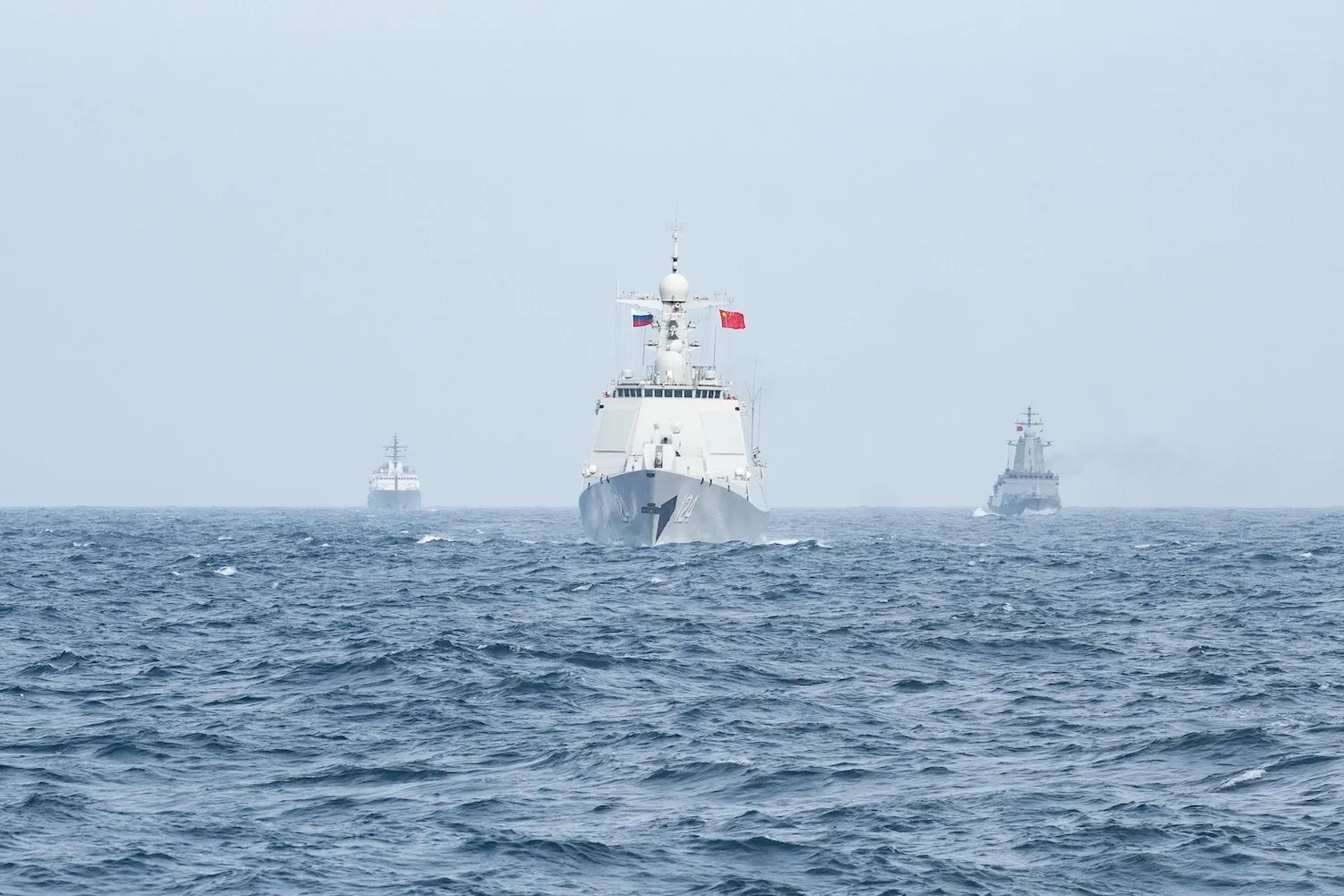
!Chinese and Russian naval vessels sail in formation during a joint exercise between China and Russia on July 10.
*Chinese and Russian naval vessels sail in formation during a joint exercise between China and Russia on July 10.*
Chinese and Russian naval vessels sail in formation during a joint exercise between China and Russia on July 10. Lie Jie/Xinhua via Getty Images
*
*
August 12, 2026, 1:00 AM
Russia’s War in Ukraine
Understanding the conflict four years on.
More on this topic
China is becoming the indispensable lifeline for Russia’s sanctioned liquefied natural gas (LNG) exports. Between August 2025 and June 2026, the southern Chinese port of Beihai received more than 40 cargoes from Russian LNG projects under U.S. sanctions. Offered to Chinese buyers at discounts reportedly reaching 30 percent to 40 percent below prevailing Asian spot prices, these cargoes represent more than isolated acts of sanctions evasion. Together, they point to the emergence of a sanctions-resistant LNG trading system.
That system would not exist without solving two problems: moving sanctioned LNG out of Russia and finding a reliable destination for it. Russia addressed the first by developing a maritime logistics chain. Floating storage units, dark ship-to-ship transfers, and a growing shadow fleet now allow LNG from sanctioned projects to reach Asian waters. But maritime logistics alone are not enough.
China is becoming the indispensable lifeline for Russia’s sanctioned liquefied natural gas (LNG) exports. Between August 2025 and June 2026, the southern Chinese port of Beihai received more than 40 cargoes from Russian LNG projects under U.S. sanctions. Offered to Chinese buyers at discounts reportedly reaching 30 percent to 40 percent below prevailing Asian spot prices, these cargoes represent more than isolated acts of sanctions evasion. Together, they point to the emergence of a sanctions-resistant LNG trading system.
That system would not exist without solving two problems: moving sanctioned LNG out of Russia and finding a reliable destination for it. Russia addressed the first by developing a maritime logistics chain. Floating storage units, dark ship-to-ship transfers, and a growing shadow fleet now allow LNG from sanctioned projects to reach Asian waters. But maritime logistics alone are not enough.
Without receiving terminals, the cargoes have nowhere to go. China has provided that missing link. Before accepting its first cargo, Beihai stopped importing LNG from other suppliers, effectively segregating sanctioned Russian deliveries from the rest of China’s LNG import network and limiting the exposure of other terminals and suppliers. Beihai appears to be only the first step. The newly built Longkou terminal is expected to begin receiving similar cargoes later this year, suggesting that Beijing is not simply buying discounted LNG but also expanding the infrastructure needed to sustain Russia’s sanctioned exports.
That was the outcome that Washington sought to prevent. When the United States sanctioned the Arctic LNG 2 project in 2023, it targeted the cornerstone of Russia’s long-term LNG strategy: its flagship LNG project, led by the country’s largest private gas producer and developed with international partners. The project was expected to almost double Russia’s LNG export capacity.
The sanctions slowed its development, but they did not stop Russia from adapting. As China’s import infrastructure expands, sanctioned Russian LNG is finding new routes to market despite those restrictions. And Asia’s role, particularly China’s role, is soon likely to become even more important.
---
As the European
Union phases out imports of Russian LNG after 2027, Moscow will have little choice but to redirect a growing share of its exports to Asia, one of the few markets with the infrastructure to absorb additional Russian volumes. That will make terminals such as Beihai and Longkou increasingly central to Russia’s export strategy.
At the same time, U.S. LNG liquefaction capacity is expected to expand by 30 percent by 2027 as new export projects come online, presenting a timely opportunity to align commercial and foreign-policy interests. This creates an opportunity to constrain Russian LNG exports while opening more of the Asian market to growing U.S. supplies.
Imposing stricter sanctions would not only strengthen the credibility of U.S. economic statecraft but also limit Russia’s ability to develop a sustainable LNG export industry capable of competing with growing U.S. exports to Asia. But tightening sanctions alone will not be enough, as their enforcement must also evolve. If Washington wants to prevent Russia from building a durable LNG export industry while preserving the strategic advantage of expanding U.S. LNG exports, sanctions enforcement will have to evolve.
The immediate task is to sustain pressure on the vessels already transporting sanctioned LNG. The Trump administration should resume designating vessels involved in Russia’s sanctioned energy trade, including LNG carriers. No new Russia-related vessels have been designated since President Donald Trump returned of the White House, even as Russia’s LNG shadow fleet has expanded. U.S. sanc
!Foreign Policy
Foreign Policy
Get analysis and alerts more quickly in the mobile app.
Install
Back to Foreign Policy Magazine home page
* Latest
* Regions
+ Asia & the Pacific
+ China
+ Middle East & Africa
+ Americas
+ Europe
* Newsletters
Editors’ Picks
Evening roundup with our editors’ favorite stories of the day
!World Brief Icon
World Brief
Your guide to the most important world stories of the day
!China Brief Icon
China Brief
The latest news, analysis, and data from the country each week
Situation Report
Weekly update on what’s driving U.S. national security policy
FP Weekend
A curation of our best book reviews, deep dives, and other reads
!Africa Brief Icon
Africa Brief
Essential analysis of the stories shaping geopolitics on the continent
!South Asia Brief Icon
South Asia Brief
Weekly update on developments in India and its neighbors
The Reading List
Curated guides on geopolitics and current affairs
FP Bookshelf
A monthly guide to FP’s book reviews, excerpts, and reading recommendations
!Latin America Brief Icon
Latin America Brief
One-stop digest of politics, economics, and culture
!Southeast Asia Brief Icon
Southeast Asia Brief
A weekly dispatch with news from the region’s 11 countries
The New Geopolitics
A five-part masterclass in IR theory with Harvard Professor Stephen M. Walt
View All Newsletters
* FP Live
* Latest
* Trending:
* Europe's record heatwave
* Gaza plan
* Ceuta's future
* Colombia's new president
Search this website
* Preferences
* My FP Feed
* Saved Articles
* Newsletters
* Magazine Archive
* Subscription Settings
* FAQs
* Log Out
Sign In
Sign In
Partner with FP at UNGA81 Partner with FP at UNGA81
Subscribe SubscribePartner with FP at UNGA81 Partner with FP at UNGA81
Argument:
The Next Front in LNG Sanctions Runs Through China
*
*
* Bluesky
* X
Save
1. Create an FP account to save articles to read later.
Sign Up
ALREADY AN FP SUBSCRIBER? LOGIN
1. **Downloadable PDFs** are a benefit of an FP subscription.
Subscribe Now
ALREADY AN FP SUBSCRIBER? LOGIN
Gift
*
*
1. Gifting articles is a subscriber benefit.
Subscribe Now
ALREADY AN FP SUBSCRIBER? LOGIN
2. This article is an Insider exclusive.
Contact us at [email protected] to learn about upgrade options, unlocking the ability to gift this article.
Argument
An expert’s point of view on a current event.
The Next Front in LNG Sanctions Runs Through China
Moscow will soon have to redirect a growing share of its exports to Asia.
By **Petras Katinas**, a nonresident research fellow at the Kyiv School of Economics and a research fellow at the Royal United Services Institute.
!Chinese and Russian naval vessels sail in formation during a joint exercise between China and Russia on July 10.
*Chinese and Russian naval vessels sail in formation during a joint exercise between China and Russia on July 10.*
Chinese and Russian naval vessels sail in formation during a joint exercise between China and Russia on July 10. Lie Jie/Xinhua via Getty Images
*
*
August 12, 2026, 1:00 AM
Russia’s War in Ukraine
Understanding the conflict four years on.
China is becoming the indispensable lifeline for Russia’s sanctioned liquefied natural gas (LNG) exports. Between August 2025 and June 2026, the southern Chinese port of Beihai received more than 40 cargoes from Russian LNG projects under U.S. sanctions. Offered to Chinese buyers at discounts reportedly reaching 30 percent to 40 percent below prevailing Asian spot prices, these cargoes represent more than isolated acts of sanctions evasion. Together, they point to the emergence of a sanctions-resistant LNG trading system.
That system would not exist without solving two problems: moving sanctioned LNG out of Russia and finding a reliable destination for it. Russia addressed the first by developing a maritime logistics chain. Floating storage units, dark ship-to-ship transfers, and a growing shadow fleet now allow LNG from sanctioned projects to reach Asian waters. But maritime logistics alone are not enough.
China is becoming the indispensable lifeline for Russia’s sanctioned liquefied natural gas (LNG) exports. Between August 2025 and June 2026, the southern Chinese port of Beihai received more than 40 cargoes from Russian LNG projects under U.S. sanctions. Offered to Chinese buyers at discounts reportedly reaching 30 percent to 40 percent below prevailing Asian spot prices, these cargoes represent more than isolated acts of sanctions evasion. Together, they point to the emergence of a sanctions-resistant LNG trading system.
That system would not exist without solving two problems: moving sanctioned LNG out of Russia and finding a reliable destination for it. Russia addressed the first by developing a maritime logistics chain. Floating storage units, dark ship-to-ship transfers, and a growing shadow fleet now allow LNG from sanctioned projects to reach Asian waters. But maritime logistics alone are not enough.
Without receiving terminals, the cargoes have nowhere to go. China has provided that missing link. Before accepting its first cargo, Beihai stopped importing LNG from other suppliers, effectively segregating sanctioned Russian deliveries from the rest of China’s LNG import network and limiting the exposure of other terminals and suppliers. Beihai appears to be only the first step. The newly built Longkou terminal is expected to begin receiving similar cargoes later this year, suggesting that Beijing is not simply buying discounted LNG but also expanding the infrastructure needed to sustain Russia’s sanctioned exports.
That was the outcome that Washington sought to prevent. When the United States sanctioned the Arctic LNG 2 project in 2023, it targeted the cornerstone of Russia’s long-term LNG strategy: its flagship LNG project, led by the country’s largest private gas producer and developed with international partners. The project was expected to almost double Russia’s LNG export capacity.
The sanctions slowed its development, but they did not stop Russia from adapting. As China’s import infrastructure expands, sanctioned Russian LNG is finding new routes to market despite those restrictions. And Asia’s role, particularly China’s role, is soon likely to become even more important.
---
As the European
Union phases out imports of Russian LNG after 2027, Moscow will have little choice but to redirect a growing share of its exports to Asia, one of the few markets with the infrastructure to absorb additional Russian volumes. That will make terminals such as Beihai and Longkou increasingly central to Russia’s export strategy.
At the same time, U.S. LNG liquefaction capacity is expected to expand by 30 percent by 2027 as new export projects come online, presenting a timely opportunity to align commercial and foreign-policy interests. This creates an opportunity to constrain Russian LNG exports while opening more of the Asian market to growing U.S. supplies.
Imposing stricter sanctions would not only strengthen the credibility of U.S. economic statecraft but also limit Russia’s ability to develop a sustainable LNG export industry capable of competing with growing U.S. exports to Asia. But tightening sanctions alone will not be enough, as their enforcement must also evolve. If Washington wants to prevent Russia from building a durable LNG export industry while preserving the strategic advantage of expanding U.S. LNG exports, sanctions enforcement will have to evolve.
The immediate task is to sustain pressure on the vessels already transporting sanctioned LNG. The Trump administration should resume designating vessels involved in Russia’s sanctioned energy trade, including LNG carriers. No new Russia-related vessels have been designated since President Donald Trump returned of the White House, even as Russia’s LNG shadow fleet has expanded. U.S. sanc
🔗 Share Article
Tags:#روسيا#الصين#العقوبات الاقتصادية#الغاز الطبيعي المسيّل#السياسة الخارجية الأمريكية#التجارة الدولية
Source: Foreign Policy
For Context
Related reads from the same topic or latest developments


