PoliticsAvailable in English
Myths of Battlefield Triumph Are Destroying the U.S. Military
Editorial
Cross Lines editing
Source
Foreign Policy
Foreign Policy

Foreign Policy
Original Source
Gil Barndollar and Jason Dempsey argue that the flawed strategic thinking behind the U.S. military's troubles predates Pete Hegseth, and that the myth of "triumph forsaken" is fueling false hopes of a decisive victory in the war on Iran. They warn that relying on sheer military superiority has repeatedly led to American defeats, as the weaker side often prevails when tactics outweigh strategy.
Trump, Hegseth, and the Myths of Triumph That Are Destroying the U.S. Military
By using this website, you agree to our use of cookies. This use includes personalization of content and ads, and traffic analytics. Review our Privacy Policy for more information.
!Foreign Policy
Foreign Policy Get analysis and alerts more quickly in the mobile app.
Install
Back to Foreign Policy Magazine home page
* Latest
* Regions
+ Asia & the Pacific
+ China
+ Middle East & Africa
+ Americas
+ Europe
* Newsletters
Editors’ Picks
Evening roundup with our editors’ favorite stories of the day
!World Brief Icon
World Brief
Your guide to the most important world stories of the day
!China Brief Icon
China Brief
The latest news, analysis, and data from the country each week
Situation Report
Weekly update on what’s driving U.S. national security policy
FP Weekend
A curation of our best book reviews, deep dives, and other reads
!Africa Brief Icon
Africa Brief
Essential analysis of the stories shaping geopolitics on the continent
!South Asia Brief Icon
South Asia Brief
Weekly update on developments in India and its neighbors
The Reading List
Curated guides on geopolitics and current affairs
FP Bookshelf
A monthly guide to FP’s book reviews, excerpts, and reading recommendations
!Latin America Brief Icon
Latin America Brief
One-stop digest of politics, economics, and culture
!Southeast Asia Brief Icon
Southeast Asia Brief
A weekly dispatch with news from the region’s 11 countries
The New Geopolitics
A five-part masterclass in IR theory with Harvard Professor Stephen M. Walt
View All Newsletters
* FP Live
* Latest
* Trending:
* France's crisis
* U.S. midterms
Search this website
* Preferences
* My FP Feed
* Saved Articles
* Newsletters
* Magazine Archive
* Subscription Settings
* FAQs
* Log Out
Sign In
Sign In
Team access Team access
Subscribe Subscribe Team access Team access
Analysis: Myths of Battlefield Triumph Are Destroying the U.S. Military
*
*
* Facebook
* Bluesky
* X
* LinkedIn
* WhatsApp
* Reddit
Save
1. Create an FP account to save articles to read later.
Sign Up
ALREADY AN FP SUBSCRIBER? LOGIN
PDF
1. **Downloadable PDFs** are a benefit of an FP subscription.
Subscribe Now
ALREADY AN FP SUBSCRIBER? LOGIN
Gift
*
*
* WhatsApp
1. Gifting articles is a subscriber benefit.
Subscribe Now
ALREADY AN FP SUBSCRIBER? LOGIN
2. This article is an Insider exclusive.
Contact us at [email protected] to learn about upgrade options, unlocking the ability to gift this article.
Analysis
Myths of Battlefield Triumph Are Destroying the U.S. Military
Bad strategy long predates Pete Hegseth and his obsession with “lethality.”
By **Gil Barndollar**, a senior research fellow at the Catholic University of America, and **Jason Dempsey**, an adjunct senior fellow at the Center for a New American Security.
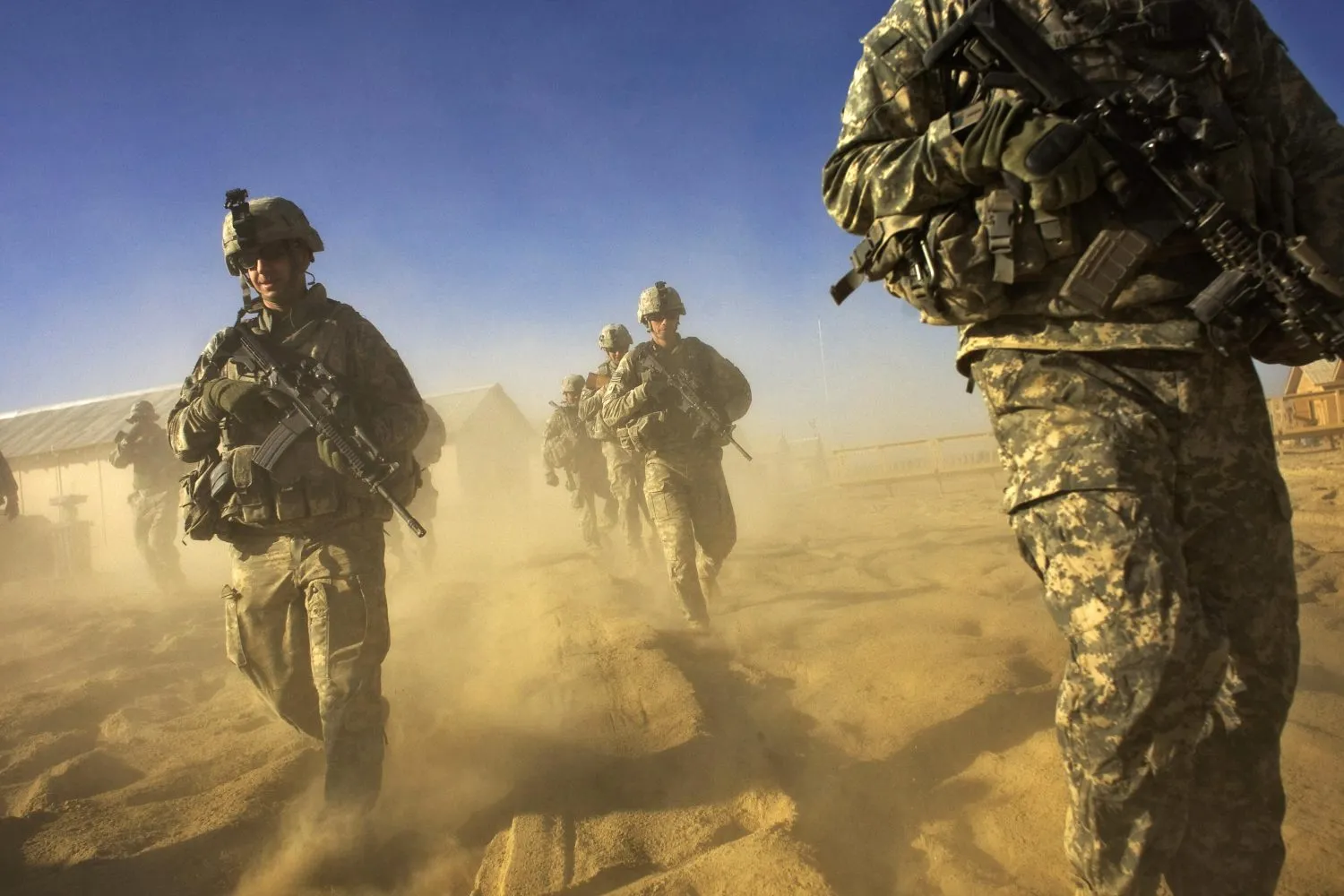
!A group of soldiers in full camouflage uniforms, helmets, and tactical gear walk in a single file line through a dusty, arid environment under a clear blue sky. Sand and dust swirl around their feet as they move past low-rise buildings in the background.
*A group of soldiers in full camouflage uniforms, helmets, and tactical gear walk in a single file line through a dusty, arid environment under a clear blue sky. Sand and dust swirl around their feet as they move past low-rise buildings in the background.*
Following a Taliban attack, U.S. Army soldiers go on patrol in Paktika province, Afghanistan, on Nov. 28, 2008. David Furst/AFP via Getty Images
1. Get audio access with any FP subscription.
Subscribe Now
ALREADY AN FP SUBSCRIBER? LOGIN
October 20, 2026, 7:17 AM
In launching his war on Iran, U.S. President Donald Trump promised quick and decisive results. More than six months later, despite thousands of airstrikes, thousands of dead Iranians, and the destruction of Tehran’s air force and navy, Iran is unbowed. Its new leaders are more radical and uncompromising than those killed by the United States and Israel at the start of the war. By disrupting traffic through the Strait of Hormuz, Iran holds the global economy hostage as the supply of oil, gas, and refined fuels out of the Gulf remains intermittent. For the Trump administration and its dwindling core of supporters, the hunt is on for excuses.
There is a default narrative for Washington’s military failures—one that is more than likely to be picked up by Trump and only compound his failure. It is the narrative of triumph forsaken: The United States can still defeat Iran if only it has the will and endurance. It just has to endure more pain and launch more missiles. Retired U.S. Army Gen. Jack Keane picked up on this supposed solution: “We really do have the capability to end this militarily if we desire to.”
Triumph forsaken is an old trope in U.S. military history. One prominent revisionist account of the Vietnam War bears that very title. This belief that any defeat is merely a lost victory springs from a fixation on material conditions and numerical calculations of comparative military strength—the bean counting school of military analysis. Since World War II more than 80 years ago, the United States has never fought a foe with peer or near-peer military or economic strength. In many cases, such as Afghanistan, the disparity in power between the U.S. military and its adversary was so large as to be absurd. Yet despite this massive imbalance, Washington has clearly and repeatedly lost wars. Repeating the failures of U.S. policymakers and military planners in Vietnam, the architects of the war in Afghanistan elided the political obstacles to victory to make the case that a flawed strategy could work with just more time and willpower.
While the United States’ wealth, technology, and power projection capabilities remain preeminent for now, armed conflict is never decided by a tally of military assets. In case after case, Washington’s strength has actually played against it. A belief in military force as the sole ingredient for success has enabled a lazy and destructive foreign policy that ignores the will and motivations of both allies and adversaries. Such thinking also elevates tactics above strategy, prioritizing quick battlefield victories over attrition, exhaustion, and will. As a result, the ostensibly weaker side—despite being decidedly outmatched by the U.S. military—has often won.
A key component of this latest triumph of hope over experience—the belief that somehow Trump’s Iran war would be different—was a sanguinary spin on triumph forsaken: the idea that the U.S. military failed to take the proverbial gloves off in Iraq and Afghanistan in order to prosec
By using this website, you agree to our use of cookies. This use includes personalization of content and ads, and traffic analytics. Review our Privacy Policy for more information.
!Foreign Policy
Foreign Policy Get analysis and alerts more quickly in the mobile app.
Install
Back to Foreign Policy Magazine home page
* Latest
* Regions
+ Asia & the Pacific
+ China
+ Middle East & Africa
+ Americas
+ Europe
* Newsletters
Editors’ Picks
Evening roundup with our editors’ favorite stories of the day
!World Brief Icon
World Brief
Your guide to the most important world stories of the day
!China Brief Icon
China Brief
The latest news, analysis, and data from the country each week
Situation Report
Weekly update on what’s driving U.S. national security policy
FP Weekend
A curation of our best book reviews, deep dives, and other reads
!Africa Brief Icon
Africa Brief
Essential analysis of the stories shaping geopolitics on the continent
!South Asia Brief Icon
South Asia Brief
Weekly update on developments in India and its neighbors
The Reading List
Curated guides on geopolitics and current affairs
FP Bookshelf
A monthly guide to FP’s book reviews, excerpts, and reading recommendations
!Latin America Brief Icon
Latin America Brief
One-stop digest of politics, economics, and culture
!Southeast Asia Brief Icon
Southeast Asia Brief
A weekly dispatch with news from the region’s 11 countries
The New Geopolitics
A five-part masterclass in IR theory with Harvard Professor Stephen M. Walt
View All Newsletters
* FP Live
* Latest
* Trending:
* France's crisis
* U.S. midterms
Search this website
* Preferences
* My FP Feed
* Saved Articles
* Newsletters
* Magazine Archive
* Subscription Settings
* FAQs
* Log Out
Sign In
Sign In
Team access Team access
Subscribe Subscribe Team access Team access
Analysis: Myths of Battlefield Triumph Are Destroying the U.S. Military
*
*
* Bluesky
* X
Save
1. Create an FP account to save articles to read later.
Sign Up
ALREADY AN FP SUBSCRIBER? LOGIN
1. **Downloadable PDFs** are a benefit of an FP subscription.
Subscribe Now
ALREADY AN FP SUBSCRIBER? LOGIN
Gift
*
*
1. Gifting articles is a subscriber benefit.
Subscribe Now
ALREADY AN FP SUBSCRIBER? LOGIN
2. This article is an Insider exclusive.
Contact us at [email protected] to learn about upgrade options, unlocking the ability to gift this article.
Analysis
Myths of Battlefield Triumph Are Destroying the U.S. Military
Bad strategy long predates Pete Hegseth and his obsession with “lethality.”
By **Gil Barndollar**, a senior research fellow at the Catholic University of America, and **Jason Dempsey**, an adjunct senior fellow at the Center for a New American Security.
!A group of soldiers in full camouflage uniforms, helmets, and tactical gear walk in a single file line through a dusty, arid environment under a clear blue sky. Sand and dust swirl around their feet as they move past low-rise buildings in the background.
*A group of soldiers in full camouflage uniforms, helmets, and tactical gear walk in a single file line through a dusty, arid environment under a clear blue sky. Sand and dust swirl around their feet as they move past low-rise buildings in the background.*
Following a Taliban attack, U.S. Army soldiers go on patrol in Paktika province, Afghanistan, on Nov. 28, 2008. David Furst/AFP via Getty Images
1. Get audio access with any FP subscription.
Subscribe Now
ALREADY AN FP SUBSCRIBER? LOGIN
October 20, 2026, 7:17 AM
In launching his war on Iran, U.S. President Donald Trump promised quick and decisive results. More than six months later, despite thousands of airstrikes, thousands of dead Iranians, and the destruction of Tehran’s air force and navy, Iran is unbowed. Its new leaders are more radical and uncompromising than those killed by the United States and Israel at the start of the war. By disrupting traffic through the Strait of Hormuz, Iran holds the global economy hostage as the supply of oil, gas, and refined fuels out of the Gulf remains intermittent. For the Trump administration and its dwindling core of supporters, the hunt is on for excuses.
There is a default narrative for Washington’s military failures—one that is more than likely to be picked up by Trump and only compound his failure. It is the narrative of triumph forsaken: The United States can still defeat Iran if only it has the will and endurance. It just has to endure more pain and launch more missiles. Retired U.S. Army Gen. Jack Keane picked up on this supposed solution: “We really do have the capability to end this militarily if we desire to.”
In launching his war on Iran, U.S. President Donald Trump promised quick and decisive results. More than six months later, despite thousands of airstrikes, thousands of dead Iranians, and the destruction of Tehran’s air force and navy, Iran is unbowed. Its new leaders are more radical and uncompromising than those killed by the United States and Israel at the start of the war. By disrupting traffic through the Strait of Hormuz, Iran holds the global economy hostage as the supply of oil, gas, and refined fuels out of the Gulf remains intermittent. For the Trump administration and its dwindling core of supporters, the hunt is on for excuses.
There is a default narrative for Washington’s military failures—one that is more than likely to be picked up by Trump and only compound his failure. It is the narrative of triumph forsaken: The United States can still defeat Iran if only it has the will and endurance. It just has to endure more pain and launch more missiles. Retired U.S. Army Gen. Jack Keane picked up on this supposed solution: “We really do have the capability to end this militarily if we desire to.”
Triumph forsaken is an old trope in U.S. military history. One prominent revisionist account of the Vietnam War bears that very title. This belief that any defeat is merely a lost victory springs from a fixation on material conditions and numerical calculations of comparative military strength—the bean counting school of military analysis. Since World War II more than 80 years ago, the United States has never fought a foe with peer or near-peer military or economic strength. In many cases, such as Afghanistan, the disparity in power between the U.S. military and its adversary was so large as to be absurd. Yet despite this massive imbalance, Washington has clearly and repeatedly lost wars. Repeating the failures of U.S. policymakers and military planners in Vietnam, the architects of the war in Afghanistan elided the political obstacles to victory to make the case that a flawed strategy could work with just more time and willpower.
While the United States’ wealth, technology, and power projection capabilities remain preeminent for now, armed conflict is never decided by a tally of military assets. In case after case, Washington’s strength has actually played against it. A belief in military force as the sole ingredient for success has enabled a lazy and destructive foreign policy that ignores the will and motivations of both allies and adversaries. Such thinking also elevates tactics above strategy, prioritizing quick battlefield victories over attrition, exhaustion, and will. As a result, the ostensibly weaker side—despite being decidedly outmatched by the U.S. military—has often won.
A key component of this latest triumph of hope over experience—the belief that somehow Trump’s Iran war would be different—was a sanguinary spin on triumph forsaken: the idea that the U.S. military failed to take the proverbial gloves off in Iraq and Afghanistan in order to prosec
Share Article
Tags:#الجيش الأمريكي#حرب إيران#دونالد ترامب#بيت هيغسيث#الاستراتيجية العسكرية#حرب فيتنام
Source: Foreign Policy
For Context
Related reads from the same topic or latest developments