The job application got faster. The job search got worse.
Axios
A
Axios
Original Source
While job applications have become easier than ever to submit, the time to fill positions stretches longer and automated rejections mount, eroding trust in America's labor market. AI now dominates both sides: helping applicants mass-apply while enabling employers to mass-reject.
Job applications speed up as hiring timelines grow longer
*
* Newsletters
*
* Axios Pro
* Axios Live
* The Axios Show
Axios
Axios
6 hours ago - Politics & Policy
Applying for jobs is easier than ever. Getting one isn't.
* Josephine Walker
*
*
*
Add Axios on Google
Add Axios as your preferred source to
see more of our stories on Google.
Add Axios on Google
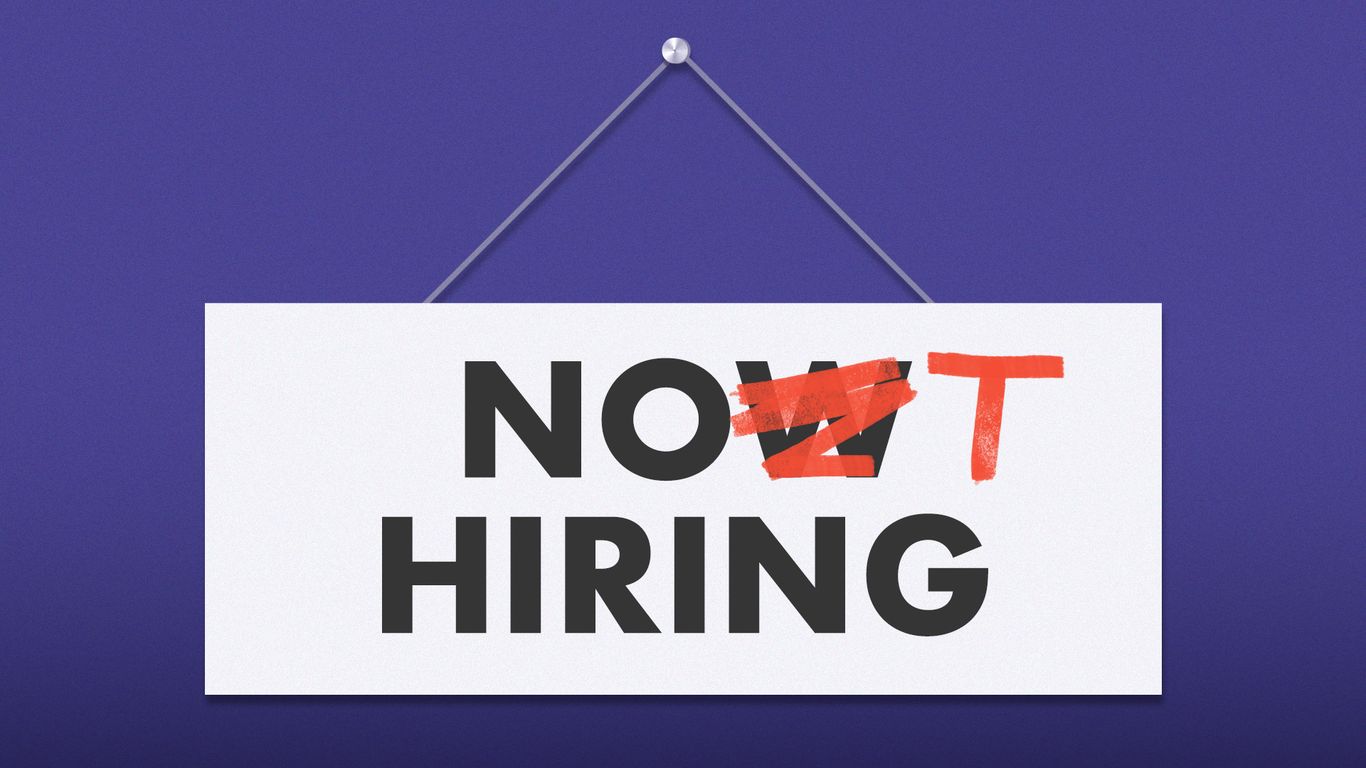
!Illustration of a sign saying "Now Hiring" with the "w" crossed out and replaced with a "t."
*Illustration: Gabriella Turrisi/Axios*
Job hunting in 2026 can mean chatting with a robot, getting rejected by AI, encountering ghost jobs and competing with a flood of applicants.
**Why it matters:** This isn't just candidates venting on LinkedIn or TikTok. The hiring process is increasingly taking longer and application apathy could be eroding trust in America's job market.
**What they're saying:** "I think burnout is absolutely happening," Gorick Ng, a Harvard career advisor and UC Berkeley faculty member, tells Axios.
* "We've moved past the ordinary job search burnout into systemic cynicism," he says.
* "Candidates assume that every posting is fake and every rejection is automated, and that their video-recorded interview won't ever even be touched, and so there's been this collapse of trust in the labor market."
**The big picture:** Technology has made it increasingly easy for applicants to apply for jobs — and for employers to screen them out.
* Recruiters process roughly 291 applications per hire, compared with roughly 100 in early 2021, per recruiting firm Ashby.
* AI usage is rampant on both sides: applicants can automate applications, while employers use chatbots, resume filters and other tools to sort through the flood.
**By the numbers:** Forty-six percent of candidates say their faith in the hiring process has decreased, per Greenhouse data.
* About 63% of U.S. applicants have been interviewed by an AI system, while 38% say they've walked away from a job because it included an AI interview.
* Only 21% of recruiters surveyed said they were "very confident" their systems weren't weeding out qualified candidates.
* It takes almost 25% longer to fill an open role today than before the pandemic, Scott Dobroski, Indeed's Vice President of corporate communications, told Axios.
**Zoom in:** Ghost jobs, or jobscompanies aren't actively trying to fill, make up about 18–22% of posted jobs in a typical quarter, per internal Greenhouse data.
* Some research suggests companies post them to build a future applicant pool, signal continued growth to investors, or even to remind workers they're replaceable.
* Alternatively, Greenhouse CEO Daniel Chait says sometimes it's not a ghost job. Business needs change, hiring managers leave and some companies have "evergreen" jobs, like how a restaurant might always need new servers.
**AI-powered resume** filters can prevent applications from ever reaching a human, sometimes sparking discrimination lawsuits.
* These tools use keyword matching and algorithmic scoring to weed out applicants, often with little transparency into how they work.
**Yes, but:** About 49% of hiring managers say using AI in the hiring process has improved candidate quality.
**Between the lines:** It's never been easier to quickly send a resume to dozens of jobs, whether through a chatbot programmed to apply or easy-apply features.
* Dobroski says that phenomenon is creating a "huge volume of noise" and applications employers have to sift through, and can leave candidates thinking they've been ghosted.
**The bottom line:** Both sides are increasingly hesitant to lean into the trust fall.
* "How a company shows up in the hiring process can tell you a lot about how this company actually operates," Ng says, comparing the process to a first date.
* When employers show "little effort in being human," he says job seekers start wondering: "If this is what I'm seeing on a first date, should I be worried about our long-term prospects together?"
**Go deeper:**U.S. economy surprisingly lost 23,000 jobs in July
*
*
*
Add Axios on Google
What to read next
*
*
*
*
*
*
Smarter, faster on what matters.
Explore Axios Newsletters
* About Axios
* Advertise with us
* Careers
* Contact us
* Newsletters
* Axios Live
* Axios HQ
* Privacy policy
* Terms of use
*
Axios Homepage
Axios Media Inc., 2026
*
* Newsletters
*
* Axios Pro
* Axios Live
* The Axios Show
Axios
Axios
6 hours ago - Politics & Policy
Applying for jobs is easier than ever. Getting one isn't.
* Josephine Walker
*
*
*
Add Axios on Google
Add Axios as your preferred source to
see more of our stories on Google.
Add Axios on Google
!Illustration of a sign saying "Now Hiring" with the "w" crossed out and replaced with a "t."
*Illustration: Gabriella Turrisi/Axios*
Job hunting in 2026 can mean chatting with a robot, getting rejected by AI, encountering ghost jobs and competing with a flood of applicants.
**Why it matters:** This isn't just candidates venting on LinkedIn or TikTok. The hiring process is increasingly taking longer and application apathy could be eroding trust in America's job market.
**What they're saying:** "I think burnout is absolutely happening," Gorick Ng, a Harvard career advisor and UC Berkeley faculty member, tells Axios.
* "We've moved past the ordinary job search burnout into systemic cynicism," he says.
* "Candidates assume that every posting is fake and every rejection is automated, and that their video-recorded interview won't ever even be touched, and so there's been this collapse of trust in the labor market."
**The big picture:** Technology has made it increasingly easy for applicants to apply for jobs — and for employers to screen them out.
* Recruiters process roughly 291 applications per hire, compared with roughly 100 in early 2021, per recruiting firm Ashby.
* AI usage is rampant on both sides: applicants can automate applications, while employers use chatbots, resume filters and other tools to sort through the flood.
**By the numbers:** Forty-six percent of candidates say their faith in the hiring process has decreased, per Greenhouse data.
* About 63% of U.S. applicants have been interviewed by an AI system, while 38% say they've walked away from a job because it included an AI interview.
* Only 21% of recruiters surveyed said they were "very confident" their systems weren't weeding out qualified candidates.
* It takes almost 25% longer to fill an open role today than before the pandemic, Scott Dobroski, Indeed's Vice President of corporate communications, told Axios.
**Zoom in:** Ghost jobs, or jobscompanies aren't actively trying to fill, make up about 18–22% of posted jobs in a typical quarter, per internal Greenhouse data.
* Some research suggests companies post them to build a future applicant pool, signal continued growth to investors, or even to remind workers they're replaceable.
* Alternatively, Greenhouse CEO Daniel Chait says sometimes it's not a ghost job. Business needs change, hiring managers leave and some companies have "evergreen" jobs, like how a restaurant might always need new servers.
**AI-powered resume** filters can prevent applications from ever reaching a human, sometimes sparking discrimination lawsuits.
* These tools use keyword matching and algorithmic scoring to weed out applicants, often with little transparency into how they work.
**Yes, but:** About 49% of hiring managers say using AI in the hiring process has improved candidate quality.
**Between the lines:** It's never been easier to quickly send a resume to dozens of jobs, whether through a chatbot programmed to apply or easy-apply features.
* Dobroski says that phenomenon is creating a "huge volume of noise" and applications employers have to sift through, and can leave candidates thinking they've been ghosted.
**The bottom line:** Both sides are increasingly hesitant to lean into the trust fall.
* "How a company shows up in the hiring process can tell you a lot about how this company actually operates," Ng says, comparing the process to a first date.
* When employers show "little effort in being human," he says job seekers start wondering: "If this is what I'm seeing on a first date, should I be worried about our long-term prospects together?"
**Go deeper:**U.S. economy surprisingly lost 23,000 jobs in July
*
*
*
Add Axios on Google
What to read next
*
*
*
*
*
*
Smarter, faster on what matters.
Explore Axios Newsletters
* About Axios
* Advertise with us
* Careers
* Contact us
* Newsletters
* Axios Live
* Axios HQ
* Privacy policy
* Terms of use
*
Axios Homepage
Axios Media Inc., 2026
🔗 Share Article
Tags:#التوظيف#سوق العمل#الذكاء الاصطناعي#البحث عن عمل#البيئة الوظيفية#الاقتصاد
Source: Axios
For Context
Related reads from the same topic or latest developments


