China Has Chosen to Disappoint Its Consumers
Foreign Policy

Foreign Policy
Original Source
China's leadership has deliberately chosen to prioritize technological and industrial development over household consumption, signaling a conscious policy shift that treats consumer welfare as acceptable collateral damage for national power. This strategic pivot fundamentally reshapes the dynamics of U.S.-China economic leverage, shifting the pressure point from tariffs to currency policy.
China’s New Politburo Strategy Is Forgoing Household Consumption
By using this website, you agree to our use of cookies. This use includes personalization of content and ads, and traffic analytics. Review our Privacy Policy for more information.
!Foreign Policy
Foreign Policy
Get analysis and alerts more quickly in the mobile app.
Install
Back to Foreign Policy Magazine home page
* Latest
* Regions
+ Asia & the Pacific
+ China
+ Middle East & Africa
+ Americas
+ Europe
* Newsletters
Editors’ Picks
Evening roundup with our editors’ favorite stories of the day
!World Brief Icon
World Brief
Your guide to the most important world stories of the day
!China Brief Icon
China Brief
The latest news, analysis, and data from the country each week
Situation Report
Weekly update on what’s driving U.S. national security policy
FP Weekend
A curation of our best book reviews, deep dives, and other reads
!Africa Brief Icon
Africa Brief
Essential analysis of the stories shaping geopolitics on the continent
!South Asia Brief Icon
South Asia Brief
Weekly update on developments in India and its neighbors
The Reading List
Curated guides on geopolitics and current affairs
FP Bookshelf
A monthly guide to FP’s book reviews, excerpts, and reading recommendations
!Latin America Brief Icon
Latin America Brief
One-stop digest of politics, economics, and culture
!Southeast Asia Brief Icon
Southeast Asia Brief
A weekly dispatch with news from the region’s 11 countries
The New Geopolitics
A five-part masterclass in IR theory with Harvard Professor Stephen M. Walt
View All Newsletters
* FP Live
* Latest
* Trending:
* Europe's record heatwave
* Gaza plan
* Ceuta's future
* Colombia's new president
Search this website
* Preferences
* My FP Feed
* Saved Articles
* Newsletters
* Magazine Archive
* Subscription Settings
* FAQs
* Log Out
Sign In
Sign In
Campus & Team Access Campus & Team Access
Subscribe SubscribeCampus and team access Campus and team access
Analysis:
China Has Chosen to Disappoint Its Consumers
*
*
* Facebook
* Bluesky
* X
* LinkedIn
* WhatsApp
* Reddit
Save
1. Create an FP account to save articles to read later.
Sign Up
ALREADY AN FP SUBSCRIBER? LOGIN
PDF
1. **Downloadable PDFs** are a benefit of an FP subscription.
Subscribe Now
ALREADY AN FP SUBSCRIBER? LOGIN
Gift
*
*
* WhatsApp
1. Gifting articles is a subscriber benefit.
Subscribe Now
ALREADY AN FP SUBSCRIBER? LOGIN
2. This article is an Insider exclusive.
Contact us at [email protected] to learn about upgrade options, unlocking the ability to gift this article.
Analysis
China Has Chosen to Disappoint Its Consumers
Beijing’s choice moves Washington’s leverage from tariffs to currency.
By **Charles Sun**, a Sinovation fellow at Yale School of Management, and **Christopher Nye**, a nonresident fellow at the Jamestown Foundation.
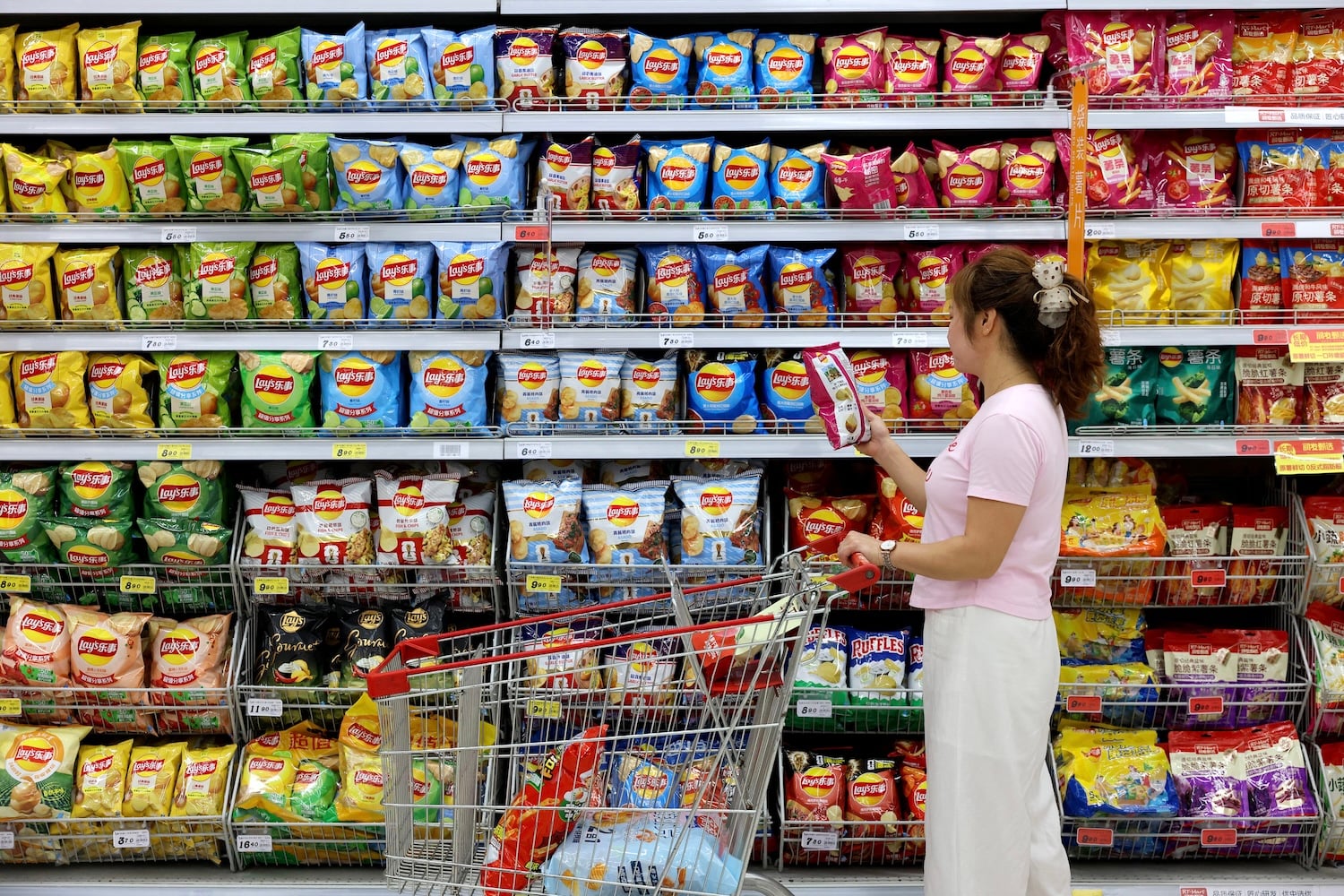
!A person is standing a supermarket while holding a bag of chips and pushing a cart.
*A person is standing a supermarket while holding a bag of chips and pushing a cart.*
A consumer selects a product at a supermarket in Zaozhuang, China, on August 9. CN-STR/AFP via Getty Images
1. Get audio access with any FP subscription.
Subscribe Now
ALREADY AN FP SUBSCRIBER? LOGIN
August 11, 2026, 9:47 AM
When China’s Politburo met on July 30 to set economic policy for the second half of 2026, the numbers in front of it were not good. In the first half of the year, retail sales grew just 1.3 percent from a year earlier, while the economy grew 4.7 percent. Consumer prices were up just 1 percent, about where they have been since February. A technology rally carried the stock market through the spring, but it broke in mid-July and was falling again as the Politburo convened.
The solution that the Politburo settled on is to double down on the strategy that Chinese President Xi Jinping had already set: deepening the “AI plus” initiative, developing new forms of the intelligent economy, pushing for breakthroughs in frontier technology, building new pillar industries, and pressing ahead with six national networks—from computing power to logistics—which the National Development and Reform Commission estimated in May would take more than 7 trillion yuan of investment this year alone.
When China’s Politburo met on July 30 to set economic policy for the second half of 2026, the numbers in front of it were not good. In the first half of the year, retail sales grew just 1.3 percent from a year earlier, while the economy grew 4.7 percent. Consumer prices were up just 1 percent, about where they have been since February. A technology rally carried the stock market through the spring, but it broke in mid-July and was falling again as the Politburo convened.
The solution that the Politburo settled on is to double down on the strategy that Chinese President Xi Jinping had already set: deepening the “AI plus” initiative, developing new forms of the intelligent economy, pushing for breakthroughs in frontier technology, building new pillar industries, and pressing ahead with six national networks—from computing power to logistics—which the National Development and Reform Commission estimated in May would take more than 7 trillion yuan of investment this year alone.
Missing from the Politburo’s strategy this year, however, are the “special initiatives to boost consumption” that anchored the July 2025 statement. The 2026 report instead tells officials to expand domestic demand by providing better supply tailored to different consumer groups and by boosting service consumption—echoing the prescriptions of the Politburo’s April statement. The original 2025 program instead survives one level down: The State Council’s five-year consumption plan, approved on July 13, tells officials to press ahead with it.
The usual description of the Chinese economy as K-shaped—tech and exports sail upward while consumption stalls—suggests an imbalance to be managed. Some analysts push the diagnosis further, describing China as a “slow tech dragon,” whose misallocation of resources produces both real breakthroughs and enough waste to slow the whole economy. In effect, both descriptions treat the household side as a casualty of error. The July statement points to another possibility. The neglect of the household is a top-down decision, a cost that the Chinese leadership has determined is worth paying for the sectors it counts on for national power.
The choice was made against a good deal of advice. In its 2024 review of China’s economy, the International Monetary Fund (IMF) proposed that Beijing spend roughly a trillion dollars finishing the country’s unfinished presold apartments or compensating the buyers; it repeated the advice in February. In China, most new homes are sold before they are built. Buyers pay upfront, often with a mortgage, while the developer puts the cash into its next project. When the bubble burst in 2021, millions of paid apartments were left unfinished, and their owners are still repaying loans on homes that may never arrive. Beijing said that it planned no additional spending to complete presold housing and that social spending would have to wait on fiscal sustainability.
Some Chinese economists have argued for years for direct transfers, cash, or vouchers put into consumers’ hands. Xi’s 2021 essay on common prosperity, which still governs policy, warned that the state must never fall into the trap of a welfarism that raises lazy people. Existing subsidies follow that dictum. The 250 billion yuan of special treasury bonds behind this year’s consumer program goes through a trade-in scheme for cars and appliances, released in planned batches, and paid only when a household buys an approved product, which is almost always Chinese-made. This year’s five-year plan sees the scheme carried forward. In effect, the state has cast the household as the channel through which the money passes on its way to the manufacturer, not as an end of its own.
There is
By using this website, you agree to our use of cookies. This use includes personalization of content and ads, and traffic analytics. Review our Privacy Policy for more information.
!Foreign Policy
Foreign Policy
Get analysis and alerts more quickly in the mobile app.
Install
Back to Foreign Policy Magazine home page
* Latest
* Regions
+ Asia & the Pacific
+ China
+ Middle East & Africa
+ Americas
+ Europe
* Newsletters
Editors’ Picks
Evening roundup with our editors’ favorite stories of the day
!World Brief Icon
World Brief
Your guide to the most important world stories of the day
!China Brief Icon
China Brief
The latest news, analysis, and data from the country each week
Situation Report
Weekly update on what’s driving U.S. national security policy
FP Weekend
A curation of our best book reviews, deep dives, and other reads
!Africa Brief Icon
Africa Brief
Essential analysis of the stories shaping geopolitics on the continent
!South Asia Brief Icon
South Asia Brief
Weekly update on developments in India and its neighbors
The Reading List
Curated guides on geopolitics and current affairs
FP Bookshelf
A monthly guide to FP’s book reviews, excerpts, and reading recommendations
!Latin America Brief Icon
Latin America Brief
One-stop digest of politics, economics, and culture
!Southeast Asia Brief Icon
Southeast Asia Brief
A weekly dispatch with news from the region’s 11 countries
The New Geopolitics
A five-part masterclass in IR theory with Harvard Professor Stephen M. Walt
View All Newsletters
* FP Live
* Latest
* Trending:
* Europe's record heatwave
* Gaza plan
* Ceuta's future
* Colombia's new president
Search this website
* Preferences
* My FP Feed
* Saved Articles
* Newsletters
* Magazine Archive
* Subscription Settings
* FAQs
* Log Out
Sign In
Sign In
Campus & Team Access Campus & Team Access
Subscribe SubscribeCampus and team access Campus and team access
Analysis:
China Has Chosen to Disappoint Its Consumers
*
*
* Bluesky
* X
Save
1. Create an FP account to save articles to read later.
Sign Up
ALREADY AN FP SUBSCRIBER? LOGIN
1. **Downloadable PDFs** are a benefit of an FP subscription.
Subscribe Now
ALREADY AN FP SUBSCRIBER? LOGIN
Gift
*
*
1. Gifting articles is a subscriber benefit.
Subscribe Now
ALREADY AN FP SUBSCRIBER? LOGIN
2. This article is an Insider exclusive.
Contact us at [email protected] to learn about upgrade options, unlocking the ability to gift this article.
Analysis
China Has Chosen to Disappoint Its Consumers
Beijing’s choice moves Washington’s leverage from tariffs to currency.
By **Charles Sun**, a Sinovation fellow at Yale School of Management, and **Christopher Nye**, a nonresident fellow at the Jamestown Foundation.
!A person is standing a supermarket while holding a bag of chips and pushing a cart.
*A person is standing a supermarket while holding a bag of chips and pushing a cart.*
A consumer selects a product at a supermarket in Zaozhuang, China, on August 9. CN-STR/AFP via Getty Images
1. Get audio access with any FP subscription.
Subscribe Now
ALREADY AN FP SUBSCRIBER? LOGIN
August 11, 2026, 9:47 AM
When China’s Politburo met on July 30 to set economic policy for the second half of 2026, the numbers in front of it were not good. In the first half of the year, retail sales grew just 1.3 percent from a year earlier, while the economy grew 4.7 percent. Consumer prices were up just 1 percent, about where they have been since February. A technology rally carried the stock market through the spring, but it broke in mid-July and was falling again as the Politburo convened.
The solution that the Politburo settled on is to double down on the strategy that Chinese President Xi Jinping had already set: deepening the “AI plus” initiative, developing new forms of the intelligent economy, pushing for breakthroughs in frontier technology, building new pillar industries, and pressing ahead with six national networks—from computing power to logistics—which the National Development and Reform Commission estimated in May would take more than 7 trillion yuan of investment this year alone.
When China’s Politburo met on July 30 to set economic policy for the second half of 2026, the numbers in front of it were not good. In the first half of the year, retail sales grew just 1.3 percent from a year earlier, while the economy grew 4.7 percent. Consumer prices were up just 1 percent, about where they have been since February. A technology rally carried the stock market through the spring, but it broke in mid-July and was falling again as the Politburo convened.
The solution that the Politburo settled on is to double down on the strategy that Chinese President Xi Jinping had already set: deepening the “AI plus” initiative, developing new forms of the intelligent economy, pushing for breakthroughs in frontier technology, building new pillar industries, and pressing ahead with six national networks—from computing power to logistics—which the National Development and Reform Commission estimated in May would take more than 7 trillion yuan of investment this year alone.
Missing from the Politburo’s strategy this year, however, are the “special initiatives to boost consumption” that anchored the July 2025 statement. The 2026 report instead tells officials to expand domestic demand by providing better supply tailored to different consumer groups and by boosting service consumption—echoing the prescriptions of the Politburo’s April statement. The original 2025 program instead survives one level down: The State Council’s five-year consumption plan, approved on July 13, tells officials to press ahead with it.
The usual description of the Chinese economy as K-shaped—tech and exports sail upward while consumption stalls—suggests an imbalance to be managed. Some analysts push the diagnosis further, describing China as a “slow tech dragon,” whose misallocation of resources produces both real breakthroughs and enough waste to slow the whole economy. In effect, both descriptions treat the household side as a casualty of error. The July statement points to another possibility. The neglect of the household is a top-down decision, a cost that the Chinese leadership has determined is worth paying for the sectors it counts on for national power.
The choice was made against a good deal of advice. In its 2024 review of China’s economy, the International Monetary Fund (IMF) proposed that Beijing spend roughly a trillion dollars finishing the country’s unfinished presold apartments or compensating the buyers; it repeated the advice in February. In China, most new homes are sold before they are built. Buyers pay upfront, often with a mortgage, while the developer puts the cash into its next project. When the bubble burst in 2021, millions of paid apartments were left unfinished, and their owners are still repaying loans on homes that may never arrive. Beijing said that it planned no additional spending to complete presold housing and that social spending would have to wait on fiscal sustainability.
Some Chinese economists have argued for years for direct transfers, cash, or vouchers put into consumers’ hands. Xi’s 2021 essay on common prosperity, which still governs policy, warned that the state must never fall into the trap of a welfarism that raises lazy people. Existing subsidies follow that dictum. The 250 billion yuan of special treasury bonds behind this year’s consumer program goes through a trade-in scheme for cars and appliances, released in planned batches, and paid only when a household buys an approved product, which is almost always Chinese-made. This year’s five-year plan sees the scheme carried forward. In effect, the state has cast the household as the channel through which the money passes on its way to the manufacturer, not as an end of its own.
There is
🔗 Share Article
Tags:#الصين#السياسة الاقتصادية#الاستهلاك#التكنولوجيا#الجيوسياسة#العلاقات الأمريكية الصينية
Source: Foreign Policy
For Context
Related reads from the same topic or latest developments


