‘Posh George,’ the Convicted Fraudster in Nigel Farage’s Inner Circle
New York Times
N
New York Times
Original Source
A convicted fraudster who served prison time for money laundering remains among Nigel Farage's closest advisers, sparking police investigations into undisclosed gifts and questionable donations. The relationship between the Reform U.K. leader and his aide continues to draw intense scrutiny even after Farage's recent election victory.
‘Posh George,’ the Convicted Fraudster in Nigel Farage’s Inner Circle - The New York Times
Skip to contentSkip to site index
Europe
Log in
Monday, August 17, 2026
Today’s Paper
* Home
* + U.S.
+ International
+ Canada
+ Español
+ 中文
U.K. Politics
* Farage Wins Special Election
* Challenges for Prime Minister
* Burnham and Trump
Advertisement
SKIP ADVERTISEMENT
Supported by
SKIP ADVERTISEMENT
‘Posh George,’ the Convicted Fraudster in Nigel Farage’s Inner Circle
Scrutiny over the gifts and support provided by George Cottrell to Mr. Farage, the Reform U.K. leader, will continue even after he won last week’s special election in Clacton.
Listen · 11:05 min
*
*
*
*
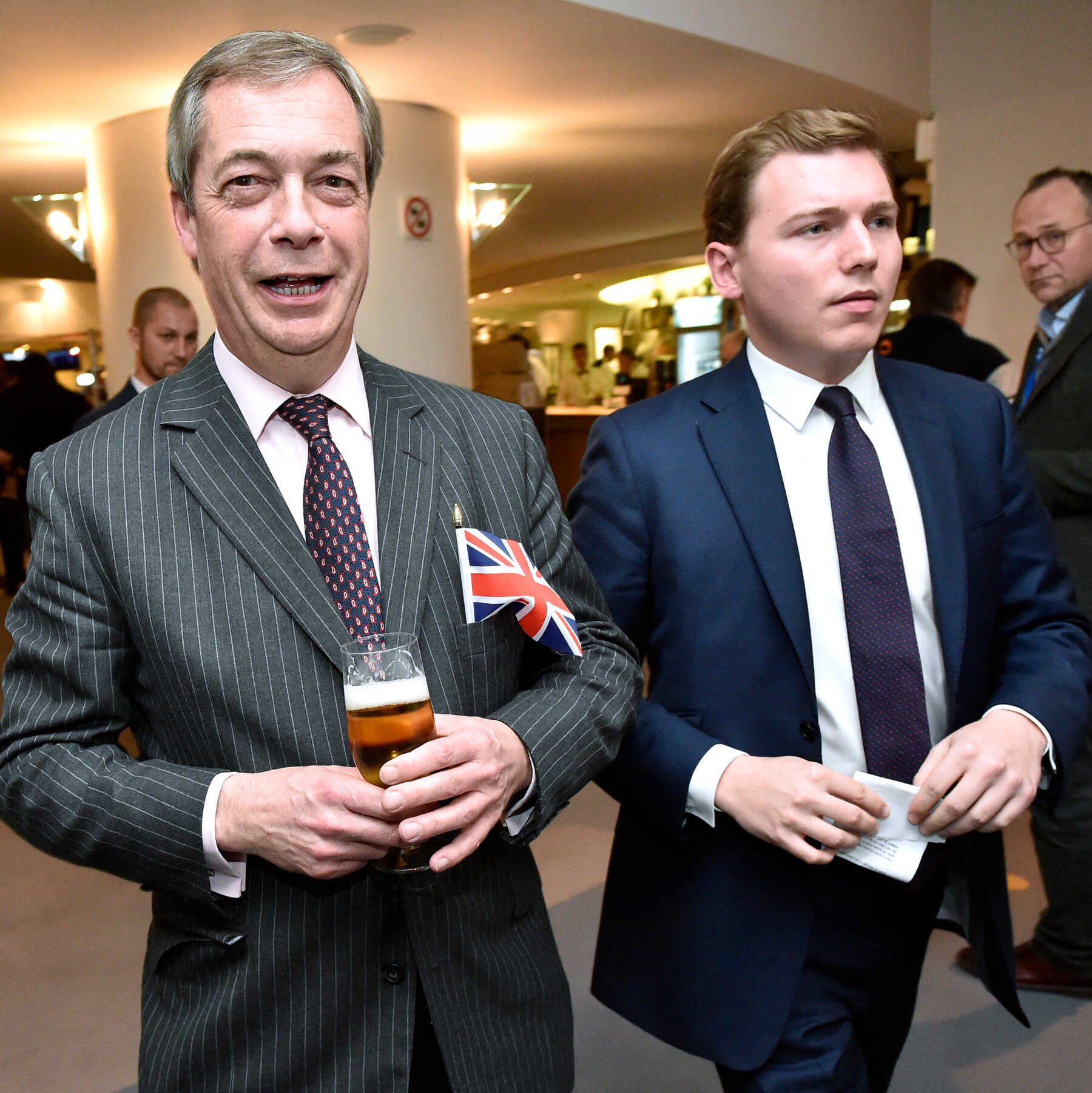
!Nigel Farage in a pinstripe suit, with a Union Jack flag in his pocket, holds a beer and smiles. A younger man in a blue suit walks beside him.
*Nigel Farage and George Cottrell in Brussels in 2020, as the European Parliament ratified the terms of Brexit, which both men campaigned for.
Credit...
John Thys/Agence France-Presse — Getty Images*
By
Michael D. Shear
Reporting from London
Aug. 17, 2026, 12:01 a.m. ET
See more of our coverage in your search results. Encuentra más de nuestra cobertura en los resultados de búsqueda. Add The New York Times on Google Agrega The New York Times en Google
Before George Cottrell became famous in Britain as “Posh George,” a near-constant sidekick to the right wing politician Nigel Farage, he traveled to Las Vegas to meet with drug traffickers for whom he’d offered to launder money.
It was 2014, and Mr. Cottrell was 21. He had met the traffickers on the dark web. Under the pseudonym “Bill,” he said he would take $20,000, send it to offshore accounts, and return it clean. Later, according to a federal indictment filed in 2016, he threatened to extort the traffickers for the Bitcoin equivalent of $80,000.
It was not until Mr. Cottrell was arrested at O’Hare International Airport in Chicago two years later that it became clear the drug dealers he had met in Las Vegas were actually I.R.S. agents conducting a sting. On July 22, 2016, he and Mr. Farage were heading back to London after a whirlwind week at the Republican National Convention — where Mr. Farage was lauded for his role in Britain’s recent Brexit vote — when five agents detained Mr. Cottrell as he came off a connecting flight.
For many high-profile political figures, an aide pleading guilty to wire fraud and serving an eight-month prison sentence might have been enough to end ties. Not so for Mr. Farage, a maverick politician and ally of President Trump who worked for two decades to engineer Britain’s departure from the European Union and who now leads Reform U.K., an anti-immigration party that has outpolled the Conservative Party for 18 months.
Mr. Cottrell, 32, has remained among Mr. Farage’s closest advisers. In 2017 he told The Telegraph that he saw him as a father figure and in an interview with Tatler in 2024 he jokingly referred to him as “Daddy.” The bond between the two men has become the subject of intense interest in Britain in recent weeks, following revelations in The Sunday Times of London that Mr. Cottrell provided Mr. Farage with undisclosed gifts and support before the 2024 general election.
The police are separately investigating the legality of two donations to Reform of 250,000 pounds each from Mr. Cottrell’s mother, Fiona, and said last month that they had questioned two people, although no arrests have been made.
Michael D. Shear
is the chief U.K. correspondent for The New York Times, covering British politics and culture and diplomacy around the world.
*
*
*
*
Related Content
*
*
*
*
*
*
*
*
*
*
*
*
*
*
*
*
*
*
*
Advertisement
SKIP ADVERTISEMENT
Site Index
Site Information Navigation
* ©2026 The New York Times Company
* NYTCo
* Contact Us
* Accessibility
* Work with us
* Advertise
* T Brand Studio
* Privacy Policy
* Cookie Policy
* Terms of Service
* Terms of Sale
* Site Map
* Canada
* International
* Help
* Subscriptions
*
Skip to contentSkip to site index
Europe
Log in
Monday, August 17, 2026
Today’s Paper
* Home
* + U.S.
+ International
+ Canada
+ Español
+ 中文
U.K. Politics
* Farage Wins Special Election
* Challenges for Prime Minister
* Burnham and Trump
Advertisement
SKIP ADVERTISEMENT
Supported by
SKIP ADVERTISEMENT
‘Posh George,’ the Convicted Fraudster in Nigel Farage’s Inner Circle
Scrutiny over the gifts and support provided by George Cottrell to Mr. Farage, the Reform U.K. leader, will continue even after he won last week’s special election in Clacton.
Listen · 11:05 min
*
*
*
*
!Nigel Farage in a pinstripe suit, with a Union Jack flag in his pocket, holds a beer and smiles. A younger man in a blue suit walks beside him.
*Nigel Farage and George Cottrell in Brussels in 2020, as the European Parliament ratified the terms of Brexit, which both men campaigned for.
Credit...
John Thys/Agence France-Presse — Getty Images*
By
Michael D. Shear
Reporting from London
Aug. 17, 2026, 12:01 a.m. ET
See more of our coverage in your search results. Encuentra más de nuestra cobertura en los resultados de búsqueda. Add The New York Times on Google Agrega The New York Times en Google
Before George Cottrell became famous in Britain as “Posh George,” a near-constant sidekick to the right wing politician Nigel Farage, he traveled to Las Vegas to meet with drug traffickers for whom he’d offered to launder money.
It was 2014, and Mr. Cottrell was 21. He had met the traffickers on the dark web. Under the pseudonym “Bill,” he said he would take $20,000, send it to offshore accounts, and return it clean. Later, according to a federal indictment filed in 2016, he threatened to extort the traffickers for the Bitcoin equivalent of $80,000.
It was not until Mr. Cottrell was arrested at O’Hare International Airport in Chicago two years later that it became clear the drug dealers he had met in Las Vegas were actually I.R.S. agents conducting a sting. On July 22, 2016, he and Mr. Farage were heading back to London after a whirlwind week at the Republican National Convention — where Mr. Farage was lauded for his role in Britain’s recent Brexit vote — when five agents detained Mr. Cottrell as he came off a connecting flight.
For many high-profile political figures, an aide pleading guilty to wire fraud and serving an eight-month prison sentence might have been enough to end ties. Not so for Mr. Farage, a maverick politician and ally of President Trump who worked for two decades to engineer Britain’s departure from the European Union and who now leads Reform U.K., an anti-immigration party that has outpolled the Conservative Party for 18 months.
Mr. Cottrell, 32, has remained among Mr. Farage’s closest advisers. In 2017 he told The Telegraph that he saw him as a father figure and in an interview with Tatler in 2024 he jokingly referred to him as “Daddy.” The bond between the two men has become the subject of intense interest in Britain in recent weeks, following revelations in The Sunday Times of London that Mr. Cottrell provided Mr. Farage with undisclosed gifts and support before the 2024 general election.
The police are separately investigating the legality of two donations to Reform of 250,000 pounds each from Mr. Cottrell’s mother, Fiona, and said last month that they had questioned two people, although no arrests have been made.
Michael D. Shear
is the chief U.K. correspondent for The New York Times, covering British politics and culture and diplomacy around the world.
*
*
*
*
Related Content
*
*
*
*
*
*
*
*
*
*
*
*
*
*
*
*
*
*
*
Advertisement
SKIP ADVERTISEMENT
Site Index
Site Information Navigation
* ©2026 The New York Times Company
* NYTCo
* Contact Us
* Accessibility
* Work with us
* Advertise
* T Brand Studio
* Privacy Policy
* Cookie Policy
* Terms of Service
* Terms of Sale
* Site Map
* Canada
* International
* Help
* Subscriptions
*
🔗 Share Article
Tags:#بريطانيا#نايجل فاراج#الإصلاح#الاحتيال المالي#التحقيقات الشرطية#السياسة البريطانية
Source: New York Times
For Context
Related reads from the same topic or latest developments


