John D. Rockefeller Is a Cautionary Tale for Today’s Business Titans
Foreign Policy

Foreign Policy
Original Source
Elon Musk, Mark Zuckerberg, and other tech titans are following a strikingly similar path to oil magnate John D. Rockefeller, who transformed from a celebrated symbol of success into a controversial figure. History repeats itself as business leaders once lauded as pioneers now face intense public scrutiny over their outsized power and influence.
John D. Rockefeller Is a Cautionary Tale for Today’s Business Titans
By using this website, you agree to our use of cookies. This use includes personalization of content and ads, and traffic analytics. Review our Privacy Policy for more information.
!Foreign Policy
Foreign Policy Get analysis and alerts more quickly in the mobile app.
Install
Back to Foreign Policy Magazine home page
* Latest
* Regions
+ Asia & the Pacific
+ China
+ Middle East & Africa
+ Americas
+ Europe
* Newsletters
Editors’ Picks
Evening roundup with our editors’ favorite stories of the day
!World Brief Icon
World Brief
Your guide to the most important world stories of the day
!China Brief Icon
China Brief
The latest news, analysis, and data from the country each week
Situation Report
Weekly update on what’s driving U.S. national security policy
FP Weekend
A curation of our best book reviews, deep dives, and other reads
!Africa Brief Icon
Africa Brief
Essential analysis of the stories shaping geopolitics on the continent
!South Asia Brief Icon
South Asia Brief
Weekly update on developments in India and its neighbors
The Reading List
Curated guides on geopolitics and current affairs
FP Bookshelf
A monthly guide to FP’s book reviews, excerpts, and reading recommendations
!Latin America Brief Icon
Latin America Brief
One-stop digest of politics, economics, and culture
!Southeast Asia Brief Icon
Southeast Asia Brief
A weekly dispatch with news from the region’s 11 countries
The New Geopolitics
A five-part masterclass in IR theory with Harvard Professor Stephen M. Walt
View All Newsletters
* FP Live
* Latest
* Trending:
* Trump-Xi meeting
* United Nations General Assembly
Search this website
* Preferences
* My FP Feed
* Saved Articles
* Newsletters
* Magazine Archive
* Subscription Settings
* FAQs
* Log Out
Sign In
Sign In
Partner with FP at UNGA81 Partner with FP at UNGA81
Subscribe Subscribe Partner with FP at UNGA81 Partner with FP at UNGA81
Analysis: John D. Rockefeller Is a Cautionary Tale for Today’s Business Titans
*
*
* Facebook
* Bluesky
* X
* LinkedIn
* WhatsApp
* Reddit
Save Save
1. Create an FP account to save articles to read later.
Sign Up
ALREADY AN FP SUBSCRIBER? LOGIN
PDF PDF
1. **Downloadable PDFs** are a benefit of an FP subscription.
Subscribe Now
ALREADY AN FP SUBSCRIBER? LOGIN
Gift Gift
*
*
* WhatsApp
1. Gifting articles is a subscriber benefit.
Subscribe Now
ALREADY AN FP SUBSCRIBER? LOGIN
2. This article is an Insider exclusive.
Contact us at [email protected] to learn about upgrade options, unlocking the ability to gift this article.
Analysis
John D. Rockefeller Is a Cautionary Tale for Today’s Business Titans
The oil tycoon was celebrated as a pioneer before the public turned on him.
!A pencil drawing of a man smiling and wearing glasses
*A pencil drawing of a man smiling and wearing glasses*
*Julian E. Zelizer*
By **Julian E. Zelizer**, a columnist at *Foreign Policy* and a professor of history and public affairs at Princeton University. Sign up for Julian’s newsletter, The Long View, here.
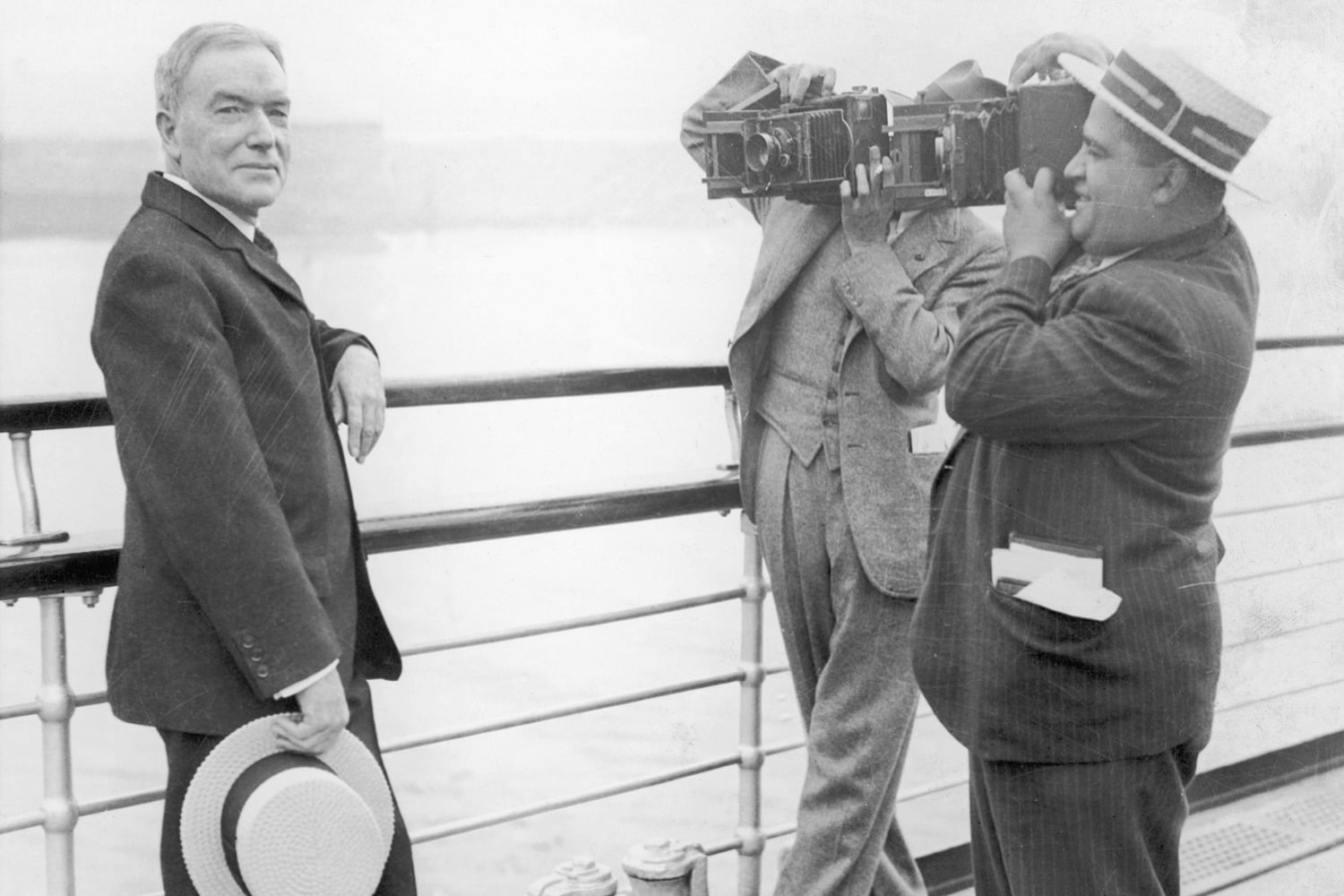
!John D. Rockefeller, surrounded by journalists and photographers, upon his arrival in New York around 1900.
*John D. Rockefeller, surrounded by journalists and photographers, upon his arrival in New York around 1900.*
John D. Rockefeller, surrounded by journalists and photographers, upon his arrival in New York around 1900. Imagno/Getty Images
1. Get audio access with any FP subscription.
Subscribe Now
ALREADY AN FP SUBSCRIBER? LOGIN
September 28, 2026, 12:01 AM
Today’s business titans have become some of the most controversial figures in U.S. politics. Elon Musk, Peter Thiel, Sam Altman, Mark Zuckerberg, and others are at the center of growing concerns about the impact of social media and artificial intelligence on the nation. These figures, who only a few years ago were celebrated as pioneers of technological innovation and credited with strengthening the economic position of the United States, are now viewed in a markedly different light. In August, a CNBC and Generation Lab poll found that more younger Americans don’t trust AI leaders than have confidence in them.
These business leaders are promoting technologies that could create national security risks while worsening economic inequality and threatening the jobs of both white-collar and working-class Americans. They are members of an elite class that wields overwhelming political influence through its wealth, embodying the dangers that money poses to a democratic system. They oversee companies whose power is so immense that they render the principle of free enterprise and market competition increasingly fragile. Indeed, as was clear during his second inauguration, many of them have become closely intertwined with the Trump administration, participating in a close alliance between business and government that many Americans have criticized when observed in other countries.
Today’s business titans have become some of the most controversial figures in U.S. politics. Elon Musk, Peter Thiel, Sam Altman, Mark Zuckerberg, and others are at the center of growing concerns about the impact of social media and artificial intelligence on the nation. These figures, who only a few years ago were celebrated as pioneers of technological innovation and credited with strengthening the economic position of the United States, are now viewed in a markedly different light. In August, a CNBC and Generation Lab poll found that more younger Americans don’t trust AI leaders than have confidence in them.
These business leaders are promoting technologies that could create national security risks while worsening economic inequality and threatening the jobs of both white-collar and working-class Americans. They are members of an elite class that wields overwhelming political influence through its wealth, embodying the dangers that money poses to a democratic system. They oversee companies whose power is so immense that they render the principle of free enterprise and market competition increasingly fragile. Indeed, as was clear during his second inauguration, many of them have become closely intertwined with the Trump administration, participating in a close alliance between business and government that many Americans have criticized when observed in other countries.
This is not the first time that Americans have confronted this problem. Throughout the nation’s history, numerous individuals once celebrated as symbols of economic success have come under intense grassroots and media scrutiny for the dangers they were perceived to pose to the rest of the country. Little more than a century ago, the oil tycoon John D. Rockefeller Sr. followed a strikingly similar trajectory.
---
Rockefeller was born on July 8, 1839, in upstate New York. His father was a bigamist and traveling salesman who peddled dubious medical remedies, and his mother, a religiously devout woman who instilled in him the values of hard work and charity, was his greatest source of stability growing up. From an early age, Rockefeller took small jobs in his neighborhood to make money before attending Owego Academy. His family moved to Cleveland, Ohio, where Rockefeller proved adept at mathematics in high school from 1853 to 1855. He then enrolled in Folsom’s Commercial College, where he spent 10 weeks learning about different business practices, such as bookkeeping.
In September 1855, he secured a job as an assistant bookkeeper in the shipping firm Hewitt & Tuttle. He steadily advanced within the company, earning greater responsibilities and eventually engaging in trade deals on his own. After several years with Hewitt & Tuttle, Rockefeller decided to go into his own business. On March 1, 1859, he and
By using this website, you agree to our use of cookies. This use includes personalization of content and ads, and traffic analytics. Review our Privacy Policy for more information.
!Foreign Policy
Foreign Policy Get analysis and alerts more quickly in the mobile app.
Install
Back to Foreign Policy Magazine home page
* Latest
* Regions
+ Asia & the Pacific
+ China
+ Middle East & Africa
+ Americas
+ Europe
* Newsletters
Editors’ Picks
Evening roundup with our editors’ favorite stories of the day
!World Brief Icon
World Brief
Your guide to the most important world stories of the day
!China Brief Icon
China Brief
The latest news, analysis, and data from the country each week
Situation Report
Weekly update on what’s driving U.S. national security policy
FP Weekend
A curation of our best book reviews, deep dives, and other reads
!Africa Brief Icon
Africa Brief
Essential analysis of the stories shaping geopolitics on the continent
!South Asia Brief Icon
South Asia Brief
Weekly update on developments in India and its neighbors
The Reading List
Curated guides on geopolitics and current affairs
FP Bookshelf
A monthly guide to FP’s book reviews, excerpts, and reading recommendations
!Latin America Brief Icon
Latin America Brief
One-stop digest of politics, economics, and culture
!Southeast Asia Brief Icon
Southeast Asia Brief
A weekly dispatch with news from the region’s 11 countries
The New Geopolitics
A five-part masterclass in IR theory with Harvard Professor Stephen M. Walt
View All Newsletters
* FP Live
* Latest
* Trending:
* Trump-Xi meeting
* United Nations General Assembly
Search this website
* Preferences
* My FP Feed
* Saved Articles
* Newsletters
* Magazine Archive
* Subscription Settings
* FAQs
* Log Out
Sign In
Sign In
Partner with FP at UNGA81 Partner with FP at UNGA81
Subscribe Subscribe Partner with FP at UNGA81 Partner with FP at UNGA81
Analysis: John D. Rockefeller Is a Cautionary Tale for Today’s Business Titans
*
*
* Bluesky
* X
Save Save
1. Create an FP account to save articles to read later.
Sign Up
ALREADY AN FP SUBSCRIBER? LOGIN
PDF PDF
1. **Downloadable PDFs** are a benefit of an FP subscription.
Subscribe Now
ALREADY AN FP SUBSCRIBER? LOGIN
Gift Gift
*
*
1. Gifting articles is a subscriber benefit.
Subscribe Now
ALREADY AN FP SUBSCRIBER? LOGIN
2. This article is an Insider exclusive.
Contact us at [email protected] to learn about upgrade options, unlocking the ability to gift this article.
Analysis
John D. Rockefeller Is a Cautionary Tale for Today’s Business Titans
The oil tycoon was celebrated as a pioneer before the public turned on him.
!A pencil drawing of a man smiling and wearing glasses
*A pencil drawing of a man smiling and wearing glasses*
*Julian E. Zelizer*
By **Julian E. Zelizer**, a columnist at *Foreign Policy* and a professor of history and public affairs at Princeton University. Sign up for Julian’s newsletter, The Long View, here.
!John D. Rockefeller, surrounded by journalists and photographers, upon his arrival in New York around 1900.
*John D. Rockefeller, surrounded by journalists and photographers, upon his arrival in New York around 1900.*
John D. Rockefeller, surrounded by journalists and photographers, upon his arrival in New York around 1900. Imagno/Getty Images
1. Get audio access with any FP subscription.
Subscribe Now
ALREADY AN FP SUBSCRIBER? LOGIN
September 28, 2026, 12:01 AM
Today’s business titans have become some of the most controversial figures in U.S. politics. Elon Musk, Peter Thiel, Sam Altman, Mark Zuckerberg, and others are at the center of growing concerns about the impact of social media and artificial intelligence on the nation. These figures, who only a few years ago were celebrated as pioneers of technological innovation and credited with strengthening the economic position of the United States, are now viewed in a markedly different light. In August, a CNBC and Generation Lab poll found that more younger Americans don’t trust AI leaders than have confidence in them.
These business leaders are promoting technologies that could create national security risks while worsening economic inequality and threatening the jobs of both white-collar and working-class Americans. They are members of an elite class that wields overwhelming political influence through its wealth, embodying the dangers that money poses to a democratic system. They oversee companies whose power is so immense that they render the principle of free enterprise and market competition increasingly fragile. Indeed, as was clear during his second inauguration, many of them have become closely intertwined with the Trump administration, participating in a close alliance between business and government that many Americans have criticized when observed in other countries.
Today’s business titans have become some of the most controversial figures in U.S. politics. Elon Musk, Peter Thiel, Sam Altman, Mark Zuckerberg, and others are at the center of growing concerns about the impact of social media and artificial intelligence on the nation. These figures, who only a few years ago were celebrated as pioneers of technological innovation and credited with strengthening the economic position of the United States, are now viewed in a markedly different light. In August, a CNBC and Generation Lab poll found that more younger Americans don’t trust AI leaders than have confidence in them.
These business leaders are promoting technologies that could create national security risks while worsening economic inequality and threatening the jobs of both white-collar and working-class Americans. They are members of an elite class that wields overwhelming political influence through its wealth, embodying the dangers that money poses to a democratic system. They oversee companies whose power is so immense that they render the principle of free enterprise and market competition increasingly fragile. Indeed, as was clear during his second inauguration, many of them have become closely intertwined with the Trump administration, participating in a close alliance between business and government that many Americans have criticized when observed in other countries.
This is not the first time that Americans have confronted this problem. Throughout the nation’s history, numerous individuals once celebrated as symbols of economic success have come under intense grassroots and media scrutiny for the dangers they were perceived to pose to the rest of the country. Little more than a century ago, the oil tycoon John D. Rockefeller Sr. followed a strikingly similar trajectory.
---
Rockefeller was born on July 8, 1839, in upstate New York. His father was a bigamist and traveling salesman who peddled dubious medical remedies, and his mother, a religiously devout woman who instilled in him the values of hard work and charity, was his greatest source of stability growing up. From an early age, Rockefeller took small jobs in his neighborhood to make money before attending Owego Academy. His family moved to Cleveland, Ohio, where Rockefeller proved adept at mathematics in high school from 1853 to 1855. He then enrolled in Folsom’s Commercial College, where he spent 10 weeks learning about different business practices, such as bookkeeping.
In September 1855, he secured a job as an assistant bookkeeper in the shipping firm Hewitt & Tuttle. He steadily advanced within the company, earning greater responsibilities and eventually engaging in trade deals on his own. After several years with Hewitt & Tuttle, Rockefeller decided to go into his own business. On March 1, 1859, he and
🔗 Share Article
Tags:#جون روكفيلر#رؤساء الأعمال#الذكاء الاصطناعي#التكنولوجيا#النفوذ السياسي#الاقتصاد الأمريكي
Source: Foreign Policy
For Context
Related reads from the same topic or latest developments