Drone Warfare Comes to Latin America
Foreign Policy

Foreign Policy
Original Source
Criminal groups across Latin America are adopting weaponized drone warfare technologies proven in Ukraine, leaving civilians dead and governments scrambling to respond. Colombia alone has witnessed a dramatic surge in drone attacks, with dozens killed including a 10-year-old boy struck during a soccer game.
How Latin American Crime Groups Adopted Drone Warfare
!Foreign Policy
Foreign Policy
Get analysis and alerts more quickly in the mobile app.
Install
Back to Foreign Policy Magazine home page
* Latest
* Regions
+ Asia & the Pacific
+ China
+ Middle East & Africa
+ Americas
+ Europe
* Newsletters
Editors’ Picks
Evening roundup with our editors’ favorite stories of the day
!World Brief Icon
World Brief
Your guide to the most important world stories of the day
!China Brief Icon
China Brief
The latest news, analysis, and data from the country each week
Situation Report
Weekly update on what’s driving U.S. national security policy
FP Weekend
A curation of our best book reviews, deep dives, and other reads
!Africa Brief Icon
Africa Brief
Essential analysis of the stories shaping geopolitics on the continent
!South Asia Brief Icon
South Asia Brief
Weekly update on developments in India and its neighbors
The Reading List
Curated guides on geopolitics and current affairs
FP Bookshelf
A monthly guide to FP’s book reviews, excerpts, and reading recommendations
!Latin America Brief Icon
Latin America Brief
One-stop digest of politics, economics, and culture
!Southeast Asia Brief Icon
Southeast Asia Brief
A weekly dispatch with news from the region’s 11 countries
The New Geopolitics
A five-part masterclass in IR theory with Harvard Professor Stephen M. Walt
View All Newsletters
* FP Live
* Latest
* Trending:
* Europe's record heatwave
* Gaza plan
* Ceuta's future
Search this website
* Preferences
* My FP Feed
* Saved Articles
* Newsletters
* Magazine Archive
* Subscription Settings
* FAQs
* Log Out
Sign In
Sign In
Partner with FP at UNGA81 Partner with FP at UNGA81
Subscribe SubscribePartner with FP at UNGA81 Partner with FP at UNGA81
Analysis:
Drone Warfare Comes to Latin America
*
*
* Facebook
* Bluesky
* X
* LinkedIn
* WhatsApp
* Reddit
Save
1. Create an FP account to save articles to read later.
Sign Up
ALREADY AN FP SUBSCRIBER? LOGIN
PDF
1. **Downloadable PDFs** are a benefit of an FP subscription.
Subscribe Now
ALREADY AN FP SUBSCRIBER? LOGIN
Gift
*
*
* WhatsApp
1. Gifting articles is a subscriber benefit.
Subscribe Now
ALREADY AN FP SUBSCRIBER? LOGIN
2. This article is an Insider exclusive.
Contact us at [email protected] to learn about upgrade options, unlocking the ability to gift this article.
Analysis
Drone Warfare Comes to Latin America
Battle-tested tech from Ukraine has reached the region’s armed groups—and governments are struggling to catch up.
By **Gene Kuleta**, the editor of the Latin America Advisor publications at the Inter-American Dialogue in Washington, D.C.
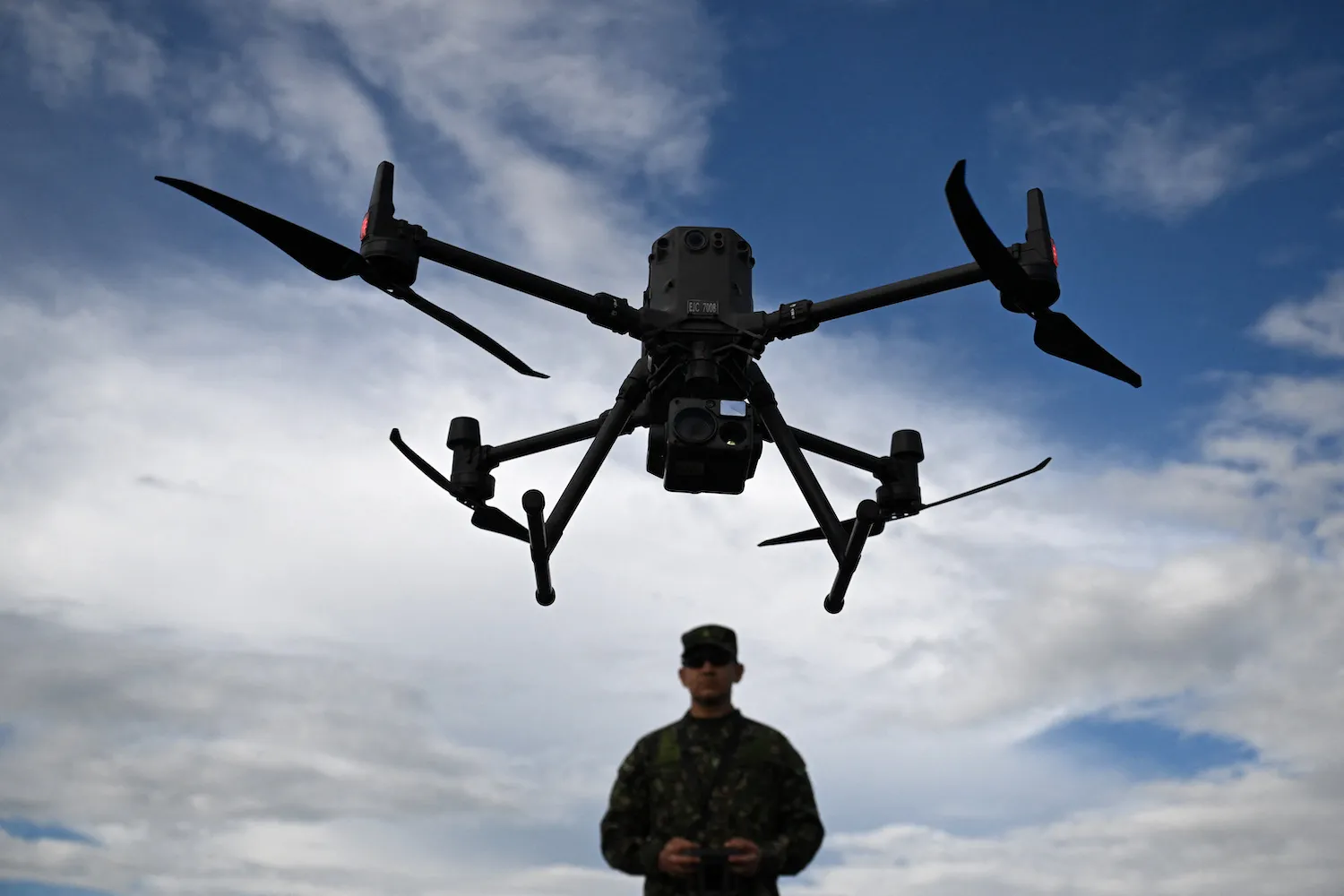
!A soldier operates a drone.
*A soldier operates a drone.*
A Colombian soldier operates a drone during the activation of the country's first unmanned aircraft battalion at a military base in Tolemaida, Colombia, on Oct. 10, 2025. Raul Arboleda/AFP via Getty Images
*
*
*
August 13, 2026, 7:00 AM
Ten-year-old Dilan Camilo Erazo Yela gathered with friends to play soccer on a Tuesday night in July 2024 in El Plateado, Colombia. Around 9:20 p.m., a drone appeared overhead and dropped an explosive on the turf field where the children played. Video footage posted on social media the next day showed Dilan lying on a gurney with his light blue T-shirt pulled up to his neck, as medical personnel tried unsuccessfully to resuscitate him.
Dilan’s fifth-grade teacher described him as quiet and respectful. “He was a boy who had dreams, and one of them was to be a great cyclist,” Dilan’s uncle, Rubiel Yela, told Colombia’s Caracol Radio after his nephew died. “He loved riding his bike around town. He loved his studies, spent time with his family and friends, and was very affectionate.”
Ten-year-old Dilan Camilo Erazo Yela gathered with friends to play soccer on a Tuesday night in July 2024 in El Plateado, Colombia. Around 9:20 p.m., a drone appeared overhead and dropped an explosive on the turf field where the children played. Video footage posted on social media the next day showed Dilan lying on a gurney with his light blue T-shirt pulled up to his neck, as medical personnel tried unsuccessfully to resuscitate him.
Dilan’s fifth-grade teacher described him as quiet and respectful. “He was a boy who had dreams, and one of them was to be a great cyclist,” Dilan’s uncle, Rubiel Yela, told Colombia’s Caracol Radio after his nephew died. “He loved riding his bike around town. He loved his studies, spent time with his family and friends, and was very affectionate.”
The drone attack that killed Dilan injured 12 others, including an 11-year-old boy who suffered a chest wound and a 2-year-old girl who was diagnosed with post-traumatic stress disorder, according to regional authorities. Colombia’s military blamed the attack on the Jacobo Arenas Western Bloc of the Central General Staff, or EMC, a coalition of dissident groups from the demobilized Revolutionary Armed Forces of Colombia (FARC).
The EMC was formed of dissident FARC commanders and fighters who rejected the group’s 2016 peace agreement with the Colombian government. The rebel faction was “sowing despair and terror” in the area in retaliation for the military targeting the group, Colombian army Brig. Gen. Federico Mejía said in a video posted on social media. After first denying responsibility for Dilan’s killing, the EMC later acknowledged that it was to blame, calling the attack accidental.
More than two years later, the strike has become emblematic of how armed groups in Colombia and elsewhere in Latin America are increasingly using commercial-grade aerial drones to launch attacks, with civilians caught in the crossfire as security forces struggle to catch up. In a region long marred by conflict, drones “have further tilted the scales toward impunity,” said Henry Ziemer, a fellow in the Americas program at the Center for Strategic and International Studies.
Dilan was the first person in Colombia known to be killed in a strike by a weaponized drone, according to the Armed Conflict Location and Event Data (ACLED) monitoring organization. ACLED has logged a sharp rise in drone attacks in Colombia in recent years, reporting one in 2023, 38 in 2024, and 149 in 2025. This year through July 17, ACLED recorded 137 drone attacks in Colombia. Several strikes in the country have been deadly.
Thirteen police officers were killed when a drone attacked their helicopter in Antioquia in August 2025. Seven soldiers were killed and 30 others were injured last December when drones attacked a military base in the city of Aguachica, near the border with Venezuela. In February, a woman and her two adult sons were killed in the mining town of Segovia when a drone dropped a mortar shell on their home. Injuries caused by drone attacks include a February 2025 strike in Cauca that injured a health care worker at a field hospital set up by Doctors Without Borders.
Armed groups in Colombia have learned how to deploy drones from their counterparts in Mexico, where criminal organizations have used them since at least 2015, said Tiziano Breda, a senior analyst for Latin America and the Caribbean at ACLED. Mexican drug traffickers have used commercially available drones to smuggle narcotics into the United States and avoid cross-border tunnels targeted by authorities, he said. Groups often use U.S.-manufactured technologies due to the proximity of the two countries.
However, more recent innovation on drones has come from Ukraine. The Russia-Ukraine war has become a “proving ground” for drone warfare, Ziemer said, showing Latin American criminal groups “just how useful this technology is.” As of mid-2025, drones accounted for 69 percent of the attacks on Russian forces in Ukraine, Reuters reported, citing Ukrainian estimates. At the time, a Ukrainian medic said that most battlefield injuries that she and her colleagues had treated were also caused by drones.
Colombia is the single largest source
!Foreign Policy
Foreign Policy
Get analysis and alerts more quickly in the mobile app.
Install
Back to Foreign Policy Magazine home page
* Latest
* Regions
+ Asia & the Pacific
+ China
+ Middle East & Africa
+ Americas
+ Europe
* Newsletters
Editors’ Picks
Evening roundup with our editors’ favorite stories of the day
!World Brief Icon
World Brief
Your guide to the most important world stories of the day
!China Brief Icon
China Brief
The latest news, analysis, and data from the country each week
Situation Report
Weekly update on what’s driving U.S. national security policy
FP Weekend
A curation of our best book reviews, deep dives, and other reads
!Africa Brief Icon
Africa Brief
Essential analysis of the stories shaping geopolitics on the continent
!South Asia Brief Icon
South Asia Brief
Weekly update on developments in India and its neighbors
The Reading List
Curated guides on geopolitics and current affairs
FP Bookshelf
A monthly guide to FP’s book reviews, excerpts, and reading recommendations
!Latin America Brief Icon
Latin America Brief
One-stop digest of politics, economics, and culture
!Southeast Asia Brief Icon
Southeast Asia Brief
A weekly dispatch with news from the region’s 11 countries
The New Geopolitics
A five-part masterclass in IR theory with Harvard Professor Stephen M. Walt
View All Newsletters
* FP Live
* Latest
* Trending:
* Europe's record heatwave
* Gaza plan
* Ceuta's future
Search this website
* Preferences
* My FP Feed
* Saved Articles
* Newsletters
* Magazine Archive
* Subscription Settings
* FAQs
* Log Out
Sign In
Sign In
Partner with FP at UNGA81 Partner with FP at UNGA81
Subscribe SubscribePartner with FP at UNGA81 Partner with FP at UNGA81
Analysis:
Drone Warfare Comes to Latin America
*
*
* Bluesky
* X
Save
1. Create an FP account to save articles to read later.
Sign Up
ALREADY AN FP SUBSCRIBER? LOGIN
1. **Downloadable PDFs** are a benefit of an FP subscription.
Subscribe Now
ALREADY AN FP SUBSCRIBER? LOGIN
Gift
*
*
1. Gifting articles is a subscriber benefit.
Subscribe Now
ALREADY AN FP SUBSCRIBER? LOGIN
2. This article is an Insider exclusive.
Contact us at [email protected] to learn about upgrade options, unlocking the ability to gift this article.
Analysis
Drone Warfare Comes to Latin America
Battle-tested tech from Ukraine has reached the region’s armed groups—and governments are struggling to catch up.
By **Gene Kuleta**, the editor of the Latin America Advisor publications at the Inter-American Dialogue in Washington, D.C.
!A soldier operates a drone.
*A soldier operates a drone.*
A Colombian soldier operates a drone during the activation of the country's first unmanned aircraft battalion at a military base in Tolemaida, Colombia, on Oct. 10, 2025. Raul Arboleda/AFP via Getty Images
*
*
*
August 13, 2026, 7:00 AM
Ten-year-old Dilan Camilo Erazo Yela gathered with friends to play soccer on a Tuesday night in July 2024 in El Plateado, Colombia. Around 9:20 p.m., a drone appeared overhead and dropped an explosive on the turf field where the children played. Video footage posted on social media the next day showed Dilan lying on a gurney with his light blue T-shirt pulled up to his neck, as medical personnel tried unsuccessfully to resuscitate him.
Dilan’s fifth-grade teacher described him as quiet and respectful. “He was a boy who had dreams, and one of them was to be a great cyclist,” Dilan’s uncle, Rubiel Yela, told Colombia’s Caracol Radio after his nephew died. “He loved riding his bike around town. He loved his studies, spent time with his family and friends, and was very affectionate.”
Ten-year-old Dilan Camilo Erazo Yela gathered with friends to play soccer on a Tuesday night in July 2024 in El Plateado, Colombia. Around 9:20 p.m., a drone appeared overhead and dropped an explosive on the turf field where the children played. Video footage posted on social media the next day showed Dilan lying on a gurney with his light blue T-shirt pulled up to his neck, as medical personnel tried unsuccessfully to resuscitate him.
Dilan’s fifth-grade teacher described him as quiet and respectful. “He was a boy who had dreams, and one of them was to be a great cyclist,” Dilan’s uncle, Rubiel Yela, told Colombia’s Caracol Radio after his nephew died. “He loved riding his bike around town. He loved his studies, spent time with his family and friends, and was very affectionate.”
The drone attack that killed Dilan injured 12 others, including an 11-year-old boy who suffered a chest wound and a 2-year-old girl who was diagnosed with post-traumatic stress disorder, according to regional authorities. Colombia’s military blamed the attack on the Jacobo Arenas Western Bloc of the Central General Staff, or EMC, a coalition of dissident groups from the demobilized Revolutionary Armed Forces of Colombia (FARC).
The EMC was formed of dissident FARC commanders and fighters who rejected the group’s 2016 peace agreement with the Colombian government. The rebel faction was “sowing despair and terror” in the area in retaliation for the military targeting the group, Colombian army Brig. Gen. Federico Mejía said in a video posted on social media. After first denying responsibility for Dilan’s killing, the EMC later acknowledged that it was to blame, calling the attack accidental.
More than two years later, the strike has become emblematic of how armed groups in Colombia and elsewhere in Latin America are increasingly using commercial-grade aerial drones to launch attacks, with civilians caught in the crossfire as security forces struggle to catch up. In a region long marred by conflict, drones “have further tilted the scales toward impunity,” said Henry Ziemer, a fellow in the Americas program at the Center for Strategic and International Studies.
Dilan was the first person in Colombia known to be killed in a strike by a weaponized drone, according to the Armed Conflict Location and Event Data (ACLED) monitoring organization. ACLED has logged a sharp rise in drone attacks in Colombia in recent years, reporting one in 2023, 38 in 2024, and 149 in 2025. This year through July 17, ACLED recorded 137 drone attacks in Colombia. Several strikes in the country have been deadly.
Thirteen police officers were killed when a drone attacked their helicopter in Antioquia in August 2025. Seven soldiers were killed and 30 others were injured last December when drones attacked a military base in the city of Aguachica, near the border with Venezuela. In February, a woman and her two adult sons were killed in the mining town of Segovia when a drone dropped a mortar shell on their home. Injuries caused by drone attacks include a February 2025 strike in Cauca that injured a health care worker at a field hospital set up by Doctors Without Borders.
Armed groups in Colombia have learned how to deploy drones from their counterparts in Mexico, where criminal organizations have used them since at least 2015, said Tiziano Breda, a senior analyst for Latin America and the Caribbean at ACLED. Mexican drug traffickers have used commercially available drones to smuggle narcotics into the United States and avoid cross-border tunnels targeted by authorities, he said. Groups often use U.S.-manufactured technologies due to the proximity of the two countries.
However, more recent innovation on drones has come from Ukraine. The Russia-Ukraine war has become a “proving ground” for drone warfare, Ziemer said, showing Latin American criminal groups “just how useful this technology is.” As of mid-2025, drones accounted for 69 percent of the attacks on Russian forces in Ukraine, Reuters reported, citing Ukrainian estimates. At the time, a Ukrainian medic said that most battlefield injuries that she and her colleagues had treated were also caused by drones.
Colombia is the single largest source
🔗 Share Article
Tags:#أمريكا اللاتينية#الطائرات المسيّرة#كولومبيا#العنف الحضري#التقنيات العسكرية
Source: Foreign Policy
For Context
Related reads from the same topic or latest developments


