Dismantling the ICC Doesn’t Serve U.S. Interests
Foreign Policy

Foreign Policy
Original Source
The Trump administration is waging a systematic campaign to dismantle the International Criminal Court under the guise of protecting U.S. sovereignty, yet this approach undermines American long-term interests and the international legal order. The push comes as the court faces internal turbulence and reveals an overt Israeli-American coordination to pressure the institution.
Trump Dismantling the ICC Doesn’t Serve U.S. Interests
By using this website, you agree to our use of cookies. This use includes personalization of content and ads, and traffic analytics. Review our Privacy Policy for more information.
!Foreign Policy
Foreign Policy
Get analysis and alerts more quickly in the mobile app.
Install
Back to Foreign Policy Magazine home page
* Latest
* Regions
+ Asia & the Pacific
+ China
+ Middle East & Africa
+ Americas
+ Europe
* Newsletters
Editors’ Picks
Evening roundup with our editors’ favorite stories of the day
!World Brief Icon
World Brief
Your guide to the most important world stories of the day
!China Brief Icon
China Brief
The latest news, analysis, and data from the country each week
Situation Report
Weekly update on what’s driving U.S. national security policy
FP Weekend
A curation of our best book reviews, deep dives, and other reads
!Africa Brief Icon
Africa Brief
Essential analysis of the stories shaping geopolitics on the continent
!South Asia Brief Icon
South Asia Brief
Weekly update on developments in India and its neighbors
The Reading List
Curated guides on geopolitics and current affairs
FP Bookshelf
A monthly guide to FP’s book reviews, excerpts, and reading recommendations
!Latin America Brief Icon
Latin America Brief
One-stop digest of politics, economics, and culture
!Southeast Asia Brief Icon
Southeast Asia Brief
A weekly dispatch with news from the region’s 11 countries
The New Geopolitics
A five-part masterclass in IR theory with Harvard Professor Stephen M. Walt
View All Newsletters
* FP Live
* Latest
* Trending:
* India's protests rattle Modi
* Gulf states react to Iran
Search this website
* Preferences
* My FP Feed
* Saved Articles
* Newsletters
* Magazine Archive
* Subscription Settings
* FAQs
* Log Out
Sign In
Sign In
Equip your team with FP Enterprise Equip your team with FP Enterprise
SUBSCRIBE SUBSCRIBEUpgrade & get a limited-edition tote Upgrade & get a limited-edition tote
Argument:
Dismantling the ICC Doesn’t Serve U.S. Interests
*
*
* Facebook
* Bluesky
* X
* LinkedIn
* WhatsApp
* Reddit
Save
1. Create an FP account to save articles to read later.
Sign Up
ALREADY AN FP SUBSCRIBER? LOGIN
PDF
1. **Downloadable PDFs** are a benefit of an FP subscription.
Subscribe Now
ALREADY AN FP SUBSCRIBER? LOGIN
Gift
*
*
* WhatsApp
1. Gifting articles is a subscriber benefit.
Subscribe Now
ALREADY AN FP SUBSCRIBER? LOGIN
2. This article is an Insider exclusive.
Contact us at [email protected] to learn about upgrade options, unlocking the ability to gift this article.
Argument
An expert’s point of view on a current event.
Dismantling the ICC Doesn’t Serve U.S. Interests
The Trump administration’s campaign against the court is transparently cynical.
By **Janine di Giovanni**, the CEO of the Reckoning Project and a senior fellow at the Yale Jackson School of Global Affairs, and **Christopher “Kip” Hale**, the chief of staff of the Reckoning Project.
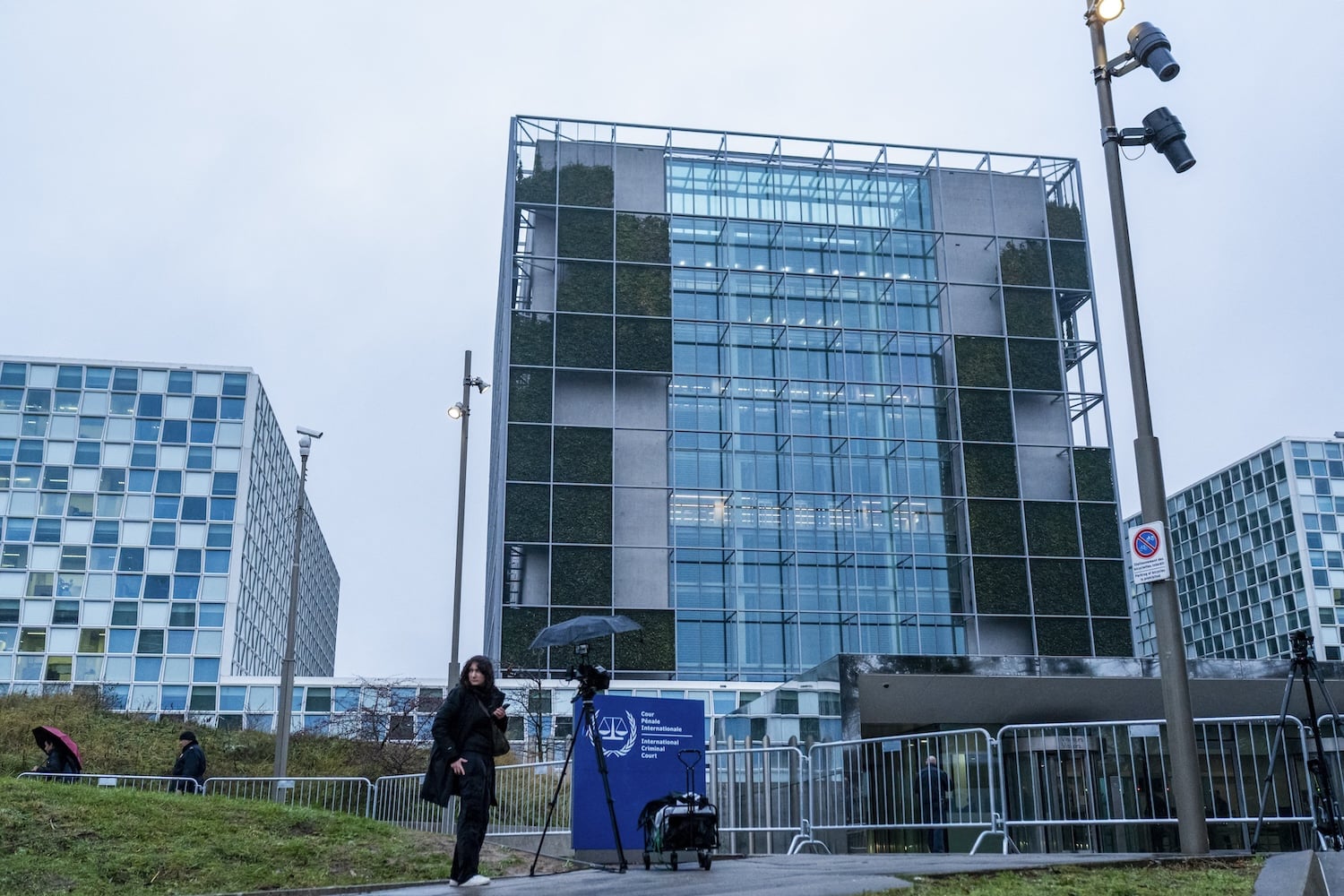
!The outside of the International Criminal Court is seen before an appeal ruling on the provisional release of former Philippine President Rodrigo Duterte in The Hague on Nov. 28, 2025.
*The outside of the International Criminal Court is seen before an appeal ruling on the provisional release of former Philippine President Rodrigo Duterte in The Hague on Nov. 28, 2025.*
The outside of the International Criminal Court is seen before an appeal ruling on the provisional release of former Philippine President Rodrigo Duterte in The Hague on Nov. 28, 2025. Lina Selg/ANP/AFP via Getty Images
*
August 10, 2026, 6:00 AM
Trump’s Second Term
Ongoing reports and analysis
When we spoke in April with a woman who had survived a Rapid Support Forces (RSF) massacre on the border of Sudan, she did not ask for revenge. For more than two years, the RSF has carried out attacks in the country that amount to crimes against humanity. But instead, the woman asked whether anyone would write down what had happened to her—whether it would be believed, and whether it would matter.
That question, repeated to both of us for decades across war zones, is the reason for the International Criminal Court (ICC), established by the Rome Statute in 2002. It is also the reason that our organization, the Reckoning Project, trains citizens to turn what they have survived into evidence that a court can use. And it is precisely the thing that the United States under President Donald Trump has set out to dismantle.
When we spoke in April with a woman who had survived a Rapid Support Forces (RSF) massacre on the border of Sudan, she did not ask for revenge. For more than two years, the RSF has carried out attacks in the country that amount to crimes against humanity. But instead, the woman asked whether anyone would write down what had happened to her—whether it would be believed, and whether it would matter.
That question, repeated to both of us for decades across war zones, is the reason for the International Criminal Court (ICC), established by the Rome Statute in 2002. It is also the reason that our organization, the Reckoning Project, trains citizens to turn what they have survived into evidence that a court can use. And it is precisely the thing that the United States under President Donald Trump has set out to dismantle.
A few days before International Criminal Justice Day on July 17, U.S. Secretary of State Marco Rubio announced a campaign to “systematically disable” the ICC. In Rubio’s words, this is the Trump administration’s attempt to demolish the court “brick by brick,” supposedly seeking to stop the court from “threatening U.S. sovereignty or targeting Americans.”
The Trump administration’s plan promises expanded sanctions against the ICC and any organization or people affiliated with it; visa revocations and travel bans on court staff, which could extend to perceived supporters; and a diplomatic push to pressure other countries to stop cooperating with the court. What is new about this campaign is its stated ambition. The White House’s goal is no longer to shield particular defendants—it is to end the institution unless it cows to U.S. demands.
This is not a first strike but an escalation: Last year, after the ICC issued arrest warrants for Israeli Prime Minister Benjamin Netanyahu and his former defense minister, the Trump administration sanctioned ICC judges and prosecutors outright. The United States also sanctioned the United Nations special rapporteur on the occupied Palestinian territories, Francesca Albanese, for expressing her opinion in support of the ICC’s work in Palestine.
During Trump’s first term, his administration also leveled sanctions against ICC personnel, most acutely the ICC prosecutor, Fatou Bensouda. (Bensouda sits on the board of the Reckoning Project.)
The latest campaign arrives at a genuinely difficult moment for the ICC. On July 24, Chief Prosecutor Karim Khan was ousted after an overwhelming majority of the Assembly of States Parties (ASP)—the body of 125 member states that oversees the court—voted to remove him after a two-year investigation into allegations of sexual misconduct. (He had been formally suspended in June by an ASP executive committee.)
However, the Rome Statute system is larger than its prosecutor; it is underpinned by 125 states and a quarter-century of hard-won jurisprudence. That distinction matters, because Washington is deliberately blurring it—seizing on a moment of institutional strain to advance a project that has nothing to do with legitimate concerns or calls for reform. There should be no illusion about the fact that Israel is working with the United States on this campaign, using this unfortunate episode at the ICC to cast the institution as compromised.
Netanyahu’s government did not wait for the ASP session or the outcome of any investigation before declaring the court irredeemable, yet it’s clear that the leadership of a country facing an
By using this website, you agree to our use of cookies. This use includes personalization of content and ads, and traffic analytics. Review our Privacy Policy for more information.
!Foreign Policy
Foreign Policy
Get analysis and alerts more quickly in the mobile app.
Install
Back to Foreign Policy Magazine home page
* Latest
* Regions
+ Asia & the Pacific
+ China
+ Middle East & Africa
+ Americas
+ Europe
* Newsletters
Editors’ Picks
Evening roundup with our editors’ favorite stories of the day
!World Brief Icon
World Brief
Your guide to the most important world stories of the day
!China Brief Icon
China Brief
The latest news, analysis, and data from the country each week
Situation Report
Weekly update on what’s driving U.S. national security policy
FP Weekend
A curation of our best book reviews, deep dives, and other reads
!Africa Brief Icon
Africa Brief
Essential analysis of the stories shaping geopolitics on the continent
!South Asia Brief Icon
South Asia Brief
Weekly update on developments in India and its neighbors
The Reading List
Curated guides on geopolitics and current affairs
FP Bookshelf
A monthly guide to FP’s book reviews, excerpts, and reading recommendations
!Latin America Brief Icon
Latin America Brief
One-stop digest of politics, economics, and culture
!Southeast Asia Brief Icon
Southeast Asia Brief
A weekly dispatch with news from the region’s 11 countries
The New Geopolitics
A five-part masterclass in IR theory with Harvard Professor Stephen M. Walt
View All Newsletters
* FP Live
* Latest
* Trending:
* India's protests rattle Modi
* Gulf states react to Iran
Search this website
* Preferences
* My FP Feed
* Saved Articles
* Newsletters
* Magazine Archive
* Subscription Settings
* FAQs
* Log Out
Sign In
Sign In
Equip your team with FP Enterprise Equip your team with FP Enterprise
SUBSCRIBE SUBSCRIBEUpgrade & get a limited-edition tote Upgrade & get a limited-edition tote
Argument:
Dismantling the ICC Doesn’t Serve U.S. Interests
*
*
* Bluesky
* X
Save
1. Create an FP account to save articles to read later.
Sign Up
ALREADY AN FP SUBSCRIBER? LOGIN
1. **Downloadable PDFs** are a benefit of an FP subscription.
Subscribe Now
ALREADY AN FP SUBSCRIBER? LOGIN
Gift
*
*
1. Gifting articles is a subscriber benefit.
Subscribe Now
ALREADY AN FP SUBSCRIBER? LOGIN
2. This article is an Insider exclusive.
Contact us at [email protected] to learn about upgrade options, unlocking the ability to gift this article.
Argument
An expert’s point of view on a current event.
Dismantling the ICC Doesn’t Serve U.S. Interests
The Trump administration’s campaign against the court is transparently cynical.
By **Janine di Giovanni**, the CEO of the Reckoning Project and a senior fellow at the Yale Jackson School of Global Affairs, and **Christopher “Kip” Hale**, the chief of staff of the Reckoning Project.
!The outside of the International Criminal Court is seen before an appeal ruling on the provisional release of former Philippine President Rodrigo Duterte in The Hague on Nov. 28, 2025.
*The outside of the International Criminal Court is seen before an appeal ruling on the provisional release of former Philippine President Rodrigo Duterte in The Hague on Nov. 28, 2025.*
The outside of the International Criminal Court is seen before an appeal ruling on the provisional release of former Philippine President Rodrigo Duterte in The Hague on Nov. 28, 2025. Lina Selg/ANP/AFP via Getty Images
*
August 10, 2026, 6:00 AM
Trump’s Second Term
Ongoing reports and analysis
When we spoke in April with a woman who had survived a Rapid Support Forces (RSF) massacre on the border of Sudan, she did not ask for revenge. For more than two years, the RSF has carried out attacks in the country that amount to crimes against humanity. But instead, the woman asked whether anyone would write down what had happened to her—whether it would be believed, and whether it would matter.
That question, repeated to both of us for decades across war zones, is the reason for the International Criminal Court (ICC), established by the Rome Statute in 2002. It is also the reason that our organization, the Reckoning Project, trains citizens to turn what they have survived into evidence that a court can use. And it is precisely the thing that the United States under President Donald Trump has set out to dismantle.
When we spoke in April with a woman who had survived a Rapid Support Forces (RSF) massacre on the border of Sudan, she did not ask for revenge. For more than two years, the RSF has carried out attacks in the country that amount to crimes against humanity. But instead, the woman asked whether anyone would write down what had happened to her—whether it would be believed, and whether it would matter.
That question, repeated to both of us for decades across war zones, is the reason for the International Criminal Court (ICC), established by the Rome Statute in 2002. It is also the reason that our organization, the Reckoning Project, trains citizens to turn what they have survived into evidence that a court can use. And it is precisely the thing that the United States under President Donald Trump has set out to dismantle.
A few days before International Criminal Justice Day on July 17, U.S. Secretary of State Marco Rubio announced a campaign to “systematically disable” the ICC. In Rubio’s words, this is the Trump administration’s attempt to demolish the court “brick by brick,” supposedly seeking to stop the court from “threatening U.S. sovereignty or targeting Americans.”
The Trump administration’s plan promises expanded sanctions against the ICC and any organization or people affiliated with it; visa revocations and travel bans on court staff, which could extend to perceived supporters; and a diplomatic push to pressure other countries to stop cooperating with the court. What is new about this campaign is its stated ambition. The White House’s goal is no longer to shield particular defendants—it is to end the institution unless it cows to U.S. demands.
This is not a first strike but an escalation: Last year, after the ICC issued arrest warrants for Israeli Prime Minister Benjamin Netanyahu and his former defense minister, the Trump administration sanctioned ICC judges and prosecutors outright. The United States also sanctioned the United Nations special rapporteur on the occupied Palestinian territories, Francesca Albanese, for expressing her opinion in support of the ICC’s work in Palestine.
During Trump’s first term, his administration also leveled sanctions against ICC personnel, most acutely the ICC prosecutor, Fatou Bensouda. (Bensouda sits on the board of the Reckoning Project.)
The latest campaign arrives at a genuinely difficult moment for the ICC. On July 24, Chief Prosecutor Karim Khan was ousted after an overwhelming majority of the Assembly of States Parties (ASP)—the body of 125 member states that oversees the court—voted to remove him after a two-year investigation into allegations of sexual misconduct. (He had been formally suspended in June by an ASP executive committee.)
However, the Rome Statute system is larger than its prosecutor; it is underpinned by 125 states and a quarter-century of hard-won jurisprudence. That distinction matters, because Washington is deliberately blurring it—seizing on a moment of institutional strain to advance a project that has nothing to do with legitimate concerns or calls for reform. There should be no illusion about the fact that Israel is working with the United States on this campaign, using this unfortunate episode at the ICC to cast the institution as compromised.
Netanyahu’s government did not wait for the ASP session or the outcome of any investigation before declaring the court irredeemable, yet it’s clear that the leadership of a country facing an
🔗 Share Article
Tags:#المحكمة الجنائية الدولية#إدارة ترامب#السياسة الأمريكية#إسرائيل#العدالة الدولية#جرائم الحرب
Source: Foreign Policy
For Context
Related reads from the same topic or latest developments


