Pakistan, Saudi Arabia, Turkey Trigger Mutual Defense Pact
Foreign Policy

Foreign Policy
Original Source
Pakistan, Saudi Arabia, and Turkey have activated their mutual defense pact—known as the Mecca Joint Defense Agreement—for the first time since its signing in August, in response to repeated Houthi attacks on Saudi infrastructure. The NATO-style trilateral accord involves rapid deployment of Pakistani and Turkish forces to the kingdom, potentially reshaping the Saudi-Houthi conflict dramatically.
Pakistan, Saudi Arabia, Turkey Trigger Mutual Defense Pact Over Houthi Attacks
By using this website, you agree to our use of cookies. This use includes personalization of content and ads, and traffic analytics. Review our Privacy Policy for more information.
!Foreign Policy
Foreign Policy Get analysis and alerts more quickly in the mobile app.
Install
Back to Foreign Policy Magazine home page
* Latest
* Regions
+ Asia & the Pacific
+ China
+ Middle East & Africa
+ Americas
+ Europe
* Newsletters
Editors’ Picks
Evening roundup with our editors’ favorite stories of the day
!World Brief Icon
World Brief
Your guide to the most important world stories of the day
!China Brief Icon
China Brief
The latest news, analysis, and data from the country each week
Situation Report
Weekly update on what’s driving U.S. national security policy
FP Weekend
A curation of our best book reviews, deep dives, and other reads
!Africa Brief Icon
Africa Brief
Essential analysis of the stories shaping geopolitics on the continent
!South Asia Brief Icon
South Asia Brief
Weekly update on developments in India and its neighbors
The Reading List
Curated guides on geopolitics and current affairs
FP Bookshelf
A monthly guide to FP’s book reviews, excerpts, and reading recommendations
!Latin America Brief Icon
Latin America Brief
One-stop digest of politics, economics, and culture
!Southeast Asia Brief Icon
Southeast Asia Brief
A weekly dispatch with news from the region’s 11 countries
The New Geopolitics
A five-part masterclass in IR theory with Harvard Professor Stephen M. Walt
View All Newsletters
* FP Live
* Latest
* Trending:
* Brazil's election
* Canada-EU ties
Search this website
* Preferences
* My FP Feed
* Saved Articles
* Newsletters
* Magazine Archive
* Subscription Settings
* FAQs
* Log Out
Sign In
Sign In
Team access Team access
Subscribe Subscribe Team access Team access
World Brief: Pakistan, Saudi Arabia, Turkey Trigger Mutual Defense Pact
*
*
* Facebook
* Bluesky
* X
* LinkedIn
* WhatsApp
* Reddit
Save
1. Create an FP account to save articles to read later.
Sign Up
ALREADY AN FP SUBSCRIBER? LOGIN
PDF
1. **Downloadable PDFs** are a benefit of an FP subscription.
Subscribe Now
ALREADY AN FP SUBSCRIBER? LOGIN
Gift
*
*
* WhatsApp
1. Gifting articles is a subscriber benefit.
Subscribe Now
ALREADY AN FP SUBSCRIBER? LOGIN
2. This article is an Insider exclusive.
Contact us at [email protected] to learn about upgrade options, unlocking the ability to gift this article.
World Brief
FP’s flagship daily newsletter, catching you up on 24 hours of news in five minutes. Delivered weekdays.
Pakistan, Saudi Arabia, Turkey Trigger Mutual Defense Pact
Even the threat of joint involvement could dramatically shift the Saudi-Houthi conflict.
!An illustration of Alexandra Sharp, World Brief newsletter writer
*An illustration of Alexandra Sharp, World Brief newsletter writer*
*Alexandra Sharp*
By **Alexandra Sharp**, the World Brief writer at *Foreign Policy*.
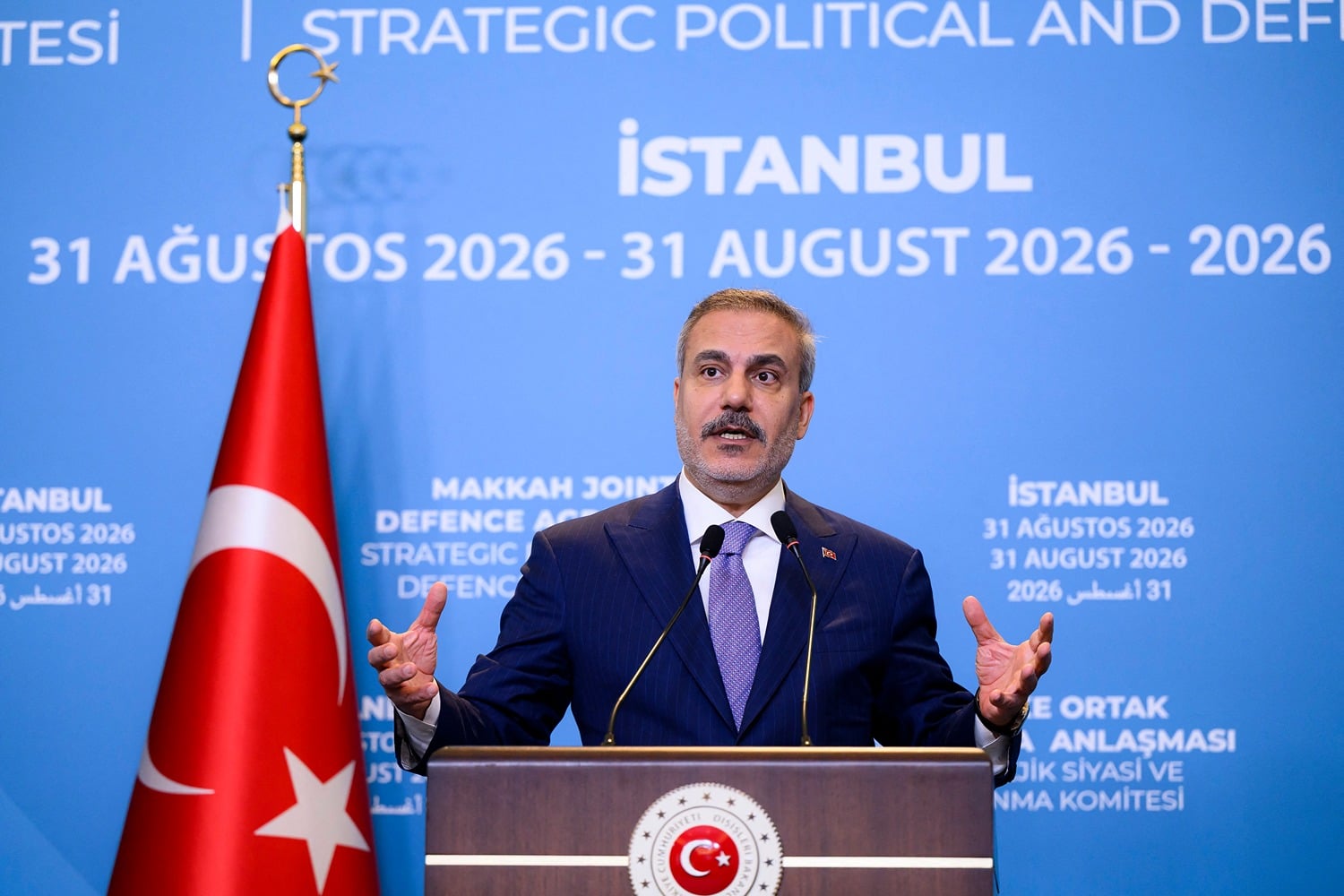
!Turkish Foreign Minister Hakan Fidan attends a press conference.
*Turkish Foreign Minister Hakan Fidan attends a press conference.*
Turkish Foreign Minister Hakan Fidan attends a press conference following a meeting between Turkey, Saudi Arabia, and Pakistan in Istanbul on Aug. 31. Yasin Akgul/AFP via Getty Images
*
October 6, 2026, 4:18 PM
Welcome back to World Brief, where we’re looking at joint efforts to counter **Houthi** attacks on **Saudi Arabia**, the potential future of nuclear weapons in **Lithuania**, and espionage allegations against a former **German** spy chief.
---
**Joint Deterrence**
Pakistan, Saudi Arabia, and Turkey triggered a mutual defense pact on Monday in response to repeated Houthi strikes on Saudi infrastructure. The joint deterrence measures, which appear to include the “rapid deployment” of Pakistani and Turkish troops to the Persian Gulf kingdom, mark the first time that the Mecca Joint Defense Agreement has been invoked since it was signed in August.
Welcome back to World Brief, where we’re looking at joint efforts to counter **Houthi** attacks on **Saudi Arabia**, the potential future of nuclear weapons in **Lithuania**, and espionage allegations against a former **German** spy chief.
Sign up to receive World Brief in your inbox every weekday.
---
**Joint Deterrence**
Pakistan, Saudi Arabia, and Turkey triggered a mutual defense pact on Monday in response to repeated Houthi strikes on Saudi infrastructure. The joint deterrence measures, which appear to include the “rapid deployment” of Pakistani and Turkish troops to the Persian Gulf kingdom, mark the first time that the Mecca Joint Defense Agreement has been invoked since it was signed in August.
The Houthis have yet to comment on the activation of the mutual defense pact.
Under the trilateral, NATO-style agreement, “any armed attack against any one of the three states shall be regarded as an attack against them all.” Although military cooperation among the three Sunni Muslim-majority nations is nothing new, the timing of the pact’s creation was particularly notable, as it came less than one month after Yemen’s Houthi rebels began launching attacks on Saudi Arabia.
In recent weeks, fighting between the Iran-backed Houthis and the Saudi-backed, internationally recognized Yemeni government has only worsened. Houthi forces seized control of Yemen’s Red Sea coast, including the strategic Bab el-Mandeb strait, and targeted critical energy infrastructure and Muslim holy sites in Saudi Arabia. This week, the Houthis also claimed to have launched attacks on King Khalid International Airport in Riyadh, Saudi Arabia’s Aramco-associated Petro Rabigh refinery, and other locations.
In response, Saudi-led coalition forces in Yemen launched a counteroffensive on Monday in an effort to retake the coastal territory. Yemeni officials said the forces successfully recaptured several key towns near Bab el-Mandeb.
Meanwhile, Saudi Arabia has doubled down on the defense of its own territory by bringing Pakistan and Turkey further into the fold. A joint statement released by the three countries following Monday’s emergency meeting in Riyadh did not explicitly name the Houthis as the rationale for activating the pact, though it did cite recent attacks on the holy cities of Mecca and Medina.
It is unclear to what extent Islamabad and Ankara will aid Riyadh. The trio announced on Monday that they will “move immediately to the practical implementation of the collective defense commitments and to take the necessary measures to provide the agreed military forces and capabilities and ensure their rapid deployment in the kingdom.”
However, Pakistan said it will not release the details of its deployment, though Pakistani Defense Minister Khawaja Asif said on Monday that Islamabad and Ankara were already aiding Riyadh in a “supporting role,” including in the form of reconnaissance. And the Turkish parliament has yet to ratify the mutual defense pact.
Still, even the threat of joint involvement could dramatically shift the Saudi-Houthi conflict. The members of the Mecca Joint Defense Agreement boast a combined military strength of nearly 1.4 million active troops. That doesn’t include their 3,400 aircraft, 6,000 tanks, and more than 340 naval assets. Pakistan is the only nuclear-armed Muslim-majority nation in the world, and Turkey has NATO’s second-largest armed forces.
---
**Today’s Most Read**
* **How to Fix Our Global Malaise** *by Gordon Brown*
* **Where Does Russia’s Violent Imperialism Come From?** *by Ian Garner*
* **Everyone Got Pete Hegseth Wrong** *by Emma Ashford*
---
**What We’re Following**
**Risks of new escalation.** Lithuania’s parliament voted in favor of a constitutional amendment
By using this website, you agree to our use of cookies. This use includes personalization of content and ads, and traffic analytics. Review our Privacy Policy for more information.
!Foreign Policy
Foreign Policy Get analysis and alerts more quickly in the mobile app.
Install
Back to Foreign Policy Magazine home page
* Latest
* Regions
+ Asia & the Pacific
+ China
+ Middle East & Africa
+ Americas
+ Europe
* Newsletters
Editors’ Picks
Evening roundup with our editors’ favorite stories of the day
!World Brief Icon
World Brief
Your guide to the most important world stories of the day
!China Brief Icon
China Brief
The latest news, analysis, and data from the country each week
Situation Report
Weekly update on what’s driving U.S. national security policy
FP Weekend
A curation of our best book reviews, deep dives, and other reads
!Africa Brief Icon
Africa Brief
Essential analysis of the stories shaping geopolitics on the continent
!South Asia Brief Icon
South Asia Brief
Weekly update on developments in India and its neighbors
The Reading List
Curated guides on geopolitics and current affairs
FP Bookshelf
A monthly guide to FP’s book reviews, excerpts, and reading recommendations
!Latin America Brief Icon
Latin America Brief
One-stop digest of politics, economics, and culture
!Southeast Asia Brief Icon
Southeast Asia Brief
A weekly dispatch with news from the region’s 11 countries
The New Geopolitics
A five-part masterclass in IR theory with Harvard Professor Stephen M. Walt
View All Newsletters
* FP Live
* Latest
* Trending:
* Brazil's election
* Canada-EU ties
Search this website
* Preferences
* My FP Feed
* Saved Articles
* Newsletters
* Magazine Archive
* Subscription Settings
* FAQs
* Log Out
Sign In
Sign In
Team access Team access
Subscribe Subscribe Team access Team access
World Brief: Pakistan, Saudi Arabia, Turkey Trigger Mutual Defense Pact
*
*
* Bluesky
* X
Save
1. Create an FP account to save articles to read later.
Sign Up
ALREADY AN FP SUBSCRIBER? LOGIN
1. **Downloadable PDFs** are a benefit of an FP subscription.
Subscribe Now
ALREADY AN FP SUBSCRIBER? LOGIN
Gift
*
*
1. Gifting articles is a subscriber benefit.
Subscribe Now
ALREADY AN FP SUBSCRIBER? LOGIN
2. This article is an Insider exclusive.
Contact us at [email protected] to learn about upgrade options, unlocking the ability to gift this article.
World Brief
FP’s flagship daily newsletter, catching you up on 24 hours of news in five minutes. Delivered weekdays.
Pakistan, Saudi Arabia, Turkey Trigger Mutual Defense Pact
Even the threat of joint involvement could dramatically shift the Saudi-Houthi conflict.
!An illustration of Alexandra Sharp, World Brief newsletter writer
*An illustration of Alexandra Sharp, World Brief newsletter writer*
*Alexandra Sharp*
By **Alexandra Sharp**, the World Brief writer at *Foreign Policy*.
!Turkish Foreign Minister Hakan Fidan attends a press conference.
*Turkish Foreign Minister Hakan Fidan attends a press conference.*
Turkish Foreign Minister Hakan Fidan attends a press conference following a meeting between Turkey, Saudi Arabia, and Pakistan in Istanbul on Aug. 31. Yasin Akgul/AFP via Getty Images
*
October 6, 2026, 4:18 PM
Welcome back to World Brief, where we’re looking at joint efforts to counter **Houthi** attacks on **Saudi Arabia**, the potential future of nuclear weapons in **Lithuania**, and espionage allegations against a former **German** spy chief.
---
**Joint Deterrence**
Pakistan, Saudi Arabia, and Turkey triggered a mutual defense pact on Monday in response to repeated Houthi strikes on Saudi infrastructure. The joint deterrence measures, which appear to include the “rapid deployment” of Pakistani and Turkish troops to the Persian Gulf kingdom, mark the first time that the Mecca Joint Defense Agreement has been invoked since it was signed in August.
Welcome back to World Brief, where we’re looking at joint efforts to counter **Houthi** attacks on **Saudi Arabia**, the potential future of nuclear weapons in **Lithuania**, and espionage allegations against a former **German** spy chief.
Sign up to receive World Brief in your inbox every weekday.
---
**Joint Deterrence**
Pakistan, Saudi Arabia, and Turkey triggered a mutual defense pact on Monday in response to repeated Houthi strikes on Saudi infrastructure. The joint deterrence measures, which appear to include the “rapid deployment” of Pakistani and Turkish troops to the Persian Gulf kingdom, mark the first time that the Mecca Joint Defense Agreement has been invoked since it was signed in August.
The Houthis have yet to comment on the activation of the mutual defense pact.
Under the trilateral, NATO-style agreement, “any armed attack against any one of the three states shall be regarded as an attack against them all.” Although military cooperation among the three Sunni Muslim-majority nations is nothing new, the timing of the pact’s creation was particularly notable, as it came less than one month after Yemen’s Houthi rebels began launching attacks on Saudi Arabia.
In recent weeks, fighting between the Iran-backed Houthis and the Saudi-backed, internationally recognized Yemeni government has only worsened. Houthi forces seized control of Yemen’s Red Sea coast, including the strategic Bab el-Mandeb strait, and targeted critical energy infrastructure and Muslim holy sites in Saudi Arabia. This week, the Houthis also claimed to have launched attacks on King Khalid International Airport in Riyadh, Saudi Arabia’s Aramco-associated Petro Rabigh refinery, and other locations.
In response, Saudi-led coalition forces in Yemen launched a counteroffensive on Monday in an effort to retake the coastal territory. Yemeni officials said the forces successfully recaptured several key towns near Bab el-Mandeb.
Meanwhile, Saudi Arabia has doubled down on the defense of its own territory by bringing Pakistan and Turkey further into the fold. A joint statement released by the three countries following Monday’s emergency meeting in Riyadh did not explicitly name the Houthis as the rationale for activating the pact, though it did cite recent attacks on the holy cities of Mecca and Medina.
It is unclear to what extent Islamabad and Ankara will aid Riyadh. The trio announced on Monday that they will “move immediately to the practical implementation of the collective defense commitments and to take the necessary measures to provide the agreed military forces and capabilities and ensure their rapid deployment in the kingdom.”
However, Pakistan said it will not release the details of its deployment, though Pakistani Defense Minister Khawaja Asif said on Monday that Islamabad and Ankara were already aiding Riyadh in a “supporting role,” including in the form of reconnaissance. And the Turkish parliament has yet to ratify the mutual defense pact.
Still, even the threat of joint involvement could dramatically shift the Saudi-Houthi conflict. The members of the Mecca Joint Defense Agreement boast a combined military strength of nearly 1.4 million active troops. That doesn’t include their 3,400 aircraft, 6,000 tanks, and more than 340 naval assets. Pakistan is the only nuclear-armed Muslim-majority nation in the world, and Turkey has NATO’s second-largest armed forces.
---
**Today’s Most Read**
* **How to Fix Our Global Malaise** *by Gordon Brown*
* **Where Does Russia’s Violent Imperialism Come From?** *by Ian Garner*
* **Everyone Got Pete Hegseth Wrong** *by Emma Ashford*
---
**What We’re Following**
**Risks of new escalation.** Lithuania’s parliament voted in favor of a constitutional amendment
🔗 Share Article
Tags:#الشرق الأوسط#السعودية#باكستان#تركيا#الحوثيون#الدفاع المشترك
Source: Foreign Policy
For Context
Related reads from the same topic or latest developments