Colby’s ‘Flexible Realism’ Won’t Work in the Indo-Pacific
Foreign Policy

Foreign Policy
Original Source
Critics argue that Washington's new "flexible realism" strategy signals unpredictability rather than strategic clarity, potentially weakening U.S. alliances in the Indo-Pacific. The approach prioritizes transactional interests over shared values, risking the erosion of regional partnerships vital to countering Beijing.
Elbridge Colby's 'Flexible Realism' Won’t Work in the Indo-Pacific
By using this website, you agree to our use of cookies. This use includes personalization of content and ads, and traffic analytics. Review our Privacy Policy for more information.
!Foreign Policy
Foreign Policy
Get analysis and alerts more quickly in the mobile app.
Install
Back to Foreign Policy Magazine home page
* Latest
* Regions
+ Asia & the Pacific
+ China
+ Middle East & Africa
+ Americas
+ Europe
* Newsletters
Editors’ Picks
Evening roundup with our editors’ favorite stories of the day
!World Brief Icon
World Brief
Your guide to the most important world stories of the day
!China Brief Icon
China Brief
The latest news, analysis, and data from the country each week
Situation Report
Weekly update on what’s driving U.S. national security policy
FP Weekend
A curation of our best book reviews, deep dives, and other reads
!Africa Brief Icon
Africa Brief
Essential analysis of the stories shaping geopolitics on the continent
!South Asia Brief Icon
South Asia Brief
Weekly update on developments in India and its neighbors
The Reading List
Curated guides on geopolitics and current affairs
FP Bookshelf
A monthly guide to FP’s book reviews, excerpts, and reading recommendations
!Latin America Brief Icon
Latin America Brief
One-stop digest of politics, economics, and culture
!Southeast Asia Brief Icon
Southeast Asia Brief
A weekly dispatch with news from the region’s 11 countries
The New Geopolitics
A five-part masterclass in IR theory with Harvard Professor Stephen M. Walt
View All Newsletters
* FP Live
* Latest
* Trending:
* Iran war
* Colombia's earthquake recovery
Search this website
* Preferences
* My FP Feed
* Saved Articles
* Newsletters
* Magazine Archive
* Subscription Settings
* FAQs
* Log Out
Sign In
Sign In
Partner with FP at UNGA81 Partner with FP at UNGA81
Subscribe SubscribePartner with FP at UNGA81 Partner with FP at UNGA81
Argument:
Colby’s ‘Flexible Realism’ Won’t Work in the Indo-Pacific
*
*
* Facebook
* Bluesky
* X
* LinkedIn
* WhatsApp
* Reddit
Save
Save
1. Create an FP account to save articles to read later.
Sign Up
ALREADY AN FP SUBSCRIBER? LOGIN
PDF
PDF
1. **Downloadable PDFs** are a benefit of an FP subscription.
Subscribe Now
ALREADY AN FP SUBSCRIBER? LOGIN
Gift
Gift
*
*
* WhatsApp
1. Gifting articles is a subscriber benefit.
Subscribe Now
ALREADY AN FP SUBSCRIBER? LOGIN
2. This article is an Insider exclusive.
Contact us at [email protected] to learn about upgrade options, unlocking the ability to gift this article.
Argument
An expert’s point of view on a current event.
Colby’s ‘Flexible Realism’ Won’t Work in the Indo-Pacific
Washington’s new strategy is little more than a euphemism for unpredictability.
By **Derek Grossman**, a professor of political science and international relations at the University of Southern California.
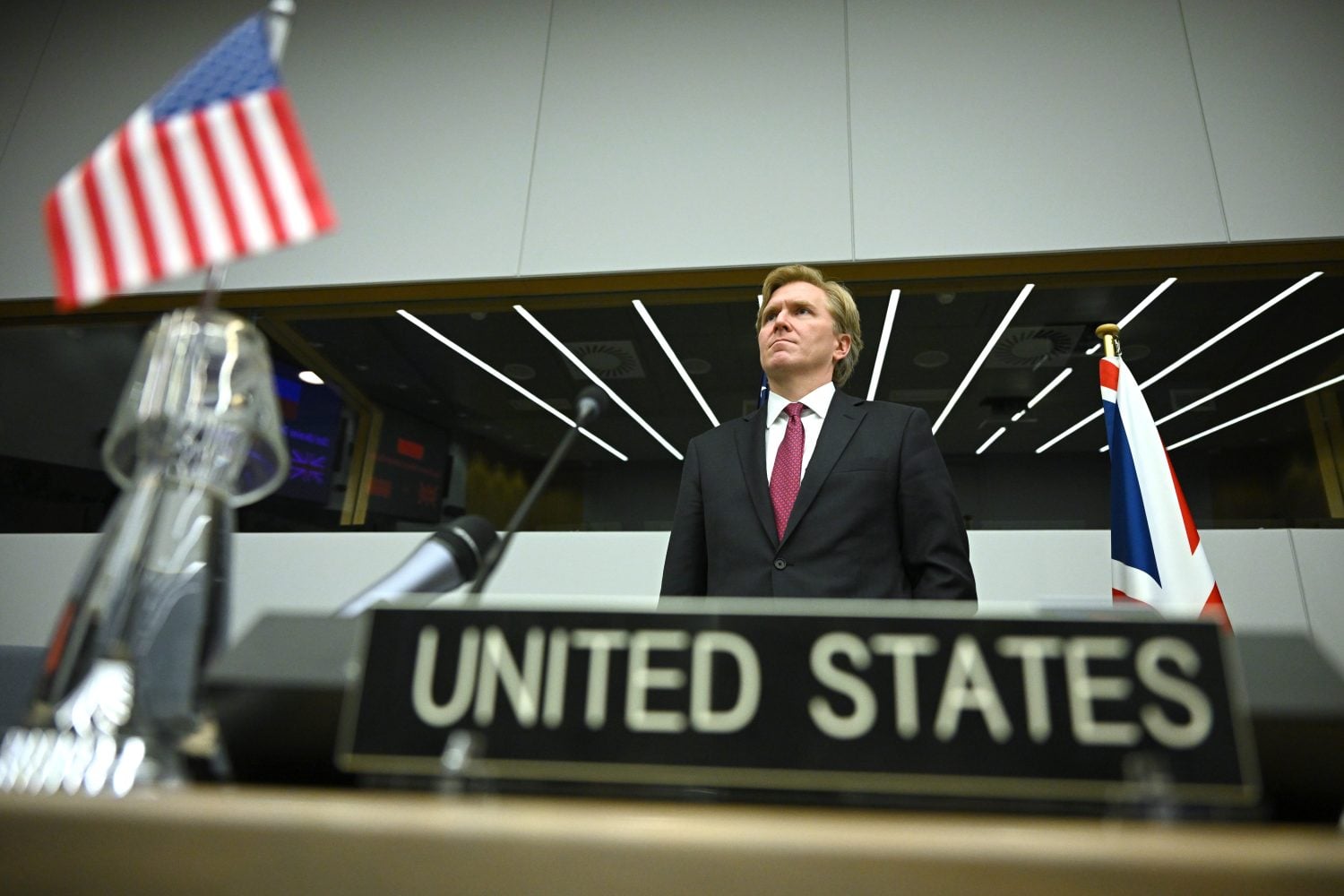
!Elbridge Colby
*Elbridge Colby*
U.S. Under Secretary of Defense for Policy Elbridge Colby attends a meeting at NATO headquarters in Brussels on Feb. 12. Leon Neal/Getty Images
My FP:
Follow topics and authors to get straight to what you like. Exclusively for FP subscribers. Subscribe Now | Log In
*
*
*
*
*
August 18, 2026, 8:11 AM
Elbridge Colby, the influential but polarizing U.S. undersecretary of defense for policy, just completed a tour of Southeast Asia where he visited Cambodia, Indonesia, the Philippines, and Thailand. His primary goal was clearly to clarify and promote the Trump administration’s new global defense strategy, underpinned by what it calls “flexible realism,” with U.S. allies and partners in the Indo-Pacific.
Trump’s Second Term
Ongoing reports and analysis
In a public speech in Manila, he reiterated the turn in U.S. alliance politics, much of which appears to carry his handwriting. Washington seeks “partners, not protectorates,” to increase burden-sharing while continuing to bolster deterrence by denial against China. Colby also highlighted that, unlike the Biden administration’s Indo-Pacific strategy, the Trump administration prioritizes shared interests over shared values, thus enabling the U.S. to significantly widen the aperture of security cooperation across the entire region. Finally, Colby talked of maintaining a favorable balance of power with China in the Indo-Pacific rather than preserving American primacy—a stark departure from previous administrations, including President Donald Trump’s first, which sought to keep the United States as the predominant global power.
Elbridge Colby, theinfluential but polarizing
U.S. undersecretary of defense for policy, just completed
a tour of Southeast Asia where he visited Cambodia, Indonesia,
the Philippines, and Thailand. His primary
goal was
clearly to clarify and promote the Trump administration’s new global defense strategy, underpinned by what it calls “flexible realism,” with U.S. allies and partners in the Indo-Pacific.
Trump’s Second Term
Ongoing reports and analysis
In a public speech in Manila, he reiterated the turn in U.S. alliance politics, much of which appears to carry his handwriting. Washington seeks “partners, not protectorates,” to increase burden-sharing while continuing to bolster deterrence by denial against China. Colby also highlighted that, unlike the Biden administration’s Indo-Pacific strategy, the Trump administration prioritizes shared interests over shared values, thus enabling the U.S. to significantly widen the aperture of security cooperation across the entire region. Finally, Colby talked of maintaining a favorable balance of power with China in the Indo-Pacific rather than preserving American primacy—a stark departure from previous administrations, including President Donald Trump’s first, which sought to keep the United States as the predominant global power.
Colby is half-correct. Washington should certainly want to enlist as many partners as possible to counter Beijing, whether democratic or authoritarian. Engaging more with Cambodia, for instance, is geostrategically advantageous to the United States because doing so challenges China within its own backyard. But Colby and the administration are also losing sight of the bigger picture. What looks like strategic flexibility from Washington risks looking like strategic unpredictability for the Indo-Pacific, ultimately making U.S. allies and partners less, rather than more, willing to balance China.
From my routine discussions with interlocutors representing key U.S. allies and partners throughout the Indo-Pacific, the common theme is that they all seek a sustained and predictable U.S. commitment to the region—basically the opposite of Trump’s poston
Truth Socialthis week that suddenly downgraded
routine U.S.-South Korea military drills because North Korea was offended. Washington’s friends do not want a strategy
based on pure transactionalism, which the Trump administration has turned into a synonym for unpredictability.
Colby himself has described flexible realism as “contextual” because the appropriate U.S. response “depends on the situation”—likely a function of whether the boss changes his mind.
For better or worse, a longer-lasting commitment is typically premised on shared values or at least a few shared principles, such as maintaining the rules-based order (a term forbidden in the Trump White House). Without this common understanding, the U.S. network of allies and partners has no glue keeping it together, which risks a quick unraveling if conditions change and Washington’s help is no longer required.
Another problem is that Colby and the administration are demanding substantially higher defense spending from U.S. allies and partners to satisfy Washington’s new burden-sharing requirements. One of the challenges is that many nations, like the Philippines, simply will not be able to meet expectations of dramatically higher spending. Even wealthier states, such as Japan, are
st
By using this website, you agree to our use of cookies. This use includes personalization of content and ads, and traffic analytics. Review our Privacy Policy for more information.
!Foreign Policy
Foreign Policy
Get analysis and alerts more quickly in the mobile app.
Install
Back to Foreign Policy Magazine home page
* Latest
* Regions
+ Asia & the Pacific
+ China
+ Middle East & Africa
+ Americas
+ Europe
* Newsletters
Editors’ Picks
Evening roundup with our editors’ favorite stories of the day
!World Brief Icon
World Brief
Your guide to the most important world stories of the day
!China Brief Icon
China Brief
The latest news, analysis, and data from the country each week
Situation Report
Weekly update on what’s driving U.S. national security policy
FP Weekend
A curation of our best book reviews, deep dives, and other reads
!Africa Brief Icon
Africa Brief
Essential analysis of the stories shaping geopolitics on the continent
!South Asia Brief Icon
South Asia Brief
Weekly update on developments in India and its neighbors
The Reading List
Curated guides on geopolitics and current affairs
FP Bookshelf
A monthly guide to FP’s book reviews, excerpts, and reading recommendations
!Latin America Brief Icon
Latin America Brief
One-stop digest of politics, economics, and culture
!Southeast Asia Brief Icon
Southeast Asia Brief
A weekly dispatch with news from the region’s 11 countries
The New Geopolitics
A five-part masterclass in IR theory with Harvard Professor Stephen M. Walt
View All Newsletters
* FP Live
* Latest
* Trending:
* Iran war
* Colombia's earthquake recovery
Search this website
* Preferences
* My FP Feed
* Saved Articles
* Newsletters
* Magazine Archive
* Subscription Settings
* FAQs
* Log Out
Sign In
Sign In
Partner with FP at UNGA81 Partner with FP at UNGA81
Subscribe SubscribePartner with FP at UNGA81 Partner with FP at UNGA81
Argument:
Colby’s ‘Flexible Realism’ Won’t Work in the Indo-Pacific
*
*
* Bluesky
* X
Save
Save
1. Create an FP account to save articles to read later.
Sign Up
ALREADY AN FP SUBSCRIBER? LOGIN
1. **Downloadable PDFs** are a benefit of an FP subscription.
Subscribe Now
ALREADY AN FP SUBSCRIBER? LOGIN
Gift
Gift
*
*
1. Gifting articles is a subscriber benefit.
Subscribe Now
ALREADY AN FP SUBSCRIBER? LOGIN
2. This article is an Insider exclusive.
Contact us at [email protected] to learn about upgrade options, unlocking the ability to gift this article.
Argument
An expert’s point of view on a current event.
Colby’s ‘Flexible Realism’ Won’t Work in the Indo-Pacific
Washington’s new strategy is little more than a euphemism for unpredictability.
By **Derek Grossman**, a professor of political science and international relations at the University of Southern California.
!Elbridge Colby
*Elbridge Colby*
U.S. Under Secretary of Defense for Policy Elbridge Colby attends a meeting at NATO headquarters in Brussels on Feb. 12. Leon Neal/Getty Images
My FP:
Follow topics and authors to get straight to what you like. Exclusively for FP subscribers. Subscribe Now | Log In
*
*
*
*
*
August 18, 2026, 8:11 AM
Elbridge Colby, the influential but polarizing U.S. undersecretary of defense for policy, just completed a tour of Southeast Asia where he visited Cambodia, Indonesia, the Philippines, and Thailand. His primary goal was clearly to clarify and promote the Trump administration’s new global defense strategy, underpinned by what it calls “flexible realism,” with U.S. allies and partners in the Indo-Pacific.
Trump’s Second Term
Ongoing reports and analysis
In a public speech in Manila, he reiterated the turn in U.S. alliance politics, much of which appears to carry his handwriting. Washington seeks “partners, not protectorates,” to increase burden-sharing while continuing to bolster deterrence by denial against China. Colby also highlighted that, unlike the Biden administration’s Indo-Pacific strategy, the Trump administration prioritizes shared interests over shared values, thus enabling the U.S. to significantly widen the aperture of security cooperation across the entire region. Finally, Colby talked of maintaining a favorable balance of power with China in the Indo-Pacific rather than preserving American primacy—a stark departure from previous administrations, including President Donald Trump’s first, which sought to keep the United States as the predominant global power.
Elbridge Colby, theinfluential but polarizing
U.S. undersecretary of defense for policy, just completed
a tour of Southeast Asia where he visited Cambodia, Indonesia,
the Philippines, and Thailand. His primary
goal was
clearly to clarify and promote the Trump administration’s new global defense strategy, underpinned by what it calls “flexible realism,” with U.S. allies and partners in the Indo-Pacific.
Trump’s Second Term
Ongoing reports and analysis
In a public speech in Manila, he reiterated the turn in U.S. alliance politics, much of which appears to carry his handwriting. Washington seeks “partners, not protectorates,” to increase burden-sharing while continuing to bolster deterrence by denial against China. Colby also highlighted that, unlike the Biden administration’s Indo-Pacific strategy, the Trump administration prioritizes shared interests over shared values, thus enabling the U.S. to significantly widen the aperture of security cooperation across the entire region. Finally, Colby talked of maintaining a favorable balance of power with China in the Indo-Pacific rather than preserving American primacy—a stark departure from previous administrations, including President Donald Trump’s first, which sought to keep the United States as the predominant global power.
Colby is half-correct. Washington should certainly want to enlist as many partners as possible to counter Beijing, whether democratic or authoritarian. Engaging more with Cambodia, for instance, is geostrategically advantageous to the United States because doing so challenges China within its own backyard. But Colby and the administration are also losing sight of the bigger picture. What looks like strategic flexibility from Washington risks looking like strategic unpredictability for the Indo-Pacific, ultimately making U.S. allies and partners less, rather than more, willing to balance China.
From my routine discussions with interlocutors representing key U.S. allies and partners throughout the Indo-Pacific, the common theme is that they all seek a sustained and predictable U.S. commitment to the region—basically the opposite of Trump’s poston
Truth Socialthis week that suddenly downgraded
routine U.S.-South Korea military drills because North Korea was offended. Washington’s friends do not want a strategy
based on pure transactionalism, which the Trump administration has turned into a synonym for unpredictability.
Colby himself has described flexible realism as “contextual” because the appropriate U.S. response “depends on the situation”—likely a function of whether the boss changes his mind.
For better or worse, a longer-lasting commitment is typically premised on shared values or at least a few shared principles, such as maintaining the rules-based order (a term forbidden in the Trump White House). Without this common understanding, the U.S. network of allies and partners has no glue keeping it together, which risks a quick unraveling if conditions change and Washington’s help is no longer required.
Another problem is that Colby and the administration are demanding substantially higher defense spending from U.S. allies and partners to satisfy Washington’s new burden-sharing requirements. One of the challenges is that many nations, like the Philippines, simply will not be able to meet expectations of dramatically higher spending. Even wealthier states, such as Japan, are
st
🔗 Share Article
Tags:#الهند والمحيط الهادئ#الاستراتيجية الأمريكية#إدارة ترامب الثانية#التحالفات العسكرية#الصين#كولبي
Source: Foreign Policy
For Context
Related reads from the same topic or latest developments


