In a world of wars and climate crisis, a new leader could save the UN. But would Trump allow it? | Steve Bloomfield
The Guardian US
T
The Guardian US
Original Source
The United Nations faces unprecedented challenges from wars, climate crisis, and a direct Trump administration assault on its relevance, as diplomats prepare to elect a new secretary-general under extraordinary circumstances. The organization's desperate need for strong leadership collides with American resistance to the rules-based international order.
If all goes to plan, at some stage in the coming weeks 15 diplomats will emerge from a small sound-proofed room deep in the bowels of the United Nations headquarters in New York and announce the organisation’s next secretary-general.
The person they choose will face a combination of challenges unlike any that their predecessors have had to deal with. Two of the security council’s permanent members, the US and Russia, are engaged in wars of choice that have no end in sight. A UN commission of inquiry has accused Israel of committing genocide in Gaza, but the UN has effectively been reduced to the role of bystander, pushed out by Donald Trump’s Board of Peace. The climate crisis is creating a cascade of new humanitarian disasters, while every day now seems to bring a new security threat caused by the unregulated rise of AI.
All of this is happening in a world in which the very principles of the UN – multilateralism, a rules-based order and international law – are under threat.
Secretary-general elections have rarely been this consequential and conversations about who should win will dominate the sidelines of the UN general assembly this week and next, as world leaders gather for the annual summit.
The UN, and the world it speaks for, desperately needs a new leader who is both charismatic and competent. Yet the five permanent members of the security council – the US, UK, France, Russia and China – hold a veto. Anyone who wants the job will need the approval of Xi Jinping, Vladimir Putin and, most importantly, Trump.
It is not easy to argue you are best placed to save the UN when the man you need to persuade would rather it fails.
Three informal straw polls have taken place so far and no frontrunner has emerged, indeed opposition to the two leading candidates rose in last Friday’s vote. For the first time in the organisation’s 80-year history serious discussions are quietly taking place about what would happen if no secretary-general is chosen at all.
Ten years ago, the election of António Guterres of Portugal was widely welcomed as a shot in the arm for the UN after a decade of the low-energy leadership of the South Korean Ban Ki-moon. In his previous role as the UN’s refugee chief he had been an outspoken activist and had pledged to continue speaking up for the world’s most vulnerable people. Then, a month later, Trump took office as the US president.
Earlier this year, he announced the US’s withdrawal from 31 UN organisations, including the bodies responsible for dealing with climate change and women’s health, while in July his secretary of state, Marco Rubio, announced the administration’s desire to “dismantle” the international criminal court “brick by brick”. The abrupt closure of the US’s aid and development programme, USAID, led to deaths around the world.
Most controversially, the establishment of Trump’s Board of Peace sparked fears that it could be used to supplant the UN itself. The UN meanwhile is in the grip of a financial crisis, with Guterres warning during the summer that it faced “imminent financial collapse” due to unpaid dues, much of it owed by the US.
And yet, despite everything, the UN is still standing – and still matters. It is only the UN, through its Framework Convention on Climate Change, that manages to focus international attention on the greatest crisis the world is facing. Despite dramatic cuts in funding, there are still 11 peacekeeping missions staffed by more than 50,000 personnel in some of the most dangerous parts of the world. The UN’s office for the coordination of humanitarian affairs remains the best hope for negotiating access to deliver aid in war zones, including Sudan.
This year the general assembly passed two landmark resolutions: one recognising the transatlantic slave trade as a crime, another to adopt a new world map that correctly recognises Africa’s size.
We don’t know what the candidates think of these decisions, nor do we know where they stand on the war in Ukraine or what their stance is on Israel’s actions in Gaza. Despite the election’s importance – and despite the relatively recent transparency of “vision statements” and hustings – the candidates’ campaigns have been overwhelmingly cautious.
Part of the reason, of course, is that someone standing on an ambitious platform would stand no chance of getting the job.
UN experts believe there is a chance that the two current frontrunners, Guyana’s former foreign minister Carolyn Rodrigues-Birkett and Costa Rica’s ex vice-president Rebeca Grynspan, might become good secretary-generals. But no one is blown away by the choice on offer.
For Andy Burnham and Ed Miliband, both of whom will be in New York this week at the UN general assembly, there is a choice to be made. The UK is yet to express a preference, indeed the UK team at the UN is said to be unimpressed with all the candidates. So far, it’s understood, they have not voted in favour of anyone in the first three straw polls. The UK and France are both hoping another candidate will emerge.
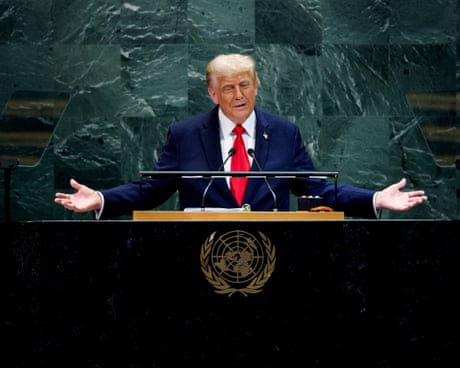
Whether they will be any better is an open question. The New York Post reported in July that Trump wanted Fifa president Gianni Infantino to get the job. There is next to no chance that would happen, but European diplomats fear a Trump-backed dark horse – possibly one without a diplomatic background – may emerge in the coming weeks. This is, after all, the man who has outsourced his nation’s diplomacy to his son-in-law and a real estate investor. So far, Trump has said nothing in public, although that may change on Tuesday when he gives his speech at the general assembly. Or a social media post spat out at two in the morning could upend the race entirely.
The chances of the “Permanent Five” failing to agree on a name remain slim, but plans are already being drawn up in case the worst happens. Guterres may be asked to stay on, while another possibility is that a collection of senior UN officials is asked to serve in administrative roles until a candidate is found. Either way, it would leave the UN rudderless at a time it needs to be anything but.
No one is getting this job without Trump’s say so. But once the new general secretary is in office, the US president will have less sway on their actions. They will potentially serve for 10 years, eight of which will be without Trump in the White House.
But even without Trump, this will be an almost impossible job. The UN’s financial crisis is not going away. Severe cuts are coming. There will be no easy return to the 1990s and early 2000s, when the UN was at the heart of world events. A new leader will need to reinvent multilateralism in a world where it’s going out of favour.
Depending on the choice they make, we could look back at this decision as the moment that the crumbling international rules-based order began to be rebuilt – or when it slid irretrievably into irrelevance.
The person they choose will face a combination of challenges unlike any that their predecessors have had to deal with. Two of the security council’s permanent members, the US and Russia, are engaged in wars of choice that have no end in sight. A UN commission of inquiry has accused Israel of committing genocide in Gaza, but the UN has effectively been reduced to the role of bystander, pushed out by Donald Trump’s Board of Peace. The climate crisis is creating a cascade of new humanitarian disasters, while every day now seems to bring a new security threat caused by the unregulated rise of AI.
All of this is happening in a world in which the very principles of the UN – multilateralism, a rules-based order and international law – are under threat.
Secretary-general elections have rarely been this consequential and conversations about who should win will dominate the sidelines of the UN general assembly this week and next, as world leaders gather for the annual summit.
The UN, and the world it speaks for, desperately needs a new leader who is both charismatic and competent. Yet the five permanent members of the security council – the US, UK, France, Russia and China – hold a veto. Anyone who wants the job will need the approval of Xi Jinping, Vladimir Putin and, most importantly, Trump.
It is not easy to argue you are best placed to save the UN when the man you need to persuade would rather it fails.
Three informal straw polls have taken place so far and no frontrunner has emerged, indeed opposition to the two leading candidates rose in last Friday’s vote. For the first time in the organisation’s 80-year history serious discussions are quietly taking place about what would happen if no secretary-general is chosen at all.
Ten years ago, the election of António Guterres of Portugal was widely welcomed as a shot in the arm for the UN after a decade of the low-energy leadership of the South Korean Ban Ki-moon. In his previous role as the UN’s refugee chief he had been an outspoken activist and had pledged to continue speaking up for the world’s most vulnerable people. Then, a month later, Trump took office as the US president.
Earlier this year, he announced the US’s withdrawal from 31 UN organisations, including the bodies responsible for dealing with climate change and women’s health, while in July his secretary of state, Marco Rubio, announced the administration’s desire to “dismantle” the international criminal court “brick by brick”. The abrupt closure of the US’s aid and development programme, USAID, led to deaths around the world.
Most controversially, the establishment of Trump’s Board of Peace sparked fears that it could be used to supplant the UN itself. The UN meanwhile is in the grip of a financial crisis, with Guterres warning during the summer that it faced “imminent financial collapse” due to unpaid dues, much of it owed by the US.
And yet, despite everything, the UN is still standing – and still matters. It is only the UN, through its Framework Convention on Climate Change, that manages to focus international attention on the greatest crisis the world is facing. Despite dramatic cuts in funding, there are still 11 peacekeeping missions staffed by more than 50,000 personnel in some of the most dangerous parts of the world. The UN’s office for the coordination of humanitarian affairs remains the best hope for negotiating access to deliver aid in war zones, including Sudan.
This year the general assembly passed two landmark resolutions: one recognising the transatlantic slave trade as a crime, another to adopt a new world map that correctly recognises Africa’s size.
We don’t know what the candidates think of these decisions, nor do we know where they stand on the war in Ukraine or what their stance is on Israel’s actions in Gaza. Despite the election’s importance – and despite the relatively recent transparency of “vision statements” and hustings – the candidates’ campaigns have been overwhelmingly cautious.
Part of the reason, of course, is that someone standing on an ambitious platform would stand no chance of getting the job.
UN experts believe there is a chance that the two current frontrunners, Guyana’s former foreign minister Carolyn Rodrigues-Birkett and Costa Rica’s ex vice-president Rebeca Grynspan, might become good secretary-generals. But no one is blown away by the choice on offer.
For Andy Burnham and Ed Miliband, both of whom will be in New York this week at the UN general assembly, there is a choice to be made. The UK is yet to express a preference, indeed the UK team at the UN is said to be unimpressed with all the candidates. So far, it’s understood, they have not voted in favour of anyone in the first three straw polls. The UK and France are both hoping another candidate will emerge.
Whether they will be any better is an open question. The New York Post reported in July that Trump wanted Fifa president Gianni Infantino to get the job. There is next to no chance that would happen, but European diplomats fear a Trump-backed dark horse – possibly one without a diplomatic background – may emerge in the coming weeks. This is, after all, the man who has outsourced his nation’s diplomacy to his son-in-law and a real estate investor. So far, Trump has said nothing in public, although that may change on Tuesday when he gives his speech at the general assembly. Or a social media post spat out at two in the morning could upend the race entirely.
The chances of the “Permanent Five” failing to agree on a name remain slim, but plans are already being drawn up in case the worst happens. Guterres may be asked to stay on, while another possibility is that a collection of senior UN officials is asked to serve in administrative roles until a candidate is found. Either way, it would leave the UN rudderless at a time it needs to be anything but.
No one is getting this job without Trump’s say so. But once the new general secretary is in office, the US president will have less sway on their actions. They will potentially serve for 10 years, eight of which will be without Trump in the White House.
But even without Trump, this will be an almost impossible job. The UN’s financial crisis is not going away. Severe cuts are coming. There will be no easy return to the 1990s and early 2000s, when the UN was at the heart of world events. A new leader will need to reinvent multilateralism in a world where it’s going out of favour.
Depending on the choice they make, we could look back at this decision as the moment that the crumbling international rules-based order began to be rebuilt – or when it slid irretrievably into irrelevance.
🔗 Share Article
Tags:#الأمم المتحدة#الأمين العام#الانتخابات الدولية#السياسة الدولية#ترامب#الدبلوماسية
Source: The Guardian US
For Context
Related reads from the same topic or latest developments
Same context
Trump claims triumphal arch will serve as a ‘top grade military complex’ to store weapons
Follow-up
US environment agency let Bayer pick regulations for destructive weedkiller, documents show
Follow-up