Trump’s Missile Math Problem
Foreign Policy

Foreign Policy
Original Source
The U.S. has expended roughly half of its crucial missile inventory in its war with Iran, significantly constraining its ability to project power globally and emboldening adversaries. Even with ramped-up production, the Pentagon faces a critical munitions shortage that threatens broader strategic capabilities.
FP Live: Tom Karako on Why America Is Running Out of Munitions
!Foreign Policy
Foreign Policy
Get analysis and alerts more quickly in the mobile app.
Install
Back to Foreign Policy Magazine home page
* Latest
* Regions
+ Asia & the Pacific
+ China
+ Middle East & Africa
+ Americas
+ Europe
* Newsletters
Editors’ Picks
Evening roundup with our editors’ favorite stories of the day
!World Brief Icon
World Brief
Your guide to the most important world stories of the day
!China Brief Icon
China Brief
The latest news, analysis, and data from the country each week
Situation Report
Weekly update on what’s driving U.S. national security policy
FP Weekend
A curation of our best book reviews, deep dives, and other reads
!Africa Brief Icon
Africa Brief
Essential analysis of the stories shaping geopolitics on the continent
!South Asia Brief Icon
South Asia Brief
Weekly update on developments in India and its neighbors
The Reading List
Curated guides on geopolitics and current affairs
FP Bookshelf
A monthly guide to FP’s book reviews, excerpts, and reading recommendations
!Latin America Brief Icon
Latin America Brief
One-stop digest of politics, economics, and culture
!Southeast Asia Brief Icon
Southeast Asia Brief
A weekly dispatch with news from the region’s 11 countries
The New Geopolitics
A five-part masterclass in IR theory with Harvard Professor Stephen M. Walt
View All Newsletters
* FP Live
* Latest
* Trending:
* Iran war
* Brazil's election kicks off
Search this website
* Preferences
* My FP Feed
* Saved Articles
* Newsletters
* Magazine Archive
* Subscription Settings
* FAQs
* Log Out
Sign In
Sign In
Campus and team access Campus and team access
Subscribe SubscribeCampus and team access Campus and team access
Q&A:
Trump’s Missile Math Problem
*
*
* Facebook
* Bluesky
* X
* LinkedIn
* WhatsApp
* Reddit
Save
1. Create an FP account to save articles to read later.
Sign Up
ALREADY AN FP SUBSCRIBER? LOGIN
PDF
1. **Downloadable PDFs** are a benefit of an FP subscription.
Subscribe Now
ALREADY AN FP SUBSCRIBER? LOGIN
Gift
*
*
* WhatsApp
1. Gifting articles is a subscriber benefit.
Subscribe Now
ALREADY AN FP SUBSCRIBER? LOGIN
2. This article is an Insider exclusive.
Contact us at [email protected] to learn about upgrade options, unlocking the ability to gift this article.
Your all-access pass to FP
Trump’s Missile Math Problem
An accounting of how the White House has run down key munitions in the Iran war.
By **Ravi Agrawal**, the editor in chief of *Foreign Policy*.
No audio? Hover over the video player, and tap the Click to Unmute button.
Subtitles are also available. Closed captioning provided by Vimeo and may contain minor inconsistencies.
Already an FP Subscriber? Login
Register now to watch this on-demand recording.
|
Ask a Question
Ask a Question
1. Only FP subscribers can submit questions for FP Live interviews.
Subscribe
ALREADY AN FP SUBSCRIBER? LOGIN
2. Only FP subscribers can submit questions for FP Live interviews.
Subscribe
ALREADY AN FP SUBSCRIBER? LOGIN
*
*
*
August 27, 2026, 7:40 AM
Iran War
Analysis and news.
Whether or not it’s prudent for the United States to continue its war with Iran, a new constraint is becoming public knowledge: the depletion of crucial U.S. munitions. According to the Center for Strategic and International Studies (CSIS), the United States has used up as much as half of certain key defensive and offensive missiles in this year’s conflict with Iran. The running down of these munitions diminishes the White House’s ability to project power and emboldens its adversaries.
On the latest episode of FP Live, I spoke with Tom Karako, the director of CSIS’s Missile Defense Project, to understand the extent to which the United States has expended its inventory of missiles, and what that means for its foreign policy. Watch the full discussion on the video box atop this page, or try the FP Live podcast on Apple, Spotify, or YouTube. What follows here is an excerpted transcript of our discussion.
Whether or not it’s prudent for the United States to continue its war with Iran, a new constraint is becoming public knowledge: the depletion of crucial U.S. munitions. According to the Center for Strategic and International Studies (CSIS), the United States has used up as much as half of certain key defensive and offensive missiles in this year’s conflict with Iran. The running down of these munitions diminishes the White House’s ability to project power and emboldens its adversaries.
On the latest episode of FP Live, I spoke with Tom Karako, the director of CSIS’s Missile Defense Project, to understand the extent to which the United States has expended its inventory of missiles, and what that means for its foreign policy. Watch the full discussion on the video box atop this page, or try the FP Live podcast on Apple, Spotify, or YouTube. What follows here is an excerpted transcript of our discussion.
**Ravi Agrawal:** So we’re going to discuss several different types of munitions. Some of this is going to get wonky, but I just want to start with the one that seems to be the most well-known: the Patriot missile interceptors. Just very briefly, can you explain how they work in layman’s terms and why they seem to be so popular?
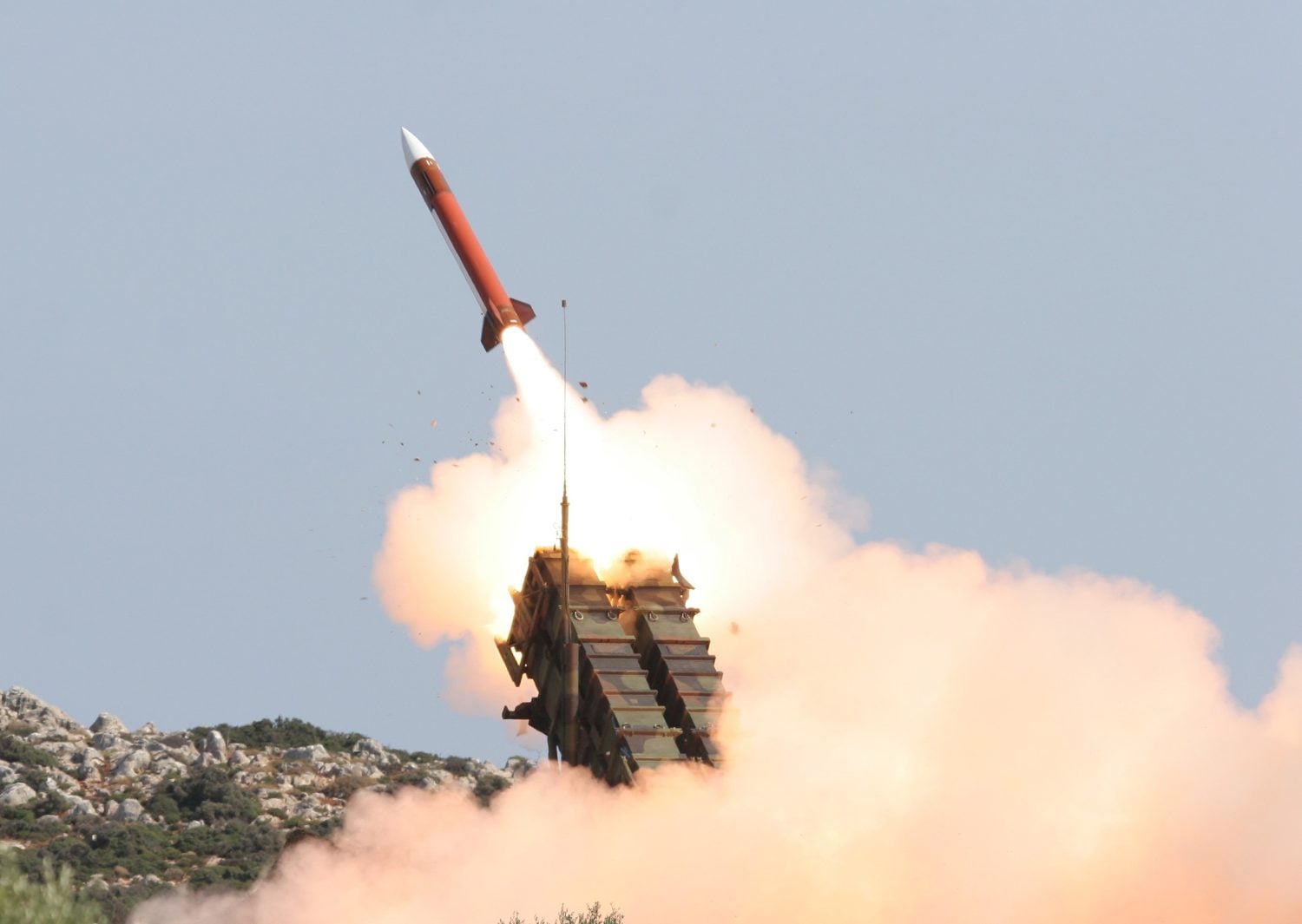
**Tom Karako:** They’re popular because people want to be defended against missiles, and missiles have become weapons of choice globally. In fact, there are 18 nations that count themselves members of the “Patriot family” and operate one or another kind of Patriot missile. So you’re alluding to essentially two different kinds: Patriot Advanced Capability-2 (PAC-2) and -3 (PAC-3). PAC-2 is a “blast frag”; it explodes. PAC-3 is “hit to kill”; it collides with the target. All of that is possible because sophisticated radars detect a threat, track the threat, develop a fire-control solution, and tell the missile where to fire. It’s a very sophisticated system, and that’s why the demand for it is out the door and around the block.
**RA:** And what is your understanding of how many of these the United States had before the war, which began in February, and how many it has now?
**TK:** The Pentagon—correctly—does not release exact numbers of inventory necessarily, or the numbers that have been used. That’s for good reason. Having said that, according to some public statements in the budget requests, you can guess there were probably about 2,500 or so before the war. Some of my colleagues have estimated on the basis of open-source information that probably over half of that, perhaps as many as 1,200 or more, have been expended. Those are probably for the United States; there’s also a number of Patriot operators in the Middle East—Saudi Arabia, United Arab Emirates, and others—that, according to news reports, have also been expending a lot of their interceptors defending against these Iranian missiles.
**RA:** How much does each one cost? How long does it take to replace them?
**TK:** It takes about $4 million per round. There are different kinds, and how much it costs in any given year is going to depend upon how many the government is buying in a given lot—if you want to buy one of something or a hundred of something, the price per unit is going to vary; that applies to missiles as it does to many other commodities. In terms of the production rate, that’s a little bit complicated to answer. In round numbers, it probably takes about 36 months from a flat start to delivery. Having said that, the defense industry is ramping up its production rates. Rather than just a flat number per year, they’ve gone from about 350 to 650 a year, as of last year. We’re probably going to get to 1,000 a year, up to probably at least 2,000 a year, by the end of the decade.
**RA:** And just sticking with Patriots for a minute before we broaden this out to other types of munitions, what does this mean? So, this dwindling of these interceptors in the United Stat
!Foreign Policy
Foreign Policy
Get analysis and alerts more quickly in the mobile app.
Install
Back to Foreign Policy Magazine home page
* Latest
* Regions
+ Asia & the Pacific
+ China
+ Middle East & Africa
+ Americas
+ Europe
* Newsletters
Editors’ Picks
Evening roundup with our editors’ favorite stories of the day
!World Brief Icon
World Brief
Your guide to the most important world stories of the day
!China Brief Icon
China Brief
The latest news, analysis, and data from the country each week
Situation Report
Weekly update on what’s driving U.S. national security policy
FP Weekend
A curation of our best book reviews, deep dives, and other reads
!Africa Brief Icon
Africa Brief
Essential analysis of the stories shaping geopolitics on the continent
!South Asia Brief Icon
South Asia Brief
Weekly update on developments in India and its neighbors
The Reading List
Curated guides on geopolitics and current affairs
FP Bookshelf
A monthly guide to FP’s book reviews, excerpts, and reading recommendations
!Latin America Brief Icon
Latin America Brief
One-stop digest of politics, economics, and culture
!Southeast Asia Brief Icon
Southeast Asia Brief
A weekly dispatch with news from the region’s 11 countries
The New Geopolitics
A five-part masterclass in IR theory with Harvard Professor Stephen M. Walt
View All Newsletters
* FP Live
* Latest
* Trending:
* Iran war
* Brazil's election kicks off
Search this website
* Preferences
* My FP Feed
* Saved Articles
* Newsletters
* Magazine Archive
* Subscription Settings
* FAQs
* Log Out
Sign In
Sign In
Campus and team access Campus and team access
Subscribe SubscribeCampus and team access Campus and team access
Q&A:
Trump’s Missile Math Problem
*
*
* Bluesky
* X
Save
1. Create an FP account to save articles to read later.
Sign Up
ALREADY AN FP SUBSCRIBER? LOGIN
1. **Downloadable PDFs** are a benefit of an FP subscription.
Subscribe Now
ALREADY AN FP SUBSCRIBER? LOGIN
Gift
*
*
1. Gifting articles is a subscriber benefit.
Subscribe Now
ALREADY AN FP SUBSCRIBER? LOGIN
2. This article is an Insider exclusive.
Contact us at [email protected] to learn about upgrade options, unlocking the ability to gift this article.
Your all-access pass to FP
Trump’s Missile Math Problem
An accounting of how the White House has run down key munitions in the Iran war.
By **Ravi Agrawal**, the editor in chief of *Foreign Policy*.
No audio? Hover over the video player, and tap the Click to Unmute button.
Subtitles are also available. Closed captioning provided by Vimeo and may contain minor inconsistencies.
Already an FP Subscriber? Login
Register now to watch this on-demand recording.
|
Ask a Question
Ask a Question
1. Only FP subscribers can submit questions for FP Live interviews.
Subscribe
ALREADY AN FP SUBSCRIBER? LOGIN
2. Only FP subscribers can submit questions for FP Live interviews.
Subscribe
ALREADY AN FP SUBSCRIBER? LOGIN
*
*
*
August 27, 2026, 7:40 AM
Iran War
Analysis and news.
Whether or not it’s prudent for the United States to continue its war with Iran, a new constraint is becoming public knowledge: the depletion of crucial U.S. munitions. According to the Center for Strategic and International Studies (CSIS), the United States has used up as much as half of certain key defensive and offensive missiles in this year’s conflict with Iran. The running down of these munitions diminishes the White House’s ability to project power and emboldens its adversaries.
On the latest episode of FP Live, I spoke with Tom Karako, the director of CSIS’s Missile Defense Project, to understand the extent to which the United States has expended its inventory of missiles, and what that means for its foreign policy. Watch the full discussion on the video box atop this page, or try the FP Live podcast on Apple, Spotify, or YouTube. What follows here is an excerpted transcript of our discussion.
Whether or not it’s prudent for the United States to continue its war with Iran, a new constraint is becoming public knowledge: the depletion of crucial U.S. munitions. According to the Center for Strategic and International Studies (CSIS), the United States has used up as much as half of certain key defensive and offensive missiles in this year’s conflict with Iran. The running down of these munitions diminishes the White House’s ability to project power and emboldens its adversaries.
On the latest episode of FP Live, I spoke with Tom Karako, the director of CSIS’s Missile Defense Project, to understand the extent to which the United States has expended its inventory of missiles, and what that means for its foreign policy. Watch the full discussion on the video box atop this page, or try the FP Live podcast on Apple, Spotify, or YouTube. What follows here is an excerpted transcript of our discussion.
**Ravi Agrawal:** So we’re going to discuss several different types of munitions. Some of this is going to get wonky, but I just want to start with the one that seems to be the most well-known: the Patriot missile interceptors. Just very briefly, can you explain how they work in layman’s terms and why they seem to be so popular?
**Tom Karako:** They’re popular because people want to be defended against missiles, and missiles have become weapons of choice globally. In fact, there are 18 nations that count themselves members of the “Patriot family” and operate one or another kind of Patriot missile. So you’re alluding to essentially two different kinds: Patriot Advanced Capability-2 (PAC-2) and -3 (PAC-3). PAC-2 is a “blast frag”; it explodes. PAC-3 is “hit to kill”; it collides with the target. All of that is possible because sophisticated radars detect a threat, track the threat, develop a fire-control solution, and tell the missile where to fire. It’s a very sophisticated system, and that’s why the demand for it is out the door and around the block.
**RA:** And what is your understanding of how many of these the United States had before the war, which began in February, and how many it has now?
**TK:** The Pentagon—correctly—does not release exact numbers of inventory necessarily, or the numbers that have been used. That’s for good reason. Having said that, according to some public statements in the budget requests, you can guess there were probably about 2,500 or so before the war. Some of my colleagues have estimated on the basis of open-source information that probably over half of that, perhaps as many as 1,200 or more, have been expended. Those are probably for the United States; there’s also a number of Patriot operators in the Middle East—Saudi Arabia, United Arab Emirates, and others—that, according to news reports, have also been expending a lot of their interceptors defending against these Iranian missiles.
**RA:** How much does each one cost? How long does it take to replace them?
**TK:** It takes about $4 million per round. There are different kinds, and how much it costs in any given year is going to depend upon how many the government is buying in a given lot—if you want to buy one of something or a hundred of something, the price per unit is going to vary; that applies to missiles as it does to many other commodities. In terms of the production rate, that’s a little bit complicated to answer. In round numbers, it probably takes about 36 months from a flat start to delivery. Having said that, the defense industry is ramping up its production rates. Rather than just a flat number per year, they’ve gone from about 350 to 650 a year, as of last year. We’re probably going to get to 1,000 a year, up to probably at least 2,000 a year, by the end of the decade.
**RA:** And just sticking with Patriots for a minute before we broaden this out to other types of munitions, what does this mean? So, this dwindling of these interceptors in the United Stat
🔗 Share Article
Tags:#الحرب الأمريكية الإيرانية#الترسانة الصاروخية#السياسة الخارجية الأمريكية#الأمن القومي#صواريخ باتريوت#استنزاف الموارد العسكرية
Source: Foreign Policy
For Context
Related reads from the same topic or latest developments


