Chocó, Colombia, Faces Deeper Hardship After an Earthquake
New York Times
N
New York Times
Original Source
Colombia's remote Chocó region, already plagued by isolation and poverty, faces a mounting humanitarian crisis following a 7.4 magnitude earthquake that killed at least 298 people nationwide. Authorities struggle to reach scattered communities across the territory to assess the full extent of devastation.
Chocó, Colombia, Faces Deeper Hardship After an Earthquake - The New York Times
Skip to contentSkip to site index
Log in
* Home
* + U.S.
+ International
+ Canada
+ Español
+ 中文
Colombia
Earthquake
* What to Know
* Volunteer Rescue Group
* Map of Epicenter
* Cities Damaged
* Photos
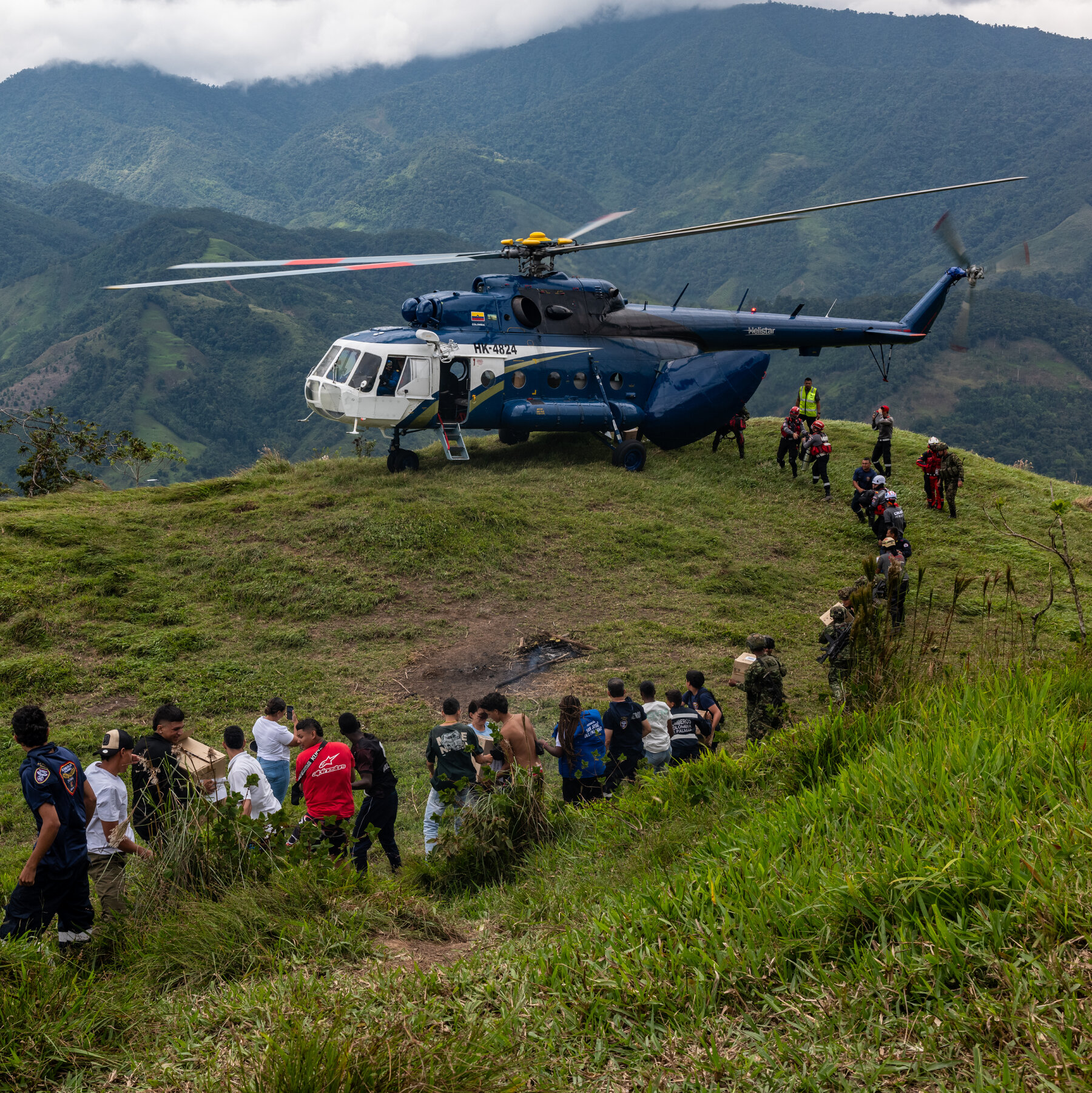
!Many people in a line move supplies on a green mountain slope. A blue-and-white helicopter is parked on the hill, with more mountains behind.
An Isolated Corner of Colombia Faces Deeper Hardship After a Quake
In Chocó, a remote region, “pain, hunger and homelessness await” survivors of last week’s earthquake, the governor said. Shakira visited to help draw awareness.
*Soldiers and volunteers offloading aid supplies from a helicopter in San José del Palmar, Colombia, a remote town close to the earthquake’s epicenter.*
An Isolated Corner of Colombia Faces Deeper Hardship After a Quake
In Chocó, a remote region, “pain, hunger and homelessness await” survivors of last week’s earthquake, the governor said. Shakira visited to help draw awareness.
Soldiers and volunteers offloading aid supplies from a helicopter in San José del Palmar, Colombia, a remote town close to the earthquake’s epicenter.
Credit...
Supported by
SKIP ADVERTISEMENT
Listen · 9:50 min
*
*
*
*
By
Genevieve Glatsky
Photographs by
Federico Rios
Genevieve Glatsky and Federico Rios traversed Chocó, Colombia, by car, boat and helicopter over several days.
Aug. 18, 2026
Updated 5:19 a.m. ET
Leer en español
In Colombia’s remote Pacific region of Chocó, isolation has long been a fact of life. Roads are few, electricity and health care are limited, and much of the population lives in poverty while armed groups control parts of the territory.
Then came the earthquake. Already one of the country’s most vulnerable areas, Chocó was also the epicenter of a 7.4 magnitude quake that struck last week, killing at least 298 people across the country.
In Chocó, the full extent of the devastation is unknown, as the authorities struggle to reach communities scattered across the region. Now, Chocó faces a reconstruction effort that will have to overcome the same geographic, economic and political barriers that have shaped the region for generations.
“We were left in ruins,” said Juan Fernando Taborda, 35, who does odd jobs in La Ye, a town of about 600 people two hours from the Quibdó, the capital of Chocó, where most buildings were destroyed or damaged. “We have nothing.”
For much of Colombia’s history, Chocó was a remote mining frontier where enslaved Africans were brought by the Spanish to work in the mines. Some escaped and formed communities beyond colonial control.
Image
!People shifting through the ruins of a multilevel building left uninhabitable by the earthquake.
*People grabbing items from damaged buildings in La Ye, Colombia.*
**Corrected on**
Aug. 18, 2026
:
A picture caption in an earlier version of this article misstated the day the performer Shakira visited Chocó. It was Monday, as the article noted — not Thursday.
We acknowledge mistakes in our reporting with corrections. If you spot an error, please let us know at [email protected].
Learn more.
Genevieve Glatsky
is a reporter for The Times, based in Bogotá, Colombia.
*
*
*
*
Related Content
*
*
*
*
*
*
*
*
*
*
*
*
*
*
*
*
*
*
*
Advertisement
SKIP ADVERTISEMENT
Site Index
Site Information Navigation
* ©2026 The New York Times Company
* NYTCo
* Contact Us
* Accessibility
* Work with us
* Advertise
* T Brand Studio
* Privacy Policy
* Cookie Policy
* Terms of Service
* Terms of Sale
* Site Map
* Canada
* International
* Help
* Subscriptions
*
Skip to contentSkip to site index
Log in
* Home
* + U.S.
+ International
+ Canada
+ Español
+ 中文
Colombia
Earthquake
* What to Know
* Volunteer Rescue Group
* Map of Epicenter
* Cities Damaged
* Photos
!Many people in a line move supplies on a green mountain slope. A blue-and-white helicopter is parked on the hill, with more mountains behind.
An Isolated Corner of Colombia Faces Deeper Hardship After a Quake
In Chocó, a remote region, “pain, hunger and homelessness await” survivors of last week’s earthquake, the governor said. Shakira visited to help draw awareness.
*Soldiers and volunteers offloading aid supplies from a helicopter in San José del Palmar, Colombia, a remote town close to the earthquake’s epicenter.*
An Isolated Corner of Colombia Faces Deeper Hardship After a Quake
In Chocó, a remote region, “pain, hunger and homelessness await” survivors of last week’s earthquake, the governor said. Shakira visited to help draw awareness.
Soldiers and volunteers offloading aid supplies from a helicopter in San José del Palmar, Colombia, a remote town close to the earthquake’s epicenter.
Credit...
Supported by
SKIP ADVERTISEMENT
Listen · 9:50 min
*
*
*
*
By
Genevieve Glatsky
Photographs by
Federico Rios
Genevieve Glatsky and Federico Rios traversed Chocó, Colombia, by car, boat and helicopter over several days.
Aug. 18, 2026
Updated 5:19 a.m. ET
Leer en español
In Colombia’s remote Pacific region of Chocó, isolation has long been a fact of life. Roads are few, electricity and health care are limited, and much of the population lives in poverty while armed groups control parts of the territory.
Then came the earthquake. Already one of the country’s most vulnerable areas, Chocó was also the epicenter of a 7.4 magnitude quake that struck last week, killing at least 298 people across the country.
In Chocó, the full extent of the devastation is unknown, as the authorities struggle to reach communities scattered across the region. Now, Chocó faces a reconstruction effort that will have to overcome the same geographic, economic and political barriers that have shaped the region for generations.
“We were left in ruins,” said Juan Fernando Taborda, 35, who does odd jobs in La Ye, a town of about 600 people two hours from the Quibdó, the capital of Chocó, where most buildings were destroyed or damaged. “We have nothing.”
For much of Colombia’s history, Chocó was a remote mining frontier where enslaved Africans were brought by the Spanish to work in the mines. Some escaped and formed communities beyond colonial control.
Image
!People shifting through the ruins of a multilevel building left uninhabitable by the earthquake.
*People grabbing items from damaged buildings in La Ye, Colombia.*
**Corrected on**
Aug. 18, 2026
:
A picture caption in an earlier version of this article misstated the day the performer Shakira visited Chocó. It was Monday, as the article noted — not Thursday.
We acknowledge mistakes in our reporting with corrections. If you spot an error, please let us know at [email protected].
Learn more.
Genevieve Glatsky
is a reporter for The Times, based in Bogotá, Colombia.
*
*
*
*
Related Content
*
*
*
*
*
*
*
*
*
*
*
*
*
*
*
*
*
*
*
Advertisement
SKIP ADVERTISEMENT
Site Index
Site Information Navigation
* ©2026 The New York Times Company
* NYTCo
* Contact Us
* Accessibility
* Work with us
* Advertise
* T Brand Studio
* Privacy Policy
* Cookie Policy
* Terms of Service
* Terms of Sale
* Site Map
* Canada
* International
* Help
* Subscriptions
*
🔗 Share Article
Tags:#كولومبيا#زلزال#تشوكو#أزمة إنسانية#إغاثة#دمار
Source: New York Times
For Context
Related reads from the same topic or latest developments


