After Fighting Russia Fiercely, He Wants to Forge Ukraine’s Path to Peace
New York Times
N
New York Times
Original Source
Kyrylo Budanov, Ukraine's military chief of staff and former intelligence chief, now leads peace negotiations with Russia, willing to take unexpected steps to end the war. Talks mediated by the Trump administration are expected to resume in late September.
After Fighting Russia Fiercely, He Wants to Forge Ukraine’s Path to Peace - The New York Times
Skip to contentSkip to site index
Europe
Today’s Paper
Russia-Ukraine War
* War Escalation
* Underground Schools
* Russian Drone Strikes
* C.I.A. Chief’s Assessment
* Ukraine’s Drone Army
* Photos
Advertisement
SKIP ADVERTISEMENT
Supported by
SKIP ADVERTISEMENT
After Fighting Russia Fiercely, He Wants to Forge Ukraine’s Path to Peace
Kyrylo Budanov, a decorated soldier and former military spy chief, advocates a negotiated settlement. Talks are expected to resume this month.
Listen · 8:53 min
*
*
*
*
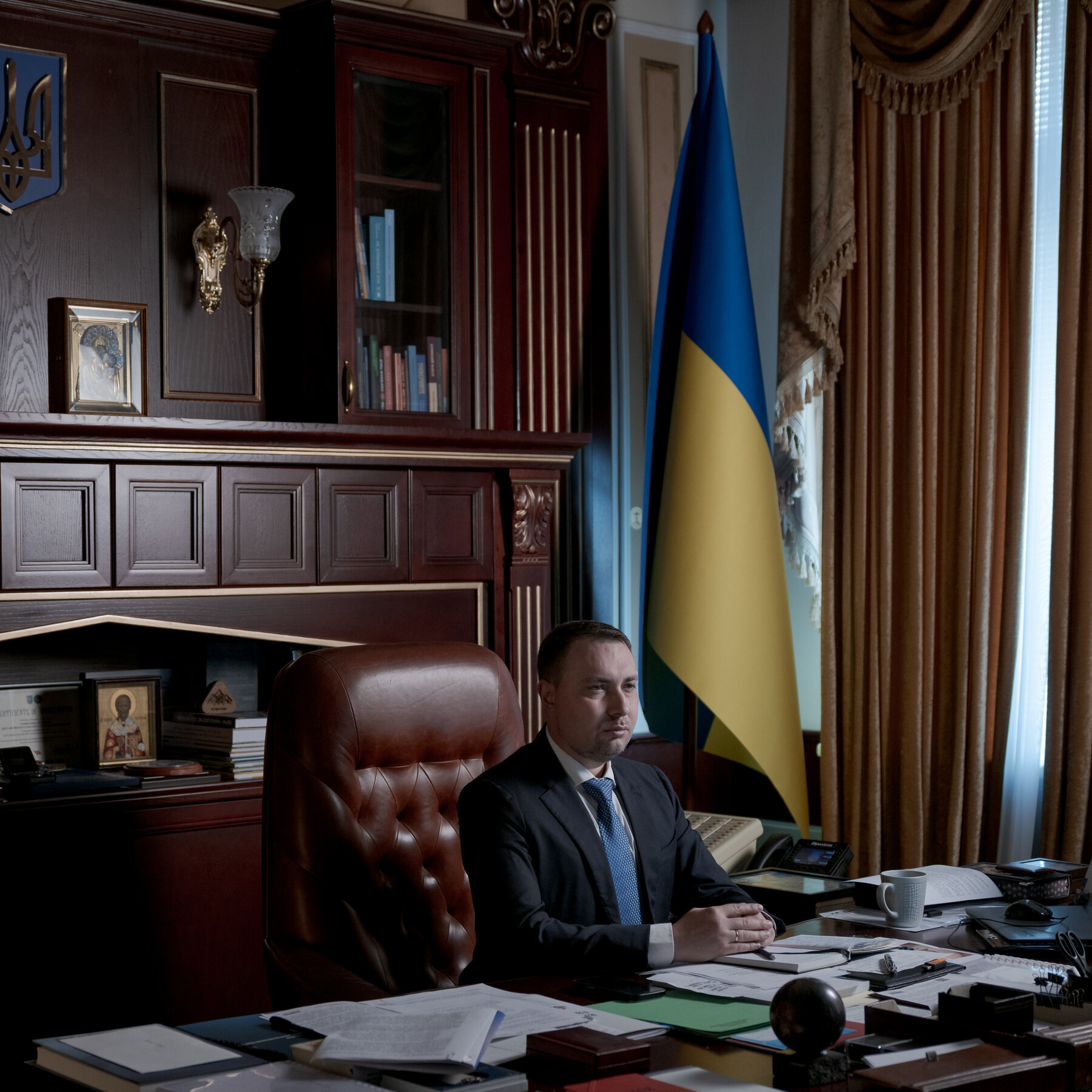
!A man in a dark suit sits at a cluttered wooden desk. Behind him is a blue and yellow flag, dark wood paneling, and peach curtains.
*Kyrylo Budanov, chief of staff to President Volodymyr Zelensky, in his office in Kyiv, Ukraine, on Saturday.
Credit...
Jędrzej Nowicki for The New York Times*
By
Andrew E. Kramer
Reporting from Kyiv, Ukraine
Sept. 4, 2026, 5:03 a.m. ET
See more of our coverage in your search results. Encuentra más de nuestra cobertura en los resultados de búsqueda. Add The New York Times on Google Agrega The New York Times en Google
As a round of peace talks wrapped up earlier this year, Ukrainian negotiators received a surprise offer from the Russians.
The Ukrainians could fly to Moscow and continue the talks, the Russians suggested. The upside: a potential meeting with President Vladimir V. Putin. The downside: possible arrest, or worse.
For Kyrylo Budanov, the Ukrainian delegation’s leader at the talks last February in Geneva, the proposal presented a stark choice. He is wanted in Russia on terrorism charges leveled when he was Ukraine’s military spy chief. But he, more than other Ukrainian leaders, has talked openly of needing to do what it takes, however unexpected, to reach a negotiated peace.
“I’m ready for any step that will end the war” if the terms are acceptable to Ukraine, Mr. Budanov, the No. 2 official in the Ukrainian government, said in an interview last weekend in the capital, Kyiv.
In the end, the proposed trip to Moscow, which was described by Mr. Budanov and has not previously been reported, never came together, and negotiations soon stalled.
But the episode showed the multiple facets of a man who, analysts say, is seeking to cement a legacy as a soldier who fiercely fought the Russians but went on to take the lead in bringing the bloodshed to a close.
Russia and Ukraine are currently in an escalatory cycle in the war, in part to try to gain the upper hand in eventual settlement talks.
Yet even as the two sides bombard each other with drones and missiles, Mr. Budanov said in the roughly hourlong interview that talks mediated by the Trump administration were expected to resume by late September, days after Russia’s parliamentary election and weeks before U.S. midterm elections.
The process, he said, is expected to restart with a visit to Kyiv by Steve Witkoff, the administration’s peace envoy, and Jared Kushner, President Trump’s son-in-law. While Mr. Witkoff and Mr. Kushner have traveled to Moscow several times, they have not been to Kyiv, despite multiple official invitations.
Image
*The American representatives Jared Kushner and Steve Witkoff with President Vladimir V. Putin of Russia at the Kremlin in January, in a photo from Russian state media.
Credit...
Alexander Kazakov/Sputnik*
Mr. Budanov, 40, serves as President Volodymyr Zelensky’s chief of staff and is a lieutenant general in the Ukrainian military. As he advocates negotiation, he has little left to prove as a soldier who fought the Russians.
During the long-simmering war in eastern Ukraine that began in 2014, Mr. Budanov led commando raids behind enemy lines, including one that killed the son of a Russian general in combat.
He served in a C.I.A.-trained unit in Ukraine’s defense intelligence agency whose head was assassinated in a Russian car bombing in Kyiv. In 2016, a machine gun bullet shattered Mr. Budanov’s elbow. He was treated at Walter Reed National Military Medical Center in Maryland for months, as his arm was rebuilt. After the 2022 all-out Russian invasion, he helped mastermind some of Ukraine’s most audacious counterattacks.
Mr. Budanov still wears a military-style buzz cut and is known for piercing stares with his dark eyes. In an office adorned with a Christian icon painted on the ceramic plate of an armored vest, he pulled back the curtain a bit on the art of negotiating with mortal enemies.
Don’t waste time trying to prove you’re right, he said.
“Of course, we cannot trust one another because we are at war,” Mr. Budanov said. “That is logical and understandable. At the same time, both sides understand they need to search for a solution. The war cannot be eternal.”
The Ukrainian government has been divided over peace talks. In an analysis, the Carnegie Russia Eurasia Center described Mr. Budanov as leading a faction that advocates a settlement rather than risking greater losses. Other Ukrainian leaders, the group said, argue against any major concession, saying it would demoralize the army and society.
The Ukrainian public, for its part, has been skeptical of American-led talks. Before negotiations froze, many viewed the Trump administration as pushing for Ukrainian capitulation to further Mr. Trump’s quest for a Nobel Peace Prize. They also saw Mr. Putin as having no intention of ending the war, no matter what was negotiated.
Image
*Smoke rising from the site of a Russian attack in Kyiv on Thursday.
Credit...
Anatolii Stepanov/Reuters*
Still, Mr. Budanov said he believed in keeping conversations open even while fighting. “I am an officer of military intelligence,” he said. “My whole life, I am in dialogues and communications. For me, this is not difficult.”
Russia and Ukraine have been talking since the first day of the 2022 invasion, when an aide to Mr. Putin tried unsuccessfully in two phone calls to negotiate a swift surrender.
Both sides have missed chances. About a month into the war, Russia walked away from a more balanced deal, only to then suffer a series of battlefield setbacks. Moscow lost about 10 percent of Ukraine’s land, which it might have retained had it accepted the deal, though the exact proposed territorial division was never made public.
A year later, Ukraine, on a roll then and brimming with confidence, missed a possible window for negotiations urged by the United States. Kyiv went on to lose about 1.5 percent of its territory to Russian advances.
A new flurry of talks began shortly after Mr. Trump took office in January 2025. But days after the Geneva meeting in February, the United States and Israel attacked Iran, opening a war that has consumed the Trump administration ever since.
Behind the scenes, lower-level negotiations carried on, Mr. Budanov said.
He said he had frequently talked with Adm. Igor O. Kostyukov, the head of Russia’s military intelligence agency, the G.R.U. They first negotiated in 2022, with Turkish mediation, to open Black Sea shipping channels for grain, a key export for both warring countries.
“Over the years, we were able to accomplish a lot, including on questions of prisoners of war,” Mr. Budanov said.
Image
*Greeting returning Ukrainian prisoners of war last year. Mr. Budanov has been involved in negotiations on prisoner exchanges.
Credit...
Brendan Hoffman for The New York Times*
He maintained this dialogue even as he inflicted heavy losses on Admiral Kostyukov. Mr. Budanov keeps a photograph in his reception area of Ukrainian special operators storming a G.R.U. redoubt in a cement factory in the town of Vovchansk in 2024. That action killed many of the admiral’s soldiers.
Mr. Budanov said he had also spoken regularly with Yevgeny Prigozhin, the gregarious and murderous founder of the Russian mercenary company Wagner. Those conversations, Mr. Budanov said, continued until shortly before Wagner staged a mutiny against the Kremlin
Skip to contentSkip to site index
Europe
Today’s Paper
Russia-Ukraine War
* War Escalation
* Underground Schools
* Russian Drone Strikes
* C.I.A. Chief’s Assessment
* Ukraine’s Drone Army
* Photos
Advertisement
SKIP ADVERTISEMENT
Supported by
SKIP ADVERTISEMENT
After Fighting Russia Fiercely, He Wants to Forge Ukraine’s Path to Peace
Kyrylo Budanov, a decorated soldier and former military spy chief, advocates a negotiated settlement. Talks are expected to resume this month.
Listen · 8:53 min
*
*
*
*
!A man in a dark suit sits at a cluttered wooden desk. Behind him is a blue and yellow flag, dark wood paneling, and peach curtains.
*Kyrylo Budanov, chief of staff to President Volodymyr Zelensky, in his office in Kyiv, Ukraine, on Saturday.
Credit...
Jędrzej Nowicki for The New York Times*
By
Andrew E. Kramer
Reporting from Kyiv, Ukraine
Sept. 4, 2026, 5:03 a.m. ET
See more of our coverage in your search results. Encuentra más de nuestra cobertura en los resultados de búsqueda. Add The New York Times on Google Agrega The New York Times en Google
As a round of peace talks wrapped up earlier this year, Ukrainian negotiators received a surprise offer from the Russians.
The Ukrainians could fly to Moscow and continue the talks, the Russians suggested. The upside: a potential meeting with President Vladimir V. Putin. The downside: possible arrest, or worse.
For Kyrylo Budanov, the Ukrainian delegation’s leader at the talks last February in Geneva, the proposal presented a stark choice. He is wanted in Russia on terrorism charges leveled when he was Ukraine’s military spy chief. But he, more than other Ukrainian leaders, has talked openly of needing to do what it takes, however unexpected, to reach a negotiated peace.
“I’m ready for any step that will end the war” if the terms are acceptable to Ukraine, Mr. Budanov, the No. 2 official in the Ukrainian government, said in an interview last weekend in the capital, Kyiv.
In the end, the proposed trip to Moscow, which was described by Mr. Budanov and has not previously been reported, never came together, and negotiations soon stalled.
But the episode showed the multiple facets of a man who, analysts say, is seeking to cement a legacy as a soldier who fiercely fought the Russians but went on to take the lead in bringing the bloodshed to a close.
Russia and Ukraine are currently in an escalatory cycle in the war, in part to try to gain the upper hand in eventual settlement talks.
Yet even as the two sides bombard each other with drones and missiles, Mr. Budanov said in the roughly hourlong interview that talks mediated by the Trump administration were expected to resume by late September, days after Russia’s parliamentary election and weeks before U.S. midterm elections.
The process, he said, is expected to restart with a visit to Kyiv by Steve Witkoff, the administration’s peace envoy, and Jared Kushner, President Trump’s son-in-law. While Mr. Witkoff and Mr. Kushner have traveled to Moscow several times, they have not been to Kyiv, despite multiple official invitations.
Image
*The American representatives Jared Kushner and Steve Witkoff with President Vladimir V. Putin of Russia at the Kremlin in January, in a photo from Russian state media.
Credit...
Alexander Kazakov/Sputnik*
Mr. Budanov, 40, serves as President Volodymyr Zelensky’s chief of staff and is a lieutenant general in the Ukrainian military. As he advocates negotiation, he has little left to prove as a soldier who fought the Russians.
During the long-simmering war in eastern Ukraine that began in 2014, Mr. Budanov led commando raids behind enemy lines, including one that killed the son of a Russian general in combat.
He served in a C.I.A.-trained unit in Ukraine’s defense intelligence agency whose head was assassinated in a Russian car bombing in Kyiv. In 2016, a machine gun bullet shattered Mr. Budanov’s elbow. He was treated at Walter Reed National Military Medical Center in Maryland for months, as his arm was rebuilt. After the 2022 all-out Russian invasion, he helped mastermind some of Ukraine’s most audacious counterattacks.
Mr. Budanov still wears a military-style buzz cut and is known for piercing stares with his dark eyes. In an office adorned with a Christian icon painted on the ceramic plate of an armored vest, he pulled back the curtain a bit on the art of negotiating with mortal enemies.
Don’t waste time trying to prove you’re right, he said.
“Of course, we cannot trust one another because we are at war,” Mr. Budanov said. “That is logical and understandable. At the same time, both sides understand they need to search for a solution. The war cannot be eternal.”
The Ukrainian government has been divided over peace talks. In an analysis, the Carnegie Russia Eurasia Center described Mr. Budanov as leading a faction that advocates a settlement rather than risking greater losses. Other Ukrainian leaders, the group said, argue against any major concession, saying it would demoralize the army and society.
The Ukrainian public, for its part, has been skeptical of American-led talks. Before negotiations froze, many viewed the Trump administration as pushing for Ukrainian capitulation to further Mr. Trump’s quest for a Nobel Peace Prize. They also saw Mr. Putin as having no intention of ending the war, no matter what was negotiated.
Image
*Smoke rising from the site of a Russian attack in Kyiv on Thursday.
Credit...
Anatolii Stepanov/Reuters*
Still, Mr. Budanov said he believed in keeping conversations open even while fighting. “I am an officer of military intelligence,” he said. “My whole life, I am in dialogues and communications. For me, this is not difficult.”
Russia and Ukraine have been talking since the first day of the 2022 invasion, when an aide to Mr. Putin tried unsuccessfully in two phone calls to negotiate a swift surrender.
Both sides have missed chances. About a month into the war, Russia walked away from a more balanced deal, only to then suffer a series of battlefield setbacks. Moscow lost about 10 percent of Ukraine’s land, which it might have retained had it accepted the deal, though the exact proposed territorial division was never made public.
A year later, Ukraine, on a roll then and brimming with confidence, missed a possible window for negotiations urged by the United States. Kyiv went on to lose about 1.5 percent of its territory to Russian advances.
A new flurry of talks began shortly after Mr. Trump took office in January 2025. But days after the Geneva meeting in February, the United States and Israel attacked Iran, opening a war that has consumed the Trump administration ever since.
Behind the scenes, lower-level negotiations carried on, Mr. Budanov said.
He said he had frequently talked with Adm. Igor O. Kostyukov, the head of Russia’s military intelligence agency, the G.R.U. They first negotiated in 2022, with Turkish mediation, to open Black Sea shipping channels for grain, a key export for both warring countries.
“Over the years, we were able to accomplish a lot, including on questions of prisoners of war,” Mr. Budanov said.
Image
*Greeting returning Ukrainian prisoners of war last year. Mr. Budanov has been involved in negotiations on prisoner exchanges.
Credit...
Brendan Hoffman for The New York Times*
He maintained this dialogue even as he inflicted heavy losses on Admiral Kostyukov. Mr. Budanov keeps a photograph in his reception area of Ukrainian special operators storming a G.R.U. redoubt in a cement factory in the town of Vovchansk in 2024. That action killed many of the admiral’s soldiers.
Mr. Budanov said he had also spoken regularly with Yevgeny Prigozhin, the gregarious and murderous founder of the Russian mercenary company Wagner. Those conversations, Mr. Budanov said, continued until shortly before Wagner staged a mutiny against the Kremlin
🔗 Share Article
Tags:#أوكرانيا#روسيا#التفاوض#السلام#بوداتوف#الحرب
Source: New York Times
For Context
Related reads from the same topic or latest developments


