Colombia’s Week of Rupture
Foreign Policy

Foreign Policy
Original Source
A devastating 7.4-magnitude earthquake struck Colombia just three days into President Abelardo de la Espriella's tenure, exposing the new administration's geopolitical realignment and raising questions about its priorities. The government's selective acceptance of international rescue assistance sparked criticism that political considerations were overshadowing humanitarian needs.
Colombia Earthquake: Disaster Response Tests New President De La Espriella
By using this website, you agree to our use of cookies. This use includes personalization of content and ads, and traffic analytics. Review our Privacy Policy for more information.
!Foreign Policy
Foreign Policy
Get analysis and alerts more quickly in the mobile app.
Install
Back to Foreign Policy Magazine home page
* Latest
* Regions
+ Asia & the Pacific
+ China
+ Middle East & Africa
+ Americas
+ Europe
* Newsletters
Editors’ Picks
Evening roundup with our editors’ favorite stories of the day
!World Brief Icon
World Brief
Your guide to the most important world stories of the day
!China Brief Icon
China Brief
The latest news, analysis, and data from the country each week
Situation Report
Weekly update on what’s driving U.S. national security policy
FP Weekend
A curation of our best book reviews, deep dives, and other reads
!Africa Brief Icon
Africa Brief
Essential analysis of the stories shaping geopolitics on the continent
!South Asia Brief Icon
South Asia Brief
Weekly update on developments in India and its neighbors
The Reading List
Curated guides on geopolitics and current affairs
FP Bookshelf
A monthly guide to FP’s book reviews, excerpts, and reading recommendations
!Latin America Brief Icon
Latin America Brief
One-stop digest of politics, economics, and culture
!Southeast Asia Brief Icon
Southeast Asia Brief
A weekly dispatch with news from the region’s 11 countries
The New Geopolitics
A five-part masterclass in IR theory with Harvard Professor Stephen M. Walt
View All Newsletters
* FP Live
* Latest
* Trending:
* Europe's record heatwave
* Gaza plan
* Ceuta's future
Search this website
* Preferences
* My FP Feed
* Saved Articles
* Newsletters
* Magazine Archive
* Subscription Settings
* FAQs
* Log Out
Sign In
Sign In
Partner with FP at UNGA81 Partner with FP at UNGA81
Subscribe SubscribePartner with FP at UNGA81 Partner with FP at UNGA81
Latin America Brief:
Colombia’s Week of Rupture
*
*
* Facebook
* Bluesky
* X
* LinkedIn
* WhatsApp
* Reddit
Save
Save
1. Create an FP account to save articles to read later.
Sign Up
ALREADY AN FP SUBSCRIBER? LOGIN
PDF
PDF
1. **Downloadable PDFs** are a benefit of an FP subscription.
Subscribe Now
ALREADY AN FP SUBSCRIBER? LOGIN
Gift
Gift
*
*
* WhatsApp
1. Gifting articles is a subscriber benefit.
Subscribe Now
ALREADY AN FP SUBSCRIBER? LOGIN
2. This article is an Insider exclusive.
Contact us at [email protected] to learn about upgrade options, unlocking the ability to gift this article.
Latin America Brief
A one-stop weekly digest of politics, economics, technology, and culture in Latin America. Delivered Friday.
Colombia’s Week of Rupture
Monday’s deadly earthquake presents the country’s new president with his first big test.
!Osborn-Catherine-foreign-policy-columnist15
*Osborn-Catherine-foreign-policy-columnist15*
*Catherine Osborn*
By **Catherine Osborn**, the writer of *Foreign Policy*’s weekly Latin America Brief.
!People stand near a collapsed building after an earthquake.
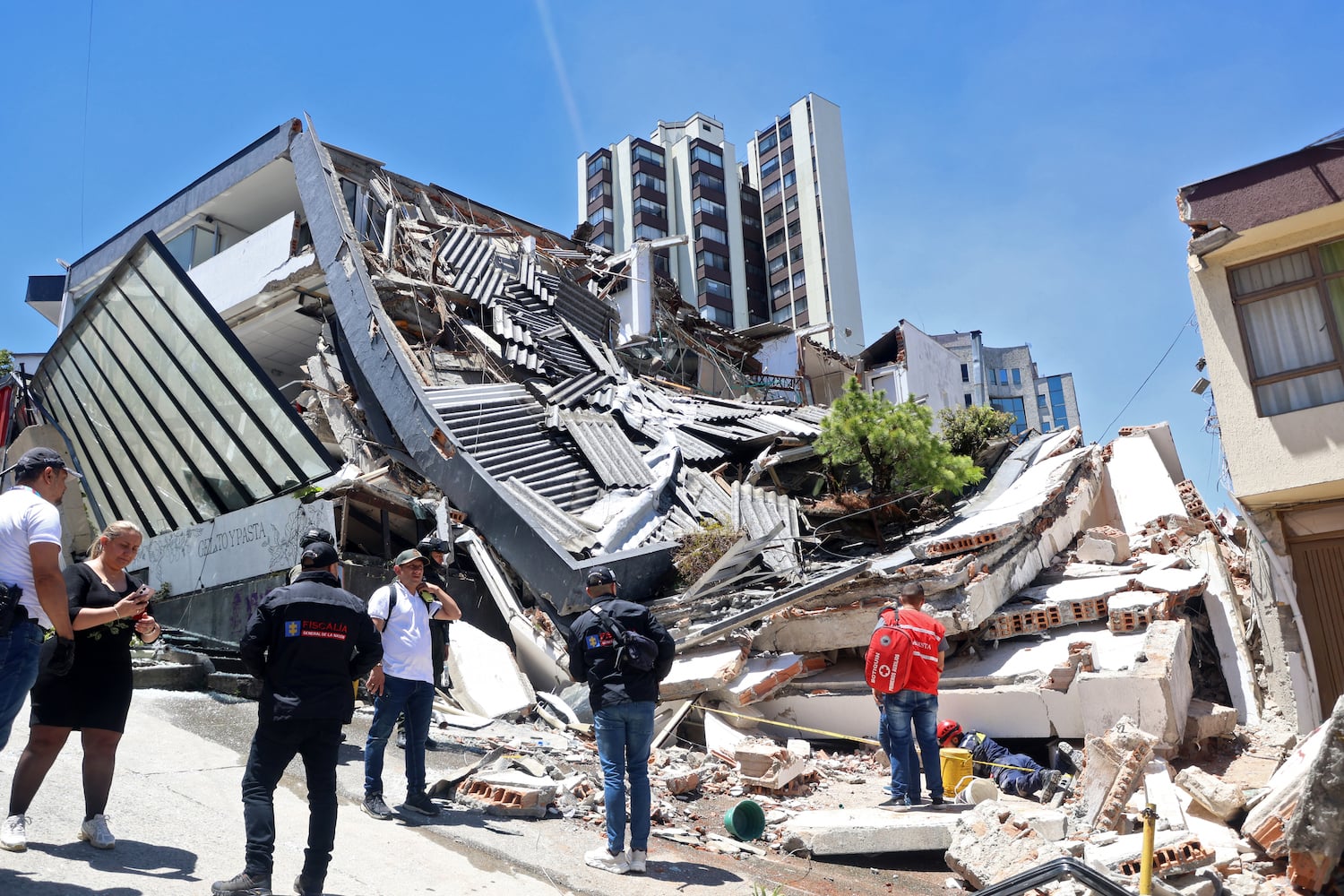
*People stand near a collapsed building after an earthquake.*
People stand near a collapsed building after an earthquake in Manizales, Colombia, on Aug. 10. Giovanny Galvez/AFP via Getty Images
My FP:
Follow topics and authors to get straight to what you like. Exclusively for FP subscribers. Subscribe Now | Log In
*
*
*
August 14, 2026, 8:00 AM
Welcome back to *Foreign Policy*’s Latin America Brief.
The highlights this week: A deadly **earthquake** rattles Colombia, the United States threatens visa bans for Argentines doing **business with Huawei**, and the final season of ***One Hundred Years of Solitude*** drops on Netflix.
Welcome back to *Foreign Policy*’s Latin America Brief.
The highlights this week: A deadly **earthquake** rattles Colombia, the United States threatens visa bans for Argentines doing **business with Huawei**, and the final season of ***One Hundred Years of Solitude*** drops on Netflix.
Sign up to receive Latin America Brief in your inbox every Friday.
---
De la Espriella’s First Big Test
Colombian President Abelardo de la Espriella had been in office for less than three days when a 7.4-magnitude earthquake hit the country on Monday.
The epicenter of the quake was in the Chocó department, which is located between Bogotá and the Pacific coast and lies on a few fault lines. Colombian officials said on Thursday that at least 273 people had died, while a civilian-created tally reported that more than 4,000 were still missing.
Earthquake response has dominated de la Espriella’s first days in office and led to global offers of support. But the new president was slow to embrace those overtures—highlighting a foreign-policy shakeup that he was already carrying out.
Because finding survivors is most likely in the first 72 hours after an earthquake, search and rescue specialists from across the world often travel to quake zones immediately after disaster strikes to help local governments, as they did following Venezuela’s June earthquakes.
Countries including Chile, Ecuador, El Salvador, Israel, Mexico, Peru, and the United States all offered assistance to Colombia early this week. But de la Espriella’s administration at first said that it sought help only with equipment, not personnel. That sparked domestic criticism; in some cities, untrained volunteer groups were struggling to try and rescue their trapped neighbors.
On Wednesday, Bogotá changed its tune, saying that it would accept search and rescue help from Ecuador, El Salvador, Israel, and the United States. Colombian officials said that those four countries were chosen because they were internationally certified. But commentators wondered whether the decision reflected de la Espriella’s sharp turn toward the Trump administration and its allies.
When de la Espriella took office, the United States announced a new $1 billion security partnership with Colombia and plans to carry out joint military operations on Colombian soil. Colombia also ended diplomatic ties with Cuba and Nicaragua and restored them with Israel—moves that hewed closely to U.S. positions.
What’s more, de la Espriella added Colombia to the small list of countries that recognize Moroccan sovereignty over the disputed Western Sahara region. Colombia also became the only country besides the United States and Israel to recognize Israeli sovereignty over the occupied Golan Heights, triggering a formal protest to the United Nations by Syria and several of its neighbors.
On Wednesday, Colombian Foreign Minister Omar Bula denied that the government had chosen which rescuers to accept based on “ideological consideration.” But political analyst Sandra Borda pointed out that many other countries beyond those selected by Bogotá appeared to have U.N.-administered international certification for search and rescue operations.
“It’s going to cost us a lot to understand why we continue having difficulties rescuing so many people while at the same time deciding not to accept help,” Borda posted.
As the key 72-hour window for saving survivors neared its close on Thursday, little heavy equipment had arrived in the remote cities of Quibdó and San José del Palmar to clear rubble. “We’ve felt abandoned,” San José del Pamar’s mayor told France 24.
Even so, the Colombian government’s response to the earthquake has been quicker, more effective, and more transparent than Venezuela’s response to its June disaster, thanks in large part to the functioning state institutions that Caracas lacks after years of autocracy.
In the hours after Colombia’s disaster, local and national officials gave updates on estimates of dead and injured. It was a contrast with Venezuela, where the government slowly released statistics that civil society groups widely considered a vast undercount. Colombia’s military also arrived more quickly on the scene to help.
Colombia’s in
By using this website, you agree to our use of cookies. This use includes personalization of content and ads, and traffic analytics. Review our Privacy Policy for more information.
!Foreign Policy
Foreign Policy
Get analysis and alerts more quickly in the mobile app.
Install
Back to Foreign Policy Magazine home page
* Latest
* Regions
+ Asia & the Pacific
+ China
+ Middle East & Africa
+ Americas
+ Europe
* Newsletters
Editors’ Picks
Evening roundup with our editors’ favorite stories of the day
!World Brief Icon
World Brief
Your guide to the most important world stories of the day
!China Brief Icon
China Brief
The latest news, analysis, and data from the country each week
Situation Report
Weekly update on what’s driving U.S. national security policy
FP Weekend
A curation of our best book reviews, deep dives, and other reads
!Africa Brief Icon
Africa Brief
Essential analysis of the stories shaping geopolitics on the continent
!South Asia Brief Icon
South Asia Brief
Weekly update on developments in India and its neighbors
The Reading List
Curated guides on geopolitics and current affairs
FP Bookshelf
A monthly guide to FP’s book reviews, excerpts, and reading recommendations
!Latin America Brief Icon
Latin America Brief
One-stop digest of politics, economics, and culture
!Southeast Asia Brief Icon
Southeast Asia Brief
A weekly dispatch with news from the region’s 11 countries
The New Geopolitics
A five-part masterclass in IR theory with Harvard Professor Stephen M. Walt
View All Newsletters
* FP Live
* Latest
* Trending:
* Europe's record heatwave
* Gaza plan
* Ceuta's future
Search this website
* Preferences
* My FP Feed
* Saved Articles
* Newsletters
* Magazine Archive
* Subscription Settings
* FAQs
* Log Out
Sign In
Sign In
Partner with FP at UNGA81 Partner with FP at UNGA81
Subscribe SubscribePartner with FP at UNGA81 Partner with FP at UNGA81
Latin America Brief:
Colombia’s Week of Rupture
*
*
* Bluesky
* X
Save
Save
1. Create an FP account to save articles to read later.
Sign Up
ALREADY AN FP SUBSCRIBER? LOGIN
1. **Downloadable PDFs** are a benefit of an FP subscription.
Subscribe Now
ALREADY AN FP SUBSCRIBER? LOGIN
Gift
Gift
*
*
1. Gifting articles is a subscriber benefit.
Subscribe Now
ALREADY AN FP SUBSCRIBER? LOGIN
2. This article is an Insider exclusive.
Contact us at [email protected] to learn about upgrade options, unlocking the ability to gift this article.
Latin America Brief
A one-stop weekly digest of politics, economics, technology, and culture in Latin America. Delivered Friday.
Colombia’s Week of Rupture
Monday’s deadly earthquake presents the country’s new president with his first big test.
!Osborn-Catherine-foreign-policy-columnist15
*Osborn-Catherine-foreign-policy-columnist15*
*Catherine Osborn*
By **Catherine Osborn**, the writer of *Foreign Policy*’s weekly Latin America Brief.
!People stand near a collapsed building after an earthquake.
*People stand near a collapsed building after an earthquake.*
People stand near a collapsed building after an earthquake in Manizales, Colombia, on Aug. 10. Giovanny Galvez/AFP via Getty Images
My FP:
Follow topics and authors to get straight to what you like. Exclusively for FP subscribers. Subscribe Now | Log In
*
*
*
August 14, 2026, 8:00 AM
Welcome back to *Foreign Policy*’s Latin America Brief.
The highlights this week: A deadly **earthquake** rattles Colombia, the United States threatens visa bans for Argentines doing **business with Huawei**, and the final season of ***One Hundred Years of Solitude*** drops on Netflix.
Welcome back to *Foreign Policy*’s Latin America Brief.
The highlights this week: A deadly **earthquake** rattles Colombia, the United States threatens visa bans for Argentines doing **business with Huawei**, and the final season of ***One Hundred Years of Solitude*** drops on Netflix.
Sign up to receive Latin America Brief in your inbox every Friday.
---
De la Espriella’s First Big Test
Colombian President Abelardo de la Espriella had been in office for less than three days when a 7.4-magnitude earthquake hit the country on Monday.
The epicenter of the quake was in the Chocó department, which is located between Bogotá and the Pacific coast and lies on a few fault lines. Colombian officials said on Thursday that at least 273 people had died, while a civilian-created tally reported that more than 4,000 were still missing.
Earthquake response has dominated de la Espriella’s first days in office and led to global offers of support. But the new president was slow to embrace those overtures—highlighting a foreign-policy shakeup that he was already carrying out.
Because finding survivors is most likely in the first 72 hours after an earthquake, search and rescue specialists from across the world often travel to quake zones immediately after disaster strikes to help local governments, as they did following Venezuela’s June earthquakes.
Countries including Chile, Ecuador, El Salvador, Israel, Mexico, Peru, and the United States all offered assistance to Colombia early this week. But de la Espriella’s administration at first said that it sought help only with equipment, not personnel. That sparked domestic criticism; in some cities, untrained volunteer groups were struggling to try and rescue their trapped neighbors.
On Wednesday, Bogotá changed its tune, saying that it would accept search and rescue help from Ecuador, El Salvador, Israel, and the United States. Colombian officials said that those four countries were chosen because they were internationally certified. But commentators wondered whether the decision reflected de la Espriella’s sharp turn toward the Trump administration and its allies.
When de la Espriella took office, the United States announced a new $1 billion security partnership with Colombia and plans to carry out joint military operations on Colombian soil. Colombia also ended diplomatic ties with Cuba and Nicaragua and restored them with Israel—moves that hewed closely to U.S. positions.
What’s more, de la Espriella added Colombia to the small list of countries that recognize Moroccan sovereignty over the disputed Western Sahara region. Colombia also became the only country besides the United States and Israel to recognize Israeli sovereignty over the occupied Golan Heights, triggering a formal protest to the United Nations by Syria and several of its neighbors.
On Wednesday, Colombian Foreign Minister Omar Bula denied that the government had chosen which rescuers to accept based on “ideological consideration.” But political analyst Sandra Borda pointed out that many other countries beyond those selected by Bogotá appeared to have U.N.-administered international certification for search and rescue operations.
“It’s going to cost us a lot to understand why we continue having difficulties rescuing so many people while at the same time deciding not to accept help,” Borda posted.
As the key 72-hour window for saving survivors neared its close on Thursday, little heavy equipment had arrived in the remote cities of Quibdó and San José del Palmar to clear rubble. “We’ve felt abandoned,” San José del Pamar’s mayor told France 24.
Even so, the Colombian government’s response to the earthquake has been quicker, more effective, and more transparent than Venezuela’s response to its June disaster, thanks in large part to the functioning state institutions that Caracas lacks after years of autocracy.
In the hours after Colombia’s disaster, local and national officials gave updates on estimates of dead and injured. It was a contrast with Venezuela, where the government slowly released statistics that civil society groups widely considered a vast undercount. Colombia’s military also arrived more quickly on the scene to help.
Colombia’s in
🔗 Share Article
Tags:#كولومبيا#الزلازل#السياسة الخارجية#الشرق الأوسط#الكوارث الطبيعية#الدبلوماسية
Source: Foreign Policy
For Context
Related reads from the same topic or latest developments


