Trump Has Peaked
Foreign Policy

Foreign Policy
Original Source
Despite remaining a disruptive force on the global stage, President Trump is gradually losing his coercive power and ability to impose his will. While 2026 began with apparent victories, cracks have started to appear in his absolute influence.
Trump Has Peaked
By using this website, you agree to our use of cookies. This use includes personalization of content and ads, and traffic analytics. Review our Privacy Policy for more information.
!Foreign Policy
Foreign Policy
Get analysis and alerts more quickly in the mobile app.
Install
Back to Foreign Policy Magazine home page
* Latest
* Regions
+ Asia & the Pacific
+ China
+ Middle East & Africa
+ Americas
+ Europe
* Newsletters
Editors’ Picks
Evening roundup with our editors’ favorite stories of the day
!World Brief Icon
World Brief
Your guide to the most important world stories of the day
!China Brief Icon
China Brief
The latest news, analysis, and data from the country each week
Situation Report
Weekly update on what’s driving U.S. national security policy
FP Weekend
A curation of our best book reviews, deep dives, and other reads
!Africa Brief Icon
Africa Brief
Essential analysis of the stories shaping geopolitics on the continent
!South Asia Brief Icon
South Asia Brief
Weekly update on developments in India and its neighbors
The Reading List
Curated guides on geopolitics and current affairs
FP Bookshelf
A monthly guide to FP’s book reviews, excerpts, and reading recommendations
!Latin America Brief Icon
Latin America Brief
One-stop digest of politics, economics, and culture
!Southeast Asia Brief Icon
Southeast Asia Brief
A weekly dispatch with news from the region’s 11 countries
The New Geopolitics
A five-part masterclass in IR theory with Harvard Professor Stephen M. Walt
View All Newsletters
* FP Live
* Latest
* Trending:
* Iran war
* China's bet on AI
Search this website
* Preferences
* My FP Feed
* Saved Articles
* Newsletters
* Magazine Archive
* Subscription Settings
* FAQs
* Log Out
Sign In
Sign In
Partner with FP at UNGA81 Partner with FP at UNGA81
Subscribe SubscribePartner with FP at UNGA81 Partner with FP at UNGA81
Essay:
Trump Has Peaked
*
*
* Facebook
* Bluesky
* X
* LinkedIn
* WhatsApp
* Reddit
Save
1. Create an FP account to save articles to read later.
Sign Up
ALREADY AN FP SUBSCRIBER? LOGIN
PDF
1. **Downloadable PDFs** are a benefit of an FP subscription.
Subscribe Now
ALREADY AN FP SUBSCRIBER? LOGIN
Gift
*
*
* WhatsApp
1. Gifting articles is a subscriber benefit.
Subscribe Now
ALREADY AN FP SUBSCRIBER? LOGIN
2. This article is an Insider exclusive.
Contact us at [email protected] to learn about upgrade options, unlocking the ability to gift this article.
Essay
Trump Has Peaked
The U.S. president will remain disruptive on the global stage, but he is losing his coercive powers.
August 31, 2026, 6:00 AM
By **Ravi Agrawal**, the editor in chief of *Foreign Policy*.
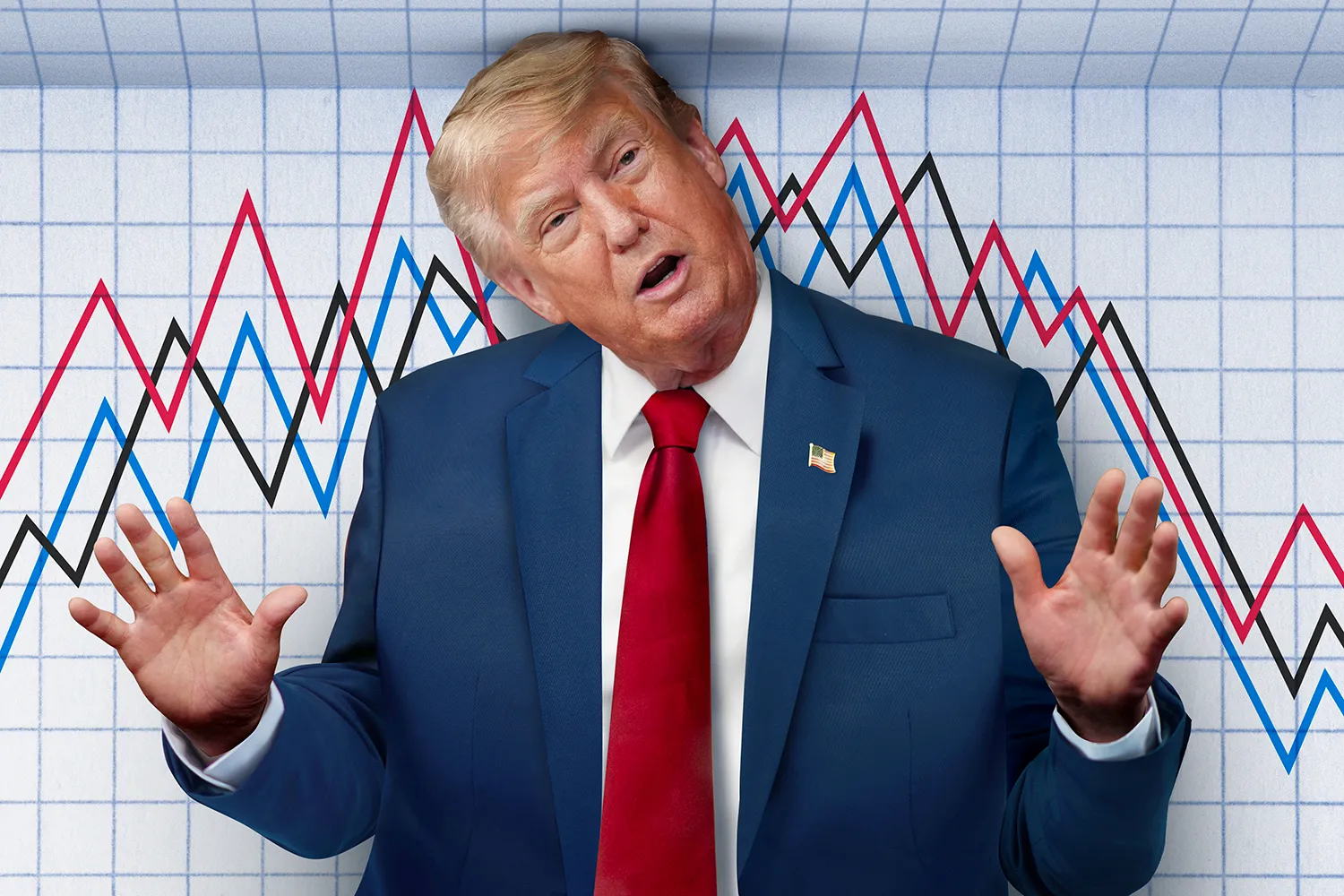
!An illustration of Donald Trump in a blue suit and long red tie gesturing with open hands in front of a grid patterned background with jagged red, blue, and black line graphs diving downward.
*An illustration of Donald Trump in a blue suit and long red tie gesturing with open hands in front of a grid patterned background with jagged red, blue, and black line graphs diving downward.*
Doug Chayka illustration for Foreign Policy; Getty Images
*
*
*
Donald Trump must look back at the start of 2026 with a wistful sigh. The U.S. president rang in the new year with a grand bash at Mar-a-Lago, his private club in Florida, attracting guests such as Israeli Prime Minister Benjamin Netanyahu and Emirati billionaire Hussain Sajwani. At the party, Vanilla Ice pumped out “Ice, Ice, Baby.” A live speed painter conjured up an image of Jesus Christ. Since Christ himself wasn’t around to do the honors, Trump promised to autograph the painting and then personally auctioned it off for $2.75 million. The first year of the president’s second term was largely going to plan. Trump had assembled a cabinet of loyalists, signed more executive orders in his first 100 days than any other U.S. president, and deployed the Justice Department to go after his enemies. He had ordered the bombing of Iran’s nuclear facilities in June 2025 while simultaneously cosplaying as a statesman who could end all wars. He had even orchestrated a vibe shift in Silicon Valley: The world’s richest men were now flying to the White House to kiss the ring.
Then, on Jan. 3, Trump launched Operation Absolute Resolve. The world’s mightiest military swooped into Caracas to capture Venezuelan leader Nicolás Maduro. The mission was daring and impressive. It was also illegal, unconstitutional, and lacked long-term payoff. But for Trump, it was an affirming display of strength. He was belatedly realizing the full extent of the awesome power wielded by a commander in chief—and what good was power that couldn’t be exercised? It could not have escaped Trump’s notice that his actions generated limited national or international blowback. Maduro was a corrupt dictator; he had no real allies, and his arrest did little more than provide yet another example of a growing void in international law. An emboldened Trump proposed taking Greenland, a Danish territory, next. It was a threat that could have destroyed NATO, the world’s biggest military alliance. And as CEOs and world leaders gathered in Switzerland for the World Economic Forum later that month, there was little else one could discuss. Will he, or won’t he? On everyone’s lips, it was Trump, Trump, Trump. A burgeoning cottage industry of lobbyists doled out expensive advice on how to navigate an administration that had concentrated so much power in one person. The most common prescription was a mixture of flattery and gifts.
D
onald Trump must look back at the start of 2026 with a wistful sigh. The U.S. president rang in the new year with a grand bash at Mar-a-Lago, his private club in Florida, attracting guests such as Israeli Prime Minister Benjamin Netanyahu and Emirati billionaire Hussain Sajwani. At the party, Vanilla Ice pumped out “Ice, Ice, Baby.” A live speed painter conjured up an image of Jesus Christ. Since Christ himself wasn’t around to do the honors, Trump promised to autograph the painting and then personally auctioned it off for $2.75 million. The first year of the president’s second term was largely going to plan. Trump had assembled a cabinet of loyalists, signed more executive orders in his first 100 days than any other U.S. president, and deployed the Justice Department to go after his enemies. He had ordered the bombing of Iran’s nuclear facilities in June 2025 while simultaneously cosplaying as a statesman who could end all wars. He had even orchestrated a vibe shift in Silicon Valley: The world’s richest men were now flying to the White House to kiss the ring.
Then, on Jan. 3, Trump launched Operation Absolute Resolve. The world’s mightiest military swooped into Caracas to capture Venezuelan leader Nicolás Maduro. The mission was daring and impressive. It was also illegal, unconstitutional, and lacked long-term payoff. But for Trump, it was an affirming display of strength. He was belatedly realizing the full extent of the awesome power wielded by a commander in chief—and what good was power that couldn’t be exercised? It could not have escaped Trump’s notice that his actions generated limited national or international blowback. Maduro was a corrupt dictator; he had no real allies, and his arrest did little more than provide yet another example of a growing void in international law. An emboldened Trump proposed taking Greenland, a Danish territory, next. It was a threat that could have destroyed NATO, the world’s biggest military alliance. And as CEOs and world leaders gathered in Switzerland for the World Economic Forum later that month, there was little else one could discuss. Will he, or won’t he? On everyone’s lips, it was Trump, Trump, Trump. A burgeoning cottage industry of lobbyists doled out expensive advice on how to navigate an administration that had concentrated so much power in one person. The most common prescription was a mixture of flattery and gifts.
Trump
By using this website, you agree to our use of cookies. This use includes personalization of content and ads, and traffic analytics. Review our Privacy Policy for more information.
!Foreign Policy
Foreign Policy
Get analysis and alerts more quickly in the mobile app.
Install
Back to Foreign Policy Magazine home page
* Latest
* Regions
+ Asia & the Pacific
+ China
+ Middle East & Africa
+ Americas
+ Europe
* Newsletters
Editors’ Picks
Evening roundup with our editors’ favorite stories of the day
!World Brief Icon
World Brief
Your guide to the most important world stories of the day
!China Brief Icon
China Brief
The latest news, analysis, and data from the country each week
Situation Report
Weekly update on what’s driving U.S. national security policy
FP Weekend
A curation of our best book reviews, deep dives, and other reads
!Africa Brief Icon
Africa Brief
Essential analysis of the stories shaping geopolitics on the continent
!South Asia Brief Icon
South Asia Brief
Weekly update on developments in India and its neighbors
The Reading List
Curated guides on geopolitics and current affairs
FP Bookshelf
A monthly guide to FP’s book reviews, excerpts, and reading recommendations
!Latin America Brief Icon
Latin America Brief
One-stop digest of politics, economics, and culture
!Southeast Asia Brief Icon
Southeast Asia Brief
A weekly dispatch with news from the region’s 11 countries
The New Geopolitics
A five-part masterclass in IR theory with Harvard Professor Stephen M. Walt
View All Newsletters
* FP Live
* Latest
* Trending:
* Iran war
* China's bet on AI
Search this website
* Preferences
* My FP Feed
* Saved Articles
* Newsletters
* Magazine Archive
* Subscription Settings
* FAQs
* Log Out
Sign In
Sign In
Partner with FP at UNGA81 Partner with FP at UNGA81
Subscribe SubscribePartner with FP at UNGA81 Partner with FP at UNGA81
Essay:
Trump Has Peaked
*
*
* Bluesky
* X
Save
1. Create an FP account to save articles to read later.
Sign Up
ALREADY AN FP SUBSCRIBER? LOGIN
1. **Downloadable PDFs** are a benefit of an FP subscription.
Subscribe Now
ALREADY AN FP SUBSCRIBER? LOGIN
Gift
*
*
1. Gifting articles is a subscriber benefit.
Subscribe Now
ALREADY AN FP SUBSCRIBER? LOGIN
2. This article is an Insider exclusive.
Contact us at [email protected] to learn about upgrade options, unlocking the ability to gift this article.
Essay
Trump Has Peaked
The U.S. president will remain disruptive on the global stage, but he is losing his coercive powers.
August 31, 2026, 6:00 AM
By **Ravi Agrawal**, the editor in chief of *Foreign Policy*.
!An illustration of Donald Trump in a blue suit and long red tie gesturing with open hands in front of a grid patterned background with jagged red, blue, and black line graphs diving downward.
*An illustration of Donald Trump in a blue suit and long red tie gesturing with open hands in front of a grid patterned background with jagged red, blue, and black line graphs diving downward.*
Doug Chayka illustration for Foreign Policy; Getty Images
*
*
*
Donald Trump must look back at the start of 2026 with a wistful sigh. The U.S. president rang in the new year with a grand bash at Mar-a-Lago, his private club in Florida, attracting guests such as Israeli Prime Minister Benjamin Netanyahu and Emirati billionaire Hussain Sajwani. At the party, Vanilla Ice pumped out “Ice, Ice, Baby.” A live speed painter conjured up an image of Jesus Christ. Since Christ himself wasn’t around to do the honors, Trump promised to autograph the painting and then personally auctioned it off for $2.75 million. The first year of the president’s second term was largely going to plan. Trump had assembled a cabinet of loyalists, signed more executive orders in his first 100 days than any other U.S. president, and deployed the Justice Department to go after his enemies. He had ordered the bombing of Iran’s nuclear facilities in June 2025 while simultaneously cosplaying as a statesman who could end all wars. He had even orchestrated a vibe shift in Silicon Valley: The world’s richest men were now flying to the White House to kiss the ring.
Then, on Jan. 3, Trump launched Operation Absolute Resolve. The world’s mightiest military swooped into Caracas to capture Venezuelan leader Nicolás Maduro. The mission was daring and impressive. It was also illegal, unconstitutional, and lacked long-term payoff. But for Trump, it was an affirming display of strength. He was belatedly realizing the full extent of the awesome power wielded by a commander in chief—and what good was power that couldn’t be exercised? It could not have escaped Trump’s notice that his actions generated limited national or international blowback. Maduro was a corrupt dictator; he had no real allies, and his arrest did little more than provide yet another example of a growing void in international law. An emboldened Trump proposed taking Greenland, a Danish territory, next. It was a threat that could have destroyed NATO, the world’s biggest military alliance. And as CEOs and world leaders gathered in Switzerland for the World Economic Forum later that month, there was little else one could discuss. Will he, or won’t he? On everyone’s lips, it was Trump, Trump, Trump. A burgeoning cottage industry of lobbyists doled out expensive advice on how to navigate an administration that had concentrated so much power in one person. The most common prescription was a mixture of flattery and gifts.
D
onald Trump must look back at the start of 2026 with a wistful sigh. The U.S. president rang in the new year with a grand bash at Mar-a-Lago, his private club in Florida, attracting guests such as Israeli Prime Minister Benjamin Netanyahu and Emirati billionaire Hussain Sajwani. At the party, Vanilla Ice pumped out “Ice, Ice, Baby.” A live speed painter conjured up an image of Jesus Christ. Since Christ himself wasn’t around to do the honors, Trump promised to autograph the painting and then personally auctioned it off for $2.75 million. The first year of the president’s second term was largely going to plan. Trump had assembled a cabinet of loyalists, signed more executive orders in his first 100 days than any other U.S. president, and deployed the Justice Department to go after his enemies. He had ordered the bombing of Iran’s nuclear facilities in June 2025 while simultaneously cosplaying as a statesman who could end all wars. He had even orchestrated a vibe shift in Silicon Valley: The world’s richest men were now flying to the White House to kiss the ring.
Then, on Jan. 3, Trump launched Operation Absolute Resolve. The world’s mightiest military swooped into Caracas to capture Venezuelan leader Nicolás Maduro. The mission was daring and impressive. It was also illegal, unconstitutional, and lacked long-term payoff. But for Trump, it was an affirming display of strength. He was belatedly realizing the full extent of the awesome power wielded by a commander in chief—and what good was power that couldn’t be exercised? It could not have escaped Trump’s notice that his actions generated limited national or international blowback. Maduro was a corrupt dictator; he had no real allies, and his arrest did little more than provide yet another example of a growing void in international law. An emboldened Trump proposed taking Greenland, a Danish territory, next. It was a threat that could have destroyed NATO, the world’s biggest military alliance. And as CEOs and world leaders gathered in Switzerland for the World Economic Forum later that month, there was little else one could discuss. Will he, or won’t he? On everyone’s lips, it was Trump, Trump, Trump. A burgeoning cottage industry of lobbyists doled out expensive advice on how to navigate an administration that had concentrated so much power in one person. The most common prescription was a mixture of flattery and gifts.
Trump
🔗 Share Article
Tags:#السياسة الأمريكية#ترامب#السياسة الخارجية الأمريكية#القوة الأمريكية#العلاقات الدولية#الشؤون العالمية
Source: Foreign Policy
For Context
Related reads from the same topic or latest developments