U.S. Sends Flight With Deportees to Venezuela for First Time Since Quakes
New York Times
N
New York Times
Original Source
The United States resumed deportation flights to Venezuela on Monday, sending 147 deportees to the country for the first time since devastating earthquakes killed over 5,500 people in late June. The move faces criticism over dozens of deportees believed to have died when an intelligence facility housing them collapsed during the disaster.
U.S. Sends Flight With Deportees to Venezuela for First Time Since Earthquakes - The New York Times
Skip to contentSkip to site index
Americas
Log in
Monday, August 3, 2026
Today’s Paper
* Home
* + U.S.
+ International
+ Canada
+ Español
+ 中文
U.S. Immigration
Crackdown
* ICE Arrests at Airports
* Labor Shortage Fears
* Fines for Immigrants
* Killing of Lorenzo Salgado Araujo
* Fatal Shooting of Johan Guerrero
Advertisement
SKIP ADVERTISEMENT
Supported by
SKIP ADVERTISEMENT
U.S. Sends Flight With Deportees to Venezuela for First Time Since Quakes
A plane with 147 Venezuelans landed on Monday in the South American country amid criticism over the deaths of deportees housed in a collapsed building during June’s quakes.
Listen · 3:40 min
*
*
*
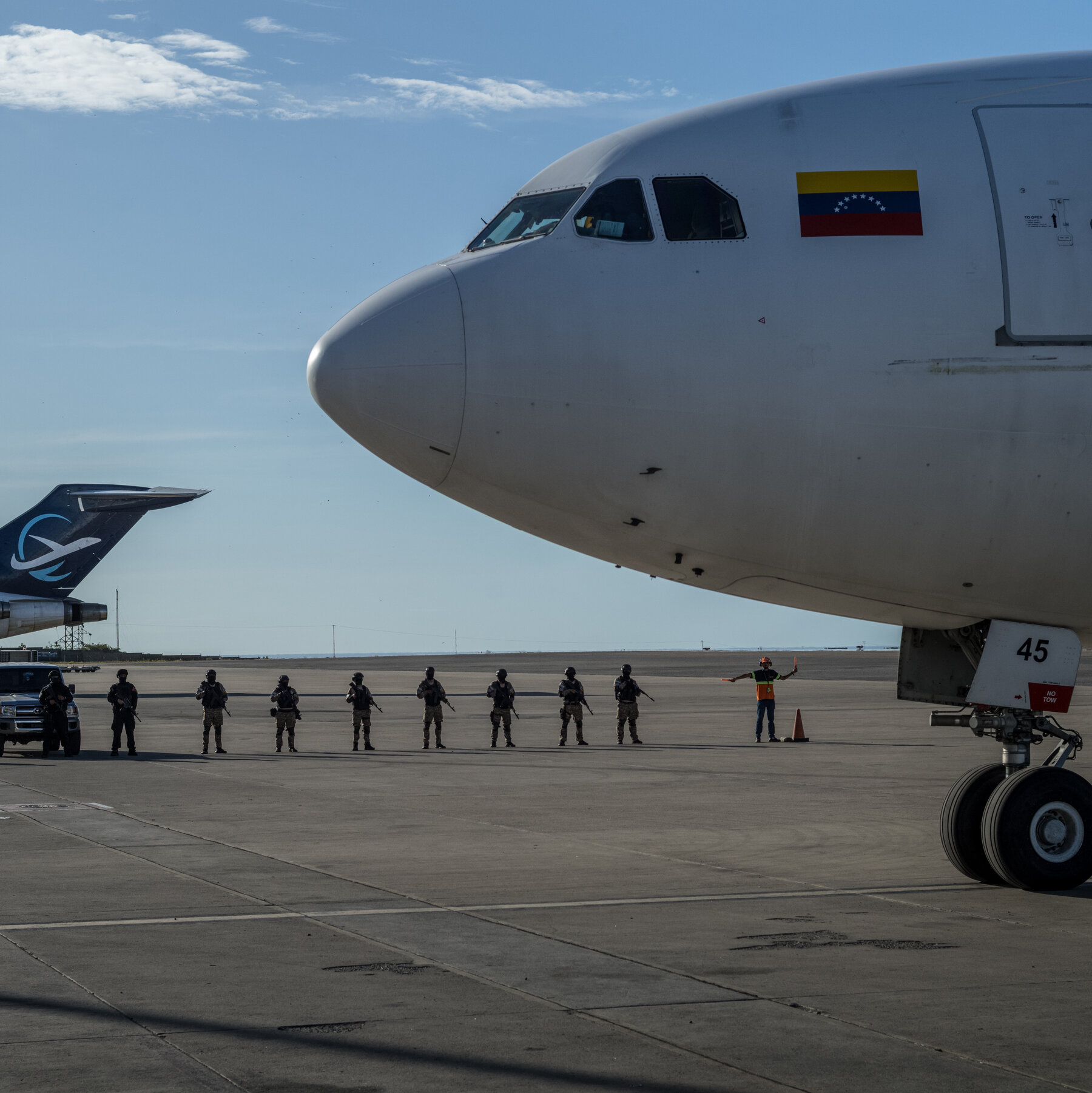
!The front of a large white plane with a Venezuelan flag on its side sits on a tarmac. Uniformed people, some holding guns, stand nearby, with another airplane visible in the background.
*A Venezuelan-operated plane arrived with deported migrants at Simón Bolívar International Airport in Maiquetía, Venezuela, in December.
Credit...
Alejandro Cegarra for The New York Times*
By
Genevieve Glatsky
Aug. 3, 2026
Updated 8:55 p.m. ET
Leer en español
See more of our coverage in your search results. Encuentra más de nuestra cobertura en los resultados de búsqueda. Add The New York Times on Google Agrega The New York Times en Google
The United States sent a flight with deportees to Venezuela on Monday for the first time since devastating earthquakes struck the South American nation in late June.
A charter flight from Miami flew to the eastern coastal city of Barcelona. The Venezuelan authorities confirmed the plane’s arrival on Monday afternoon. In a joint social media statement, the Anzoátegui state government and the state-run repatriation program Return to the Homeland announced that 147 Venezuelan nationals had been “received with dignity.”
State officials regularly publish choreographed videos of returnees, framing their forced removal as a government-led homecoming.
The U.S. Department of Homeland Security would not confirm if the plane’s arrival meant the official resumption of removal flights. A spokesman said in a statement: “On August 3, ICE successfully conducted a removal flight to return 147 Venezuelans to Venezuela. For operational security reasons, we would not confirm future removal operations.”
After the United States captured President Nicolás Maduro in the capital, Caracas, in January, Venezuela’s interim leadership agreed under U.S. pressure to receive an expanded schedule of deportation flights — up to three times a week.
That deal followed the U.S. termination of legal protections like Temporary Protected Status and humanitarian parole, which left hundreds of thousands of Venezuelan migrants vulnerable to detention in and expulsion from the United States. Many of them had risked their lives in recent years on perilous migrant routes to the U.S. border, joining an exodus of millions fleeing Venezuela’s economic crisis and political repression.
Then, back-to-back earthquakes killed more than 5,500 people and left at least 24,000 others homeless in La Guaira, Venezuela, alone. The coastal strip was in ruins. Buildings pancaked. Popular tourist spots were converted into field hospitals and morgues. Basic infrastructure was severely damaged.
And there are still unanswered questions about the dozens of deportees believed to have died during the disaster.
Just eight hours before the twin earthquakes struck, a U.S. deportation flight carrying 146 Venezuelans arrived near Caracas on June 24. Most of those deportees were transferred to a holding center run by Venezuela’s intelligence agency in La Guaira, the area hit hardest. During the quakes, the building collapsed, trapping and killing dozens of deportees beneath the rubble.
In the weeks since, neither the U.S. nor Venezuela has released a complete passenger manifest, an official death toll or a list of survivors from that flight, leaving families to search morgues and hospitals for missing relatives amid reports of intimidation by Venezuelan security forces.
“The resumption of deportation flights to Venezuela is premature and hard to reconcile with what happened to the passengers,” said Carolina Jiménez Sandoval, Andes director of the Washington Office on Latin America, a research group.
She added that neither government had clarified what safety or housing protocols were in place for deportees upon arrival, and that restarting flights “risks repeating the same failures.”
Genevieve Glatsky
is a reporter for The Times, based in Bogotá, Colombia.
*
*
*
Related Content
*
*
*
*
*
*
*
*
*
*
*
*
*
*
*
*
*
*
*
Advertisement
SKIP ADVERTISEMENT
Site Index
Site Information Navigation
* ©2026 The New York Times Company
* NYTCo
* Contact Us
* Accessibility
* Work with us
* Advertise
* T Brand Studio
* Privacy Policy
* Cookie Policy
* Terms of Service
* Terms of Sale
* Site Map
* Canada
* International
* Help
* Subscriptions
*
Skip to contentSkip to site index
Americas
Log in
Monday, August 3, 2026
Today’s Paper
* Home
* + U.S.
+ International
+ Canada
+ Español
+ 中文
U.S. Immigration
Crackdown
* ICE Arrests at Airports
* Labor Shortage Fears
* Fines for Immigrants
* Killing of Lorenzo Salgado Araujo
* Fatal Shooting of Johan Guerrero
Advertisement
SKIP ADVERTISEMENT
Supported by
SKIP ADVERTISEMENT
U.S. Sends Flight With Deportees to Venezuela for First Time Since Quakes
A plane with 147 Venezuelans landed on Monday in the South American country amid criticism over the deaths of deportees housed in a collapsed building during June’s quakes.
Listen · 3:40 min
*
*
*
!The front of a large white plane with a Venezuelan flag on its side sits on a tarmac. Uniformed people, some holding guns, stand nearby, with another airplane visible in the background.
*A Venezuelan-operated plane arrived with deported migrants at Simón Bolívar International Airport in Maiquetía, Venezuela, in December.
Credit...
Alejandro Cegarra for The New York Times*
By
Genevieve Glatsky
Aug. 3, 2026
Updated 8:55 p.m. ET
Leer en español
See more of our coverage in your search results. Encuentra más de nuestra cobertura en los resultados de búsqueda. Add The New York Times on Google Agrega The New York Times en Google
The United States sent a flight with deportees to Venezuela on Monday for the first time since devastating earthquakes struck the South American nation in late June.
A charter flight from Miami flew to the eastern coastal city of Barcelona. The Venezuelan authorities confirmed the plane’s arrival on Monday afternoon. In a joint social media statement, the Anzoátegui state government and the state-run repatriation program Return to the Homeland announced that 147 Venezuelan nationals had been “received with dignity.”
State officials regularly publish choreographed videos of returnees, framing their forced removal as a government-led homecoming.
The U.S. Department of Homeland Security would not confirm if the plane’s arrival meant the official resumption of removal flights. A spokesman said in a statement: “On August 3, ICE successfully conducted a removal flight to return 147 Venezuelans to Venezuela. For operational security reasons, we would not confirm future removal operations.”
After the United States captured President Nicolás Maduro in the capital, Caracas, in January, Venezuela’s interim leadership agreed under U.S. pressure to receive an expanded schedule of deportation flights — up to three times a week.
That deal followed the U.S. termination of legal protections like Temporary Protected Status and humanitarian parole, which left hundreds of thousands of Venezuelan migrants vulnerable to detention in and expulsion from the United States. Many of them had risked their lives in recent years on perilous migrant routes to the U.S. border, joining an exodus of millions fleeing Venezuela’s economic crisis and political repression.
Then, back-to-back earthquakes killed more than 5,500 people and left at least 24,000 others homeless in La Guaira, Venezuela, alone. The coastal strip was in ruins. Buildings pancaked. Popular tourist spots were converted into field hospitals and morgues. Basic infrastructure was severely damaged.
And there are still unanswered questions about the dozens of deportees believed to have died during the disaster.
Just eight hours before the twin earthquakes struck, a U.S. deportation flight carrying 146 Venezuelans arrived near Caracas on June 24. Most of those deportees were transferred to a holding center run by Venezuela’s intelligence agency in La Guaira, the area hit hardest. During the quakes, the building collapsed, trapping and killing dozens of deportees beneath the rubble.
In the weeks since, neither the U.S. nor Venezuela has released a complete passenger manifest, an official death toll or a list of survivors from that flight, leaving families to search morgues and hospitals for missing relatives amid reports of intimidation by Venezuelan security forces.
“The resumption of deportation flights to Venezuela is premature and hard to reconcile with what happened to the passengers,” said Carolina Jiménez Sandoval, Andes director of the Washington Office on Latin America, a research group.
She added that neither government had clarified what safety or housing protocols were in place for deportees upon arrival, and that restarting flights “risks repeating the same failures.”
Genevieve Glatsky
is a reporter for The Times, based in Bogotá, Colombia.
*
*
*
Related Content
*
*
*
*
*
*
*
*
*
*
*
*
*
*
*
*
*
*
*
Advertisement
SKIP ADVERTISEMENT
Site Index
Site Information Navigation
* ©2026 The New York Times Company
* NYTCo
* Contact Us
* Accessibility
* Work with us
* Advertise
* T Brand Studio
* Privacy Policy
* Cookie Policy
* Terms of Service
* Terms of Sale
* Site Map
* Canada
* International
* Help
* Subscriptions
*
🔗 Share Article
Tags:#الهجرة الأمريكية#فنزويلا#الترحيل#الزلازل#الولايات المتحدة#حقوق الإنسان
Source: New York Times
For Context
Related reads from the same topic or latest developments


