Trump’s Flurry of National Security Policies
Foreign Policy

Foreign Policy
Original Source
President Donald Trump this week announced a sweeping set of national security directives, including aggressive tariffs on drones, measures allowing U.S. companies to conduct cyberattacks on behalf of the government, and changes to Navy policy. The moves reflect Washington's effort to maintain military and technological dominance amid global competition.
Trump Announces Drone Tariffs, Cyber Memo in Flurry of National Security Policies
!Foreign Policy
Foreign Policy
Get analysis and alerts more quickly in the mobile app.
Install
Back to Foreign Policy Magazine home page
* Latest
* Regions
+ Asia & the Pacific
+ China
+ Middle East & Africa
+ Americas
+ Europe
* Newsletters
Editors’ Picks
Evening roundup with our editors’ favorite stories of the day
!World Brief Icon
World Brief
Your guide to the most important world stories of the day
!China Brief Icon
China Brief
The latest news, analysis, and data from the country each week
Situation Report
Weekly update on what’s driving U.S. national security policy
FP Weekend
A curation of our best book reviews, deep dives, and other reads
!Africa Brief Icon
Africa Brief
Essential analysis of the stories shaping geopolitics on the continent
!South Asia Brief Icon
South Asia Brief
Weekly update on developments in India and its neighbors
The Reading List
Curated guides on geopolitics and current affairs
FP Bookshelf
A monthly guide to FP’s book reviews, excerpts, and reading recommendations
!Latin America Brief Icon
Latin America Brief
One-stop digest of politics, economics, and culture
!Southeast Asia Brief Icon
Southeast Asia Brief
A weekly dispatch with news from the region’s 11 countries
The New Geopolitics
A five-part masterclass in IR theory with Harvard Professor Stephen M. Walt
View All Newsletters
* FP Live
* Latest
* Trending:
* Iran war
* Colombia's earthquake recovery
Search this website
* Preferences
* My FP Feed
* Saved Articles
* Newsletters
* Magazine Archive
* Subscription Settings
* FAQs
* Log Out
Sign In
Sign In
Partner with FP at UNGA81 Partner with FP at UNGA81
Subscribe SubscribePartner with FP at UNGA81 Partner with FP at UNGA81
World Brief:
Trump’s Flurry of National Security Policies
*
*
* Facebook
* Bluesky
* X
* LinkedIn
* WhatsApp
* Reddit
Save
1. Create an FP account to save articles to read later.
Sign Up
ALREADY AN FP SUBSCRIBER? LOGIN
PDF
1. **Downloadable PDFs** are a benefit of an FP subscription.
Subscribe Now
ALREADY AN FP SUBSCRIBER? LOGIN
Gift
*
*
* WhatsApp
1. Gifting articles is a subscriber benefit.
Subscribe Now
ALREADY AN FP SUBSCRIBER? LOGIN
2. This article is an Insider exclusive.
Contact us at [email protected] to learn about upgrade options, unlocking the ability to gift this article.
World Brief
FP’s flagship daily newsletter, catching you up on 24 hours of news in five minutes. Delivered weekdays.
Trump’s Flurry of National Security Policies
The administration made moves on drones, cyberwarfare, and ship building.
By **Eli Wizevich**, an editorial fellow at *Foreign Policy*, and **Maxine Davey**, an editorial fellow at *Foreign Policy*.
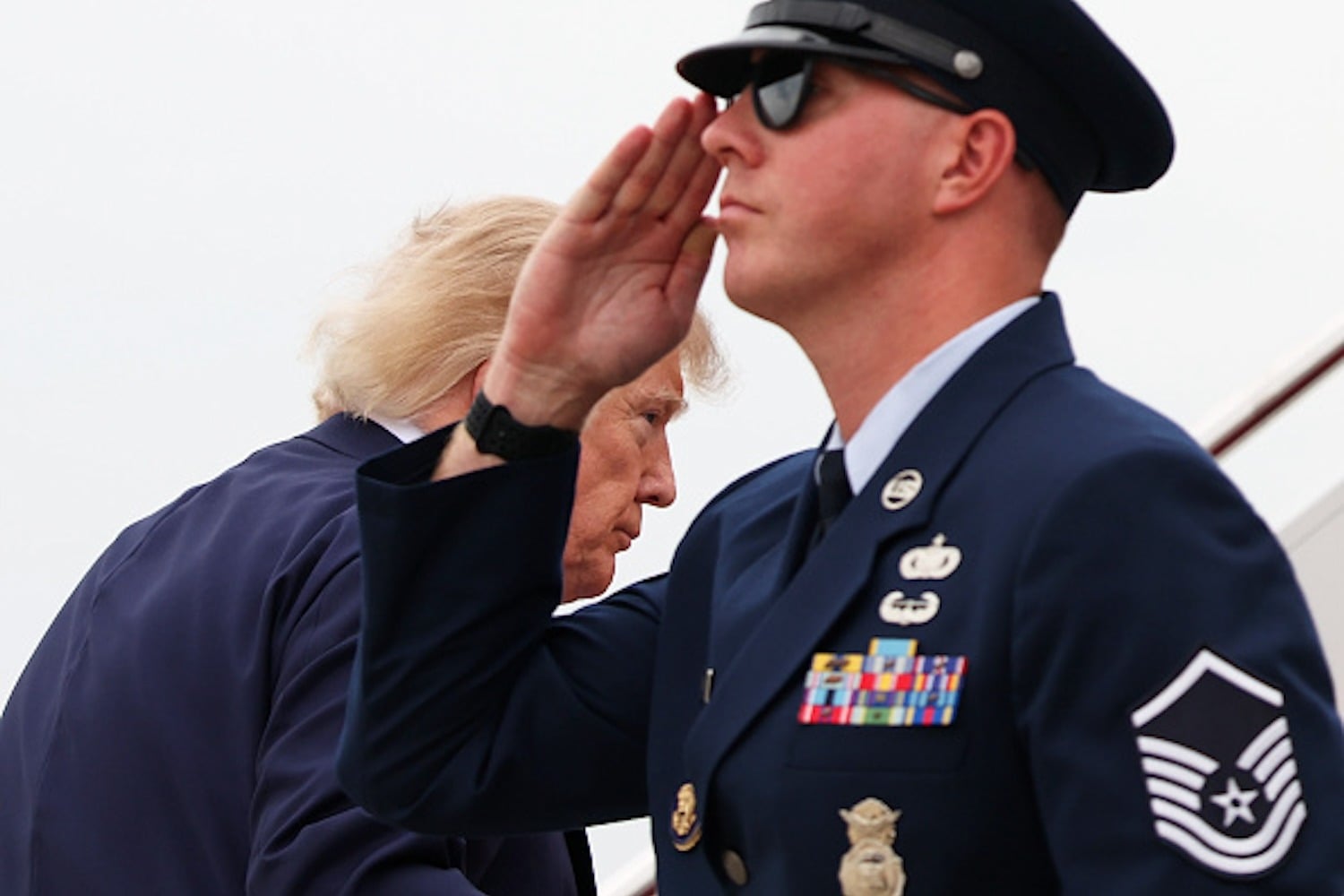
!U.S. President Donald Trump boards Air Force One at Joint Base Andrews, Maryland, on Aug. 14.
*U.S. President Donald Trump boards Air Force One at Joint Base Andrews, Maryland, on Aug. 14.*
U.S. President Donald Trump boards Air Force One at Joint Base Andrews, Maryland, on Aug. 14. Samuel Corum/Getty Images
*
*
*
August 14, 2026, 4:17 PM
Welcome back to World Brief, where we’re looking at the **United States**’ new national security directives, a drone incursion into **Latvian** airspace, and a controversial delay in **Zambia**’s election.
---
**Policy Action In Washington**
U.S. President Donald Trump unveiled a slate of national security directives this week, including aggressive tariffs on drones, measures that free U.S. companies to hack on behalf of the government, and changes to Navy policy.
Welcome back to World Brief, where we’re looking at the **United States**’ new national security directives, a drone incursion into **Latvian** airspace, and a controversial delay in **Zambia**’s election.
Sign up to receive World Brief in your inbox every weekday.
---
**Policy Action In Washington**
U.S. President Donald Trump unveiled a slate of national security directives this week, including aggressive tariffs on drones, measures that free U.S. companies to hack on behalf of the government, and changes to Navy policy.
In the name of “securing American drone dominance,” the Trump administration on Friday announced a 100 percent tariff on drones weighing more than 25 kilograms and drones with thermal imaging; a 25 percent tariff on small drones, even those without particular national security concerns; and a 15 percent tariff on drone parts from allies such as the European Union, Japan, South Korea, and Taiwan. Drones from the United Kingdom will only face a 10 percent tariff.
Trump will implement the tariffs under Section 232 of the Trade Expansion Act of 1962, which gives the president a more legally durable tariff strategy for national security risks after the Supreme Court ruled against a different method in February. The White House’s announcement makes no mention of China, but the move is widely seen as attempting to counter Chinese dominance, as drones have become a critical part of modern warfare from Ukraine to Iran to Latin America.
In a national security memorandum on Wednesday, Trump also directed the U.S. government to partner with “vetted” private companies to conduct cyberattacks and surveillance against foreign transnational criminal networks that target U.S. citizens. While the announcement does not say which companies might sign on or what their specific missions would be, it establishes a framework for federal government oversight of such activities and sets guardrails against cyberattacks that would cause loss of life or “rise to the level of use of force or armed attack under international law.”
The move offloads work from U.S. military and intelligence agency hackers and puts the United States on more equal footing with the likes of Russia, China, and Iran, which have long merged private cyber capabilities with the state. Hackers linked to these governments “have a history of targeting U.S. critical infrastructure,” including recent suspected Iranian cyberattacks on vulnerable U.S. water systems, *Foreign Policy*’s Rishi Iyengar and Christina Lu report. However, the directive makes it clear that it only targets criminal groups that are “not an institutional part of a foreign government or wholly operated under a foreign government’s direction.”
But some experts warn that Trump’s directive risks inflaming global cyberwarfare and that attributing cyberattacks to specific actors is a fraught undertaking. “People are regularly and willingly wrong on pretty important incidents,” Nick Carr, threat intelligence lead at Microsoft and a former official at the U.S. Cybersecurity and Infrastructure Security Agency, wrote on social media.
Finally, Trump achieved a longtime goal on Thursday, when he mandated the Navy’s return to steam catapults to launch jet fighters from aircraft carriers, replacing a newer electromagnetic catapult system. The switch could cost billions of dollars. The memo also allows the Navy to outsource building to overseas shipyards and orders the Pentagon to build a fifth naval shipyard for submarines and aircraft carriers.
The order comes alongside growing concerns over the strength and health of the U.S. military, including reportedly poor conditions onboard the USS *Abraham Lincoln*, a depleted drone arsenal, and a loss to Ukrainian troops in a military training exercise earlier this year.
---
**Today’s Most Read**
* **The Houthis Are Risking Everything for Iran***by Fatima Abo Alasrar*
* **Mojtaba Khamenei Is Planning for a Long War***by Sina Toossi*
* **What Does the Mecca Pact Deliver Pakistan?***by Michael Kugelman*
---
**What We’re Following**
**Fire and drones.** Ukrainian drones battered Ust-Luga, Russia’s largest Baltic Sea port, on Friday morning, causing a fire and imperiling a key node in Russia’s oil export network. Russian officials claimed that the country’s air defenses shot down 54 Ukrainian drones, that the fires have been put out, and tha
!Foreign Policy
Foreign Policy
Get analysis and alerts more quickly in the mobile app.
Install
Back to Foreign Policy Magazine home page
* Latest
* Regions
+ Asia & the Pacific
+ China
+ Middle East & Africa
+ Americas
+ Europe
* Newsletters
Editors’ Picks
Evening roundup with our editors’ favorite stories of the day
!World Brief Icon
World Brief
Your guide to the most important world stories of the day
!China Brief Icon
China Brief
The latest news, analysis, and data from the country each week
Situation Report
Weekly update on what’s driving U.S. national security policy
FP Weekend
A curation of our best book reviews, deep dives, and other reads
!Africa Brief Icon
Africa Brief
Essential analysis of the stories shaping geopolitics on the continent
!South Asia Brief Icon
South Asia Brief
Weekly update on developments in India and its neighbors
The Reading List
Curated guides on geopolitics and current affairs
FP Bookshelf
A monthly guide to FP’s book reviews, excerpts, and reading recommendations
!Latin America Brief Icon
Latin America Brief
One-stop digest of politics, economics, and culture
!Southeast Asia Brief Icon
Southeast Asia Brief
A weekly dispatch with news from the region’s 11 countries
The New Geopolitics
A five-part masterclass in IR theory with Harvard Professor Stephen M. Walt
View All Newsletters
* FP Live
* Latest
* Trending:
* Iran war
* Colombia's earthquake recovery
Search this website
* Preferences
* My FP Feed
* Saved Articles
* Newsletters
* Magazine Archive
* Subscription Settings
* FAQs
* Log Out
Sign In
Sign In
Partner with FP at UNGA81 Partner with FP at UNGA81
Subscribe SubscribePartner with FP at UNGA81 Partner with FP at UNGA81
World Brief:
Trump’s Flurry of National Security Policies
*
*
* Bluesky
* X
Save
1. Create an FP account to save articles to read later.
Sign Up
ALREADY AN FP SUBSCRIBER? LOGIN
1. **Downloadable PDFs** are a benefit of an FP subscription.
Subscribe Now
ALREADY AN FP SUBSCRIBER? LOGIN
Gift
*
*
1. Gifting articles is a subscriber benefit.
Subscribe Now
ALREADY AN FP SUBSCRIBER? LOGIN
2. This article is an Insider exclusive.
Contact us at [email protected] to learn about upgrade options, unlocking the ability to gift this article.
World Brief
FP’s flagship daily newsletter, catching you up on 24 hours of news in five minutes. Delivered weekdays.
Trump’s Flurry of National Security Policies
The administration made moves on drones, cyberwarfare, and ship building.
By **Eli Wizevich**, an editorial fellow at *Foreign Policy*, and **Maxine Davey**, an editorial fellow at *Foreign Policy*.
!U.S. President Donald Trump boards Air Force One at Joint Base Andrews, Maryland, on Aug. 14.
*U.S. President Donald Trump boards Air Force One at Joint Base Andrews, Maryland, on Aug. 14.*
U.S. President Donald Trump boards Air Force One at Joint Base Andrews, Maryland, on Aug. 14. Samuel Corum/Getty Images
*
*
*
August 14, 2026, 4:17 PM
Welcome back to World Brief, where we’re looking at the **United States**’ new national security directives, a drone incursion into **Latvian** airspace, and a controversial delay in **Zambia**’s election.
---
**Policy Action In Washington**
U.S. President Donald Trump unveiled a slate of national security directives this week, including aggressive tariffs on drones, measures that free U.S. companies to hack on behalf of the government, and changes to Navy policy.
Welcome back to World Brief, where we’re looking at the **United States**’ new national security directives, a drone incursion into **Latvian** airspace, and a controversial delay in **Zambia**’s election.
Sign up to receive World Brief in your inbox every weekday.
---
**Policy Action In Washington**
U.S. President Donald Trump unveiled a slate of national security directives this week, including aggressive tariffs on drones, measures that free U.S. companies to hack on behalf of the government, and changes to Navy policy.
In the name of “securing American drone dominance,” the Trump administration on Friday announced a 100 percent tariff on drones weighing more than 25 kilograms and drones with thermal imaging; a 25 percent tariff on small drones, even those without particular national security concerns; and a 15 percent tariff on drone parts from allies such as the European Union, Japan, South Korea, and Taiwan. Drones from the United Kingdom will only face a 10 percent tariff.
Trump will implement the tariffs under Section 232 of the Trade Expansion Act of 1962, which gives the president a more legally durable tariff strategy for national security risks after the Supreme Court ruled against a different method in February. The White House’s announcement makes no mention of China, but the move is widely seen as attempting to counter Chinese dominance, as drones have become a critical part of modern warfare from Ukraine to Iran to Latin America.
In a national security memorandum on Wednesday, Trump also directed the U.S. government to partner with “vetted” private companies to conduct cyberattacks and surveillance against foreign transnational criminal networks that target U.S. citizens. While the announcement does not say which companies might sign on or what their specific missions would be, it establishes a framework for federal government oversight of such activities and sets guardrails against cyberattacks that would cause loss of life or “rise to the level of use of force or armed attack under international law.”
The move offloads work from U.S. military and intelligence agency hackers and puts the United States on more equal footing with the likes of Russia, China, and Iran, which have long merged private cyber capabilities with the state. Hackers linked to these governments “have a history of targeting U.S. critical infrastructure,” including recent suspected Iranian cyberattacks on vulnerable U.S. water systems, *Foreign Policy*’s Rishi Iyengar and Christina Lu report. However, the directive makes it clear that it only targets criminal groups that are “not an institutional part of a foreign government or wholly operated under a foreign government’s direction.”
But some experts warn that Trump’s directive risks inflaming global cyberwarfare and that attributing cyberattacks to specific actors is a fraught undertaking. “People are regularly and willingly wrong on pretty important incidents,” Nick Carr, threat intelligence lead at Microsoft and a former official at the U.S. Cybersecurity and Infrastructure Security Agency, wrote on social media.
Finally, Trump achieved a longtime goal on Thursday, when he mandated the Navy’s return to steam catapults to launch jet fighters from aircraft carriers, replacing a newer electromagnetic catapult system. The switch could cost billions of dollars. The memo also allows the Navy to outsource building to overseas shipyards and orders the Pentagon to build a fifth naval shipyard for submarines and aircraft carriers.
The order comes alongside growing concerns over the strength and health of the U.S. military, including reportedly poor conditions onboard the USS *Abraham Lincoln*, a depleted drone arsenal, and a loss to Ukrainian troops in a military training exercise earlier this year.
---
**Today’s Most Read**
* **The Houthis Are Risking Everything for Iran***by Fatima Abo Alasrar*
* **Mojtaba Khamenei Is Planning for a Long War***by Sina Toossi*
* **What Does the Mecca Pact Deliver Pakistan?***by Michael Kugelman*
---
**What We’re Following**
**Fire and drones.** Ukrainian drones battered Ust-Luga, Russia’s largest Baltic Sea port, on Friday morning, causing a fire and imperiling a key node in Russia’s oil export network. Russian officials claimed that the country’s air defenses shot down 54 Ukrainian drones, that the fires have been put out, and tha
🔗 Share Article
Tags:#الأمن القومي الأمريكي#الطائرات بدون طيار#الحرب السيبرانية#البحرية الأمريكية#السياسة الدولية#الرسوم الجمركية
Source: Foreign Policy
For Context
Related reads from the same topic or latest developments


