As Oil Prices Rise, BRICS Leaders Have What U.S. Doesn’t: Iran at the Table
New York Times
N
New York Times
Original Source
BRICS leaders gathering in New Delhi enjoy a strategic advantage the U.S. lacks: direct access to Iran at the negotiating table as global oil prices surge. Yet achieving genuine unity among this loose coalition of emerging economies remains formidable amid Middle Eastern tensions.
As Oil Prices Rise, BRICS Leaders Have What U.S. Doesn’t: Iran at the Table - The New York Times
Skip to contentSkip to site index
Asia Pacific
Log in
Saturday, September 12, 2026
Today’s Paper
* Home
* + U.S.
+ International
+ Canada
+ Español
+ 中文
War in the
Middle East
* Iran’s Aggressive Approach
* Yemen on the Brink of War
* Timeline of War
Advertisement
SKIP ADVERTISEMENT
Supported by
SKIP ADVERTISEMENT
As Oil Prices Rise, BRICS Leaders Have What U.S. Doesn’t: Iran at the Table
Even so, finding unity among the loose grouping of emerging economies will be difficult as the war in the Middle East strains their own interests.
Listen · 9:08 min
*
*
*
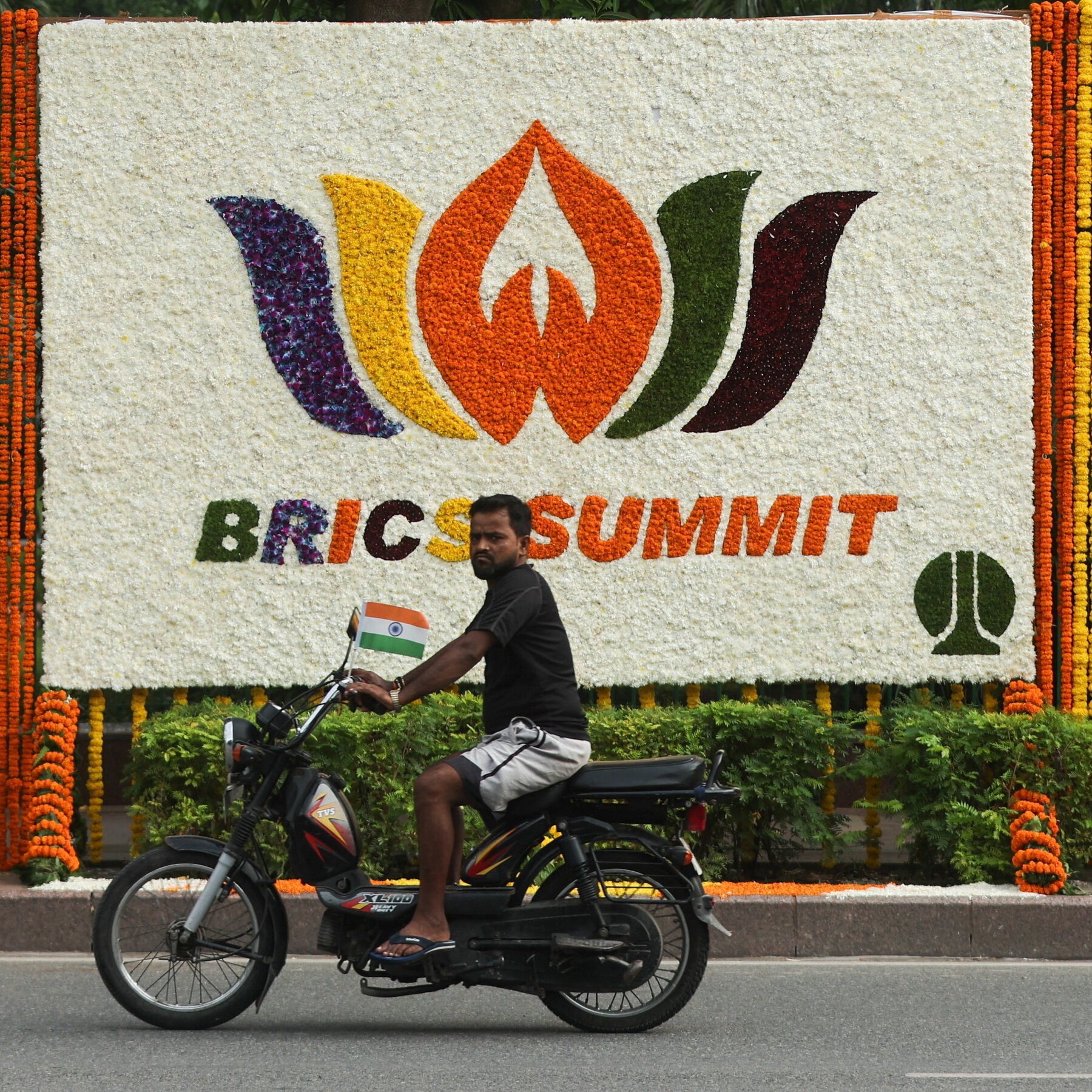
!A person on a motorcycle passes a large flower wall displaying "BRICS SUMMIT." The wall is decorated with colorful flowers.
*BRICS signage in New Delhi on Friday. The Indian capital has largely been shut down for the meeting.
Credit...
Francis Mascarenhas/Reuters*
By
David Pierson and Alex Travelli
Reporting from New Delhi
Sept. 12, 2026
Updated 2:30 a.m. ET
See more of our coverage in your search results. Encuentra más de nuestra cobertura en los resultados de búsqueda. Add The New York Times on Google Agrega The New York Times en Google
The summit of the BRICS group of emerging economies is designed to show what world leadership looks like when the West is not in the room.
And as widening clashes in the Middle East send global energy prices soaring, the gathering in New Delhi this weekend gives the leaders of China, India and Russia something Washington does not have: a seat at the table with Iran.
Prime Minister Narendra Modi of India is hosting the BRICS club — named after its earliest members, Brazil, Russia, India, China and South Africa — that has been conceived as a counterweight to the West.
The Indian capital has largely been shut down for the meeting. Soldiers in khaki uniforms carrying rifles patrolled the streets, and steel road blocks cluttered the city center. Highways leading from the airport were also blanketed with BRICS signs depicting Mr. Modi alongside slogans such as: “Together we build, together we rise.”
That slogan points to the hope that the BRICS group has of projecting solidarity among its membership, which has expanded in recent years to include countries such as Egypt, Ethiopia, Iran, the United Arab Emirates and Indonesia. The message of unity stands in contrast to the global friction emanating from the Trump administration’s tariffs and the U.S.-Israeli war against Iran, which has disrupted global energy corridors.
In reality, expectations are low that BRICS, a loose bloc, will be able to step up to fill that gap in leadership, let alone broker a diplomatic off-ramp to the crisis in the Middle East.
David Pierson
covers Chinese foreign policy and China’s economic and cultural engagement with the world. He has been a journalist for more than two decades.
Alex Travelli
is a correspondent based in New Delhi, writing about business and economic developments in India and the rest of South Asia.
*
*
*
Related Content
*
*
*
*
*
*
*
*
*
*
*
*
*
*
*
*
*
*
*
Advertisement
SKIP ADVERTISEMENT
Site Index
Site Information Navigation
* ©2026 The New York Times Company
* NYTCo
* Contact Us
* Accessibility
* Work with us
* Advertise
* T Brand Studio
* Privacy Policy
* Cookie Policy
* Terms of Service
* Terms of Sale
* Site Map
* Canada
* International
* Help
* Subscriptions
*
Skip to contentSkip to site index
Asia Pacific
Log in
Saturday, September 12, 2026
Today’s Paper
* Home
* + U.S.
+ International
+ Canada
+ Español
+ 中文
War in the
Middle East
* Iran’s Aggressive Approach
* Yemen on the Brink of War
* Timeline of War
Advertisement
SKIP ADVERTISEMENT
Supported by
SKIP ADVERTISEMENT
As Oil Prices Rise, BRICS Leaders Have What U.S. Doesn’t: Iran at the Table
Even so, finding unity among the loose grouping of emerging economies will be difficult as the war in the Middle East strains their own interests.
Listen · 9:08 min
*
*
*
!A person on a motorcycle passes a large flower wall displaying "BRICS SUMMIT." The wall is decorated with colorful flowers.
*BRICS signage in New Delhi on Friday. The Indian capital has largely been shut down for the meeting.
Credit...
Francis Mascarenhas/Reuters*
By
David Pierson and Alex Travelli
Reporting from New Delhi
Sept. 12, 2026
Updated 2:30 a.m. ET
See more of our coverage in your search results. Encuentra más de nuestra cobertura en los resultados de búsqueda. Add The New York Times on Google Agrega The New York Times en Google
The summit of the BRICS group of emerging economies is designed to show what world leadership looks like when the West is not in the room.
And as widening clashes in the Middle East send global energy prices soaring, the gathering in New Delhi this weekend gives the leaders of China, India and Russia something Washington does not have: a seat at the table with Iran.
Prime Minister Narendra Modi of India is hosting the BRICS club — named after its earliest members, Brazil, Russia, India, China and South Africa — that has been conceived as a counterweight to the West.
The Indian capital has largely been shut down for the meeting. Soldiers in khaki uniforms carrying rifles patrolled the streets, and steel road blocks cluttered the city center. Highways leading from the airport were also blanketed with BRICS signs depicting Mr. Modi alongside slogans such as: “Together we build, together we rise.”
That slogan points to the hope that the BRICS group has of projecting solidarity among its membership, which has expanded in recent years to include countries such as Egypt, Ethiopia, Iran, the United Arab Emirates and Indonesia. The message of unity stands in contrast to the global friction emanating from the Trump administration’s tariffs and the U.S.-Israeli war against Iran, which has disrupted global energy corridors.
In reality, expectations are low that BRICS, a loose bloc, will be able to step up to fill that gap in leadership, let alone broker a diplomatic off-ramp to the crisis in the Middle East.
David Pierson
covers Chinese foreign policy and China’s economic and cultural engagement with the world. He has been a journalist for more than two decades.
Alex Travelli
is a correspondent based in New Delhi, writing about business and economic developments in India and the rest of South Asia.
*
*
*
Related Content
*
*
*
*
*
*
*
*
*
*
*
*
*
*
*
*
*
*
*
Advertisement
SKIP ADVERTISEMENT
Site Index
Site Information Navigation
* ©2026 The New York Times Company
* NYTCo
* Contact Us
* Accessibility
* Work with us
* Advertise
* T Brand Studio
* Privacy Policy
* Cookie Policy
* Terms of Service
* Terms of Sale
* Site Map
* Canada
* International
* Help
* Subscriptions
*
🔗 Share Article
Tags:#بريكس#إيران#أسعار النفط#الشرق الأوسط#القيادة العالمية#نيودلهي
Source: New York Times
For Context
Related reads from the same topic or latest developments


