PoliticsAvailable in English
The Iran War Has Changed the World Forever
Editorial
Cross Lines editing
Source
Foreign Policy
Foreign Policy

Foreign Policy
Original Source
In an essay, Kenneth M. Pollack of the Middle East Institute examines the immediate consequences of the Israeli-American war with Iran, including the growing role of drones and missiles and the threats to vital maritime chokepoints. He argues that the conflict could have longer-term effects that reshape the foundations of modern geopolitics.
The Iran War Has Changed the World Forever – Foreign Policy
!Foreign Policy
Foreign Policy Get analysis and alerts more quickly in the mobile app.
Install
Back to Foreign Policy Magazine home page
* Latest
* Regions
+ Asia & the Pacific
+ China
+ Middle East & Africa
+ Americas
+ Europe
* Newsletters
Editors’ Picks
Evening roundup with our editors’ favorite stories of the day
!World Brief Icon
World Brief
Your guide to the most important world stories of the day
!China Brief Icon
China Brief
The latest news, analysis, and data from the country each week
Situation Report
Weekly update on what’s driving U.S. national security policy
FP Weekend
A curation of our best book reviews, deep dives, and other reads
!Africa Brief Icon
Africa Brief
Essential analysis of the stories shaping geopolitics on the continent
!South Asia Brief Icon
South Asia Brief
Weekly update on developments in India and its neighbors
The Reading List
Curated guides on geopolitics and current affairs
FP Bookshelf
A monthly guide to FP’s book reviews, excerpts, and reading recommendations
!Latin America Brief Icon
Latin America Brief
One-stop digest of politics, economics, and culture
!Southeast Asia Brief Icon
Southeast Asia Brief
A weekly dispatch with news from the region’s 11 countries
The New Geopolitics
A five-part masterclass in IR theory with Harvard Professor Stephen M. Walt
View All Newsletters
* FP Live
* Latest
* Trending:
* U.S. midterms
* India's protests
Search this website
* Preferences
* My FP Feed
* Saved Articles
* Newsletters
* Magazine Archive
* Subscription Settings
* FAQs
* Log Out
Sign In
Sign In
Team access Team access
Subscribe Subscribe Team access Team access
Essay: The Iran War Has Changed the World Forever
*
*
* Facebook
* Bluesky
* X
* LinkedIn
* WhatsApp
* Reddit
Save
1. Create an FP account to save articles to read later.
Sign Up
ALREADY AN FP SUBSCRIBER? LOGIN
PDF
1. **Downloadable PDFs** are a benefit of an FP subscription.
Subscribe Now
ALREADY AN FP SUBSCRIBER? LOGIN
Gift
*
*
* WhatsApp
1. Gifting articles is a subscriber benefit.
Subscribe Now
ALREADY AN FP SUBSCRIBER? LOGIN
2. This article is an Insider exclusive.
Contact us at [email protected] to learn about upgrade options, unlocking the ability to gift this article.
Essay
The Iran War Has Changed the World Forever
Some dramatic long-term consequences are just beginning to come into view.
October 19, 2026, 6:00 AM
By **Kenneth M. Pollack**, the vice president for policy at the Middle East Institute.
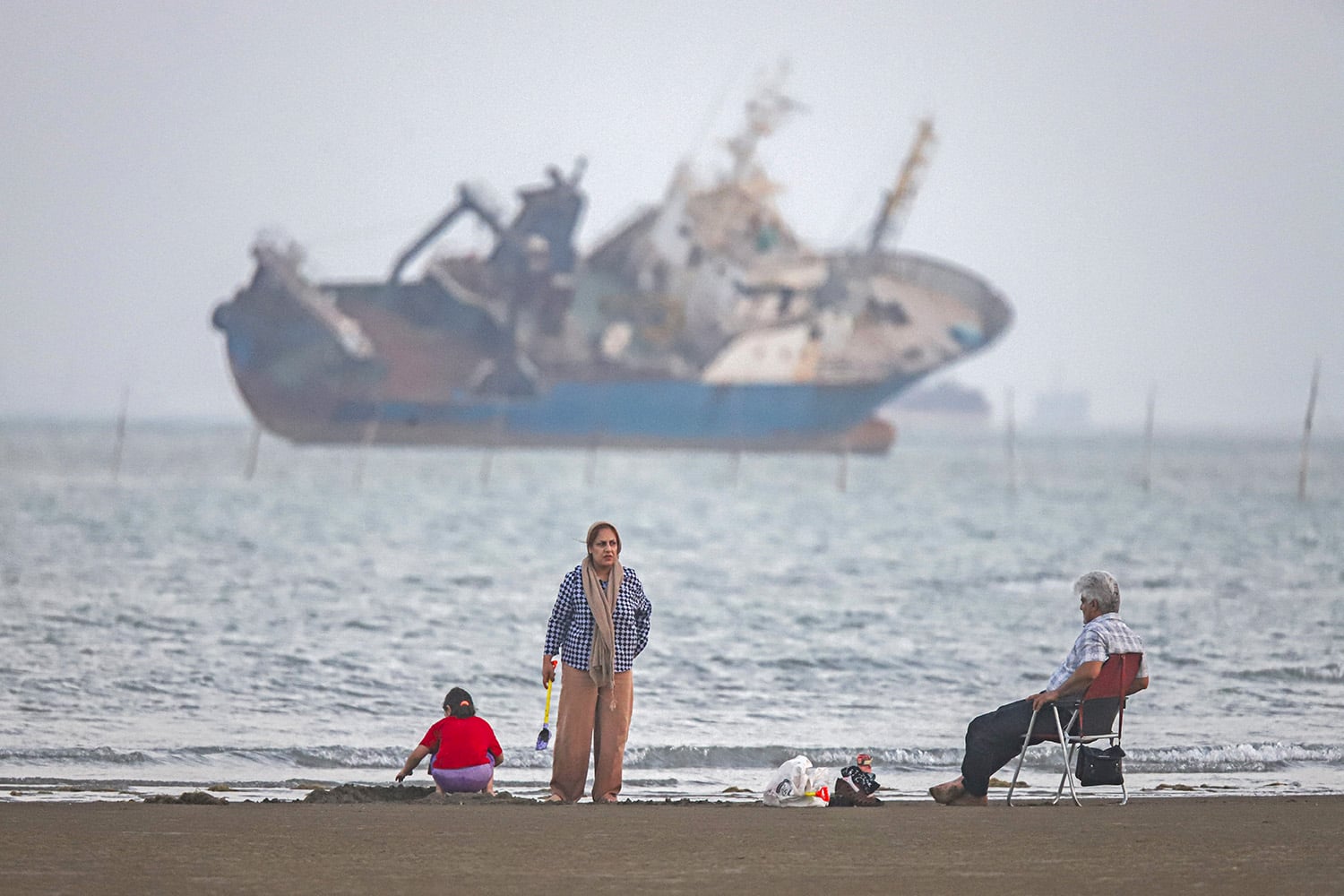
!Three people rest on a sandy beach while a large, partially submerged and tilted ship sits out in the water in the background. The sky above is a hazy gray with cloud cover.
*Three people rest on a sandy beach while a large, partially submerged and tilted ship sits out in the water in the background. The sky above is a hazy gray with cloud cover.*
A photo obtained from Iran’s ISNA news agency shows Iranians with a ship in the background on Suru Beach, located along the Strait of Hormuz, in Bandar Abbas, Iran, on June 1. Amirhossein Khorgooei/ISNA/AFP via Getty Images
1. Get audio access with any FP subscription.
Subscribe Now
ALREADY AN FP SUBSCRIBER? LOGIN
Many of the immediate consequences of the Israeli-American war with Iran are already clear. The further emergence of drones and missiles as dominant weapons of war; the danger to the global economy from the threats to vital chokepoints such as the Strait of Hormuz and the Bab el-Mandeb; and the inadequacy of U.S. weapons procurement, among other issues, have garnered widespread and entirely merited attention.
Yet as important enough as those developments are, the Iran conflict could also have far wider and longer-term implications—changes that could be truly transformative for the Middle East region and the rest of the world. Decades from now, we might look back on this conflict as a watershed event that fundamentally reshaped what had been bedrock principles of modern geopolitics.
While it would have been better to have discerned these potential break points before the war, there may still be time to take action to try to steer them in favorable directions. As always, the first requirement is to recognize the possible seismic changes that may already be underway.
---
Gulf States Shifting to Offense—and More War
!Aerial satellite footage shows a coastline where a thick plume of black smoke rises from a port area and stretches inland over mountainous terrain.
*Aerial satellite footage shows a coastline where a thick plume of black smoke rises from a port area and stretches inland over mountainous terrain.*
A satellite view shows a major fire following an Iranian drone strike at the Port of Salalah oil storage tanks in Oman on March 11.Gallo Images/Orbital Horizon/Copernicus Sentinel Data 2026
There has been no shortage of commentary on the new technologies of combat highlighted by the Iran war, with the United States having been mostly focused on defensive systems. Americans have both marveled at the superb performance of Western interceptors and hyperventilated over their dwindling stockpiles of them. However, the Persian Gulf states—and likely many other threatened middle and smaller powers—have taken another lesson from the conflict: The best defense is a good offense.
U.S., Israeli, European, and South Korean interceptor munitions have performed brilliantly, shooting down Iranian ballistic missiles, cruise missiles, and drones. Coupled with the ability of Western fighter aircraft to shoot down drones and cruise missiles—and to suppress the launches of ballistic missiles—Iran has done far less damage to its targets than would otherwise have been the case. In short, air and missile defenses have performed extremely well so far. That’s not nothing.
The problem is that it has not proved to be anything close to enough. Because drones; cruise missiles; and even, to a considerable extent, ballistic missiles are so much cheaper, easier to produce, store, hide, and launch than most of the interceptors that the United States and its allies use against them, Iran has been able to keep making more and launching them at targets across the Gulf, Jordan, and Israel. Even though the defenses are stopping roughly 90 percent of them, the 10 percent that are getting through are 100 percent too many.
Only the Israeli population is inured enough and its infrastructure hardened enough to prove undaunted by Iran’s counterstrikes. In stark contrast, the same levels of damage have proved catastrophic for the Gulf states. Energy companies, shipping companies, and insurance companies are all balking at the prospect of functioning with the residual threat of constant Iranian attacks, even if more than 90 percent are defeated. The 10 percent that have gotten through have done significant physical damage and far greater psychological damage. They called into question the current and planned future socioeconomi
!Foreign Policy
Foreign Policy Get analysis and alerts more quickly in the mobile app.
Install
Back to Foreign Policy Magazine home page
* Latest
* Regions
+ Asia & the Pacific
+ China
+ Middle East & Africa
+ Americas
+ Europe
* Newsletters
Editors’ Picks
Evening roundup with our editors’ favorite stories of the day
!World Brief Icon
World Brief
Your guide to the most important world stories of the day
!China Brief Icon
China Brief
The latest news, analysis, and data from the country each week
Situation Report
Weekly update on what’s driving U.S. national security policy
FP Weekend
A curation of our best book reviews, deep dives, and other reads
!Africa Brief Icon
Africa Brief
Essential analysis of the stories shaping geopolitics on the continent
!South Asia Brief Icon
South Asia Brief
Weekly update on developments in India and its neighbors
The Reading List
Curated guides on geopolitics and current affairs
FP Bookshelf
A monthly guide to FP’s book reviews, excerpts, and reading recommendations
!Latin America Brief Icon
Latin America Brief
One-stop digest of politics, economics, and culture
!Southeast Asia Brief Icon
Southeast Asia Brief
A weekly dispatch with news from the region’s 11 countries
The New Geopolitics
A five-part masterclass in IR theory with Harvard Professor Stephen M. Walt
View All Newsletters
* FP Live
* Latest
* Trending:
* U.S. midterms
* India's protests
Search this website
* Preferences
* My FP Feed
* Saved Articles
* Newsletters
* Magazine Archive
* Subscription Settings
* FAQs
* Log Out
Sign In
Sign In
Team access Team access
Subscribe Subscribe Team access Team access
Essay: The Iran War Has Changed the World Forever
*
*
* Bluesky
* X
Save
1. Create an FP account to save articles to read later.
Sign Up
ALREADY AN FP SUBSCRIBER? LOGIN
1. **Downloadable PDFs** are a benefit of an FP subscription.
Subscribe Now
ALREADY AN FP SUBSCRIBER? LOGIN
Gift
*
*
1. Gifting articles is a subscriber benefit.
Subscribe Now
ALREADY AN FP SUBSCRIBER? LOGIN
2. This article is an Insider exclusive.
Contact us at [email protected] to learn about upgrade options, unlocking the ability to gift this article.
Essay
The Iran War Has Changed the World Forever
Some dramatic long-term consequences are just beginning to come into view.
October 19, 2026, 6:00 AM
By **Kenneth M. Pollack**, the vice president for policy at the Middle East Institute.
!Three people rest on a sandy beach while a large, partially submerged and tilted ship sits out in the water in the background. The sky above is a hazy gray with cloud cover.
*Three people rest on a sandy beach while a large, partially submerged and tilted ship sits out in the water in the background. The sky above is a hazy gray with cloud cover.*
A photo obtained from Iran’s ISNA news agency shows Iranians with a ship in the background on Suru Beach, located along the Strait of Hormuz, in Bandar Abbas, Iran, on June 1. Amirhossein Khorgooei/ISNA/AFP via Getty Images
1. Get audio access with any FP subscription.
Subscribe Now
ALREADY AN FP SUBSCRIBER? LOGIN
Many of the immediate consequences of the Israeli-American war with Iran are already clear. The further emergence of drones and missiles as dominant weapons of war; the danger to the global economy from the threats to vital chokepoints such as the Strait of Hormuz and the Bab el-Mandeb; and the inadequacy of U.S. weapons procurement, among other issues, have garnered widespread and entirely merited attention.
Yet as important enough as those developments are, the Iran conflict could also have far wider and longer-term implications—changes that could be truly transformative for the Middle East region and the rest of the world. Decades from now, we might look back on this conflict as a watershed event that fundamentally reshaped what had been bedrock principles of modern geopolitics.
Many of the immediate consequences of the Israeli-American war with Iran are already clear. The further emergence of drones and missiles as dominant weapons of war; the danger to the global economy from the threats to vital chokepoints such as the Strait of Hormuz and the Bab el-Mandeb; and the inadequacy of U.S. weapons procurement, among other issues, have garnered widespread and entirely merited attention.
Yet as important enough as those developments are, the Iran conflict could also have far wider and longer-term implications—changes that could be truly transformative for the Middle East region and the rest of the world. Decades from now, we might look back on this conflict as a watershed event that fundamentally reshaped what had been bedrock principles of modern geopolitics.
While it would have been better to have discerned these potential break points before the war, there may still be time to take action to try to steer them in favorable directions. As always, the first requirement is to recognize the possible seismic changes that may already be underway.
---
Gulf States Shifting to Offense—and More War
!Aerial satellite footage shows a coastline where a thick plume of black smoke rises from a port area and stretches inland over mountainous terrain.
*Aerial satellite footage shows a coastline where a thick plume of black smoke rises from a port area and stretches inland over mountainous terrain.*
A satellite view shows a major fire following an Iranian drone strike at the Port of Salalah oil storage tanks in Oman on March 11.Gallo Images/Orbital Horizon/Copernicus Sentinel Data 2026
There has been no shortage of commentary on the new technologies of combat highlighted by the Iran war, with the United States having been mostly focused on defensive systems. Americans have both marveled at the superb performance of Western interceptors and hyperventilated over their dwindling stockpiles of them. However, the Persian Gulf states—and likely many other threatened middle and smaller powers—have taken another lesson from the conflict: The best defense is a good offense.
U.S., Israeli, European, and South Korean interceptor munitions have performed brilliantly, shooting down Iranian ballistic missiles, cruise missiles, and drones. Coupled with the ability of Western fighter aircraft to shoot down drones and cruise missiles—and to suppress the launches of ballistic missiles—Iran has done far less damage to its targets than would otherwise have been the case. In short, air and missile defenses have performed extremely well so far. That’s not nothing.
The problem is that it has not proved to be anything close to enough. Because drones; cruise missiles; and even, to a considerable extent, ballistic missiles are so much cheaper, easier to produce, store, hide, and launch than most of the interceptors that the United States and its allies use against them, Iran has been able to keep making more and launching them at targets across the Gulf, Jordan, and Israel. Even though the defenses are stopping roughly 90 percent of them, the 10 percent that are getting through are 100 percent too many.
Only the Israeli population is inured enough and its infrastructure hardened enough to prove undaunted by Iran’s counterstrikes. In stark contrast, the same levels of damage have proved catastrophic for the Gulf states. Energy companies, shipping companies, and insurance companies are all balking at the prospect of functioning with the residual threat of constant Iranian attacks, even if more than 90 percent are defeated. The 10 percent that have gotten through have done significant physical damage and far greater psychological damage. They called into question the current and planned future socioeconomi
Share Article
Tags:#إيران#حرب#الشرق الأوسط#الخليج#المسيّرات#مضيق هرمز
Source: Foreign Policy
For Context
Related reads from the same topic or latest developments