As Iran and U.S. Settle Into an Uneasy Standoff, Who Will Blink First?
New York Times
N
New York Times
Original Source
Diplomatic negotiations between Iran and the United States have stalled for weeks amid an absence of large-scale fighting, with each side betting it can outlast the other. The standoff hinges on competing calculations: Tehran believes it gains more by withstanding economic pressure, while Washington wagers that financial strangulation can succeed where military strikes have failed.
As Iran and U.S. Settle Into an Uneasy Standoff, Who Will Blink First? - The New York Times
Skip to contentSkip to site index
Middle East
Log in
Thursday, August 20, 2026
Today’s Paper
* Home
* + U.S.
+ International
+ Canada
+ Español
+ 中文
War in the
Middle East
* An Uneasy Standoff
* Strait of Hormuz
* Trump’s Economic Threats
* Strikes in Lebanon
* U.S. Munitions
* Timeline of War
Advertisement
SKIP ADVERTISEMENT
You have a preview view of this article while we are checking your access. When we have confirmed access, the full article content will load.
Supported by
SKIP ADVERTISEMENT
News Analysis
As Iran and U.S. Settle Into an Uneasy Standoff, Who Will Blink First?
For weeks, there has been no diplomatic progress, but also no full-scale fighting, as each side seems to believe it can hold out longer than the other.
Listen · 6:21 min
*
*
*
*
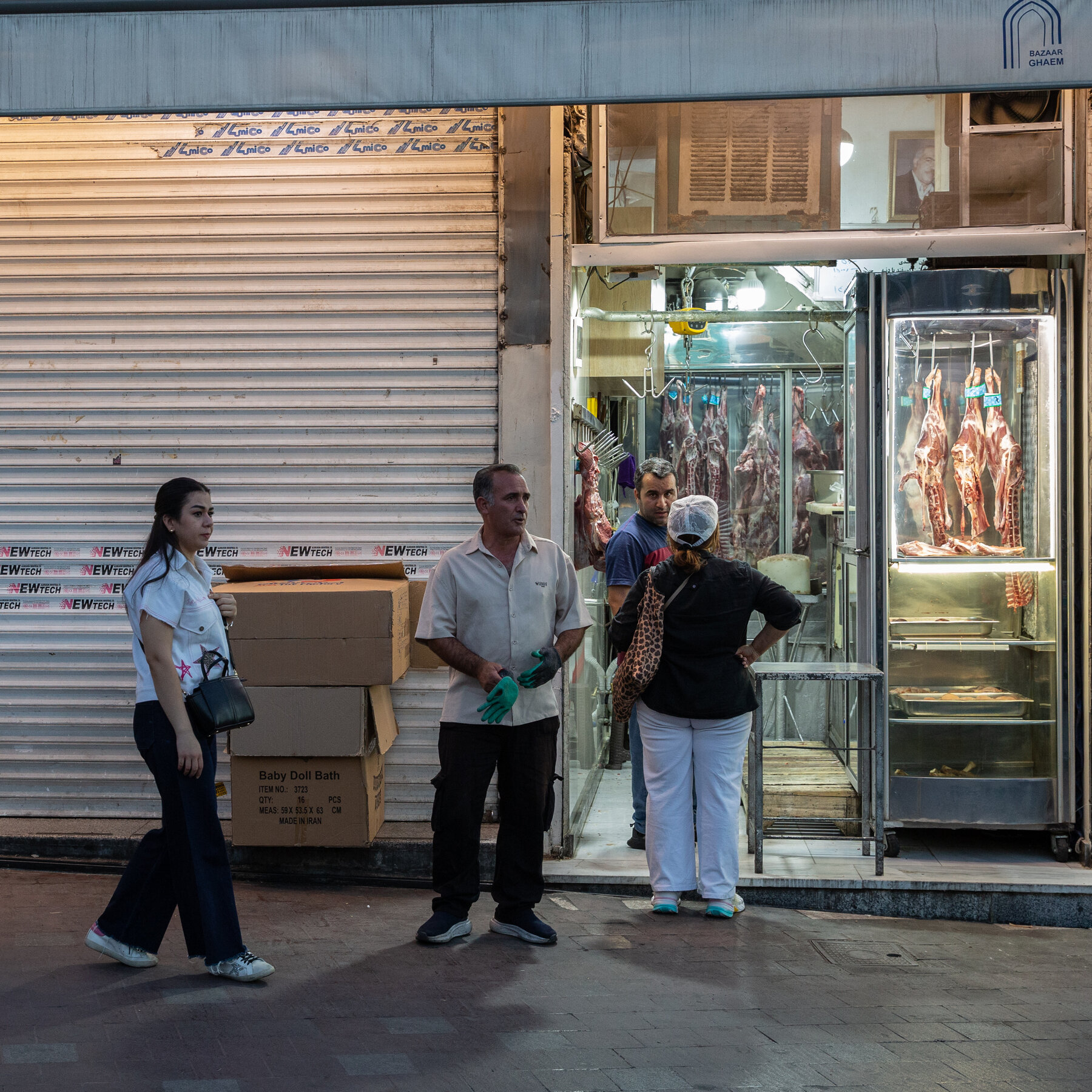
!Pedestrians walk along a sidewalk past a shop selling meat hung on hooks in the window.
*A butcher in Tehran in July. The United States appears to be betting that putting Iran in a tighter economic stranglehold will succeed where military strikes have not.
Credit...
Arash Khamooshi/Polaris for The New York Times*
By
Yeganeh Torbati
Yeganeh Torbati is a Times reporter covering Iran from Istanbul.
Aug. 20, 2026
Updated 1:14 p.m. ET
See more of our coverage in your search results. Encuentra más de nuestra cobertura en los resultados de búsqueda. Add The New York Times on Google Agrega The New York Times en Google
They are not seriously negotiating, nor are they shooting at each other. Instead, Iran and the United States have settled into an uneasy, in-between state that risks either a return to fighting or a hardening stalemate.
At the core of this unresolved status are calculations, perhaps miscalculations, by each side.
Iranian officials believe they have more to gain from withstanding U.S. economic pressure and maintaining control over the Strait of Hormuz than they do from making major concessions in a negotiated deal, analysts said. And the United States appears to be betting that putting Iran in a tighter economic stranglehold will succeed where military strikes have not. On Wednesday, President Trump vowed to impose “tremendous economic consequences” on countries that do business with Iran.
So far, neither the United States nor Iran has gotten what it wants.
When the countries agreed to a cease-fire two months ago, it was supposed to put them on a path to a broader deal within 60 days, covering Iran’s nuclear program and the lifting of U.S. sanctions. That deadline passed this week and, on Tuesday, Mr. Trump said on social media that there were “no talks or conversations” going on or scheduled.
Instead, the two countries are “in a state of constant limbo,” said Nicole Grajewski, an assistant professor at the Center for International Studies at Sciences Po in Paris. “Not that much has fundamentally changed over the past several months,” she added, “beyond a further entrenchment of the Iranian position and repeated, so far unsuccessful, U.S. efforts to find some kind of way out.”
Image
!A handful of ships on a broad expanse of sea under a hazy sky.
*Vessels near the Strait of Hormuz, seen from Oman, this week.
Credit...
Reuters*
This month, Tehran issued a list of demands on Washington for reopening the Strait of Hormuz, which sits along Iran’s southern coast and is a major transit point for much of the world’s oil.
---
Thank you for your patience while we verify access. If you are in Reader mode please exit andlog intoyour Times account, orsubscribefor all of The Times.
---
Thank you for your patience while we verify access.
Already a subscriber?Log in.
Want all of The Times?Subscribe.
Related Content
*
*
*
*
*
*
*
*
*
*
*
*
*
*
*
*
*
*
*
Advertisement
SKIP ADVERTISEMENT
Site Index
Site Information Navigation
* ©2026 The New York Times Company
* NYTCo
* Contact Us
* Accessibility
* Work with us
* Advertise
* T Brand Studio
* Privacy Policy
* Cookie Policy
* Terms of Service
* Terms of Sale
* Site Map
* Canada
* International
* Help
* Subscriptions
*
* California Notices
Skip to contentSkip to site index
Middle East
Log in
Thursday, August 20, 2026
Today’s Paper
* Home
* + U.S.
+ International
+ Canada
+ Español
+ 中文
War in the
Middle East
* An Uneasy Standoff
* Strait of Hormuz
* Trump’s Economic Threats
* Strikes in Lebanon
* U.S. Munitions
* Timeline of War
Advertisement
SKIP ADVERTISEMENT
You have a preview view of this article while we are checking your access. When we have confirmed access, the full article content will load.
Supported by
SKIP ADVERTISEMENT
News Analysis
As Iran and U.S. Settle Into an Uneasy Standoff, Who Will Blink First?
For weeks, there has been no diplomatic progress, but also no full-scale fighting, as each side seems to believe it can hold out longer than the other.
Listen · 6:21 min
*
*
*
*
!Pedestrians walk along a sidewalk past a shop selling meat hung on hooks in the window.
*A butcher in Tehran in July. The United States appears to be betting that putting Iran in a tighter economic stranglehold will succeed where military strikes have not.
Credit...
Arash Khamooshi/Polaris for The New York Times*
By
Yeganeh Torbati
Yeganeh Torbati is a Times reporter covering Iran from Istanbul.
Aug. 20, 2026
Updated 1:14 p.m. ET
See more of our coverage in your search results. Encuentra más de nuestra cobertura en los resultados de búsqueda. Add The New York Times on Google Agrega The New York Times en Google
They are not seriously negotiating, nor are they shooting at each other. Instead, Iran and the United States have settled into an uneasy, in-between state that risks either a return to fighting or a hardening stalemate.
At the core of this unresolved status are calculations, perhaps miscalculations, by each side.
Iranian officials believe they have more to gain from withstanding U.S. economic pressure and maintaining control over the Strait of Hormuz than they do from making major concessions in a negotiated deal, analysts said. And the United States appears to be betting that putting Iran in a tighter economic stranglehold will succeed where military strikes have not. On Wednesday, President Trump vowed to impose “tremendous economic consequences” on countries that do business with Iran.
So far, neither the United States nor Iran has gotten what it wants.
When the countries agreed to a cease-fire two months ago, it was supposed to put them on a path to a broader deal within 60 days, covering Iran’s nuclear program and the lifting of U.S. sanctions. That deadline passed this week and, on Tuesday, Mr. Trump said on social media that there were “no talks or conversations” going on or scheduled.
Instead, the two countries are “in a state of constant limbo,” said Nicole Grajewski, an assistant professor at the Center for International Studies at Sciences Po in Paris. “Not that much has fundamentally changed over the past several months,” she added, “beyond a further entrenchment of the Iranian position and repeated, so far unsuccessful, U.S. efforts to find some kind of way out.”
Image
!A handful of ships on a broad expanse of sea under a hazy sky.
*Vessels near the Strait of Hormuz, seen from Oman, this week.
Credit...
Reuters*
This month, Tehran issued a list of demands on Washington for reopening the Strait of Hormuz, which sits along Iran’s southern coast and is a major transit point for much of the world’s oil.
---
Thank you for your patience while we verify access. If you are in Reader mode please exit andlog intoyour Times account, orsubscribefor all of The Times.
---
Thank you for your patience while we verify access.
Already a subscriber?Log in.
Want all of The Times?Subscribe.
Related Content
*
*
*
*
*
*
*
*
*
*
*
*
*
*
*
*
*
*
*
Advertisement
SKIP ADVERTISEMENT
Site Index
Site Information Navigation
* ©2026 The New York Times Company
* NYTCo
* Contact Us
* Accessibility
* Work with us
* Advertise
* T Brand Studio
* Privacy Policy
* Cookie Policy
* Terms of Service
* Terms of Sale
* Site Map
* Canada
* International
* Help
* Subscriptions
*
* California Notices
🔗 Share Article
Tags:#إيران#الولايات المتحدة#مضيق هرمز#الدبلوماسية#الصراع#الشرق الأوسط
Source: New York Times
For Context
Related reads from the same topic or latest developments


