PoliticsAvailable in English
Russia the Disruptor
Editorial
Cross Lines editing
Source
Foreign Policy
Foreign Policy

Foreign Policy
Original Source
Three new books trace the rupture between Moscow and the West, from NATO's eastward expansion in the 1990s to the war in Ukraine and Russia's network of alliances worldwide. The review asks whether the West can adapt to an increasingly chaotic international order.
Review: Stephen Kinzer's 'Boiling Point'; Jonathan Haslam's 'Hubris'; Hanna Notte's 'We Shall Outlast Them'
By using this website, you agree to our use of cookies. This use includes personalization of content and ads, and traffic analytics. Review our Privacy Policy for more information.
!Foreign Policy
Foreign Policy Get analysis and alerts more quickly in the mobile app.
Install
Back to Foreign Policy Magazine home page
* Latest
* Regions
+ Asia & the Pacific
+ China
+ Middle East & Africa
+ Americas
+ Europe
* Newsletters
Editors’ Picks
Evening roundup with our editors’ favorite stories of the day
!World Brief Icon
World Brief
Your guide to the most important world stories of the day
!China Brief Icon
China Brief
The latest news, analysis, and data from the country each week
Situation Report
Weekly update on what’s driving U.S. national security policy
FP Weekend
A curation of our best book reviews, deep dives, and other reads
!Africa Brief Icon
Africa Brief
Essential analysis of the stories shaping geopolitics on the continent
!South Asia Brief Icon
South Asia Brief
Weekly update on developments in India and its neighbors
The Reading List
Curated guides on geopolitics and current affairs
FP Bookshelf
A monthly guide to FP’s book reviews, excerpts, and reading recommendations
!Latin America Brief Icon
Latin America Brief
One-stop digest of politics, economics, and culture
!Southeast Asia Brief Icon
Southeast Asia Brief
A weekly dispatch with news from the region’s 11 countries
The New Geopolitics
A five-part masterclass in IR theory with Harvard Professor Stephen M. Walt
View All Newsletters
* FP Live
* Latest
* Trending:
* Israel's election
* Lula wins in Brazil
* U.S. midterms
Search this website
* Preferences
* My FP Feed
* Saved Articles
* Newsletters
* Magazine Archive
* Subscription Settings
* FAQs
* Log Out
Sign In
Sign In
Team access Team access
Subscribe Subscribe Team access Team access
Review: Russia the Disruptor
*
*
* Facebook
* Bluesky
* X
* LinkedIn
* WhatsApp
* Reddit
Save
1. Create an FP account to save articles to read later.
Sign Up
ALREADY AN FP SUBSCRIBER? LOGIN
PDF
1. **Downloadable PDFs** are a benefit of an FP subscription.
Subscribe Now
ALREADY AN FP SUBSCRIBER? LOGIN
Gift
*
*
* WhatsApp
1. Gifting articles is a subscriber benefit.
Subscribe Now
ALREADY AN FP SUBSCRIBER? LOGIN
2. This article is an Insider exclusive.
Contact us at [email protected] to learn about upgrade options, unlocking the ability to gift this article.
Review
Russia the Disruptor
How Moscow broke with the West—and unleashed a more chaotic world.
October 30, 2026, 3:15 PM
By **Laura Mills**, a human rights researcher and writer based in New York.
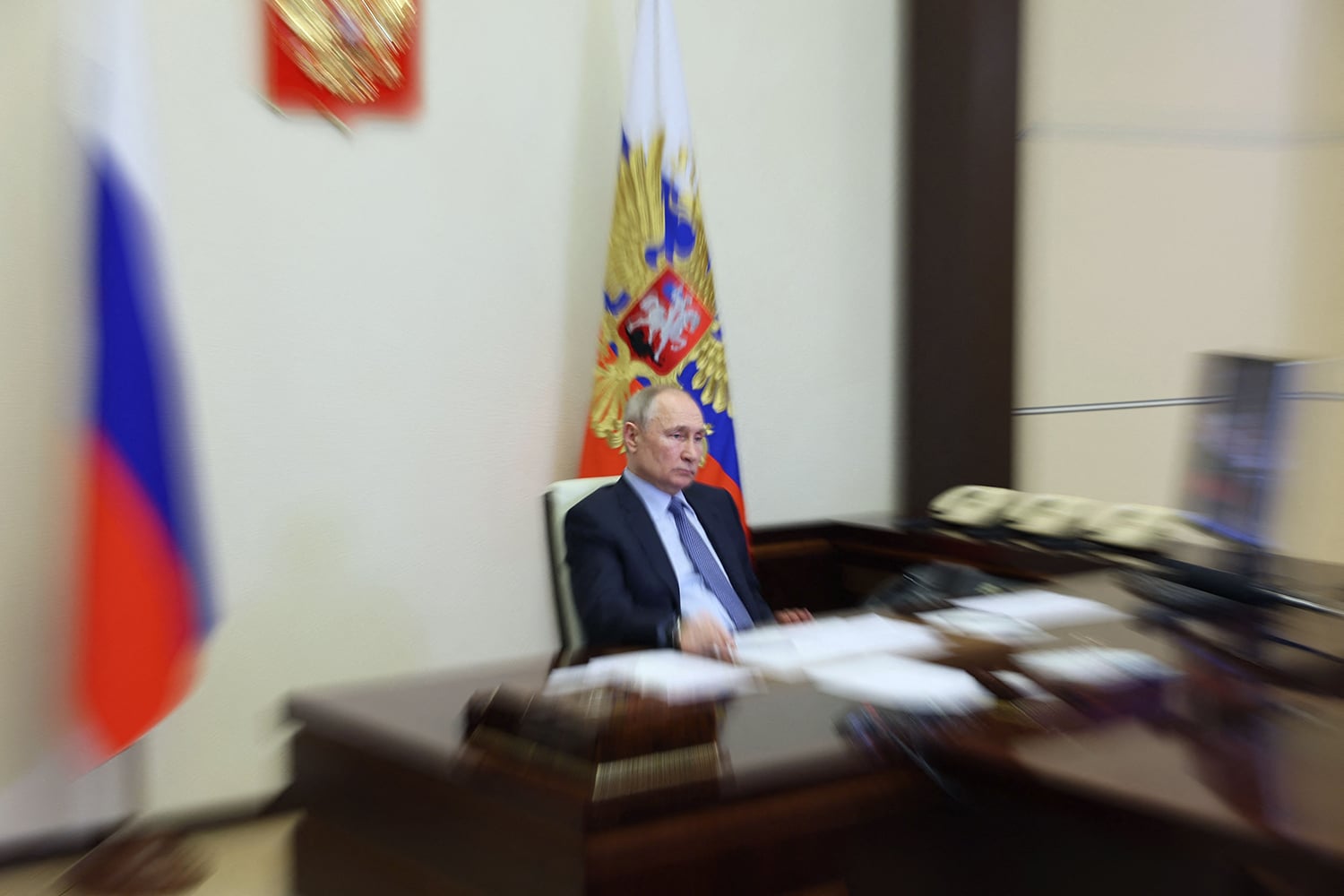
!Russian President Vladimir Putin sits at a polished wooden desk with papers, flanked by flags in an office setting. The overall image has a motion-blur effect.
*Russian President Vladimir Putin sits at a polished wooden desk with papers, flanked by flags in an office setting. The overall image has a motion-blur effect.*
Russian President Vladimir Putin chairs a meeting with members of the government via a video conference at the Novo-Ogaryovo state residence, outside Moscow, on April 19, 2023. Gavriil Grigorov/Sputnik/AFP via Getty Images
1. Get audio access with any FP subscription.
Subscribe Now
ALREADY AN FP SUBSCRIBER? LOGIN
In a famous scene from *Band of Brothers*, the HBO epic about a U.S. paratrooper regiment in World War II, a Nazi general surrenders to U.S. forces. The Americans, rather than humiliating him, allow him to deliver a stirring address to his troops after they lay down their arms; the soldiers from both camps are visibly moved.
That incident may be exaggerated or apocryphal, but it echoed a widely held sentiment among the Allies in 1945: “In victory, magnanimity,” as Winston Churchill once summarized. But over four decades later, as the Berlin Wall fell and the Soviet Union collapsed, magnanimity was harder to come by: How much, if anything, was the United States willing to offer Russia in the wake of the Cold War?
That question is at the heart of two books, *Hubris: The American Origins of Russia’s War Against Ukraine* by British historian Jonathan Haslam and *Boiling Point: How America Brought War to Ukraine* by journalist Stephen Kinzer. Both authors question to what extent Russia’s war in Ukraine is a reaction to decades of arrogance by the United States, full of swagger as the last superpower standing amid the ashes of the Cold War.
***Hubris: The American Origins of Russia’s War Against Ukraine***, Jonathan Haslam, Belknap Press, 368 pp., $25.95, September 2026, paperback
Both accounts, though overeager to blame Washington for Moscow’s belligerent turn, serve as a helpful reminder of the paths not taken in the 1990s and early 2000s, when, rather than bringing Russia into the liberal world order as a true partner, the United States encouraged rapid NATO expansion and democratization in Eastern and Central Europe, antagonizing the country.
If those decisions partly drove Moscow to move toward a break with the West, a third book, *We Shall Outlast Them: Putin’s Global Campaign to Defeat the West* by international relations scholar Hanna Notte, documents the culmination of Russia’s effort, showing how, since its full-scale invasion of Ukraine in 2022, the country has leveraged ties with allies around the globe to evade sanctions and political pressure. Alienated from the West, Russia has turned to the rest of the world. The question now is whether the West, thrown into even greater chaos by U.S. President Donald Trump’s fractious impulses, will be able to adapt.
---
In February 1990, soon after the fall of the Berlin Wall, Soviet leader Mikhail Gorbachev met with Western diplomats over the question of German reunification. In a phrase that has come to haunt much of post-Soviet history, U.S. Secretary of State James Baker told Gorbachev that NATO would move “not one inch” eastward if the Soviet Union withdrew from East Germany.
!A black-and-white outdoor scene showing a row of 12 international flags on high flagpoles flying above a small artillery gun on dirt ground. Uniformed personnel stand nearby, with a crowd and buildings visible in the background.
*A black-and-white outdoor scene showing a row of 12 international flags on high flagpoles flying above a small artillery gun on dirt ground. Uniformed personnel stand nearby, with a crowd and buildings visible in the background.*
The flags of NATO nations are pictured during the inauguration ceremony of NATO’s Supreme Headquarters Allied Powers Europe near Paris on July 23, 1951. AFP via Getty Images
While much ink has been spilled about the meaning of that phrase—and Baker’s authorization to issue such assurances in the first place—this anticipated a pattern that would plague the U.S.-Russia relationship for 30 years. At each stage, the expansion of NATO’s membership and mission, partly at the behest of Central and Eastern European nations u
By using this website, you agree to our use of cookies. This use includes personalization of content and ads, and traffic analytics. Review our Privacy Policy for more information.
!Foreign Policy
Foreign Policy Get analysis and alerts more quickly in the mobile app.
Install
Back to Foreign Policy Magazine home page
* Latest
* Regions
+ Asia & the Pacific
+ China
+ Middle East & Africa
+ Americas
+ Europe
* Newsletters
Editors’ Picks
Evening roundup with our editors’ favorite stories of the day
!World Brief Icon
World Brief
Your guide to the most important world stories of the day
!China Brief Icon
China Brief
The latest news, analysis, and data from the country each week
Situation Report
Weekly update on what’s driving U.S. national security policy
FP Weekend
A curation of our best book reviews, deep dives, and other reads
!Africa Brief Icon
Africa Brief
Essential analysis of the stories shaping geopolitics on the continent
!South Asia Brief Icon
South Asia Brief
Weekly update on developments in India and its neighbors
The Reading List
Curated guides on geopolitics and current affairs
FP Bookshelf
A monthly guide to FP’s book reviews, excerpts, and reading recommendations
!Latin America Brief Icon
Latin America Brief
One-stop digest of politics, economics, and culture
!Southeast Asia Brief Icon
Southeast Asia Brief
A weekly dispatch with news from the region’s 11 countries
The New Geopolitics
A five-part masterclass in IR theory with Harvard Professor Stephen M. Walt
View All Newsletters
* FP Live
* Latest
* Trending:
* Israel's election
* Lula wins in Brazil
* U.S. midterms
Search this website
* Preferences
* My FP Feed
* Saved Articles
* Newsletters
* Magazine Archive
* Subscription Settings
* FAQs
* Log Out
Sign In
Sign In
Team access Team access
Subscribe Subscribe Team access Team access
Review: Russia the Disruptor
*
*
* Bluesky
* X
Save
1. Create an FP account to save articles to read later.
Sign Up
ALREADY AN FP SUBSCRIBER? LOGIN
1. **Downloadable PDFs** are a benefit of an FP subscription.
Subscribe Now
ALREADY AN FP SUBSCRIBER? LOGIN
Gift
*
*
1. Gifting articles is a subscriber benefit.
Subscribe Now
ALREADY AN FP SUBSCRIBER? LOGIN
2. This article is an Insider exclusive.
Contact us at [email protected] to learn about upgrade options, unlocking the ability to gift this article.
Review
Russia the Disruptor
How Moscow broke with the West—and unleashed a more chaotic world.
October 30, 2026, 3:15 PM
By **Laura Mills**, a human rights researcher and writer based in New York.
!Russian President Vladimir Putin sits at a polished wooden desk with papers, flanked by flags in an office setting. The overall image has a motion-blur effect.
*Russian President Vladimir Putin sits at a polished wooden desk with papers, flanked by flags in an office setting. The overall image has a motion-blur effect.*
Russian President Vladimir Putin chairs a meeting with members of the government via a video conference at the Novo-Ogaryovo state residence, outside Moscow, on April 19, 2023. Gavriil Grigorov/Sputnik/AFP via Getty Images
1. Get audio access with any FP subscription.
Subscribe Now
ALREADY AN FP SUBSCRIBER? LOGIN
In a famous scene from *Band of Brothers*, the HBO epic about a U.S. paratrooper regiment in World War II, a Nazi general surrenders to U.S. forces. The Americans, rather than humiliating him, allow him to deliver a stirring address to his troops after they lay down their arms; the soldiers from both camps are visibly moved.
That incident may be exaggerated or apocryphal, but it echoed a widely held sentiment among the Allies in 1945: “In victory, magnanimity,” as Winston Churchill once summarized. But over four decades later, as the Berlin Wall fell and the Soviet Union collapsed, magnanimity was harder to come by: How much, if anything, was the United States willing to offer Russia in the wake of the Cold War?
In a famous scene from *Band of Brothers*, the HBO epic about a U.S. paratrooper regiment in World War II, a Nazi general surrenders to U.S. forces. The Americans, rather than humiliating him, allow him to deliver a stirring address to his troops after they lay down their arms; the soldiers from both camps are visibly moved.
That incident may be exaggerated or apocryphal, but it echoed a widely held sentiment among the Allies in 1945: “In victory, magnanimity,” as Winston Churchill once summarized. But over four decades later, as the Berlin Wall fell and the Soviet Union collapsed, magnanimity was harder to come by: How much, if anything, was the United States willing to offer Russia in the wake of the Cold War?
That question is at the heart of two books, *Hubris: The American Origins of Russia’s War Against Ukraine* by British historian Jonathan Haslam and *Boiling Point: How America Brought War to Ukraine* by journalist Stephen Kinzer. Both authors question to what extent Russia’s war in Ukraine is a reaction to decades of arrogance by the United States, full of swagger as the last superpower standing amid the ashes of the Cold War.
***Hubris: The American Origins of Russia’s War Against Ukraine***, Jonathan Haslam, Belknap Press, 368 pp., $25.95, September 2026, paperback
Both accounts, though overeager to blame Washington for Moscow’s belligerent turn, serve as a helpful reminder of the paths not taken in the 1990s and early 2000s, when, rather than bringing Russia into the liberal world order as a true partner, the United States encouraged rapid NATO expansion and democratization in Eastern and Central Europe, antagonizing the country.
If those decisions partly drove Moscow to move toward a break with the West, a third book, *We Shall Outlast Them: Putin’s Global Campaign to Defeat the West* by international relations scholar Hanna Notte, documents the culmination of Russia’s effort, showing how, since its full-scale invasion of Ukraine in 2022, the country has leveraged ties with allies around the globe to evade sanctions and political pressure. Alienated from the West, Russia has turned to the rest of the world. The question now is whether the West, thrown into even greater chaos by U.S. President Donald Trump’s fractious impulses, will be able to adapt.
---
In February 1990, soon after the fall of the Berlin Wall, Soviet leader Mikhail Gorbachev met with Western diplomats over the question of German reunification. In a phrase that has come to haunt much of post-Soviet history, U.S. Secretary of State James Baker told Gorbachev that NATO would move “not one inch” eastward if the Soviet Union withdrew from East Germany.
!A black-and-white outdoor scene showing a row of 12 international flags on high flagpoles flying above a small artillery gun on dirt ground. Uniformed personnel stand nearby, with a crowd and buildings visible in the background.
*A black-and-white outdoor scene showing a row of 12 international flags on high flagpoles flying above a small artillery gun on dirt ground. Uniformed personnel stand nearby, with a crowd and buildings visible in the background.*
The flags of NATO nations are pictured during the inauguration ceremony of NATO’s Supreme Headquarters Allied Powers Europe near Paris on July 23, 1951. AFP via Getty Images
While much ink has been spilled about the meaning of that phrase—and Baker’s authorization to issue such assurances in the first place—this anticipated a pattern that would plague the U.S.-Russia relationship for 30 years. At each stage, the expansion of NATO’s membership and mission, partly at the behest of Central and Eastern European nations u
Share Article
Tags:#روسيا#الولايات المتحدة#حلف الناتو#الحرب الأوكرانية#الحرب الباردة#العلاقات الدولية
Source: Foreign Policy
For Context
Related reads from the same topic or latest developments